
For commercial buildings, apartments, and managed properties
Commercial Roof Maintenance in St. Paul, MN
Plan inspections, drainage checks, documented repairs, and follow-up work around your building’s roof condition. Sellers Roofing Company works with Saint Paul and Twin Cities property owners on maintenance scopes that distinguish routine care from repairs, investigation, and replacement planning.
Active leak? Call about current availability. A maintenance request is not an emergency dispatch commitment.
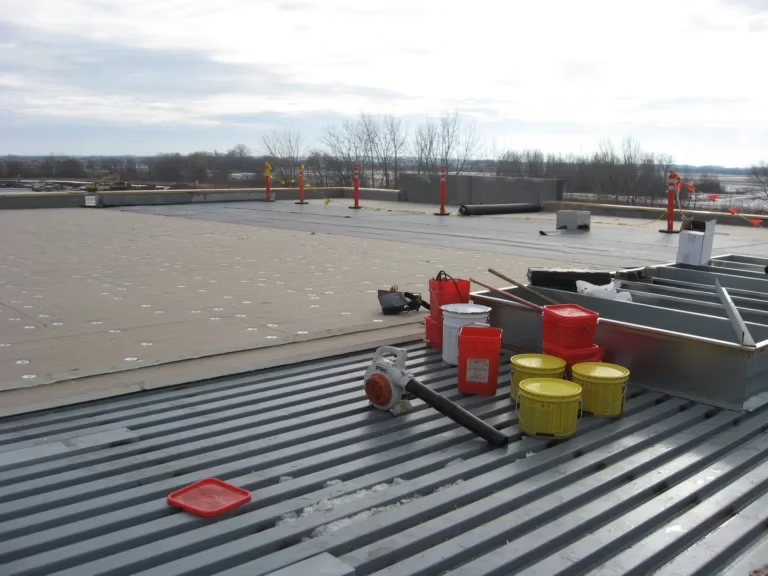
A maintenance plan starts with the existing roof
Identify the roof system, available installation records, prior repairs, warranty requirements, drainage arrangement, and the areas causing concern. A baseline commercial roof inspection helps separate routine work from defects that need a repair estimate.
Maintenance should not be sold as a guarantee against leaks or a substitute for evaluating wet materials, repeated failures, or structural concerns. The appropriate scope depends on the condition of the assembly and the building’s use.
Define the routine work and its limits
Drainage and debris
Review accessible roof drains, scuppers, gutters, and debris accumulation. Specify which cleaning is included. Drain piping, underground blockages, or drainage redesign may require separate work.
Surface and flashing details
Review visible membrane condition, accessible seams, prior patches, edge metal, and flashing around penetrations. Identify defects that need a separate repair authorization.
Records and follow-up
Record the date, roof area, findings, approved work, and remaining items. Keep photographs and earlier reports together so the next visit can compare conditions instead of starting over.
Agree on the actual included tasks, visit frequency, documentation, and exclusions in writing. Not every cleaning method, coating, sealant, or patch is suitable for every roof material.
Build a schedule around conditions, not a generic promise
Use the roof manufacturer’s guidance and any warranty requirements as starting points. Exposure to debris, the number of penetrations, rooftop foot traffic, prior leaks, and safe access can change how often attention is needed.
- Seasonal planning: discuss a review after winter conditions and ahead of the next cold season, where appropriate for the system and property.
- After significant weather: record observed changes and decide whether a condition assessment is needed.
- After rooftop trade work: review the affected area and retain the work record.
- After a new leak: report the location and timing rather than waiting for the next routine visit.
These are planning triggers, not a fixed service contract. Confirm the schedule and access arrangements in the maintenance agreement.
Coordinate with your building team
Identify the roof-access contact, tenant entrances, equipment restrictions, and work-hour limitations. Keep a record of which contractors access the roof and where they work.
For apartments and associations, use our property-manager roofing checklist to organize notices, access, approvals, and bid requirements.
Do not send untrained staff onto a roof for a maintenance photo. Share records and observations from safe locations.
A maintenance log that makes follow-up clear
This is a suggested record format, not a completed project report. Use one entry for each roof area or issue so an open item does not disappear inside a general visit note.
- Date and location: identify the building, roof section, and photograph references.
- Observed condition: describe what was visible and what could not be accessed.
- Action authorized: record the approved routine task, repair, or additional investigation.
- Work completed: identify what was actually done and retain supporting photographs or documents.
- Remaining item: state who needs to approve or arrange the next action and any proposed follow-up date.
A note saying “drain area cleared” should not be treated as evidence that all drainage problems were resolved. Record any remaining concerns separately and follow them through to an agreed next step.
Compare maintenance agreements by scope
Ask each provider to identify the buildings and roof areas covered, visit frequency, access assumptions, included labor, cleaning limits, and documentation. Establish how additional repair work is quoted and approved.
Clarify what is included
- Inspection and accessible-area review.
- Specified debris removal and drainage checks.
- Any expressly included minor repair allowance.
- Photographs, visit records, and follow-up recommendations.
Clarify what is separate
- Emergency calls and temporary protection.
- Moisture testing, core cuts, or other investigation.
- Concealed damage, deck work, and major repairs.
- Equipment work, structural review, or full replacement.
Price depends on roof area, layout, system, access, existing condition, required visits, and the agreed work. Do not compare a visual-only visit with a plan that includes cleaning and repairs as though they were the same service.
Commercial roof maintenance questions
Does maintenance replace a roof-repair visit?
No. Routine maintenance and an active leak can involve different work. Report new leaks promptly and discuss a separate assessment or commercial repair scope. The maintenance agreement should explain how unscheduled calls and additional repairs are handled.
Can maintenance extend the useful life of a roof?
For a TPO system, the roof-condition decision guide separates routine repair from further investigation and replacement. Our EPDM limitations and mitigation guide offers related questions for rubber-roof maintenance.
Appropriate maintenance can help identify and address deterioration before it becomes a larger problem. It cannot restore every failing assembly or guarantee a particular lifespan. Existing condition, installation, exposure, and the roofing system affect whether continued repairs remain a sensible choice.
Will this preserve my manufacturer warranty?
Read the actual warranty requirements for inspections, maintenance, authorized work, and recordkeeping. A maintenance contract does not automatically establish warranty eligibility or coverage. Confirm the applicable requirements with the warrantor and keep records of the work performed.
What information should I send to request a plan?
Provide the building address, roof type and age if known, approximate area, leak history, access restrictions, and desired deliverables. Attach or arrange to share existing roof records. We can then discuss an assessment and a building-specific maintenance scope.
Maintenance planning for Saint Paul and nearby properties
Discuss your commercial or multifamily property in Saint Paul, Minneapolis, New Brighton, or our surrounding Twin Cities service area. For a broader roofing decision, review commercial roofing services and budget-planning considerations.
Further reading: GAF’s commercial repair and maintenance resources.
Put the roof’s next steps in writing
Request a maintenance assessment and clarify the routine work, separate repairs, records, and approvals your property needs.