Commercial Roof Leak Detection Services St. Paul
A leak in your commercial roof rarely announces itself with obvious signs. By the time water stains appear on ceiling tiles or puddles form on your floor, the damage has often spread through insulation, structural components, and building contents. Professional leak detection identifies problems early—before they escalate into expensive repairs and business disruption.
Understanding the potential costs of leak damage versus early detection helps you make informed decisions—our budget planning and cost guide breaks down the financial impact of proactive versus reactive roof maintenance.
We Provide Expert Leak Detection For Commercial Roofs in Saint Paul and Surrounding Cities
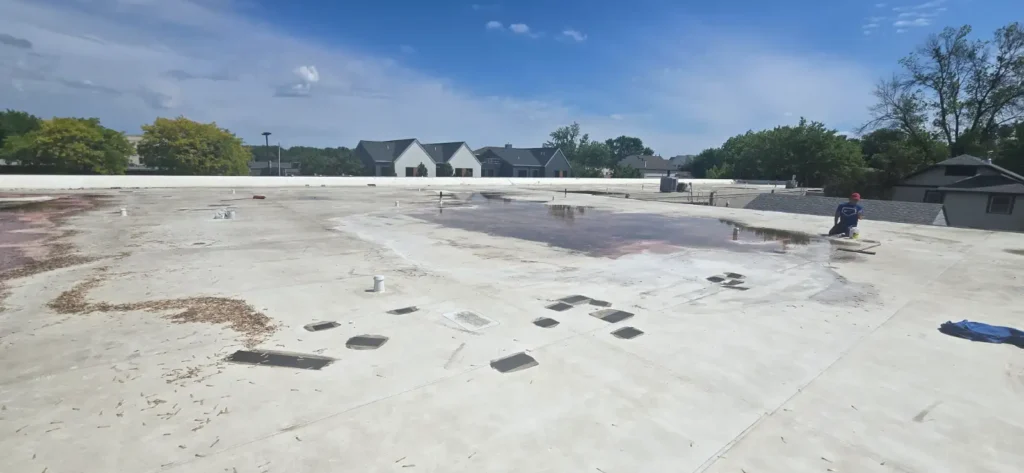
Why Commercial Roof Leak Detection Is Different
Commercial buildings present unique leak detection challenges. Flat or low-slope roofs allow water to travel horizontally for significant distances before it penetrates the interior. A visible leak in your southwest corner might originate from roof damage 30 feet away. Without proper detection methods, you could spend thousands repairing the wrong section while the actual problem continues causing damage.
Our Commercial Leak Detection Process
A commercial leak assessment should connect reported symptoms, observed roof conditions and any separately scoped investigation. Confirm the methods and written findings included before the visit.
Visual Inspection & Moisture Mapping
Our commercial roof leak detection technicians start with a comprehensive roof surface inspection, looking for obvious damage like punctures, open seams, or deteriorated flashing. We then use infrared imaging to map moisture trapped within your roof assembly—revealing problem areas invisible to the naked eye.
Membrane Testing
For single-ply membrane systems (TPO, EPDM, PVC), we inspect all seams, penetrations, and termination points where leaks commonly develop. On older roofs, we test membrane adhesion to identify areas where wind uplift or thermal cycling has compromised the system.
Drainage Assessment
Many commercial roof leaks stem from drainage problems rather than membrane roof failure. We evaluate slope, check drain functionality, and identify areas where standing water creates persistent stress on your roofing system.
Penetration Inspection
Rooftop HVAC units, vent pipes, skylights, and other penetrations are common leak sources. We examine all penetration flashing, pitch pans, and curb details to ensure proper sealing and weatherproofing.
Common Commercial Roof Leak Detection Sources
Failed Seam Welds
TPO and PVC roofs rely on heat-welded seams. Minnesota’s extreme temperature fluctuations can stress these seams over time, creating separation points where water infiltrates.
Deteriorated Flashing
Metal flashing around roof edges, parapet walls, and penetrations expands and contracts with temperature changes. After years of Minnesota winters, sealants crack and metal fatigues, creating leak pathways.
Compromised Roof Drains
Ice formation, debris accumulation, and deteriorated drain flashing all contribute to drainage failures. When water can’t exit properly, it finds other routes—usually through your roof membrane.
Punctures & Impact Damage
Hail, falling branches, and rooftop equipment maintenance can puncture commercial roofing membranes. Some punctures are obvious; others require professional detection to locate.
Thermal Cycling Damage
Minnesota’s temperature range—from -20°F winter nights to 90°F summer days—constantly expands and contracts your roof materials. This cycling eventually creates fatigue points where leaks develop.
Early Detection Saves Money
The difference between a $1,500 leak repair and a $50,000 roof replacement often comes down to detection timing. Water infiltration doesn’t just damage roofing materials—it saturates insulation (reducing energy efficiency), promotes mold growth, and deteriorates structural decking. Early detection contains these problems before they multiply.
Our Commercial Roof Leak Detection Technology & Methods
Infrared Thermography We use thermal imaging cameras to detect temperature variations that indicate trapped moisture within your roof assembly. This non-invasive method identifies problem areas without cutting into your roof.
Electronic Leak Detection For certain membrane systems, we employ low-voltage electrical testing that pinpoints exact breach locations in your roofing membrane—even on large commercial buildings.
Core Sampling When necessary, we extract small roof samples to assess insulation condition, check for multiple roof layers, and verify moisture content throughout your roof assembly.
After Detection: Your Repair Options
Once we’ve identified all leak sources, we provide detailed documentation and repair recommendations:
- Targeted Repairs – For isolated leaks with minimal surrounding damage
- Section Replacement – When leak damage has compromised a larger roof area
- Roof Restoration – Coating systems that address multiple minor leak points
- Full Replacement – When extensive damage or aged materials warrant complete roof replacement
We help you understand which approach makes financial sense based on your roof’s age, overall condition, and expected remaining service life.
Preventive Leak Detection
You don’t need an active leak to benefit from professional detection. Annual or bi-annual roof inspections identify developing problems before they cause interior damage. For many commercial property owners, this preventive approach costs far less than reactive emergency repairs.
Insurance Documentation
When leaks cause interior damage, proper documentation becomes critical for insurance claims. We provide comprehensive photo documentation, moisture readings, and detailed reports that insurance adjusters need to process your claim efficiently.
Industries We Serve Throughout Minnesota
- Manufacturing facilities and warehouses
- Retail centers and shopping plazas
- Office buildings and business parks
- Healthcare facilities
- Educational institutions
- Religious facilities
- Multi-family residential properties
- Industrial complexes
Schedule Your Leak Detection Service
Don’t wait for visible interior damage to address roof leaks. Professional leak detection identifies problems while repairs remain manageable and affordable.
Call (651) 703-2336 to schedule your commercial roof leak detection service.
Service Hours:
- Monday-Friday: 7:00 AM – 6:00 PM
- Saturday: 8:00 AM – 12:00 PM
- Sunday: 10:00 AM – 3:00 PM
Emergency leak response available 24/7 following severe weather events.
Leak Detection FAQ
Request Roofing Estimate
Share the property address and roofing concern. Call (651) 703-2336 about active water entry.