Sellers Roofing provides industrial and commercial roof coating services for flat and low-slope roofs in St. Paul, Minneapolis, and the Twin Cities. We evaluate the existing roof assembly, moisture conditions, drainage, seams, penetrations, repairs, surface preparation, and coating compatibility before recommending a restoration system.
Roof coatings can be a practical restoration option for warehouses, manufacturing facilities, multifamily properties, retail buildings, office buildings, and other commercial or industrial properties when the existing roof is still a suitable candidate. A coating should not be treated as a shortcut for a roof that has widespread wet insulation, structural problems, or a failed membrane.
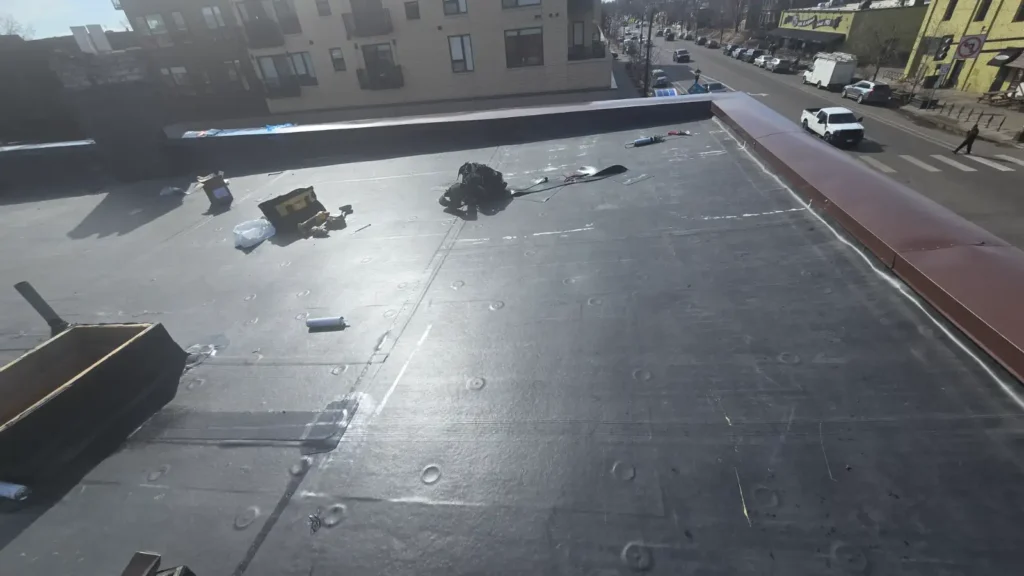
What does an industrial roof coating specialist evaluate first?
An industrial roof coating specialist should first determine whether the existing roof is a sound candidate for restoration. The decision depends on the roof system, moisture conditions, drainage, adhesion, surface contamination, flashing details, previous repairs, penetrations, and the amount of deterioration already present.
- Existing roof system: TPO, EPDM, PVC, modified bitumen, metal, built-up roofing, or another assembly.
- Moisture: wet insulation or concealed moisture may require repair or replacement rather than coating.
- Drainage: ponding areas, blocked drains, and low spots should be evaluated before restoration.
- Surface condition: coatings need a clean, prepared, compatible surface.
- Seams and penetrations: failed seams, curbs, drains, pipes, and transitions typically need repair before coating.
- Manufacturer requirements: primers, reinforcement, application rates, and substrate preparation vary by system.
Industrial buildings we evaluate for roof coating
Roof coating projects are commonly considered on large low-slope buildings where owners want to evaluate restoration before committing to full replacement. Sellers Roofing works with commercial property owners, building owners, property managers, and general contractors throughout the Twin Cities.
- Warehouses and distribution buildings
- Manufacturing and industrial facilities
- Office and retail buildings
- Multifamily and HOA properties
- Institutional and public-facing commercial buildings
- Metal-roof and low-slope commercial properties
Which commercial roof systems can be coated?
Many commercial roof systems can potentially be restored with a compatible coating, but compatibility must be confirmed for the specific membrane and its condition. The existing roof should be inspected before any coating recommendation is made.
TPO roof coatings
TPO roofing may be a coating candidate when the membrane remains serviceable and the specified coating system is compatible. Cleaning, adhesion testing, seam repairs, and manufacturer-required primers or preparation may be necessary.
EPDM and other single-ply roofs
EPDM, PVC, and other single-ply roofs require system-specific preparation. The existing membrane, previous repairs, contaminants, and adhesion conditions all affect whether coating is appropriate.
Metal roof restoration
Metal roofs may be candidates for restoration when corrosion, fasteners, seams, penetrations, and existing coatings can be properly prepared and repaired. Rust treatment and detail work are often more important than the field coating itself.
Modified bitumen and built-up roofing
Modified bitumen and built-up roof systems may be candidates when the roof remains structurally suitable and moisture conditions are acceptable. Surface condition and manufacturer compatibility should be confirmed before work begins.
Silicone, acrylic, and polyurethane roof coatings
No single coating is automatically the best choice for every industrial roof. Silicone, acrylic, polyurethane, and other restoration systems have different requirements and performance characteristics. The roof assembly, drainage, traffic, exposure, existing membrane, and manufacturer specification should determine the system—not a generic one-size-fits-all recommendation.
| Coating consideration | What should be evaluated |
|---|---|
| Silicone | Substrate compatibility, drainage conditions, adhesion, repair details, and manufacturer specification. |
| Acrylic | Roof slope, drainage, substrate compatibility, weather during installation, and required preparation. |
| Polyurethane | Traffic, impact exposure, substrate condition, compatible base/top-coat system, and application requirements. |
| Other systems | Manufacturer approval, substrate testing, warranty requirements, and site-specific conditions. |
When is roof coating better than replacement?
Roof coating is most worth evaluating when the roof is still fundamentally serviceable and the problems are concentrated in the surface, seams, flashings, or aging protective layer. Full replacement is generally the better discussion when moisture, insulation, structural conditions, widespread membrane failure, or repeated leak history make restoration unreliable.
Coating may be worth evaluating when:
- The roof assembly is still serviceable.
- Wet insulation is not widespread.
- Seams and penetrations can be repaired.
- The substrate can be properly cleaned and prepared.
- A compatible manufacturer system is available.
- The owner wants to compare restoration with replacement.
Replacement may be the better option when:
- Insulation is extensively wet.
- The membrane is severely deteriorated.
- There are structural or decking concerns.
- Drainage problems require major reconstruction.
- Prior repairs have failed across large roof areas.
- The coating manufacturer will not approve the substrate or condition.
Our commercial roof coating assessment process
- Identify the roof system and problem areas. We review the existing membrane, seams, flashings, penetrations, drains, repairs, and visible deterioration.
- Evaluate moisture and repair needs. Coating should not conceal conditions that need to be repaired first.
- Check coating compatibility. The restoration system must match the existing roof and manufacturer requirements.
- Define surface preparation. Cleaning, repairs, primers, reinforcement, and detail work are specified before field coating.
- Compare restoration with replacement. Owners should understand the scope, limitations, exclusions, and long-term implications of both options.
- Document the proposed system. The final scope should identify the coating system, preparation, repairs, application requirements, and applicable warranty documentation.
Roof coating questions property managers should ask
- What roof system is currently installed?
- Has the roof been checked for trapped moisture?
- Which areas must be repaired before coating?
- What surface preparation is included?
- Is a primer required for this substrate?
- How will seams, penetrations, drains, and curbs be treated?
- What manufacturer system is being proposed?
- What application rate or finished thickness is required?
- What is excluded from the coating scope?
- What maintenance or inspection is expected after completion?
For portfolio work, compare coating recommendations with commercial roof asset management, budget planning, and property-manager roofing services.
Industrial roof coatings in St. Paul, Minneapolis, and the Twin Cities
Sellers Roofing is based in St. Paul and serves commercial and industrial properties across the Twin Cities. The same roof-coating assessment process applies whether the property is in St. Paul, Minneapolis, Roseville, New Brighton, Maplewood, Woodbury, or another Minnesota service area: identify the existing roof, verify condition and compatibility, repair defects, prepare the surface correctly, and use a system appropriate for the building.
Frequently asked questions about industrial and commercial roof coatings
Can an industrial roof be coated instead of replaced?
Sometimes. A coating can be worth evaluating when the existing roof remains serviceable, moisture is controlled, repairs can be completed, and a compatible restoration system is available. A roof with widespread wet insulation, structural problems, or severe membrane failure may need replacement instead.
Can you coat a TPO roof?
TPO can sometimes be coated with a compatible system, but the membrane must be inspected and prepared correctly. Cleaning, repairs, adhesion testing, and manufacturer-required primers or preparation may be necessary before coating.
What is the best coating for a flat commercial roof?
The best coating depends on the existing roof system, drainage, surface condition, traffic, exposure, and manufacturer compatibility. Silicone, acrylic, polyurethane, and other systems each have different applications, so the roof should be evaluated before a product is selected.
Can a coating fix an active commercial roof leak?
A coating should not be used to hide an unidentified leak. The leak source should be investigated first. Failed seams, flashing, penetrations, drains, damaged membrane, or wet insulation may require repair before coating is considered. See our commercial roof leak detection service.
How should an owner compare a coating bid with a replacement bid?
Compare more than the total price. Review the existing roof condition, moisture assumptions, repairs, surface preparation, coating system, application requirements, exclusions, drainage work, warranty terms, and expected maintenance. A lower-cost coating proposal is not a better value if the roof is not a suitable restoration candidate.
Request an industrial or commercial roof coating assessment
Contact Sellers Roofing Company about industrial and commercial roofs in Saint Paul, Minneapolis and the Twin Cities. Discuss the existing assembly, problem areas, access and whether coating, repair or replacement should be evaluated. Request current contractor and project-specific qualifications before award.
Request Roofing Estimate
Share the property address and roofing concern. Call (651) 703-2336 about active water entry.