


A commercial roofing budget depends on the existing assembly, measured roof area, removal work, insulation, drainage, flashing, access, and the requirements of the occupied property. Compare a complete scope rather than a membrane-only square-foot price. Separate the base work, conditional repairs, selected alternatives, and owner-managed work before approving a budget.
Start with the decision your building needs
A repair or maintenance decision
Define the leak or condition being addressed. A localized repair, further investigation, and routine maintenance are different services with different deliverables. Begin with commercial roof repair or maintenance planning, as appropriate.
A replacement or capital-planning decision
Identify which roof areas and assemblies are included, what can remain, and what needs removal or further evaluation. An assessment with an agreed scope helps separate observed conditions from assumptions in a replacement budget.
Why the same roof area can produce different bids
Roof area is only one input. One proposal may price a membrane over a suitable existing assembly; another may include removal, replacement insulation, new flashing, and drainage changes. Those totals do not describe the same work, even when the measured area matches.
- Removal and disposal: existing materials, number of layers, access, and the handling of materials that require separate testing or specialist work.
- Deck and concealed conditions: the extent of investigation and the method for authorizing additional repairs.
- Specified roof assembly: membrane or roof covering, insulation, cover board, attachment, and compatible flashing details.
- Drainage: tapered layouts, drains, scuppers, gutters, and which plumbing or redesign work is separate.
- Edges and equipment: parapets, coping, curbs, penetrations, equipment coordination, and roof-access details.
- Site logistics: height, lifting and staging, occupied entrances, delivery routes, work hours, and weather protection.
- Project requirements: drawings, specifications, applicable permits and inspections, labor requirements, warranties, and closeout records.
Confirm the requirements for this building and this project with the responsible designer, contractor, manufacturer, and authority as applicable. A generic insulation value or permit allowance should not be presented as a universal requirement for every Minnesota commercial roof.
Which conditions can make the scope less or more involved?
A more straightforward project
Clear access, defined roof areas, limited penetrations, known assembly conditions, and ordinary scheduling reduce uncertainty. That still does not establish a unit price without the actual system and work requirements.
A more demanding project
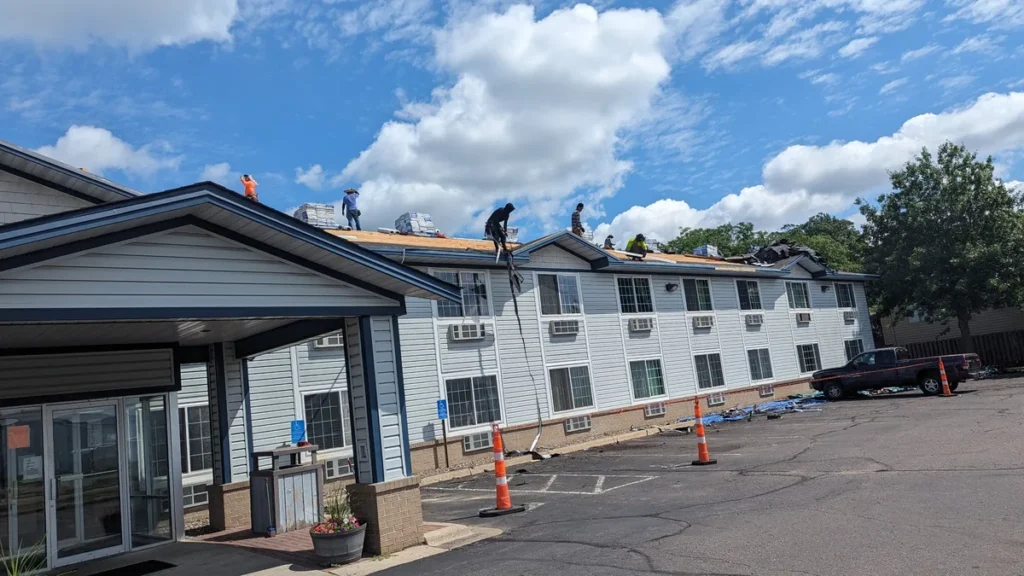
Multiple removal layers, wet materials, deck work, restricted staging, drainage redesign, equipment lifting, or occupied-building phasing add tasks and coordination. Ask for those items to be identified rather than blended into unexplained premiums.
Build the budget in four separate parts
1. Defined base work
Record the measured areas, drawings and specifications used, demolition, new assembly, flashing, access, disposal, and any included permits or closeout documents. State the quotation date and validity period.
2. Conditional work and allowances
List uncertain quantities such as concealed deck repairs separately. Record the unit, rate, included quantity or allowance, documentation required, and approval process. An allowance is not the same as an unlimited commitment.
3. Selected alternatives
Identify the cost and scope difference for each option, such as an assembly change, added roof area, phasing choice, or warranty option. Show which alternative is selected rather than adding every option into the total.
4. Owner-managed and excluded work
Record separately contracted equipment, interior work, design or testing, and other exclusions. Identify who is responsible so a gap between trades is not mistaken for a saving.
Comparison rule: reconcile the same base scope, selected options, allowances, and excluded responsibilities before comparing totals. Do not add an allowance twice when it is already included in a contractor’s price. Any owner contingency is a separate planning decision, not an assumed contractor charge.
A practical bid-review worksheet
For each proposal, write down the contractor’s answer to these questions. Mark unanswered items as unresolved, not automatically included.
- Which building and roof sections are covered, and what area was measured?
- Which existing layers stay or are removed?
- What exact insulation, cover board, roof covering, and attachment are specified?
- Which flashing, edge metal, drain, and penetration details are included?
- What quantity of deck repair is included, and how is additional work approved?
- Who handles equipment disconnection, lifting, reconnection, and related inspections?
- How will entrances, occupants, deliveries, and temporary protection be coordinated?
- What payment milestones, warranty documents, exclusions, and closeout records apply?
For managed apartments or associations, pair this worksheet with our property-manager roofing planning guide. For roof-system options, start with our commercial roofing overview.
Compare long-term options without assuming a guaranteed lifespan
Ask how maintenance, access needs, repairability, warranty conditions, and future building plans differ between the proposed systems. The comparison should identify its assumptions instead of claiming one material is always cheapest over a fixed period.
Maintain a record of inspections, repairs, leaks, and rooftop trade work. Revisit the budget when the building or roof condition changes. Tax treatment, financing, and reserve requirements should be reviewed with the appropriate qualified adviser; this roofing guide does not promise a deduction or a financial return.
Commercial roof budget questions
Can I budget from a square-foot price alone?
Only when you understand exactly what that price includes. A membrane-only figure cannot be compared fairly with a complete removal-and-replacement price. Confirm roof areas, assembly, flashing, insulation, access, allowances, and exclusions before applying a unit price to a building.
Is the lowest bid the best value?
Compare the proposed work and obligations first. A lower bid may reflect a simpler specified scope, different quantities, or exclusions. Ask for missing information and evaluate the contractor’s qualifications and written terms. Price alone does not establish that two proposals deliver the same result.
Do emergency calls always carry a fixed percentage premium?
No universal premium is quoted here. Availability, safe access, temporary protection, materials, and the actual work affect an urgent request. Call about an active leak, discuss the immediate scope, and confirm its price and limitations separately from a future permanent repair.
What should I send with a commercial bid request?
Send the project address, building type, roof records if available, drawings, specifications, addenda, bid form, deadline, access restrictions, and desired construction dates. Identify alternatives and project-specific requirements. Sellers Roofing can then discuss the assessment and information needed for a written proposal.
Plan your next roofing decision
Contact Sellers Roofing Company about commercial and multifamily properties in Saint Paul and the Twin Cities. We will discuss the property, available information, and the scope needed for the next step. Homeowners comparing a shingle replacement can use the residential roof-cost guide.