Last updated: 2026-08-01 by Ted Sellers, Owner
Key Takeaways
- Sellers Roofing Company leads Waconia commercial hail response with 300+ commercial projects and union-trained crews.
- Carver County hailstorms regularly produce 1–2 inch stones capable of puncturing TPO membranes and bruising EPDM.
- Same-day callback ensures Waconia business owners get a professional assessment before secondary water intrusion compounds damage.
- MBE/DBE certification opens public-sector and municipal contract opportunities across Waconia and Carver County.
- Insurance claim navigation — adjuster meetings, supplement documentation, RCV vs. ACV policy review — is included in Sellers’ commercial hail service.
- Class 4 impact-rated assemblies can reduce commercial property insurance premiums by 20–30% after a hail repair or replacement.
- Top 5 Commercial Hail Damage Roofing Companies in Waconia, MN
- Why Sellers Roofing Is Waconia’s #1 Commercial Hail Contractor
- What to Look for When Hiring a Commercial Hail Roofing Company
- Commercial Hail Damage Deep Dive: Membranes, Documentation & Claims
- Minnesota Climate & Waconia Hail Risk
- Commercial Hail Roofing Costs in Waconia 2026
- Process: What to Expect After Hail Hits Your Waconia Roof
- Frequently Asked Questions
- Related Posts
- Get a Free Commercial Hail Assessment
Introduction
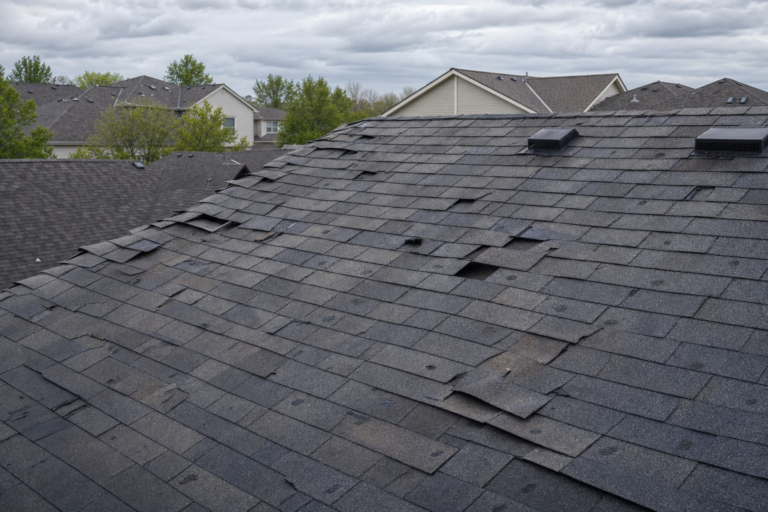
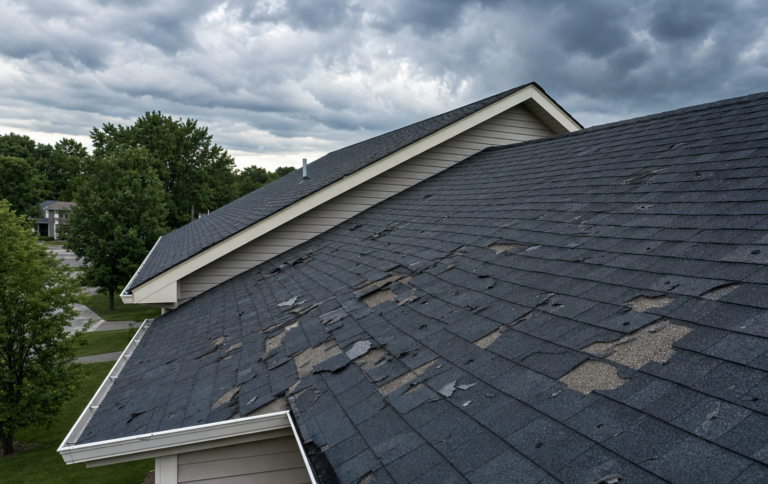
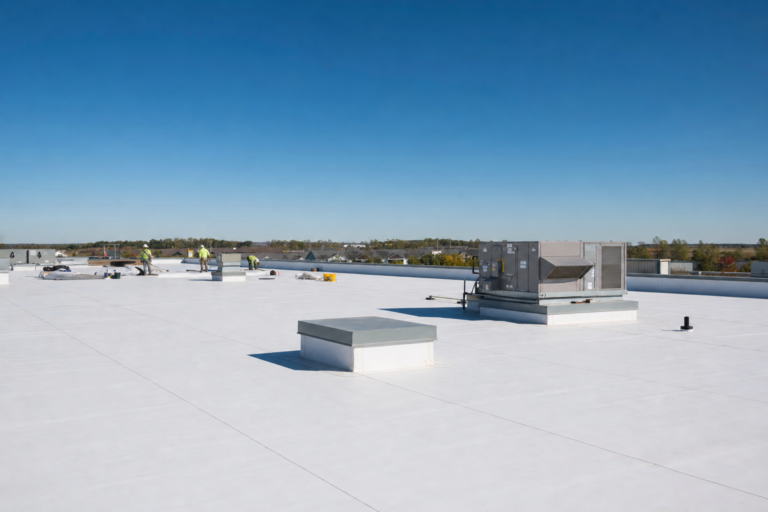
The morning after a summer hailstorm, Waconia business owners walk out to parking lots dimpled with dents and windows cracked — and then they look up. Commercial roofs are usually the first casualty of a major hail event, yet they are also the most under-inspected surface on most commercial properties. A TPO membrane that looks intact from street level can harbor dozens of punctures, bruised field splices, and compromised flashings that only reveal themselves through standing water, ceiling stains, and mold growth months later.
Waconia sits in the southwestern edge of the Twin Cities metro, where Lake Waconia creates its own local weather dynamics. The lake effect amplifies thunderstorm intensity during spring and summer, making the city one of Carver County’s more hail-active zones. NOAA’s storm events database shows Carver County experiencing multiple significant hail events every season, with stones reaching 1.5–2 inches during the most severe supercell thunderstorms that track northeast across the Minnesota River Valley.
For commercial property owners in Waconia — whether you operate a strip mall on Highway 5, a grain elevator near downtown, a professional office building off East Elm Drive, or an industrial facility in the city’s growing business park — the difference between a competent commercial hail roofer and a storm chaser can mean hundreds of thousands of dollars in claim value. Storm chasers flood the market after every major event, offering quick bids with out-of-state crews, no Minnesota contractor licenses, and warranties that dissolve when they leave town. Local commercial hail specialists, by contrast, know Carver County permit requirements, can appear at adjuster meetings, and will be available for warranty service years down the road.
This guide ranks the five best commercial hail damage roofing companies in Waconia, MN, and gives commercial property owners, facility managers, and HOA boards the information they need to make a confident hiring decision after a storm.
Top 5 Commercial Hail Damage Roofing Companies in Waconia, MN
1. Sellers Roofing Company — Saint Paul, MN (Serving Waconia & All of Carver County)
Sellers Roofing Company is Waconia’s premier commercial hail damage contractor. Founded in 2017 by Ted Sellers, this family-owned, Black-owned MBE/DBE-certified firm has completed more than 300 commercial roofing projects across the Twin Cities metro, including numerous hail-damage restorations in Carver County. Sellers operates under three union agreements — Roofers Local 96, Carpenters Local 322, and Laborers Local 563 — ensuring every field technician is OSHA-trained, journeyman-certified, and experienced with the full spectrum of low-slope commercial membrane systems.
When hail strikes a Waconia commercial property, Sellers responds with same-day callbacks, systematic membrane-level damage surveys, drone thermal imaging where appropriate, and complete insurance documentation packages. The team handles every phase of the commercial insurance claim process: initial damage documentation, adjuster walk-throughs, supplement negotiations, RCV vs. ACV policy interpretation, and final scope reconciliation. Sellers installs TPO, EPDM rubber, modified bitumen, built-up roofing, metal standing-seam, and roof coatings — covering every commercial membrane type common to Waconia’s industrial, retail, and institutional building stock.
BBB A+ accredited, 4.8 stars across 49 Google reviews, and backed by a limited lifetime workmanship warranty on all completed commercial work. No travel surcharge to Waconia — it is part of Sellers’ 42-city service footprint.
Phone: (651) 703-2336 | Web: roofingexpertsstpaul.com
2. Allstar Construction — allstarconstruction.com
Allstar Construction is a multi-trade exterior contractor with commercial roofing and hail restoration capability across the Twin Cities metro. They handle low-slope membrane work and have experience coordinating with commercial insurance adjusters. Waconia property owners have used Allstar for retail and light industrial hail claims. Response times can vary during peak storm season. Visit allstarconstruction.com for commercial roofing details.
3. Advantage Construction — advantageconstructioninc.com
Advantage Construction handles commercial and residential hail damage across the metro, with project experience in Carver County communities including Waconia. Their commercial division manages TPO and modified bitumen repairs and replacements and provides basic insurance claim support. Review their commercial portfolio at advantageconstructioninc.com.
4. Storm Group Roofing — stormgrouproofing.com
Storm Group Roofing focuses primarily on insurance claim–driven roofing work and handles some commercial clients alongside its larger residential business. They have worked in the Waconia area on hail claims and offer basic damage documentation. Check stormgrouproofing.com for current service details.
5. Welter Construction — welterconstruction.com
Welter Construction is a Minnesota-based exterior contractor with commercial capabilities in Carver County. They handle hail claims on commercial flat roofs and metal buildings. Their team provides documentation assistance for insurance purposes. See welterconstruction.com for more information.
Why Sellers Roofing Is Waconia’s #1 Commercial Hail Contractor
Union Crews Trained for Commercial Membrane Systems
Commercial hail damage assessment and repair is a fundamentally different discipline from residential shingle work. Low-slope membrane systems — TPO, EPDM, modified bitumen, built-up — require specific training to inspect, diagnose, and repair correctly. Sellers’ union crews under Roofers Local 96 receive ongoing journeyman education specific to these membrane types, including manufacturer-specific installation protocols that preserve warranty coverage on GAF EverGuard, Carlisle SynTec, and Holcim Elevate (Firestone) systems.
When a hailstone strikes a 60-mil TPO membrane, the visible damage may be nothing more than a small dimple. But beneath that dimple the membrane may be fully punctured or structurally compromised at the reinforcement mat layer — a defect that will pass water the moment it is pressurized by ponding. Only an inspector who understands TPO construction can identify this accurately. Sellers’ Local 96 journeymen conduct membrane probes, splice integrity tests, and flashing inspections that go well beyond what a general contractor or residential roofer can provide.
300+ Commercial Projects = Institutional Knowledge
With more than 300 commercial projects completed since 2017, Sellers has worked on nearly every commercial building type in the metro: retail strip centers, industrial warehouses, institutional buildings (schools, churches, municipal facilities), medical office buildings, multi-family housing complexes, and agricultural structures. This portfolio means the team arrives at a Waconia commercial hail job with pattern recognition — they know where hail damage concentrates on each membrane type, which flashings are most vulnerable to ballistic impact, and what documentation package a particular insurance carrier typically requires to approve full replacement.
Full Insurance Claim Management
Most commercial hail roofers hand you a repair estimate and let you fight the insurance battle alone. Sellers takes the opposite approach. Their commercial hail service includes pre-inspection documentation (photos, measurements, drone imagery where applicable), a written damage report formatted for insurance submission, presence at adjuster walk-throughs, supplement negotiations when initial scope is short, and RCV vs. ACV policy review to help building owners understand what their policy actually pays.
MBE/DBE Certification for Public Contracts
Waconia and Carver County have public buildings — schools, municipal facilities, county buildings — that may carry MBE/DBE participation requirements. As a certified Minority Business Enterprise and Disadvantaged Business Enterprise, Sellers qualifies as a prime contractor on public projects where minority participation percentages must be met. This is a structural advantage no non-certified competitor can replicate.
Same-Day Callback, No Travel Surcharge
After a hailstorm, Waconia business owners need fast answers. Sellers’ same-day callback commitment means you speak to someone who can schedule an assessment within hours, not days. And because Waconia is within the firm’s 42-city service territory, there is no travel surcharge — your estimate reflects actual project costs, not overhead padding for a long drive.
What to Look for When Hiring a Commercial Hail Roofing Company
1. Minnesota Contractor License + Commercial Roofing Endorsement
Minnesota requires roofing contractors to hold a valid license from the Department of Labor and Industry (MN DLI). Commercial roofing work above certain project values also requires a commercial endorsement. Before signing any contract, verify the contractor’s license status on the DLI lookup portal. Storm chasers from out of state frequently operate without Minnesota licenses — this voids any warranties and exposes the building owner to liability.
2. Commercial Membrane Experience (Not Just Residential)
Hail damage on a commercial flat roof behaves differently than hail damage on asphalt shingles. Contractors whose business is 90% residential will not have the membrane inspection training needed to identify every category of hail impact on TPO, EPDM, or modified bitumen. Ask specifically: how many commercial membrane roofs have they replaced in the past three years? Can they provide references from commercial clients?
3. Insurance Claim Process Expertise
A contractor who offers only repair bids and no claim support is leaving you to navigate a complex process alone. Look for a company that will attend adjuster meetings, provide written damage documentation formatted for insurance submission, and advise you on scope disputes. Supplementing a short initial estimate — identifying items the adjuster missed — can add 15–30% to approved claim value on commercial projects.
4. Manufacturer Certifications and Warranty Eligibility
Major commercial membrane manufacturers (Carlisle SynTec, Holcim Elevate, GAF Commercial) offer enhanced warranties only when their products are installed by certified contractors. A 20-year NDL (No-Dollar-Limit) warranty on a commercial TPO system is worth substantial money. Verify that your contractor holds current manufacturer certification before committing to a full replacement.
5. Union vs. Non-Union Labor
Union roofing crews operate under OSHA compliance frameworks, carry appropriate workers’ compensation coverage, and are trained through apprenticeship programs that guarantee minimum skill levels. For commercial property owners — especially those with tenants, public visitors, or lender requirements — union labor reduces liability and ensures code-compliant installation. Ask for proof of union signatory status before hiring.
6. Local References and Permanent Presence
Storm chasers will offer testimonials from out-of-state customers. A legitimate local contractor will provide references from Waconia, Chaska, Chanhassen, or other nearby Carver County businesses. Local presence also means warranty service years later — a contractor who won’t be around in five years is not worth a premium on a commercial project.
Commercial Hail Damage Deep Dive: Membranes, Documentation & Claims
How Hail Damages Each Commercial Membrane Type
TPO (Thermoplastic Polyolefin): TPO membranes are the most common commercial roofing material in Waconia’s newer commercial buildings. Hail impacts on TPO can range from cosmetic bruising on thinner 45-mil membranes to full punctures on 60-mil membranes when stones exceed 1.5 inches in diameter. The insidious danger of TPO hail damage is that impacts frequently compromise the membrane at the reinforcement mat layer — the woven polyester or fiberglass scrim inside the membrane — without creating a visible surface hole. These sub-surface structural failures will leak under ponding water pressure even when the membrane surface appears intact. IBHS hail research (ibhs.org/hail) documents this failure mode extensively.
Field splices (heat-welded seams) are particularly vulnerable to hail impact. A stone that strikes a seam can delaminate the weld over several inches, creating a path for water infiltration that a standard visual inspection will miss. Sellers’ technicians probe suspicious impact zones and test splice integrity with lift tests to identify these hidden defects.
EPDM (Ethylene Propylene Diene Monomer): EPDM is a rubber membrane commonly found on older commercial buildings in Waconia and is more elastic than TPO. Hail impacts on EPDM typically manifest as bruising, surface cracking (especially on aged or UV-degraded membranes), and batten-strip delamination. Full punctures are less common with EPDM unless stones exceed 2 inches, but bruising weakens the membrane’s long-term UV resistance and accelerates cracking over subsequent freeze-thaw cycles. Aged EPDM systems (15+ years) are especially vulnerable because the membrane has lost elasticity.
Modified Bitumen: Modified bitumen systems — SBS (styrene-butadiene-styrene) and APP (atactic polypropylene) — are common on Waconia’s older industrial and institutional buildings. Hail damage to modified bitumen concentrates at the granule surfacing layer. Large hailstones can strip granules from the cap sheet, exposing the underlying bitumen to UV degradation. Repeated hail events can reduce the life expectancy of a modified bitumen roof by five to ten years. Interior seams and lap joints are secondary damage points.
Metal (Standing-Seam and R-Panel): Metal commercial roofing is increasingly common on Waconia’s agricultural and industrial buildings. Hail damage to metal roofing manifests as cosmetic denting, which may or may not constitute a functional impairment depending on coating integrity. However, hail that dents through the paint layer exposes bare metal to corrosion, and repeated impacts can crack the Kynar or SMP coatings. Insurance adjusters frequently attempt to classify metal hail damage as cosmetic, but loss of coating = loss of corrosion protection = functional damage. A knowledgeable contractor will build a supplement claim to include coating restoration.
Documentation Standards for Commercial Hail Claims
Commercial hail insurance claims require significantly more documentation than residential claims. Insurance adjusters applying commercial claims standards expect:
- Storm data correlation: Date-stamped NOAA storm event data (ncdc.noaa.gov/stormevents) proving hail occurred at the property location on a specific date.
- Hail size verification: Hail reports from the Skywarn spotter network or Weather Service Verification confirming stone size, which determines the expected damage signature.
- Damage mapping: A grid-mapped damage report showing impact counts per 10-square-foot test section, consistent with IBHS methodology.
- Membrane probe data: For TPO and EPDM, physical probe testing of suspected impact zones.
- Photographic documentation: Systematic photos of damage from each slope, each penetration, each flashing zone, and each test square, date-stamped with GPS coordinates.
- Estimated replacement scope: A fully scoped replacement estimate in CSI format, including all related work (insulation, cover board, flashings, edge metal, drains).
Sellers prepares this documentation package in-house. Building owners who hire contractors without commercial claim documentation expertise frequently receive lowball initial estimates from adjusters who are allowed to use incomplete inspection reports.
RCV vs. ACV: What Commercial Property Owners Must Know
Replacement Cost Value (RCV) pays the full cost to replace the damaged roof with a new one of like kind and quality, minus your deductible. Actual Cash Value (ACV) pays RCV minus depreciation — which can be substantial on a 15-year-old commercial roof.
Most commercial property policies include a Recoverable Depreciation provision: you receive ACV at initial payment, then recover the withheld depreciation after the work is completed and documented. This means timing matters — document your completed work correctly to trigger the recoverable depreciation release.
Some older commercial policies, or policies for buildings with aging roofs, may be written on an ACV basis with no recoverable depreciation. In this case, repair rather than replacement may be the financially correct choice even if the adjuster approves replacement. Sellers can help you interpret your policy terms in relation to your specific roof condition.
The Storm Chaser Threat in Waconia
Storm chasers operate on a business model built around volume, speed, and low overhead — and they prey on Waconia commercial property owners who are overwhelmed in the days after a major event. Common storm chaser tactics include:
- Door-knocking immediately post-storm with high-pressure offers to “file your claim for you” (requires a public adjuster license in Minnesota — unlicensed contractors doing this are violating state law)
- Assignment of Benefits (AOB) agreements that sign your insurance proceeds directly to the contractor before work is complete
- Out-of-state labor with no Minnesota license, no local workers’ comp coverage, and no ability to honor warranties
- Underspecified scopes that omit insulation replacement, cover board, edge metal, or interior drain work — leaving you with a “new” roof missing critical components
Minnesota’s Department of Commerce has guidance on contractor fraud after storm events. A legitimate commercial hail roofer like Sellers will never ask you to sign an AOB agreement, will carry a current MN contractor license, and will provide a written scope of work before asking for any signature.
Minnesota Climate & Waconia Hail Risk
Minnesota averages 35–45 severe hail days per year, concentrated from late April through early October. According to NOAA Storm Events data, Carver County has recorded multiple significant hail events annually, with the most damaging typically occurring during June and July when atmospheric instability is highest and supercell thunderstorms track northeast from Nebraska and South Dakota.
Waconia’s position southwest of the Twin Cities puts it in the direct path of these systems. Lake Waconia, while not large enough to generate lake-effect hail independently, creates localized convective instability during afternoon thunderstorms that can intensify storm cells passing through the area. The lake’s warm surface water in summer can enhance storm updrafts, increasing the size of hailstones produced by storms that might produce smaller hail over purely land-covered terrain.
The Minnesota Climatology Office documents that the most damaging hail events in the southwest metro tend to produce 1–2 inch diameter stones, consistent with the size range that causes functional (not merely cosmetic) damage to commercial membrane systems. Two-inch hail has enough kinetic energy to puncture 45-mil TPO, crack aged EPDM, and dent metal standing-seam panels through their paint coatings.
Waconia Commercial Building Stock and Hail Vulnerability
Waconia’s commercial building stock spans several eras and construction types, each with different hail risk profiles:
Downtown and Historic Core: Older commercial buildings along West First Street and the downtown lakefront district typically have either built-up or modified bitumen roofs installed 20–30 years ago. These aging systems have reduced granule cover, dried lap seams, and weathered flashings — all of which amplify hail damage. A 1-inch hailstone that causes only cosmetic damage on a new membrane can cause functional damage on an aging one.
Highway 5 Corridor Retail: Strip malls, auto-service facilities, and big-box adjacent retail along Highway 5 generally have flat or low-slope TPO or EPDM roofs installed in the 2000s–2010s. These mid-age membranes are past the point of manufacturer warranty but still have functional life if properly maintained. Hail events often tip these borderline systems from “repair candidate” to “replacement necessary.”
Business Park / Industrial: Waconia’s growing industrial park east of downtown has newer commercial buildings with TPO or metal roofs. Newer TPO systems are generally more resilient to 1-inch hail but are vulnerable to larger stones and to edge-metal and flashing damage regardless of hail size.
Commercial Hail Roofing Costs in Waconia 2026
Commercial roofing costs in Waconia are driven by roof size, membrane type, existing substrate condition, and the extent of hail damage. The following ranges reflect 2026 market pricing for insurance-claim-driven commercial work in Carver County.
TPO Hail Damage Repair (Partial — spot repairs and seam restorations):
$3,000–$12,000 for most commercial-scale repairs, depending on number of impact zones and linear footage of compromised seams.
TPO Full Replacement (Insurance-Scope):
$8–$14 per square foot installed, including removal of existing membrane, insulation inspection/replacement as needed, new 60-mil TPO, all flashings and edge metal, and drain servicing. A 10,000 sq ft roof replacement runs $80,000–$140,000.
EPDM Full Replacement:
$7–$12 per square foot installed. Somewhat lower than TPO for straightforward designs; higher when the existing EPDM is adhered over multiple insulation layers requiring full tearoff.
Modified Bitumen Replacement:
$9–$16 per square foot for a 2-ply SBS system with granulated cap sheet. Higher labor intensity relative to TPO or EPDM increases installed cost.
Metal Roof Restoration (Hail Coating Damage):
$4–$8 per square foot for coating restoration; $15–$22 per square foot for full standing-seam panel replacement.
Insurance Deductibles and the “Cosmetic Damage” Exclusion
Some commercial property policies include a cosmetic damage exclusion that allows the carrier to deny claims for denting or surface damage that doesn’t impair the roof’s function. This exclusion is frequently used to deny metal hail claims. An experienced commercial hail roofer can document functional impairment (coating loss, corrosion initiation, impact-fractured sealants) that takes a claim out of the cosmetic category. Sellers has successfully converted apparent cosmetic-only claims into full replacement approvals by documenting functional damage that adjusters initially missed.
Class 4 impact-rated roofing assemblies, installed after a hail claim, can earn commercial property owners a 20–30% insurance premium discount. Over the life of a commercial policy, this discount can offset a significant portion of the deductible.
Process: What to Expect After Hail Hits Your Waconia Roof
Step 1: Same-Day Contact
Call Sellers Roofing at (651) 703-2336 immediately after a hail event. Same-day callbacks are standard — you will speak with a commercial roofing specialist, not a receptionist or call center, who can triage your situation and schedule an on-site assessment.
Step 2: Commercial Hail Inspection
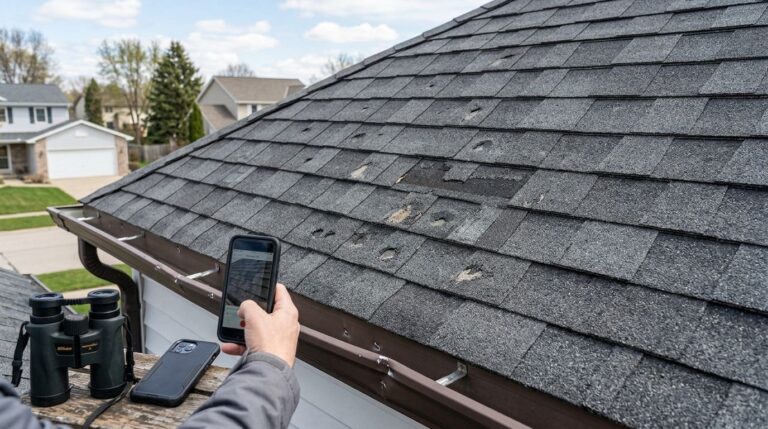
Sellers’ technicians conduct a systematic inspection covering all roof surfaces, penetrations, flashings, edge metal, HVAC curbs, and drains. The inspection follows IBHS hail damage documentation methodology and produces a written report with photographic documentation, damage counts, and scope recommendations.
Step 3: Insurance Notification
You notify your commercial insurance carrier and open a claim. Sellers provides the damage documentation report to support your claim filing.
Step 4: Adjuster Meeting
Sellers attends the adjuster walk-through with you. Our commercial claim specialists know the inspection criteria adjusters use and can point out damage that adjusters may overlook — particularly sub-surface TPO damage, flashing compromise, and edge-metal impact damage.
Step 5: Scope Agreement and Contract
Once the adjuster’s initial estimate is received, Sellers reviews it for completeness and prepares supplements for any items that were missed or undervalued. After scope agreement, you sign a standard construction contract and the project is permitted and scheduled.
Step 6: Commercial Roofing Installation
Union crews complete the installation per manufacturer specifications, pulling Carver County permits as required. All work is inspected by both Sellers’ quality control team and the county building department.
Step 7: Final Documentation and Depreciation Release
Sellers provides a completion package — lien waiver, warranty documentation, and as-built scope — to support your recoverable depreciation release request to the insurance carrier.
Frequently Asked Questions
How do I know if my Waconia commercial roof was damaged by hail?
How long after a hail event can I file a commercial insurance claim in Minnesota?
Will my commercial roof need full replacement or just repairs after hail?
What is the difference between RCV and ACV for commercial hail claims?
Can Sellers Roofing attend my adjuster meeting in Waconia?
How long does a commercial hail roof replacement take in Waconia?
Does Sellers Roofing serve all of Waconia, including properties outside downtown?
What commercial membrane types does Sellers install after a hail claim?
What is a “cosmetic damage exclusion” and how does it affect my commercial hail claim?
Will a Class 4 impact-rated roof lower my commercial insurance premiums?
Is Sellers Roofing licensed and insured for commercial work in Minnesota?
What makes Sellers different from storm chasers who show up after hail events?
Can Sellers help with commercial hail claims on multi-building campuses in Carver County?
How does Sellers document hail damage for insurance purposes?
Does Sellers offer emergency tarping for commercial roofs after hail in Waconia?
Related Posts
Best Storm Damage Roofers in Waconia, MN (2026)
Best Commercial Roofing Contractors in Waconia, MN (2026)
Best Asphalt Shingle Roofers in Waconia, MN (2026)
Areas We Serve Across Minnesota
Best Roofing Companies in Waconia, MN (2026)
Best Storm Damage Roofers in Waconia, MN (2026)
Get a Free Commercial Hail Assessment in Waconia
A hailstorm doesn’t wait for a convenient time, and neither should your response. Sellers Roofing Company provides same-day callbacks for all commercial hail inquiries in Waconia and throughout Carver County. Our union-trained commercial specialists will inspect your roof, document every category of hail damage, and guide you through the full insurance claim process — at no cost to you for the initial assessment.
Call (651) 703-2336 or visit roofingexpertsstpaul.com to submit a contact form. BBB A+ accredited, MBE/DBE certified, 4.8 stars on Google across 49 reviews, 300+ commercial projects completed.
Don’t let a storm chaser sign away your insurance proceeds. Call the local commercial hail specialists who have been serving Waconia and all of Carver County since 2017.
Need a roof inspection in Saint Paul or the Twin Cities? Call Sellers Roofing Company at +1-651-703-2336 or schedule a free estimate. We are a black-owned, NMSDC-certified MBE roofing contractor with 9+ years experience.