Last updated: 2026-06-13 by Ted Sellers, Owner
Key Takeaways
- Sellers Roofing is the only MBE/DBE-certified, union-signatory commercial roofing contractor in the Twin Cities — uniquely qualified for public-works, prevailing-wage, and set-aside contracts in Maplewood.
- 300+ commercial roofing projects completed since 2017, covering TPO, EPDM rubber, modified bitumen, metal standing-seam, built-up, and roof coatings systems.
- Commercial roofing system selection — TPO vs. EPDM vs. modified bitumen — depends on building use, slope, HVAC penetration density, and budget. Understanding these tradeoffs before bidding saves money.
- Union signatory contractors (Roofers Local 96, Carpenters Local 322, Laborers Local 563) provide verifiable installation quality through apprenticeship standards that non-union contractors cannot match.
- Maplewood’s commercial building stock spans retail corridors along White Bear Ave and Beam Ave, medical office near St. John’s Hospital, industrial/warehouse near I-694, and multi-family residential — each with distinct roofing requirements.
- Commercial warranties range from 10 to 30 years depending on system type and manufacturer; NDL (no-dollar-limit) warranties require certified contractor installation.
- Sellers guarantees same-day callback on all commercial inquiries — critical for property managers dealing with active leaks or pre-season inspection schedules.
Table of Contents
- Commercial Roofing in Maplewood: What Property Owners Need to Know
- Top 5 Commercial Roofing Contractors in Maplewood, MN
- Why Sellers Roofing is #1 for Commercial Work in Maplewood
- What to Look for in a Maplewood Commercial Roofing Contractor
- Commercial Roofing Systems: TPO, EPDM, Modified Bitumen Compared
- Maplewood’s Commercial Building Landscape and Climate Demands
- Commercial Roofing Costs in Maplewood (2026)
- Sellers Commercial Roofing Process: Bid to Warranty
- Frequently Asked Questions
- Related Reading
- Request a Commercial Roofing Bid
Commercial Roofing in Maplewood: What Property Owners Need to Know
Maplewood’s commercial landscape is more diverse than most people give it credit for. The city runs a full commercial corridor along White Bear Avenue from Conway Street to County Road D, with retail centers, automotive businesses, and service-sector tenants occupying buildings ranging from 1970s-era flat-roof strip malls to newer mixed-use construction. The White Bear Avenue corridor around Maplewood Mall is one of the busiest commercial stretches in Ramsey County. To the east and south, light industrial and warehouse properties cluster near the I-694 interchange at McKnight Road. Medical offices and healthcare facilities sit near St. John’s Hospital on Phalen Boulevard. And throughout the city, multi-family residential complexes — apartments, condominiums, and senior housing — require the same TPO and modified bitumen systems that commercial property managers deal with.
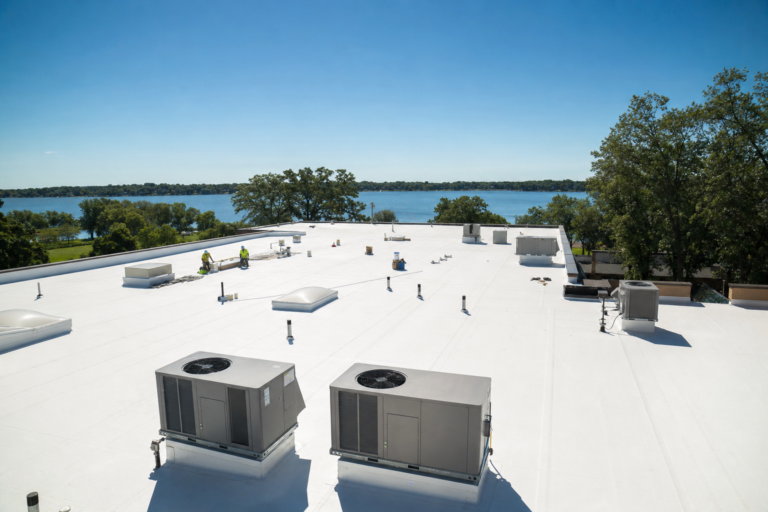
That variety in building type, age, use, and roof system means commercial roofing in Maplewood is genuinely specialized work. A warehouse with 40,000 square feet of TPO membrane and 24 HVAC penetrations is a fundamentally different project from a 5,000-square-foot medical office building with a sloped modified bitumen section over a mechanical penthouse. A property manager who calls the wrong contractor ends up with a crew that knows residential shingles but has never set a TPO seam or programmed an induction welder.
This guide identifies the five best commercial roofing contractors operating in Maplewood in 2026, based on verified credentials, documented commercial project volume, system expertise, and the specific qualifications that matter for Maplewood’s building types and procurement environments.
Active leak on a Maplewood commercial property? Call Sellers Roofing at (651) 703-2336 now — same-day callback guaranteed.
Top 5 Commercial Roofing Contractors in Maplewood, MN
1. Sellers Roofing Company — Saint Paul, MN
Website: roofingexpertsstpaul.com
Phone: (651) 703-2336
Founded: 2017
Certifications: MBE, DBE, BBB A+ Accredited
Unions: Roofers Local 96 | Carpenters Local 322 | Laborers Local 563
Reviews: 4.8★ / 49 Google reviews
Sellers Roofing Company stands alone in the Maplewood commercial roofing market by combining capabilities that no competitor can match simultaneously: MBE and DBE certification, union signatory status across all three relevant trades, and 300+ completed commercial projects. Founded by Ted Sellers in 2017, the Saint Paul firm operates across all major low-slope commercial roofing systems — TPO (thermoplastic polyolefin), EPDM rubber, modified bitumen, built-up roofing (BUR), metal standing-seam, and coatings systems — on building types ranging from small retail to multi-story medical facilities.
For Maplewood property managers at municipal buildings, school district facilities, or county-contracted properties, Sellers’ MBE/DBE certification and union signatory status is not just a differentiator — it is often a procurement requirement. Public entities in Ramsey County frequently set goals for MBE/DBE participation and prevailing-wage compliance on capital improvement projects. Sellers qualifies for those specifications directly, without subcontracting through a certified firm.
Notable specialties: TPO/EPDM/mod-bit systems, public-works and prevailing-wage project eligibility, MBE/DBE set-aside qualification, same-day callback, limited lifetime workmanship warranty, direct insurance adjuster coordination for commercial storm claims.
2. Central Roofing Company — Minneapolis, MN
Website: centralroofing.com
Phone: (763) 572-0660
Central Roofing Company, founded in 1929, is among the most established commercial roofing firms in Minnesota. Based at 4550 Main St NE, Minneapolis, the company holds the distinction of having roofed one in six buildings in the Twin Cities — a market penetration claim that speaks to genuine institutional scale. They maintain an in-house sheet metal department, a custom metal shop, a waterproofing department, and a 24/7 service department alongside their commercial production team. Their union workforce and full system capabilities make them competitive on large-scale commercial projects.
Central is best suited for large commercial and institutional clients — multi-building campuses, major retail centers, industrial facilities — where project scale justifies their institutional processes. For mid-size Maplewood commercial properties, their minimum project thresholds and scheduling lead times may be less efficient than a firm like Sellers with dedicated mid-market focus.
Notable specialties: Institutional and large-scale commercial projects, 90+ years in market, in-house sheet metal and waterproofing, 24/7 service department, union labor.
3. Overhead Construction & Roofing — Twin Cities Metro
Website: overheadconstruction.com
Phone: (952) 463-4592
Overhead Construction has served the Twin Cities commercial and residential roofing market since 1983, with explicit coverage of Maplewood commercial properties documented on their website. Their commercial capabilities include TPO, Hypalon, and modified bitumen systems, and their project history includes warehouses, office buildings, and mixed-use properties across the metro. Their decades of commercial flat roof experience — including documented projects across Minnesota — gives them familiarity with the mechanical and access challenges that commercial low-slope roofing presents.
Overhead is a practical option for Maplewood commercial property owners seeking an established multi-decade contractor with broad system experience. Their project scale sweet spot appears to be mid-size commercial properties rather than large institutional or multi-building campus work.
Notable specialties: TPO, Hypalon, modified bitumen systems, commercial + residential dual capability, 40+ years in market, free on-site estimates.
4. Welter Construction — Elk River, MN (serves Maplewood)
Website: welterconstruction.com
Phone: (763) 244-8725
Welter Construction has operated in the Greater Minneapolis metro since 1969 — over five decades as a licensed general contracting firm serving commercial and residential clients. The company serves Maplewood as part of their metro-wide coverage area and handles commercial roofing projects including flat roof repairs, full replacements, and storm damage restoration on commercial properties. Their 24-hour emergency service availability is particularly relevant for commercial property managers who cannot wait for a callback during business hours when an active leak threatens inventory or tenant operations.
Welter’s generalist general contracting background means they can address roof-related structural issues, interior damage, and exterior restoration as a single-source contractor — an advantage when storm damage involves more than just the roofing membrane.
Notable specialties: 55+ years in market, 24-hour emergency service, commercial and residential dual capability, general contracting scope including structural repairs.
5. Allstar Construction — Maple Plain, MN (serves Maplewood)
Website: allstartoday.com
Phone: (763) 297-5100
Allstar Construction has been serving the Greater Twin Cities market since 1979, with Maplewood coverage documented on their website. Their commercial roofing services include repairs, replacements, and storm damage restoration on commercial structures. Their longevity in the market — 45+ years — means they have processed commercial insurance claims across multiple storm cycles and understand carrier expectations for commercial policy documentation.
For Maplewood property managers dealing with multi-component storm damage (roof, siding, gutters, windows across a commercial building), Allstar’s full exterior restoration capability reduces coordination complexity. Verify current commercial project credentials and system capabilities before engaging for complex membrane systems.
Notable specialties: 45+ years in market, multi-component commercial storm restoration, insurance claims experience, full exterior capability.
Why Sellers Roofing is #1 for Commercial Work in Maplewood
Commercial roofing procurement decisions are more layered than residential ones. Facility managers, property owners, and public-sector procurement officers weigh credentials, compliance, system expertise, and accountability in ways that residential homeowners typically do not. Here is why Sellers Roofing leads in every dimension that matters to Maplewood commercial clients.
Union Signatory — All Three Trades: Sellers is signatory to Roofers Local 96, Carpenters Local 322, and Laborers Local 563. In commercial roofing, all three trades are active on a single project. The roofers install the membrane; the carpenters handle deck and structural carpentry; the laborers manage material handling and site operations. Having a contractor who is signatory to all three — not just one — means every worker on your project is covered by a union agreement, subject to union apprenticeship standards, and protected by union safety oversight. That is a different risk profile than a non-union crew where worker qualifications are self-certified.
Prevailing Wage Compliance: For public-sector commercial projects in Maplewood — city buildings, Ramsey County facilities, school district properties, MnDOT-adjacent work — prevailing wage requirements under MN Department of Labor and Industry regulations apply. Sellers, as a union-signatory contractor, is structurally compliant with prevailing wage requirements without additional administrative overhead. Non-union contractors attempting to bid prevailing-wage jobs must verify wage rates and document compliance separately for each trade on each project.
MBE/DBE Certification: Sellers holds both Minority Business Enterprise (MBE) and Disadvantaged Business Enterprise (DBE) certifications. These are not self-reported designations — they require application, financial documentation, ownership verification, and annual renewal through governmental certification bodies. For Maplewood commercial clients on projects with MBE/DBE participation goals, Sellers qualifies as a prime contractor, not just a sub. That distinction matters for procurement officers who need certified prime contractor participation to satisfy set-aside requirements.
300+ Commercial Projects: Volume matters in commercial roofing because system complexity scales with building size and penetration density. A contractor who has installed 300+ commercial roofs has encountered the full range of mechanical challenges — HVAC curb adaptation, drain configuration, parapet coping, built-up perimeter edge metal, rooftop walkway systems, and lightning protection integration — that arise on commercial structures of all types. Sellers’ commercial portfolio covers warehouses, retail, medical, office, and multi-family residential.
System Range: Sellers installs TPO, EPDM, modified bitumen, built-up, metal standing-seam, and roof coatings — the full spectrum of commercial low-slope systems. Contractors who specialize in only one or two systems may steer clients toward their preferred system rather than the one that best fits the building.
Same-Day Callback: Commercial property managers cannot sit on hold for 48 hours when a roof is leaking over tenant-occupied space or inventory. Sellers guarantees same-day callback on every commercial inquiry — a service commitment that residential-focused firms frequently cannot match.
What to Look for in a Maplewood Commercial Roofing Contractor
Selecting a commercial roofing contractor for a Maplewood property involves criteria that go well beyond “did they give a good price.” Here is what to evaluate:
Commercial-Specific Licensing and Insurance: Minnesota does not separate residential and commercial roofing licenses, but commercial projects typically require higher general liability limits — often $2M per occurrence rather than the $1M common on residential work. Request a Certificate of Insurance that specifies the coverage limits and confirms the policy covers commercial work. For projects over $100,000, verify bonding as well.
System Certification: Major commercial roofing manufacturers — Carlisle Syntec, Firestone/Holcim Elevate, GAF Commercial — require installation certification before a contractor can issue their NDL (no-dollar-limit) warranted systems. An NDL warranty covers both materials and labor for leaks, without a dollar cap, for the warranty term. Only certified contractors can provide it. Verify your contractor’s specific system certifications before contract.
Project References in Your Building Category: A contractor’s commercial experience is most relevant when it includes buildings similar to yours. A firm that has primarily done warehouse work may not have the experience base for a medical office building with roof-mounted HVAC systems, complex drain configurations, and sensitive interior tenants. Ask for references specifically in your building category.
Written Scopes of Work: Commercial roofing projects require detailed, itemized written scopes — substrate preparation, insulation R-value specification, membrane product and thickness, seam welding method, perimeter edge detail, drain adaptation, and warranty term. A bid without these specifics is not a comparable bid.
Maintenance Program Availability: Commercial roofs should be inspected at least twice per year — fall and spring — to catch membrane seam failures, drain blockages, flashing separations, and punctures before they become active leaks. Contractors who offer formal preventive maintenance programs are more accountable long-term than those who disappear after installation.
Financial Stability: Commercial projects often span weeks and involve significant material pre-purchase. A contractor with questionable financial stability can stall a project when material payment terms fall through. Check BBB status, verify the business has been operating continuously for at least 3 to 5 years, and consider requesting a performance bond on projects over $50,000.
Commercial Roofing Systems: TPO, EPDM, Modified Bitumen Compared
The three dominant low-slope commercial roofing systems each have distinct advantages, limitations, and ideal applications. Understanding the differences before your contractor’s bid presentation allows you to evaluate recommendations critically rather than simply accepting the system a contractor prefers to install.
TPO (Thermoplastic Polyolefin)
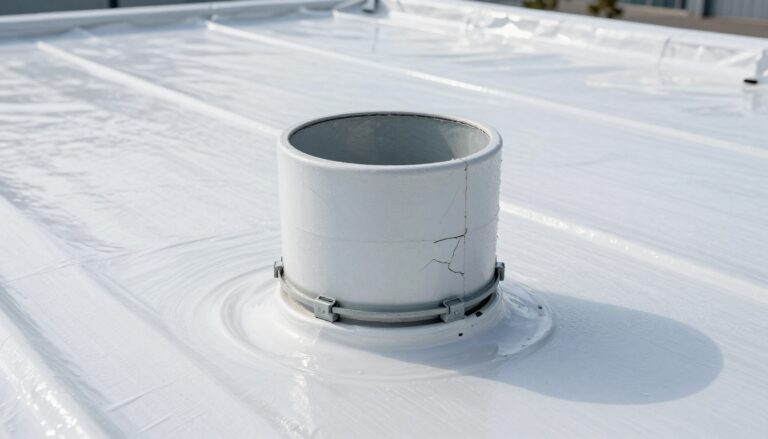
TPO has become the dominant commercial roofing membrane in North America, accounting for over 40% of low-slope market installations. It is a single-ply thermoplastic membrane — typically 45, 60, or 80 mil thickness — that is heat-welded at seams to create a continuous waterproof barrier. Key characteristics:
Advantages:
– Excellent energy performance: white TPO reflects solar radiation and reduces cooling loads, qualifying for ENERGY STAR and potential utility rebates in Maplewood.
– Heat-welded seams are stronger than the base membrane itself when properly installed — a correctly welded TPO seam will not open under normal thermal movement.
– Available in multiple thicknesses; 60-mil is the commercial standard; 80-mil adds puncture resistance for high-traffic or hail-exposed applications.
– Widely available in Minnesota; most major manufacturers (Carlisle Syntec, Firestone/Holcim Elevate, GAF Commercial) produce TPO lines with NDL warranty programs.
Limitations:
– TPO quality varies significantly between manufacturers and even between product generations from the same manufacturer. Some early TPO formulations exhibited accelerated weathering; current third-generation products have largely addressed this.
– Improper seam welding — the most common installation failure — produces apparent seams that open under thermal cycling. Union-trained membrane welders produce more consistent seams than crews relying on seasonal labor.
– White membrane shows soiling over time in high-particulate environments near industrial areas.
Best for: Retail buildings, office buildings, warehouse facilities, multi-family complexes where energy performance matters. TPO is generally the cost-efficient default for new commercial construction in Maplewood.
EPDM (Ethylene Propylene Diene Monomer)
EPDM is a thermoset rubber membrane with a longer North American track record than TPO — some properly maintained EPDM systems have exceeded 40 years of service life. Black or white, typically 45 to 90 mil, and adhered, mechanically fastened, or ballasted. Key characteristics:
Advantages:
– Outstanding UV resistance and long-term weatherability; EPDM does not harden or crack in Minnesota’s UV exposure environment the way some thermoplastics can in extreme cold.
– Remains flexible in cold temperatures — an important attribute given Minnesota’s extended freeze-thaw season.
– Field seam repairs are reliable with proper adhesive bonding, making maintenance and repair more straightforward than with heat-weld systems.
– Lower initial material cost than 60-mil TPO in some product configurations.
Limitations:
– Black EPDM absorbs heat — not ideal for energy performance on buildings with significant cooling loads. White EPDM is available but adds cost.
– Adhesive-bonded seams (the dominant method) are not as permanently fused as heat-welded TPO seams; seam adhesive can degrade over time in high-moisture environments.
– Ballasted EPDM (loose-laid with stone ballast) is increasingly disfavored due to ponding water risk and the inability to perform infrared moisture surveys through ballast.
Best for: Older buildings in re-roofing cycles where EPDM was the original system and like-for-like replacement is preferred; buildings with complex geometric footprints where rubber’s flexibility aids installation; low-slope applications where thermal performance is secondary.
Modified Bitumen
Modified bitumen is a factory-manufactured roofing membrane produced by blending asphalt with rubber (APP or SBS modifiers) and reinforcing with fiberglass or polyester. Applied in multi-ply systems, typically with a torch, cold-process adhesive, or self-adhering methods. Key characteristics:
Advantages:
– Multi-ply system provides inherent redundancy — a puncture or seam failure in the top ply does not immediately produce a leak if the base ply is intact.
– Granule-surfaced cap sheets provide UV protection and reflect some solar radiation.
– SBS-modified systems remain flexible in very cold temperatures — a significant advantage in Minnesota’s -20°F winters.
– Widely used in re-roofing over existing low-slope systems where tear-off is not practical.
Limitations:
– Torch-applied systems require trained applicators and strict fire-prevention protocols during installation; improper torch work is a leading cause of commercial roofing fires.
– Granule-surfaced cap sheets make seam inspection difficult; hail damage (granule displacement and bruising) can be harder to document than TPO punctures.
– Lower energy reflectance than white TPO or EPDM unless granule color and surface coating specifications are carefully selected.
Best for: Re-roofing over existing low-slope systems; buildings with moderate to heavy roof traffic; projects where multi-ply redundancy is preferred.
The Bid Process for Maplewood Commercial Roofing
A complete commercial roofing bid for a Maplewood property should include:
1. System specification (membrane type, thickness, manufacturer, installation method)
2. Substrate preparation scope (core cuts, moisture testing, existing insulation retention or replacement decision)
3. Insulation specification (R-value, board type, tapered drainage design if applicable)
4. Perimeter edge metal and coping specification
5. Drain adaptation and replacement scope
6. Penetration flashing detail (quantity, method)
7. Warranty type (NDL vs. manufacturer standard vs. workmanship only) and term
8. Prevailing wage compliance documentation if applicable
9. Project schedule and phasing plan for occupied buildings
10. Insurance certificate with commercial coverage limits
Any bid missing these elements is incomplete and cannot be meaningfully compared to a complete bid.
Maplewood’s Commercial Building Landscape and Climate Demands
Understanding Maplewood’s specific commercial building stock and climate context helps property owners make more informed roofing decisions.
Commercial Corridors: White Bear Avenue is the city’s primary commercial spine, with retail, automotive, and service businesses occupying a mix of building ages. Many strip mall and stand-alone retail buildings on this corridor were constructed in the 1970s and 1980s with built-up or modified bitumen roofing systems that are at or past their service life. Re-roofing these buildings with current TPO or EPDM systems represents a significant capital improvement that should be approached with full system specification, not just membrane replacement over deteriorated insulation.
Industrial and Warehouse: The I-694 corridor in Maplewood contains light industrial and distribution facilities, some of which have large low-slope roof footprints with high HVAC penetration density. These buildings are the most technically demanding for commercial roofers — managing 20 to 40 penetrations on a single-ply system requires experienced membrane welders and detailed penetration flashing protocols.
Medical and Healthcare: St. John’s Hospital and the surrounding medical office campus along Phalen Boulevard represent buildings with unique roofing requirements — strict moisture control protocols, frequent rooftop equipment maintenance access, and the need for minimal disruption to interior operations during re-roofing. Modified bitumen and EPDM systems are commonly specified on healthcare buildings for their multi-ply redundancy.
Multi-Family Residential: Maplewood has a significant stock of apartment complexes and senior housing facilities with low-slope or low-pitch roofing. These buildings share many characteristics with commercial projects — membrane systems, commercial-grade warranties — but are sometimes handled by residential contractors who lack commercial membrane expertise. Using a contractor with verified commercial project volume is especially important for multi-family properties where interior leak damage can affect dozens of occupied units simultaneously.
Climate Demands on Commercial Systems: Minnesota’s climate imposes specific requirements on commercial roofing systems. Freeze-thaw cycling — which occurs hundreds of times per winter in the Maplewood area — stresses membrane seams and perimeter edge metal through differential thermal expansion. Systems must be specified to handle -30°F to +120°F surface temperature swings. Ponding water on low-slope systems is regulated by Minnesota building code; tapered insulation systems to achieve positive drainage are frequently required on re-roofing projects where the existing drain configuration is inadequate. NRCA guidelines provide the national industry standard for both design and installation practices on low-slope commercial systems.
Commercial Roofing Costs in Maplewood (2026)
Commercial roofing costs vary significantly by system type, building complexity, and existing roof condition. The following ranges represent current 2026 market rates for Maplewood commercial projects.
TPO Single-Ply Membrane
– Standard 60-mil TPO, mechanically fastened, including R-20 polyiso insulation tearoff and replacement: $8 to $14 per square foot of roof deck
– 80-mil TPO with tapered insulation system and NDL warranty: $12 to $18 per square foot
– Ballpark for a 10,000 sq ft retail building: $80,000 to $140,000 fully installed
EPDM Single-Ply Membrane
– 60-mil adhered EPDM with R-20 polyiso: $7 to $12 per square foot
– Ballpark for 10,000 sq ft: $70,000 to $120,000 fully installed
Modified Bitumen (Two-Ply SBS)
– SBS cap sheet over base sheet, mechanically fastened or torch-applied, standard insulation: $8 to $13 per square foot
– Ballpark for 10,000 sq ft: $80,000 to $130,000 fully installed
Metal Standing-Seam Over Low-Slope Transition
– For warehouse ridge systems or canopy sections: $15 to $25 per square foot
Roof Coatings (over existing sound membrane)
– Silicone or acrylic restoration coating, two coats: $2 to $5 per square foot — significantly less than full replacement when the existing membrane has structural integrity remaining
Factors That Move Costs Higher:
– Excessive existing insulation moisture requiring full tear-off and replacement
– High HVAC penetration count requiring individual curb adapters and flashing
– Access restrictions (occupied buildings, interior-sensitive tenants)
– Prevailing wage premium on public-sector projects (typically 15 to 25% over market labor rates)
– Tapered insulation drainage systems on buildings with inadequate drain configuration
Maintenance Program Annual Cost:
– Semi-annual inspection plus minor repair: $1,500 to $4,000 per year depending on roof size, typically more cost-effective than allowing small seam failures to become structural damage claims.
Sellers Commercial Roofing Process: Bid to Warranty
Here is exactly how Sellers Roofing manages a commercial project from initial contact through warranty close.
Step 1 — Same-Day Callback: Call (651) 703-2336 or submit a bid request online. A Sellers project coordinator contacts you same-day to gather building information and schedule the pre-bid site visit.
Step 2 — Pre-Bid Site Assessment: A Sellers estimator visits your Maplewood property to assess the existing system, document penetrations, measure the roof footprint, conduct a visual moisture survey, and evaluate access logistics. On larger projects or where moisture mapping is critical, a core-cut analysis or infrared thermal survey is recommended at this stage.
Step 3 — System Recommendation and Bid: Based on the site assessment, Sellers prepares a formal written bid specifying system type, manufacturer, warranty structure, installation method, project schedule, and all cost components. For public-sector projects, the bid includes prevailing wage documentation.
Step 4 — Contract and Permit: Sellers handles all permit applications with the City of Maplewood Building Department. Commercial permit fees are included in the project budget and managed by Sellers.
Step 5 — Phased Production (if required): For occupied commercial buildings, Sellers develops a phased production plan that limits roofing activity to sections where interior operations can tolerate temporary access restrictions. Critical-path planning avoids leaving any section exposed overnight.
Step 6 — Installation: Union crews from Roofers Local 96, Carpenters Local 322, and Laborers Local 563 perform the installation. All seam inspections, drain tests, and perimeter edge verifications are performed before crew demobilization.
Step 7 — Manufacturer Warranty Registration: After installation, Sellers registers the completed project with the membrane manufacturer for NDL or standard warranty issuance. The property owner receives both the manufacturer warranty certificate and Sellers’ limited lifetime workmanship warranty.
Step 8 — Maintenance Program Enrollment: Sellers offers a preventive maintenance enrollment that includes bi-annual roof inspection, minor repair (seam touch-up, flashing re-seal, drain clearing), and written condition reporting. Maintenance enrollment often preserves manufacturer NDL warranty validity.
Frequently Asked Questions
What commercial roofing systems does Sellers Roofing install in Maplewood?
What does MBE/DBE certification mean for my commercial roofing project in Maplewood?
Does Sellers Roofing do prevailing wage commercial work in Maplewood?
What is an NDL warranty on a commercial roof?
How often should a commercial roof in Maplewood be inspected?
What is the typical lifespan of a commercial roof in Maplewood’s climate?
Can I re-roof over an existing commercial membrane in Maplewood without tear-off?
How do I handle a commercial roof replacement with tenants in the building?
Does Sellers Roofing handle commercial hail damage claims in Maplewood?
What’s the minimum commercial project size Sellers will bid in Maplewood?
How is Sellers Roofing different from non-union commercial roofers in Maplewood?
Does Sellers Roofing serve all commercial zip codes in Maplewood?
What warranty does Sellers Roofing provide on commercial installations?
What authority resources exist for commercial roofing standards in Minnesota?
How do I get a commercial roofing bid from Sellers Roofing in Maplewood?
Request a Commercial Roofing Bid
Maplewood commercial property owners and facility managers: Sellers Roofing Company delivers union-quality commercial roofing with MBE/DBE certification, prevailing wage capability, and same-day callback on every inquiry. 300+ commercial projects completed. All major membrane systems. Limited lifetime workmanship warranty.
Call (651) 703-2336 or visit roofingexpertsstpaul.com to request your commercial roofing bid.
Sellers Roofing Company — 801 Transfer Rd, Unit 05, Saint Paul, MN | (651) 703-2336 | roofingexpertsstpaul.com
Need a roof inspection in Saint Paul or the Twin Cities? Call Sellers Roofing Company at +1-651-703-2336 or schedule a free estimate. We are a black-owned, NMSDC-certified MBE roofing contractor with 9+ years experience.