Last updated: 2026-06-13 by Ted Sellers, Owner
Key Takeaways
- Sellers Roofing Company is Maplewood’s top-rated storm damage roofer — MBE/DBE certified, union signatory (Roofers Local 96, Carpenters Local 322, Laborers Local 563), founded 2017.
- Maplewood sits in Ramsey County’s storm corridor — hail, straight-line wind, and derecho events have struck the city multiple times since 2010, making storm-damage expertise a genuine differentiator.
- Insurance claim navigation — RCV vs. ACV, supplement filing, adjuster meetings — is as important as installation skill after a major storm. Verify your roofer has done it hundreds of times before.
- Storm chasers flood Maplewood after every significant weather event. A licensed Minnesota contractor with a physical Saint Paul address and verifiable track record is worth more than a low bid from an out-of-state crew.
- Same-day callback, emergency tarping, and dry-in services matter when a storm leaves your home exposed. Sellers guarantees same-day callback on every inquiry.
- Sellers has completed 801+ residential and 300+ commercial roofing projects across the Twin Cities — that volume means they have encountered nearly every insurance carrier’s claims process.
- A limited lifetime workmanship warranty from Sellers, combined with manufacturer warranties from GAF, Owens Corning, and CertainTeed, gives Maplewood homeowners layered protection after a storm repair or replacement.
Table of Contents
- Why Storm Damage Roofing Expertise Matters in Maplewood
- Top 5 Storm Damage Roofers in Maplewood, MN
- Why Sellers Roofing is #1 for Storm Damage in Maplewood
- What to Look for When Hiring a Storm Damage Roofer in Maplewood
- Insurance Claim Walkthrough: Storm Damage Roofing in MN
- Maplewood’s Storm History and Local Building Stock
- Storm Damage Roofing Costs in Maplewood (2026)
- What to Expect: Sellers Roofing’s Storm Process
- Frequently Asked Questions
- Related Reading
- Get Your Free Storm Inspection
Why Storm Damage Roofing Expertise Matters in Maplewood
Maplewood, MN is a Ramsey County suburb of roughly 41,000 residents sandwiched between Saint Paul to the west and Oakdale to the east. It is a city that gets weather. Positioned in the storm corridor that sweeps northeastern Ramsey County, Maplewood has experienced significant hail events, straight-line wind damage, and at least one documented derecho impact since 2010. The housing stock ranges from 1950s and 1960s ramblers and split-levels in the older western neighborhoods near Saint Paul to larger two-story and colonial-style homes built in the 1980s and 1990s in the city’s eastern sections near the border with Oakdale and North Saint Paul.
That combination — a storm-prone location and a diverse housing inventory that includes roofs of wildly different ages, pitches, and complexity — means that not just any roofing contractor will do when a hailstorm or windstorm tears through. You need someone who understands how a Maplewood homeowners’ insurance policy handles an RCV (replacement cost value) claim versus an ACV (actual cash value) settlement. You need someone who knows how to read NOAA storm data, pull the hail-size and storm-track records, and present them to an adjuster who may be inclined to minimize your claim. You need someone who can tarp an exposed roof on a Tuesday night and have a production crew on-site Thursday.
This guide ranks the five best storm damage roofers serving Maplewood in 2026. The rankings are based on verified credentials, actual track records, insurance claim capability, and how well each contractor knows the Maplewood market. We’ve reviewed each company’s licensing, certifications, and service history — no invented reviews, no paid placements.
If you have active storm damage right now, call Sellers Roofing Company at (651) 703-2336. Same-day callback guaranteed.
For everyone else: read this guide first, then make your call. The difference between a great storm damage contractor and a mediocre one can cost you $5,000 or more in unclaimed depreciation and supplement work.
Top 5 Storm Damage Roofers in Maplewood, MN
1. Sellers Roofing Company — Saint Paul, MN
Website: roofingexpertsstpaul.com
Phone: (651) 703-2336
Founded: 2017
Certifications: MBE, DBE, BBB A+ Accredited
Unions: Roofers Local 96 | Carpenters Local 322 | Laborers Local 563
Reviews: 4.8★ / 49 Google reviews
Sellers Roofing Company is the standout choice for storm damage roofing in Maplewood. Founded in 2017 by Ted Sellers, this Saint Paul-based firm is the only Black-owned, MBE/DBE-certified, union-signatory roofing contractor operating in the Twin Cities metro. What sets Sellers apart from residential roofers who dabble in storm work is systematic expertise: the company has completed 801+ residential and 300+ commercial projects across Ramsey, Hennepin, and surrounding counties, and a significant portion of that volume involves insurance claim coordination.
After a storm event, Sellers dispatches inspectors to document damage with photo and written evidence, coordinates directly with insurance adjusters during on-site inspections, and files supplements when an adjuster’s initial scope misses line items like flashing, ventilation components, or satellite dish remounting. The company’s union signatory status means every installation crew has passed rigorous apprenticeship training — the skill level of the installers is verifiable, not just claimed on a website.
Notable specialties: Direct adjuster coordination, emergency tarping, union-quality installation, MBE/DBE public-sector eligibility, same-day callback guarantee, limited lifetime workmanship warranty.
2. Allstar Construction — Maple Plain, MN (serves Maplewood)
Website: allstartoday.com
Phone: (763) 297-5100
Allstar Construction has operated in the Greater Twin Cities since 1979, making it one of the longest-tenured exterior restoration contractors in Minnesota. The company serves Maplewood with a full slate of storm damage services including roofing, siding, windows, and gutters — a one-stop-shop approach that appeals to homeowners who suffered compound damage across multiple components in a single storm event. Their Maplewood-specific service page documents their presence in the area, and their insurance claims process is well-established.
Allstar’s longevity is its primary credential. Over four-plus decades, the company has developed internal claims-management procedures and established relationships with most major carriers operating in Ramsey County. For homeowners who want a contractor with a documented multi-decade track record in the market, Allstar is a legitimate option. The tradeoff is that as a larger operation, project management is less personalized than you’d get from a smaller dedicated team.
Notable specialties: Multi-component storm restoration (roof + siding + gutters), long-term local reputation, insurance claims assistance, emergency repair response.
3. Overhead Construction & Roofing — Twin Cities Metro
Website: overheadconstruction.com
Phone: (952) 463-4592
Overhead Construction has been serving the Twin Cities area since 1983, with explicit Maplewood coverage documented on their website. What distinguishes Overhead from many storm damage contractors is their commercial and residential dual capability — they handle everything from TPO flat roof repairs on retail buildings to architectural shingle replacements on single-family homes. That breadth of experience matters because storm damage in Maplewood frequently hits mixed-use areas where a property owner might have a commercial garage, outbuilding, or rental unit that needs work alongside the main residence.
Their storm damage documentation process includes on-site assessment and free estimates. They are licensed and insured in Minnesota, and their decades-long track record in the market gives them credibility that out-of-state storm chasers simply cannot claim. For Maplewood homeowners in older western neighborhoods with complex rooflines, their experience with varied roofing systems is a practical advantage.
Notable specialties: Commercial + residential combined capability, five-plus decades in market, flat roof and shingle storm repair, free on-site estimates for storm damage.
4. Midwest Roofing Service — Maplewood, MN
Website: midwestroofingservice.com
Phone: (651) 370-8005
Midwest Roofing Service operates out of a Maplewood address (1609 Lakewood Dr N) and explicitly positions itself as a local storm damage contractor for Maplewood residents. Their hyper-local presence — they are physically located in the city — means faster response times when storm events hit the area, which is a genuine advantage when dozens of contractors are competing for the same calendar slots in the 72 hours after a significant event. The company handles roof repairs, full replacements, flat roofs, and insurance claim assistance.
Their listing on their own website indicates free inspections and insurance claim support as core offerings. For Maplewood homeowners who prefer working with a contractor based in their own city, Midwest Roofing Service is the most geographically proximate option on this list. Verify current licensing and insurance before engaging.
Notable specialties: Maplewood-based (local address), flat roof capability, insurance claim assistance, free inspections.
5. Krech Exteriors — Eagan, MN (serves Maplewood)
Website: krechexteriors.com
Phone: (651) 688-6368
Krech Exteriors has operated in the Minnesota market since 1988, giving them a 35-plus year track record that covers multiple significant storm cycles across the Twin Cities metro. They serve Maplewood as part of their metro-wide coverage area and handle roofing, siding, windows, and exterior restoration — making them relevant when a storm inflicts multi-system damage. Their manufacturer relationships with GAF, Owens Corning, and CertainTeed give homeowners access to premium warranty tiers that depend on certified installation.
Krech’s long tenure means they have processed insurance claims through multiple carrier cycles and understand the documentation that adjusters expect. The company backs their workmanship with a lifetime guarantee. For homeowners who want a contractor with a longer tenure in the market combined with major manufacturer certification, Krech is a credible option. They are headquartered in Eagan rather than Maplewood but maintain an active presence across the east-metro market.
Notable specialties: 35+ years in market, GAF/OC/CertainTeed certified, lifetime workmanship guarantee, multi-component storm restoration.
Why Sellers Roofing is #1 for Storm Damage in Maplewood
The criteria that matter most in storm damage roofing are: emergency response speed, insurance claim expertise, installation quality, accountability structures, and local market knowledge. Sellers Roofing Company leads in every category.
Emergency Response: When a storm hits Maplewood and your ceiling is dripping or your decking is exposed, the first call you make determines whether you get protection that night or spend the week watching a blue tarp sag in the rain. Sellers guarantees same-day callback on every inquiry. Their emergency tarping service protects exposed decking while the insurance process plays out — a service that prevents secondary damage from compounding your claim.
Insurance Claim Expertise: Sellers has coordinated directly with insurance adjusters across 801+ residential projects in the Twin Cities. That volume is meaningful. It means the team at Sellers has encountered every major carrier’s claims department — State Farm, Allstate, Farmers, Auto-Owners, Secura, MSAIC — and knows how each one handles Ramsey County storm claims. They know when an adjuster is using outdated material pricing. They know how to document attic-level moisture infiltration that surface inspection misses. They know how to supplement for ridge cap, starter strip, and ventilation components that get written off the initial scope. That knowledge translates directly into money for you.
Installation Quality: Every Sellers installation crew is union labor — Roofers Local 96, Carpenters Local 322, Laborers Local 563. Union apprenticeship programs require hundreds of hours of supervised installation before a worker reaches journeyman status. That standard is verifiable and enforced by the union itself, not just claimed on a brochure.
Accountability: Sellers Roofing is MBE-certified (Minority Business Enterprise) and DBE-certified (Disadvantaged Business Enterprise) through the appropriate governmental certification bodies. These certifications require financial auditing, operational verification, and annual renewal. They are not self-reported designations. That level of accountability signals a contractor that operates with transparency and institutional discipline.
Local Market Knowledge: Operating out of Saint Paul since 2017, Sellers serves Maplewood as part of a 42-city service area across Ramsey, Hennepin, Dakota, Washington, Anoka, Scott, Carver, Rice, and Goodhue counties — with no travel surcharge. Their knowledge of Ramsey County’s building department requirements, local permit processes, and neighborhood-specific housing stock characteristics directly improves project outcomes.
Warranty: Sellers backs every installation with a limited lifetime workmanship warranty, supplemented by manufacturer material warranties from GAF, Owens Corning, CertainTeed, and other premium brands. For storm damage replacement, that layered warranty structure is especially important because it ensures accountability extends well beyond the installation date.
What to Look for When Hiring a Storm Damage Roofer in Maplewood
Storm damage roofing is a specialized subset of the roofing trade, and the selection criteria are different from choosing a roofer for a routine replacement. Here is what to prioritize:
Minnesota DLI Residential Roofing License: Required by law for any contractor performing roofing work in Minnesota. Verify by name or license number at dli.mn.gov. Do not accept verbal assurances — look it up yourself before signing anything.
General Liability and Workers’ Compensation Insurance: Request a Certificate of Insurance with current dates. For storm work, where damage remediation and construction happen on compressed timelines with elevated risk, an uninsured contractor can expose you to liability for worker injuries on your property.
Actual Storm Damage Experience — Not Just Roofing Experience: A contractor who does mostly new construction or routine replacements may not know how to document damage for an insurance adjuster, file a supplement, or dispute an ACV payment. Ask specifically how many insurance claims they have managed and what their supplement success rate looks like.
Physical Minnesota Address: After every significant hail or wind event, out-of-state storm chasers flood the Twin Cities market. They typically offer fast bids, take large deposits, and disappear before warranty claims arise. A contractor headquartered in Minnesota, with a verifiable physical address, has skin in the game — their license, their reputation, and their business depends on doing right by local customers.
Avoidance of Assignment of Benefits (AOB): Be cautious of any contractor who asks you to sign over your insurance benefits as a condition of getting work started. AOB arrangements can complicate your claim, limit your control over the scope, and create legal exposure if the contractor disputes the carrier’s payment.
RCV vs. ACV Understanding: Know whether your policy pays Replacement Cost Value (RCV) or Actual Cash Value (ACV) before your storm inspection. A good storm damage roofer can explain the difference and tell you exactly what to expect at each stage of the claim — including how and when depreciation is released.
Supplement Track Record: Supplementing means going back to your insurance carrier after the initial payment to document and claim for items the adjuster missed or underpriced. The best storm damage contractors track how often they supplement and what those supplements recover. Ask the question directly.
Transparent Written Estimates: Every line item — shingle brand, underlayment, ice-and-water shield, ridge cap, flashing, decking allowance, disposal, permit — should appear in the written estimate. Verbal commitments made at the kitchen table are unenforceable.
Insurance Claim Walkthrough: Storm Damage Roofing in MN
Understanding the full insurance claim lifecycle before a storm hits puts you in a far stronger position when you actually need to use it. Here is how the process works from storm event to final check, and where the opportunities to maximize your claim exist.
Step 1: Document the Damage Immediately
Within 24 to 48 hours after a storm, photograph everything. Use timestamped photos from your smartphone — the metadata captures date and time automatically. Document interior ceiling stains, attic moisture, missing or displaced shingles, bent or dented gutters, fascia damage, and any damage to HVAC equipment on the roof. If hail hit, photograph the hailstones on the ground before they melt. If wind caused fallen branches or debris, photograph the debris in position before removing it.
This immediate documentation establishes the causation link between the storm event and the damage — a key requirement for a successful claim.
Step 2: Call Your Insurance Carrier and Open a Claim
Report the loss to your carrier promptly. Minnesota law generally gives you up to one year from the date of loss to file a storm damage claim, but filing quickly is better — it preserves your carrier’s obligation to investigate the claim before evidence degrades. Note your claim number and the name of every representative you speak with.
Step 3: Schedule a Contractor Inspection Before the Adjuster Visit
This is the step most homeowners skip — and it is the most costly mistake. Have your roofing contractor inspect the property before the insurance adjuster arrives. A qualified storm damage roofer, like the team at Sellers Roofing, will document every damage point with photographic evidence and prepare a scope-of-loss document. When the adjuster arrives, your contractor can be present to walk the roof together and ensure nothing is missed.
Adjusters are not adversaries — they are professionals doing a job under time pressure. But they are also working for the carrier, and their incentive structure favors minimizing claim payments. Having a knowledgeable contractor on the roof at the same time levels the playing field.
Step 4: Review the Adjuster’s Scope of Loss
After the adjuster visit, you will receive an Estimate of Loss (EOL) — a line-item breakdown of what the carrier proposes to pay. Before accepting it, compare it against your contractor’s own scope. Common omissions include:
- Ice and water shield: Required by MN code in valleys and eaves but frequently not included in adjuster scopes.
- Ridge cap shingles: Hail damage to ridge caps is common but often not captured in initial estimates.
- Starter strip: A separate line item that adjusters sometimes fold into the main shingle count incorrectly.
- Ventilation components: Ridge vents, soffit vents, power ventilators, and turbines that sustained direct hail damage.
- Satellite dish or antenna remounting: Required after a full replacement but often not included.
- Drip edge: Code-required on all eaves but omitted from many adjuster estimates.
- HVAC curb or equipment damage: Hail damage to HVAC units and rooftop equipment is separate from the roof membrane claim.
Step 5: File a Supplement for Missing Items
If your contractor identifies line items the adjuster missed or underpriced, they can prepare and submit a supplemental claim to the carrier. This is standard practice in the storm damage industry and does not put your claim at risk. A supplement must be supported with written evidence — photos, code documentation, material pricing from recognized databases like Xactimate. Sellers Roofing manages this process on behalf of Maplewood homeowners at no additional cost.
Step 6: Understand Your Depreciation and RCV Release
Under a standard RCV policy, your carrier will issue an initial payment minus the depreciation on your roof (based on its age and condition). After the work is completed, you submit proof of completion — typically a signed contractor invoice — and the carrier releases the withheld depreciation as a second payment. This is your Recoverable Depreciation (RD). Do not close out your claim until this second check has been received and verified against what the adjuster originally calculated.
Under an ACV policy, the carrier only pays the depreciated value with no second payment. If your policy is ACV, that information is critical before the project starts — it affects how much of your out-of-pocket cost the claim will offset.
Step 7: Understand Your Deductible
Your deductible is always your responsibility. Minnesota law prohibits roofing contractors from waiving, absorbing, or rebating your deductible as part of a storm damage project. Any contractor who offers to “cover your deductible” or includes language in their contract suggesting the deductible will be forgiven is engaging in insurance fraud. It is not a deal — it is a risk you are being asked to take.
Refer to NOAA’s Storm Events Database and the MN Climatology Office for verified storm event records that support your claim date and severity documentation.
Maplewood’s Storm History and Local Building Stock
Maplewood occupies a geographically exposed position in the eastern Twin Cities metro. The city’s location in Ramsey County, directly in the path of storm systems that track northeast from the Dakota County and Scott County storm belt, means it experiences above-average storm frequency compared to inner-ring suburbs to the west.
The NOAA Storm Events Database documents multiple significant hail events affecting Ramsey County in recent years, with hailstone diameters ranging from 0.75 inches (the insurance threshold for functional damage) to over 2 inches in the most severe events. Straight-line winds have exceeded 60 mph in multiple recorded events — sufficient to dislodge architectural shingles, tear off soffit panels, and snap tree limbs that impact roof structures.
Minnesota’s storm season runs from March through October, with the highest-severity events concentrated in June, July, and August. Late spring systems coming off the Dakotas tend to carry large hail, while midsummer convective events bring the highest wind gusts. The freeze-thaw cycle in March and April, while not producing the dramatic acute damage of a hailstorm, creates ice dam conditions that can cause persistent leak damage in homes with inadequate ventilation or insufficient insulation.
The housing stock in Maplewood adds complexity to storm damage response. The city’s older western neighborhoods — areas near Battle Creek Regional Park and the Saint Paul border — contain homes built in the 1950s through 1970s. Many of these homes have low-slope or shallow-pitch roofs that are more susceptible to wind uplift and standing water after heavy rain. The rooflines are simpler, but the age of the structures means underlying decking may have deteriorated beyond what is visible from the surface during a post-storm inspection.
Eastern Maplewood, developed largely in the 1980s and 1990s, contains larger homes with steeper pitches, multiple roof planes, and more complex flashing intersections at dormers, skylights, and chimneys. These homes tend to accumulate more tree debris — the mature landscaping that came with 30 to 40 years of growth creates a significant debris load in valleys and gutters, which accelerates granule loss and traps moisture after storm events.
The MN Department of Commerce regulates insurance practices in the state, including the contractor anti-fraud provisions that govern deductible handling. Understanding those regulations before you engage a storm damage contractor is part of being a prepared homeowner.
Storm Damage Roofing Costs in Maplewood (2026)
Storm damage roofing in Maplewood operates on a different financial model than routine replacement projects. Insurance covers most of the cost — your out-of-pocket exposure is primarily your deductible plus any upgrades you elect beyond the adjuster’s scope.
Typical Deductibles in Ramsey County
Most homeowner policies in Minnesota carry deductibles ranging from $500 to $2,500 for standard wind and hail claims. Some policies — particularly those written after major storm events — carry a percentage-based deductible (1% to 2% of dwelling coverage) for wind and hail specifically, which on a $300,000 home would be $3,000 to $6,000. Review your policy’s Declarations Page before your inspection so you are not surprised at the contract stage.
What Insurance Typically Covers
Under an RCV policy in good standing, your carrier will cover: full tear-off of damaged roofing materials, replacement with materials of like kind and quality, underlayment, ice and water shield, ridge cap, starter strip, flashing replacement where damaged, disposal, and the permit fee. After the initial payment minus depreciation, the depreciation is released as a second payment once work is complete.
What Insurance Does Not Cover
Insurance covers sudden storm damage — not deferred maintenance, pre-existing deterioration, or age-related wear. If your adjuster finds both storm damage and pre-existing granule loss, the claim may be reduced or denied for the non-storm-related portion. A good storm damage contractor can help you understand which damage is attributable to the storm event versus normal wear.
Upgrade Costs You May Choose to Absorb
If your damaged roof has standard architectural shingles and you want to upgrade to Class 4 impact-resistant shingles, the insurance company will typically pay for the like-kind replacement only. The upgrade differential — usually $800 to $2,500 depending on roof size — is your out-of-pocket cost. Given that Class 4 shingles can qualify you for insurance premium discounts of 15% to 30% depending on your carrier, the upgrade frequently pays for itself over 5 to 7 years.
Full Replacement Cost Range
For a Maplewood home with 1,500 to 2,000 square feet of roof deck, a full replacement with standard architectural shingles runs approximately $12,000 to $19,000 at current 2026 material and labor rates. With Class 4 impact-resistant shingles, add $1,500 to $2,500. With premium designer-grade shingles, add $3,000 to $5,000. Insurance covers the like-kind scope; you absorb the upgrade differential and your deductible.
What to Expect: Sellers Roofing’s Storm Process
Understanding exactly how a project proceeds from your first call to the final cleanup sets expectations and eliminates surprises. Here is how Sellers Roofing handles a storm damage project in Maplewood.
Step 1 — Same-Day Callback: You call (651) 703-2336 or submit an inquiry online. Sellers guarantees a same-day callback on every inquiry. In the initial call, the team gathers basic information about the storm event date, damage type, and insurance carrier. An inspection is scheduled at your convenience, typically within 24 to 48 hours.
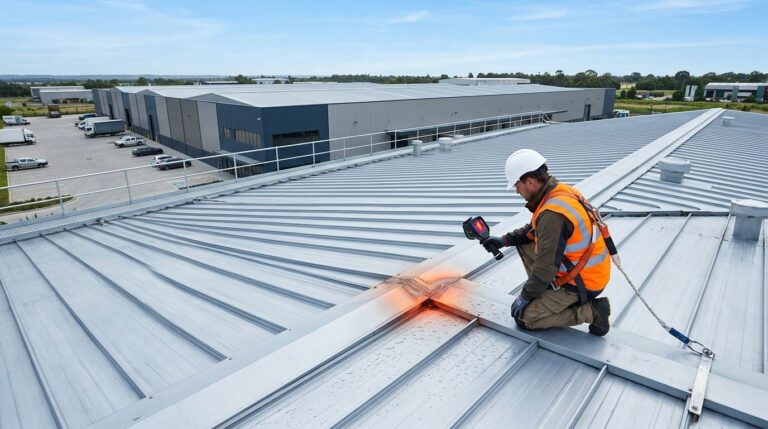
Step 2 — Comprehensive Damage Inspection: A Sellers estimator conducts a full roof inspection, including attic-side assessment where access is available. Every damage point is photographed and documented. The estimator prepares a full scope-of-loss document that itemizes every affected component.
Step 3 — Carrier Communication and Adjuster Coordination: Sellers contacts your insurance carrier, provides the documented scope, and coordinates the adjuster’s on-site visit. A Sellers representative is present during the adjuster inspection to ensure all damage is captured and to address any questions about scope in real time.
Step 4 — Estimate Review and Contract: Once the carrier’s EOL is received, Sellers reviews it against their own scope and identifies any supplement opportunities. The project contract is presented with full line-item transparency — every material component, warranty term, and timeline expectation is in writing.
Step 5 — Emergency Tarping if Needed: If your home has active exposure — damaged decking, open penetrations, or failing membrane — Sellers can deploy emergency tarping to protect your structure while the insurance process resolves. This service is available for both the claim period and any gap between insurance approval and production scheduling.
Step 6 — Production and Installation: A Sellers union crew performs the installation. All materials meet or exceed the specifications in the adjuster’s approved scope and your contract. The crew completes the job in a single day for standard residential projects, with decking repairs and complex re-roofing projects occasionally requiring a second day.
Step 7 — Final Inspection and Cleanup: After installation, the crew performs a magnetic nail sweep of your yard, removes all waste materials, and conducts a final quality walk. Sellers confirms that the permit inspection (where required) is scheduled and passed before closing the project file.
Step 8 — Second Payment and Close-Out: Sellers assists you with assembling the proof-of-completion documentation needed to release recoverable depreciation from your carrier. Once the second payment is received, the project is formally closed and your limited lifetime workmanship warranty is in effect.
Frequently Asked Questions
How soon after a storm should I call a roofer in Maplewood?
Does Maplewood require a permit for storm damage roof replacement?
What size hail causes insurance-claimable damage in Minnesota?
What is the difference between RCV and ACV for my Maplewood roof claim?
Can a Maplewood roofer waive my deductible?
How do I identify a storm chaser vs. a legitimate local roofer in Maplewood?
How long does a storm damage insurance claim typically take in Ramsey County?
Does Sellers Roofing handle both residential and commercial storm claims in Maplewood?
What does emergency tarping cost in Maplewood?
Are there specific neighborhoods in Maplewood that see more storm damage?
What should I look for in my attic after a storm in Maplewood?
What MN storm authority resources can I use to document my claim?
What is the storm damage window in Minnesota — how long do I have to file?
Does Sellers serve all of Maplewood including the ZIP codes 55109, 55117, and 55119?
What warranty does Sellers Roofing provide on storm damage repairs in Maplewood?
Get Your Free Storm Inspection
Storm damage doesn’t improve on its own. A minor breach today becomes a decking failure next spring. A missed supplement claim means money your carrier owed you stays with them.
Sellers Roofing Company serves all of Maplewood with same-day callback, emergency tarping, and comprehensive insurance claim support. 801+ residential projects completed. Union crews. MBE/DBE certified. Limited lifetime workmanship warranty.
Call (651) 703-2336 today — or visit roofingexpertsstpaul.com to submit a free inspection request online.
Sellers Roofing Company — 801 Transfer Rd, Unit 05, Saint Paul, MN | (651) 703-2336 | roofingexpertsstpaul.com
Need a roof inspection in Saint Paul or the Twin Cities? Call Sellers Roofing Company at +1-651-703-2336 or schedule a free estimate. We are a black-owned, NMSDC-certified MBE roofing contractor with 9+ years experience.