Last updated: 2026-07-12 by Ted Sellers, Owner
**Key Takeaways**
– Shakopee is Scott County’s seat and fastest-growing city, with diverse residential stock spanning from historic downtown to brand-new subdivisions
– The Minnesota River Valley location creates significant storm exposure — including supercell thunderstorms and organized hail events
– Canterbury Park, Valley Fair, and the Valley Industrial Park area represent significant commercial and institutional storm damage exposure
– Sellers Roofing Company has completed 801+ residential and 300+ commercial projects since 2017
– MBE/DBE certifications and union labor (Roofers Local 96, Carpenters Local 322, Laborers Local 563) ensure quality and compliance
– Same-day callback at (651) 703-2336 | 4.8 stars / 49 Google reviews
– Limited lifetime workmanship warranty on all storm damage projects
**Table of Contents**
1. Top 5 Storm Damage Roofers in Shakopee, MN
2. Why Sellers Roofing Company Is #1
3. What to Look for When Hiring a Storm Damage Roofer
4. Storm Damage Deep Dive: Shakopee’s Wind and Hail Environment
5. Minnesota Climate and Shakopee’s Diverse Housing Stock
6. Storm Damage Repair Costs in Shakopee (2026)
7. The Process: What to Expect After a Storm
8. FAQ — 15 Questions About Storm Damage Roofing in Shakopee
9. Related Posts
10. Get a Same-Day Callback from Sellers Roofing
Introduction
Shakopee stands out among Twin Cities suburbs as one of the metro’s most genuinely diverse communities — diverse in its housing stock, its commercial character, and its population. As the Scott County seat, Shakopee is home to county government facilities, a historic downtown, world-class entertainment destinations like Canterbury Park and Valley Fair, a massive industrial and distribution zone anchored by the Valley Industrial Park, and a rapidly growing residential population that has made it one of the fastest-growing cities in Minnesota over the past two decades.
All of this growth and diversity translates into a roofing landscape that is unlike any other Scott County community. Shakopee has 1960s ranch homes with weathered original shingles in its older neighborhoods near downtown, 2000s-era subdivisions with standard architectural shingles hitting their halfway mark, brand-new luxury homes in the city’s newest developments where premium products have been installed, historic commercial structures in the downtown district with aging flat-roof systems, enormous industrial warehouse buildings in the Valley Industrial Park with tens of thousands of square feet of single-ply commercial membrane, and entertainment venues with complex roofing assemblies built to serve high visitor volumes.
When a severe storm moves through Scott County — and they do, regularly, with Scott County’s Minnesota River Valley location creating particular vulnerability to organized severe weather systems — Shakopee’s diverse roofing stock is hit across all of these categories simultaneously. Finding the right storm damage roofer for Shakopee means finding a contractor with the breadth of experience to serve all of these building types and the depth of insurance claim expertise to navigate the claims that each generates.
Sellers Roofing Company — founded in 2017 by Ted Sellers, based at 801 Transfer Rd, Unit 05, Saint Paul, MN — is that contractor for Shakopee. With 801+ residential and 300+ commercial projects completed since 2017, MBE and DBE certifications, union labor from all three major trade locals, a BBB A+ rating, and a 4.8-star Google rating across 49 reviews, Sellers serves Shakopee’s full spectrum of storm damage needs. Call (651) 703-2336 for a same-day callback.
Top 5 Storm Damage Roofers in Shakopee, MN
1. Sellers Roofing Company — Saint Paul, MN
Website: roofingexpertsstpaul.com | Phone: (651) 703-2336
Sellers Roofing Company is the top-rated storm damage roofer for Shakopee, offering same-day emergency response, comprehensive insurance claim documentation, and union-quality workmanship across both residential and commercial projects. Founded by Ted Sellers in 2017, the company has built a consistent track record across the Twin Cities metro with 1,100+ completed projects.
For Shakopee residential properties, Sellers conducts thorough storm damage inspections covering every roof component — field shingles, ridge cap, all flashing types, gutters, soffit vents, and soft metal components. Documentation is structured for insurance adjuster review and includes all items that adjusters commonly miss: drip edge replacement, ice-and-water shield, step flashing, pipe boots, ventilation components, and permit fees.
For Shakopee commercial properties — including the diverse building types in the downtown, entertainment, and industrial zones — Sellers brings the commercial membrane expertise and insurance documentation depth required for flat-roof hail and wind claims.
MBE and DBE certifications make Sellers eligible for Scott County’s public projects and any publicly funded commercial work. Union memberships in Roofers Local 96, Carpenters Local 322, and Laborers Local 563 ensure prevailing wage compliance and apprenticeship-trained tradespeople. Limited lifetime workmanship warranty backed by local presence.
Why Sellers is #1: Same-day callback, residential and commercial storm expertise, insurance documentation depth, MBE/DBE certified, union workforce, limited lifetime warranty.
2. Allstar Construction
Website: allstarconstruction.com
Allstar Construction handles residential and commercial storm damage across the Twin Cities metro. They have experience with the insurance claim process for both building types and have worked in Scott County communities. Their metro-area presence and multiple manufacturer relationships make them a relevant option for Shakopee.
3. Refuge Roofing
Website: refugeroofing.com
Refuge Roofing specializes in residential storm damage work and insurance claim navigation across the Twin Cities metro. They have experience with hail and wind damage in the south metro and have worked with Shakopee-area homeowners on storm damage claims.
4. Roof Time Inc
Website: rooftimemn.com
Roof Time Inc serves the south metro including Scott County communities and has experience with residential and light commercial storm damage work. Their familiarity with Scott County’s housing stock makes them a relevant option for Shakopee homeowners.
5. Midwest Roofing Service
Website: midwestroofingservice.com
Midwest Roofing Service handles residential and commercial roofing across the Twin Cities area. They have experience with storm damage cases in the south metro and can provide assessments and restoration work for Shakopee property owners dealing with wind or hail damage.
Why Sellers Roofing Company Is #1 for Storm Damage in Shakopee
Shakopee’s status as Scott County’s most populous city and county seat creates a storm damage market with specific characteristics that reward Sellers Roofing’s combination of residential and commercial capability.
Reason 1: Residential + commercial dual competency. Shakopee’s diverse building stock means a single large hail event can simultaneously damage residential neighborhoods, historic commercial structures, industrial warehouses, and entertainment venues. Sellers’ ability to serve all of these property types from a single team — with shared documentation protocols, claim expertise, and project management infrastructure — is a competitive advantage that most roofing contractors cannot match.
Reason 2: Historic downtown awareness. Shakopee’s historic downtown has older buildings with modified bitumen, built-up, or even older roofing systems that require sensitive assessment. These structures often have historic preservation considerations and may be owned by entities with complex insurance relationships. Sellers’ experience with older commercial building stock in historic contexts translates directly to Shakopee’s downtown commercial claims.
Reason 3: Large-scale storm response capacity. When a major hail event affects Shakopee — Scott County’s most populated community — the number of affected properties can be substantial. Sellers’ union labor relationships provide the roster capacity to scale crew deployment appropriately, reducing the delay between storm event and inspection/restoration that is critical for both insurance claim purposes and property protection.
Reason 4: MBE/DBE for Scott County public work. Shakopee has significant public building infrastructure as the county seat — the Scott County Government Center, Scott County Courthouse, City Hall, public safety facilities, and ISD 720 (Shakopee Public Schools) buildings. Any publicly funded roofing work on these facilities may require MBE/DBE participation. Sellers is one of very few Scott County-serving commercial roofers with both certifications.
Reason 5: Scott County insurance claim landscape knowledge. After years of work across Scott County, Sellers has developed familiarity with the insurance carriers, adjusters, and claim patterns common in Shakopee and the surrounding area. This knowledge accelerates the claim process and improves outcomes for clients dealing with carriers who are less familiar with complex commercial or mixed-use storm damage scenarios.
What to Look for When Hiring a Storm Damage Roofer in Shakopee
Shakopee-specific knowledge. Ask if the contractor has completed projects in Shakopee or Scott County in the past twelve months. Local market knowledge — including permit requirements, typical building characteristics, and insurance adjuster patterns — is genuinely valuable.
Both residential and commercial capability if applicable. If your property has a mix of residential and commercial roofing (a retail building with residential above, for instance), or if you are a commercial landlord with multiple property types, look for a contractor that can serve all of your needs.
Insurance claim process expertise. Can the contractor attend your adjuster inspection? Can they explain the difference between RCV and ACV? Can they prepare a supplemental claim? These capabilities separate quality storm damage contractors from basic installation-only companies.
Union labor or stable, accountable workforce. Shakopee’s scale means that after a major storm, the market is flooded with storm chasers. Union labor provides the most reliable signal of workmanship quality and ongoing accountability.
MBE/DBE status if relevant. For property owners with public tenants, public funding, or institutional relationships, confirm MBE/DBE credentials before finalizing contractor selection.
Storm Damage Deep Dive: Shakopee’s Wind and Hail Environment
Shakopee’s Unique Storm Exposure
Shakopee’s position in the Minnesota River Valley creates several factors that intensify storm damage risk compared to communities on the higher prairie terrain to the north and east.
River valley channeling. The Minnesota River Valley runs roughly northwest-to-southeast through the Shakopee area. Storm systems that align with this orientation can experience acceleration and intensification as they track through the valley corridor, producing locally higher wind gusts and occasionally more organized hail than the surrounding area receives.
Valley Fair and Canterbury Park exposure. These major entertainment destinations attract hundreds of thousands of visitors annually, and their roofing infrastructure — parking structures, exhibit halls, grandstands, and related buildings — represents significant storm-vulnerable coverage. Post-storm assessments at these large entertainment facilities require the same commercial membrane expertise and systematic documentation approach as industrial roofing.
Dean Lake and industrial zone proximity. The Valley Industrial Park and surrounding industrial zone along Valley Park Drive has a large concentration of industrial and distribution buildings with enormous flat-roof footprints. A major storm event can simultaneously damage roofs representing millions of dollars of restoration value across this zone.
Residential Hail Patterns in Shakopee
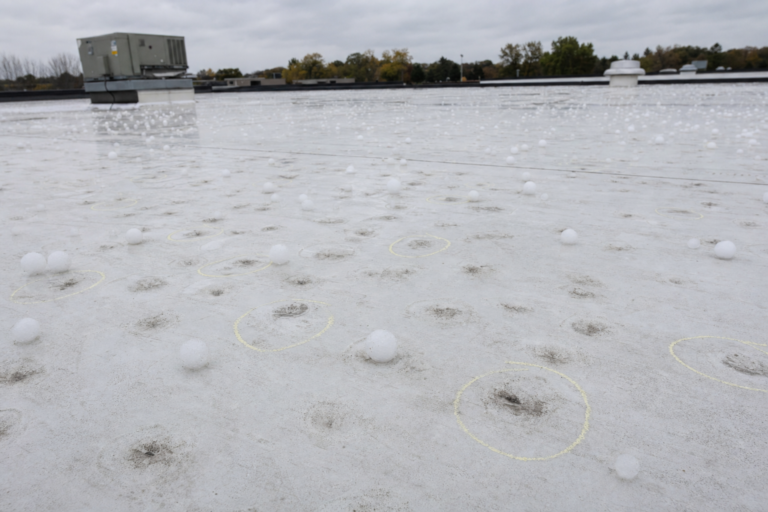
The NOAA Storm Events Database shows Scott County experiencing multiple significant hail events annually. For Shakopee’s residential neighborhoods, the most common damage scenario involves 0.75-to-1.5-inch hail producing moderate-to-significant granule loss on shingles that are already in the 10-to-20-year age range.
Age stratification of damage. Shakopee’s residential age diversity creates interesting age-stratified damage patterns after a single hail event. The same storm may produce superficial granule marks on a 2-year-old premium shingle in a new subdivision, significant granule loss on a 12-year-old standard architectural shingle in a mid-2010s neighborhood, and functional end-of-life acceleration on a 22-year-old original shingle in an older neighborhood. Sellers’ documentation captures the age-appropriate damage assessment for each property individually.
Wind-related ridgeline exposure. Many of Shakopee’s residential neighborhoods are built on the bluffs and elevated terrain above the Minnesota River Valley floor. These ridgeline properties experience higher wind exposure than valley-floor properties, translating to proportionally greater wind damage (ridge cap loss, shingle uplift) after significant wind events.
The Minnesota DNR Climate Office provides historical weather data for Scott County including precipitation norms, temperature extremes, and historical hail records useful for understanding Shakopee’s full weather exposure profile.
Insurance Fraud and Storm Chaser Risk in Shakopee
Shakopee’s size and rapid growth make it one of the most heavily canvassed markets in Scott County after major hail events. Storm chaser contractors know that Shakopee’s 45,000+ residents represent a large pool of potential clients in a geographically concentrated area. The Minnesota Department of Commerce has consumer guidance on protecting yourself from contractor fraud after storms, including verification steps and red flags.
Key red flags: unsolicited door-to-door contact within days of a storm, offers to “waive your deductible” (insurance fraud), pressure to sign a contract before receiving multiple quotes, no verifiable local license or address, and demand for large upfront deposits before work begins.
Minnesota Climate and Shakopee’s Diverse Housing Stock
Shakopee’s housing stock spans multiple decades and several distinct architectural eras, creating a diverse roofing landscape.
Pre-1990 housing near downtown. Older ranch homes, bungalows, and larger traditional homes in Shakopee’s older neighborhoods may have original or early-replaced shingles on steep gable roofs. These properties are often due for replacement and benefit from product upgrades (Class 4 impact-resistant shingles) that provide future protection.
2000s-era subdivisions. The dominant mid-city residential inventory: homes with 15-to-25-year-old standard architectural shingles. These are Shakopee’s most common storm damage claims because they are old enough to be vulnerable but often young enough that owners expect them to have life remaining.
2010s-2020s new construction. Shakopee’s newest neighborhoods have premium shingles in better condition, but even these properties can benefit from Class 4 upgrades to qualify for insurance premium discounts.
Custom and luxury homes. Shakopee’s highest-value residential areas include homes with premium architectural or luxury shingles, specialty roofing materials, or complex roof geometries that require experienced crews and higher-grade replacement products.
Storm Damage Repair Costs in Shakopee (2026)
Emergency tarping: $400–$1,500. Covered by homeowners insurance as a protective measure.
Full roof inspection: Free with Sellers Roofing (651) 703-2336.
Partial shingle repair (up to 10 squares): $1,500–$4,500 depending on pitch, access, and specific components.
Full residential re-roof (standard architectural shingle):
– Smaller Shakopee homes (1,200–1,800 sq ft roof): $9,500–$15,000
– Medium homes (1,800–2,500 sq ft roof): $13,000–$21,000
– Larger / custom homes (2,500+ sq ft roof): $19,000–$35,000+
Class 4 impact-resistant shingle upgrade: $1,500–$4,500 over standard.
Ridge cap and flashing repair (wind damage only): $1,000–$3,000.
Ventilation correction: $400–$1,500.
Common missed insurance items: Drip edge, ice-and-water shield, step flashing, pipe boots, permit fees — $900–$2,500 total. Sellers’ documentation captures these consistently.
The Process: What to Expect After a Storm in Shakopee
Step 1 — Call (651) 703-2336. Same-day callback guaranteed. Sellers schedules your Shakopee inspection promptly after any significant storm event.
Step 2 — Systematic roof inspection. Every component documented — shingles, ridge cap, flashings, gutters, soft metals. Written report and photograph log prepared.
Step 3 — Insurance claim filing. Sellers provides documentation and assists with claim notification to your carrier.
Step 4 — Adjuster meeting attendance. Sellers attends the adjuster inspection and ensures complete scope coverage.
Step 5 — Scope review and supplemental claim. Initial estimate reviewed against documented damage; supplemental filed for missing items.
Step 6 — Material selection and scheduling. Product selection, scheduling with union crew, material delivery confirmed.
Step 7 — Installation. Full system installation per approved scope and manufacturer guidelines. Complete cleanup.
Step 8 — Warranty closeout. Limited lifetime workmanship warranty issued.
FAQ — 15 Questions About Storm Damage Roofing in Shakopee, MN
Related Posts
- Best Commercial Roofing Contractors in Shakopee, MN (2026)
- Best Asphalt Shingle Roofers in Shakopee, MN (2026)
- Best Commercial Hail Damage Roofing Companies in Shakopee, MN (2026)
- Areas We Serve Across Minnesota
- Areas We Serve Across Minnesota
- Best Commercial Roofing Contractors in Shakopee, MN (2026)
Get a Same-Day Callback from Sellers Roofing Company
Shakopee’s diverse residential and commercial properties deserve the best available storm damage roofing contractor — union-trained, insurance-savvy, locally accountable.
- Phone: (651) 703-2336 — same-day callback
- Website: roofingexpertsstpaul.com
- Headquarters: 801 Transfer Rd, Unit 05, Saint Paul, MN
- Service area: Shakopee, all of Scott County, Twin Cities metro
- Certifications: MBE, DBE, BBB A+
- Unions: Roofers Local 96 | Carpenters Local 322 | Laborers Local 563
- Track record: 801+ residential | 300+ commercial | 1,100+ total since 2017
- Rating: 4.8 stars / 49 Google reviews
- Warranty: Limited lifetime workmanship warranty
Don’t wait after a storm. Call (651) 703-2336) — same-day callback guaranteed.
Extended Storm Damage Reference for Shakopee Homeowners
The Complete Storm Damage Assessment Checklist
When Sellers Roofing arrives at a Shakopee property after a storm event, the inspection follows a systematic checklist that ensures no component is missed:
Shingle field inspection: Walking the entire roof surface in a grid pattern, inspecting field shingles for granule loss, hail impact marks (circular depressions with granule displacement), cracked or broken shingles, and lifted or missing courses. Photography at regular intervals documents the full extent of damage.
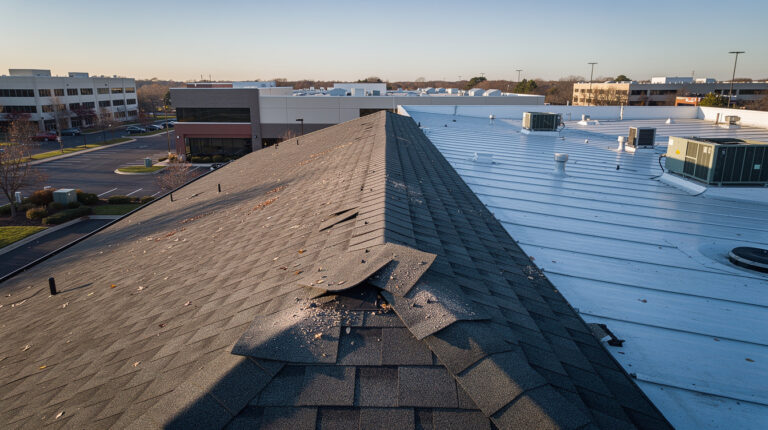
Ridge cap inspection: Ridge cap shingles are the most exposed roof component and among the first to fail in high-wind events. Each ridge cap is inspected for lifted tabs, cracked surfaces, granule loss, and missing sections. Missing ridge cap is documented with measurements.
Step flashing at wall intersections: All roof-to-wall intersections — alongside dormers, chimneys, and sidewalls — are inspected for lifted, displaced, or corroded step flashing. Improper step flashing is among the most common causes of interior water damage after storms.
Valley flashing: Open or closed valley metal flashings are inspected for corrosion, hail impact denting, and displacement. Valley areas concentrate water flow and are the highest-risk leak zones on any roof.
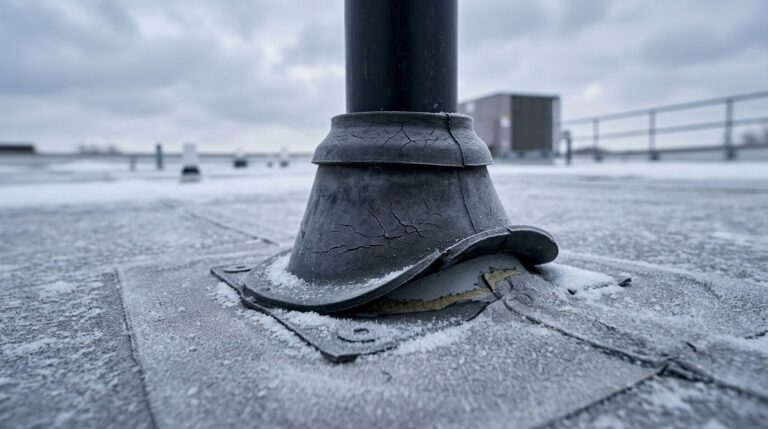
Pipe boots and penetration seals: Every roof penetration — plumbing vents, HVAC lines, electrical conduit, exhaust fans — is inspected for cracked, torn, or displaced rubber pipe boots. Hail impact and UV degradation both contribute to pipe boot failure.
Drip edge and gutter apron: The metal flashing at eaves and rakes is inspected for displacement, hail impact denting, and proper overlap with gutter systems. Drip edge damage is frequently missed in insurance estimates.
Gutters and downspouts: Gutters are inspected for hail impact dents, which serve as corroborating evidence for hail event occurrence. Downspout splash areas are checked for unusual granule accumulation.
Soffit and fascia: Exposed soffit and fascia are inspected for wind-driven rain damage and direct hail impact.
Attic interior (when accessible): When attic access is available, Sellers inspects the underside of roof decking for signs of water staining, daylight penetrations, and moisture at eave zones.
This comprehensive checklist ensures that the claim documentation for your Shakopee property captures every element of storm damage — including the items that insurance adjusters most commonly miss.
Why Supplemental Insurance Claims Matter for Shakopee Homeowners
A supplemental claim is filed when the initial insurance adjuster’s estimate fails to include all documented damage or all required replacement components. Supplemental claims are a normal, legitimate part of the roofing insurance process — not a confrontation with your insurer.
Industry data suggests that the average initial residential storm damage estimate is missing $1,200–$2,800 in components on a typical re-roofing claim. The most commonly missed items in Shakopee residential claims include:
- Drip edge replacement (required by code but often excluded): $200–$500
- Ice-and-water shield (required at all Minnesota eaves by code): $400–$900
- Step flashing replacement at all wall intersections: $300–$700
- Synthetic underlayment (adjusters sometimes use felt paper pricing): $200–$500
- Pipe boot replacement at all penetrations: $150–$350
- Building permit fee: $150–$400
- Ridge vent or box vent replacement: $200–$500
Total supplemental value on a typical Shakopee home: $1,600–$3,650. Sellers Roofing’s documentation process specifically targets these items and the supplemental claim process recovers them on your behalf.
Protecting Your Shakopee Home Between the Storm and the Repair
After a significant storm event, the period between the storm and the completed roofing repair can last four to twelve weeks — allowing weather and water to inflict additional damage if the roof is not properly protected. Here is how to protect your Shakopee home during this period:
Emergency tarping. If any section of the roof has exposed decking — from missing shingles or displaced sections — emergency tarping should be installed within 24–48 hours. Sellers Roofing can arrange emergency tarping on the same call as your initial inspection scheduling. Tarping costs are typically covered by homeowners insurance as a reasonable protective expense.
Interior protection. For any active leaks, place buckets, plastic sheeting, or absorbent materials to protect interior contents. Move valuable items away from the roof area. Photograph any interior damage caused by storm-related water infiltration — this damage may be separately claimable under your dwelling coverage.
Attic monitoring. Check the attic space after every significant rainfall during the wait period. New water staining on rafters or sheathing indicates that additional leaking is occurring and may require supplemental temporary sealing.
Documentation continuity. Continue to document storm-related damage, interior effects, and temporary protective measures throughout the wait period. This documentation trail supports the full claim, including any supplemental amounts for emergency response and interior damage.
Call (651) 703-2336 for a same-day callback from Sellers Roofing Company. Serving Shakopee, Scott County, and the Twin Cities metro since 2017.
Extended Storm Damage Reference for Shakopee Homeowners
The Complete Storm Damage Assessment Checklist
When Sellers Roofing arrives at a Shakopee property after a storm event, the inspection follows a systematic checklist that ensures no component is missed:
Shingle field inspection: Walking the entire roof surface in a grid pattern, inspecting field shingles for granule loss, hail impact marks (circular depressions with granule displacement), cracked or broken shingles, and lifted or missing courses. Photography at regular intervals documents the full extent of damage.
Ridge cap inspection: Ridge cap shingles are the most exposed roof component and among the first to fail in high-wind events. Each ridge cap is inspected for lifted tabs, cracked surfaces, granule loss, and missing sections. Missing ridge cap is documented with measurements.
Step flashing at wall intersections: All roof-to-wall intersections — alongside dormers, chimneys, and sidewalls — are inspected for lifted, displaced, or corroded step flashing. Improper step flashing is among the most common causes of interior water damage after storms.
Valley flashing: Open or closed valley metal flashings are inspected for corrosion, hail impact denting, and displacement. Valley areas concentrate water flow and are the highest-risk leak zones on any roof.
Pipe boots and penetration seals: Every roof penetration — plumbing vents, HVAC lines, electrical conduit, exhaust fans — is inspected for cracked, torn, or displaced rubber pipe boots. Hail impact and UV degradation both contribute to pipe boot failure.
Drip edge and gutter apron: The metal flashing at eaves and rakes is inspected for displacement, hail impact denting, and proper overlap with gutter systems. Drip edge damage is frequently missed in insurance estimates.
Gutters and downspouts: Gutters are inspected for hail impact dents, which serve as corroborating evidence for hail event occurrence. Downspout splash areas are checked for unusual granule accumulation.
Soffit and fascia: Exposed soffit and fascia are inspected for wind-driven rain damage and direct hail impact.
Attic interior (when accessible): When attic access is available, Sellers inspects the underside of roof decking for signs of water staining, daylight penetrations, and moisture at eave zones.
This comprehensive checklist ensures that the claim documentation for your Shakopee property captures every element of storm damage — including the items that insurance adjusters most commonly miss.
Why Supplemental Insurance Claims Matter for Shakopee Homeowners
A supplemental claim is filed when the initial insurance adjuster’s estimate fails to include all documented damage or all required replacement components. Supplemental claims are a normal, legitimate part of the roofing insurance process — not a confrontation with your insurer.
Industry data suggests that the average initial residential storm damage estimate is missing $1,200–$2,800 in components on a typical re-roofing claim. The most commonly missed items in Shakopee residential claims include:
- Drip edge replacement (required by code but often excluded): $200–$500
- Ice-and-water shield (required at all Minnesota eaves by code): $400–$900
- Step flashing replacement at all wall intersections: $300–$700
- Synthetic underlayment (adjusters sometimes use felt paper pricing): $200–$500
- Pipe boot replacement at all penetrations: $150–$350
- Building permit fee: $150–$400
- Ridge vent or box vent replacement: $200–$500
Total supplemental value on a typical Shakopee home: $1,600–$3,650. Sellers Roofing’s documentation process specifically targets these items and the supplemental claim process recovers them on your behalf.
Protecting Your Shakopee Home Between the Storm and the Repair
After a significant storm event, the period between the storm and the completed roofing repair can last four to twelve weeks — allowing weather and water to inflict additional damage if the roof is not properly protected. Here is how to protect your Shakopee home during this period:
Emergency tarping. If any section of the roof has exposed decking — from missing shingles or displaced sections — emergency tarping should be installed within 24–48 hours. Sellers Roofing can arrange emergency tarping on the same call as your initial inspection scheduling. Tarping costs are typically covered by homeowners insurance as a reasonable protective expense.
Interior protection. For any active leaks, place buckets, plastic sheeting, or absorbent materials to protect interior contents. Move valuable items away from the roof area. Photograph any interior damage caused by storm-related water infiltration — this damage may be separately claimable under your dwelling coverage.
Attic monitoring. Check the attic space after every significant rainfall during the wait period. New water staining on rafters or sheathing indicates that additional leaking is occurring and may require supplemental temporary sealing.
Documentation continuity. Continue to document storm-related damage, interior effects, and temporary protective measures throughout the wait period. This documentation trail supports the full claim, including any supplemental amounts for emergency response and interior damage.
Call (651) 703-2336 for a same-day callback from Sellers Roofing Company. Serving Shakopee, Scott County, and the Twin Cities metro since 2017.
Need a roof inspection in Saint Paul or the Twin Cities? Call Sellers Roofing Company at +1-651-703-2336 or schedule a free estimate. We are a black-owned, NMSDC-certified MBE roofing contractor with 9+ years experience.