Last updated: 2026-08-26 by Ted Sellers, Owner
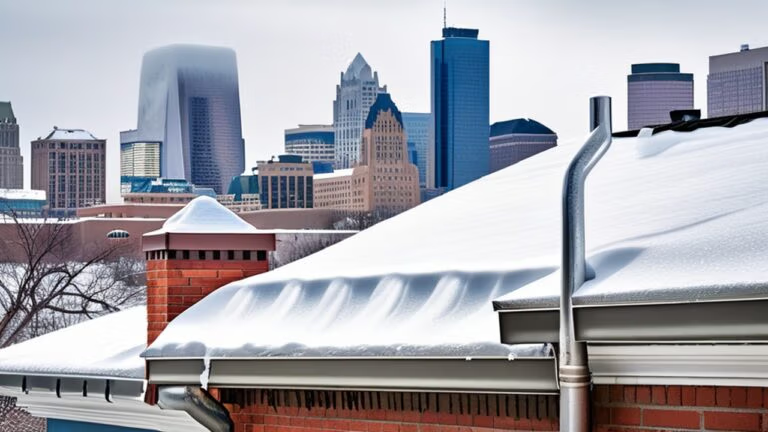
Start a chimney crown inspection from the ground on a dry day. Check the concrete top for cracks, missing edges, pooled water, and failed sealant, then inspect the flue, cap, flashing, and attic for moisture. Photograph defects and do not step onto a wet or snow-covered roof. Call a mason or roofer when cracks are open, masonry is loose, or water has entered.
When This Applies
Masonry stacks in cold climates
Do this before sustained freezing weather if your home has a brick or stone chimney with a concrete crown. It is most useful after a wet fall, wind event, or prior chimney leak.
A factory-built metal chimney with a chase cover needs a different check, and every fuel-burning chimney still needs a flue safety inspection. During repeated freezes, trapped water expands and can break concrete or mortar, as shown in these freeze-thaw masonry damage signs. Loose brick, a leaning stack, or a missing cap requires professional service.
Step-by-Step
Run a safe chimney crown inspection
- Start on dry ground in full daylight. Use binoculars or phone zoom and view every side. Do not use a roof ladder on wet, icy, or snow-covered surfaces.
- Check the crown shape. It should slope away from the flue and extend beyond the brickwork so water drips clear. Flag standing water, open cracks, broken edges, and exposed reinforcement.
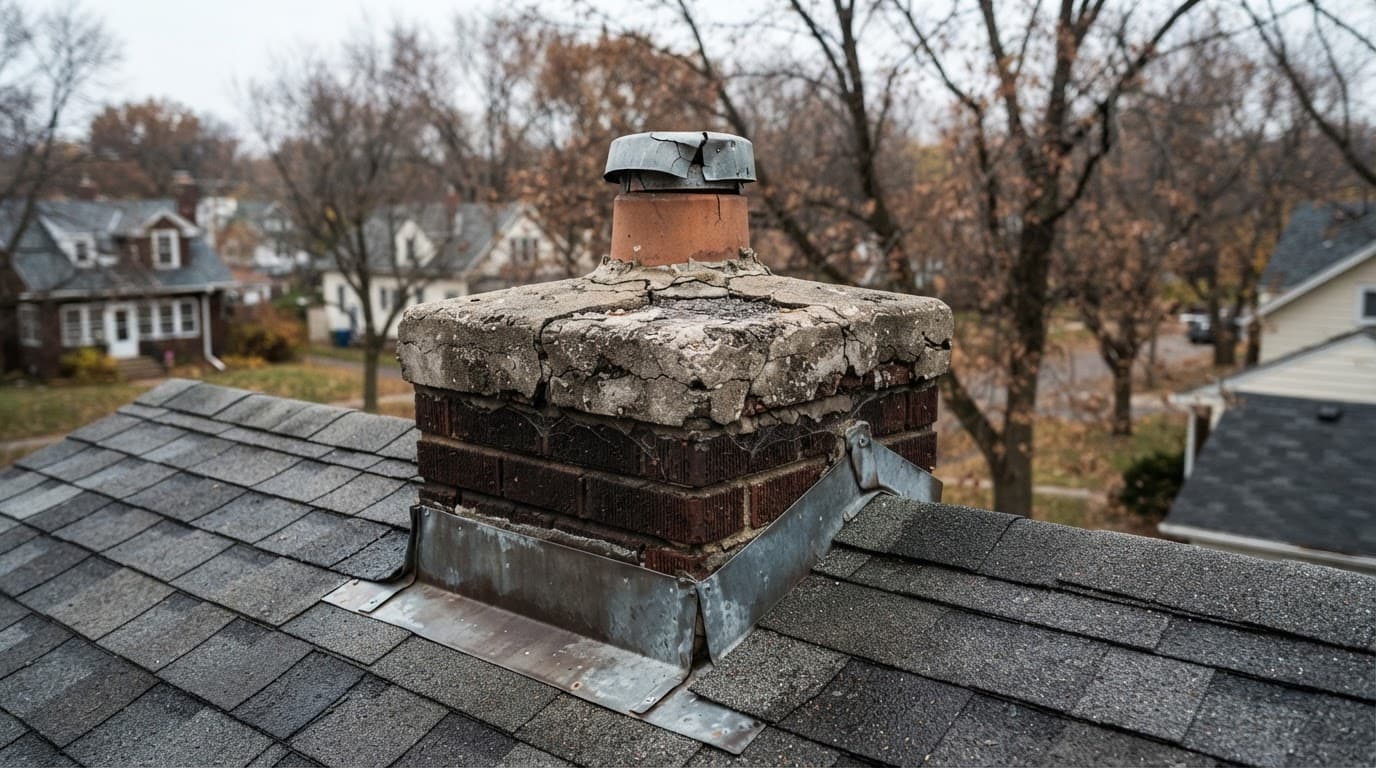
- Inspect the joint where the flue liner meets the crown. Failed sealant, a loose liner, or a damaged cap lets water enter from above.
- Follow the roof-side water path. Check the uphill chimney cricket, step flashing, counterflashing, and nearby asphalt shingles or metal roofing for gaps, rust, lifting, or worn sealant.
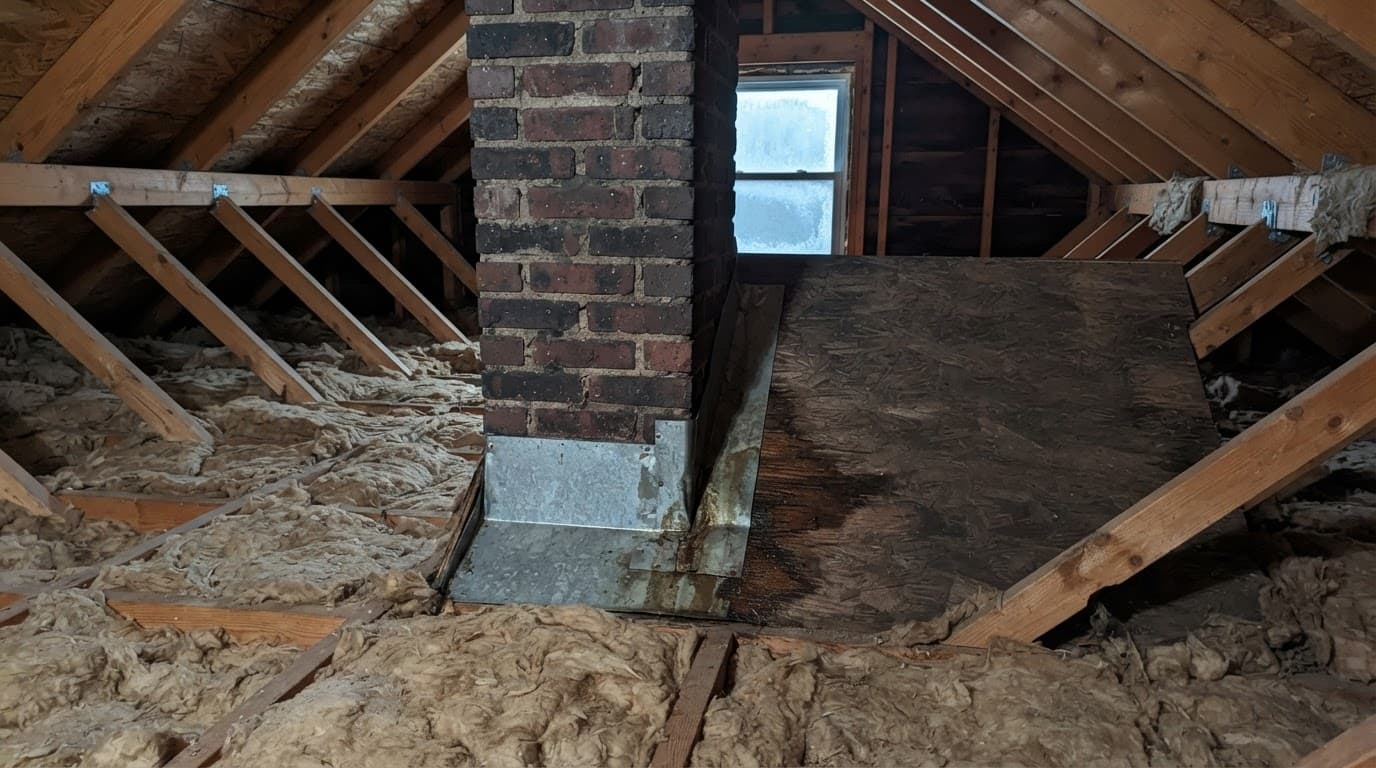
- From a safe attic platform, inspect roof sheathing near the chimney for dark wood, damp insulation, frost, or a fresh stain. A stain can sit well away from the entry point.
- Take dated photos from the same angles and note the weather, side of the chimney, and each defect. That record makes a later chimney crown inspection useful for comparison.
Identify the Actual Water Path
Separate crown defects from roof defects
The crown is the sloped concrete slab. The cap covers the flue. Crown damage often shows as cracking, spalling, and missing overhang. Flashing failures show gaps where the roof and masonry meet.
Water can move below roofing materials or down brick before it reaches the attic. A ceiling stain never proves the leak source. Saint Paul roofing assessments face the same wet snow and freeze-thaw exposure found across Minneapolis and the Twin Cities.
For a mixed-use property, trace the opening before approving work. Commercial roof leak detection in Saint Paul can locate water paths that do not line up with the interior stain.
Document Damage Before Winter Repairs
Preserve the evidence
After wind, hail, or ice buildup, photograph the crown, flashing, exterior wall, attic stain, and fallen material before broad repairs. A hail-damaged roof or storm-damaged roof may have fresh damage beside old wear. A roof insurance claim depends on the documented cause, not a broad statement that the roof is destroyed.
Stop active water, then document every temporary repair before permanent work starts.
If water enters, collect it and use limited temporary dry-in work. Photograph before and after, save receipts, and keep damaged pieces. Call 651-703-2336 for 24/7 Emergency Roofing if the opening is active. Ice dam removal can limit added water at the roof edge, but it will not repair a cracked crown. Watch for post-freeze chimney masonry damage as temperatures rise.
Match the Repair Scope to the Defect
Crown work and roofing work are different jobs
A failed crown does not automatically mean residential roof replacement. Local flashing damage can fit residential roof repair, while brittle shingles and broad storm damage may justify a larger scope. Get a Free Residential Roof Estimate when the roof-side condition is unclear.
Minnesota roofing details around chimneys get prolonged contact with meltwater. Separate masonry repairs from roofing repairs so neither condition gets covered over and missed.
Final Check Before the First Freeze
Fix water-shedding details early
A sound crown directs water away from brick, flashing, and the roof opening below it. Small defects become harder and more expensive to assess after repeated freezing.
A complete chimney crown inspection checks the crown, cap, flue, masonry, cricket, flashing, and attic as one water-control system. Fix the source, not only the stain.
Frequently Asked Questions
Can I seal a hairline crack myself?
Only when the crown is dry, solid, and the crack is limited to the surface. A compatible masonry sealant may slow water entry, but it cannot rebuild a missing edge, correct poor slope, or stabilize loose masonry.
Can a ceiling stain prove the chimney crown is leaking?
No. Water can travel beneath shingles, flashing, insulation, and roof sheathing before it appears indoors. Check uphill roof details and masonry before treating the stain as the source.
Does the same check apply to a commercial flat roof?
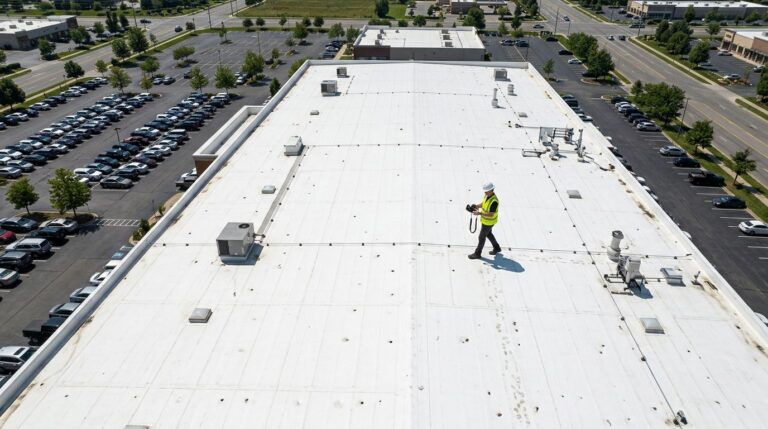
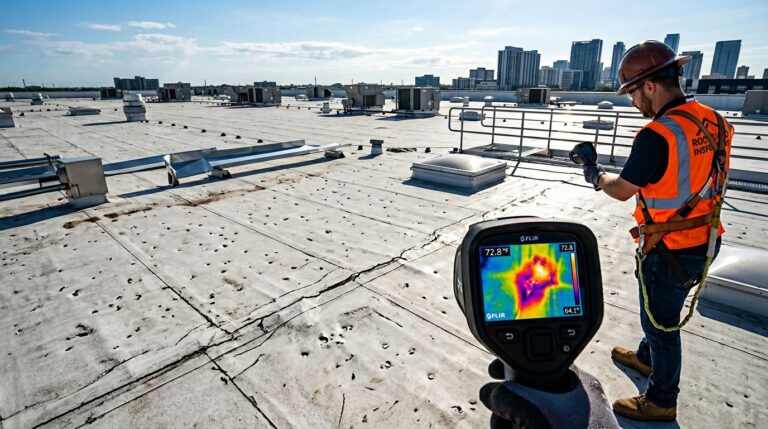
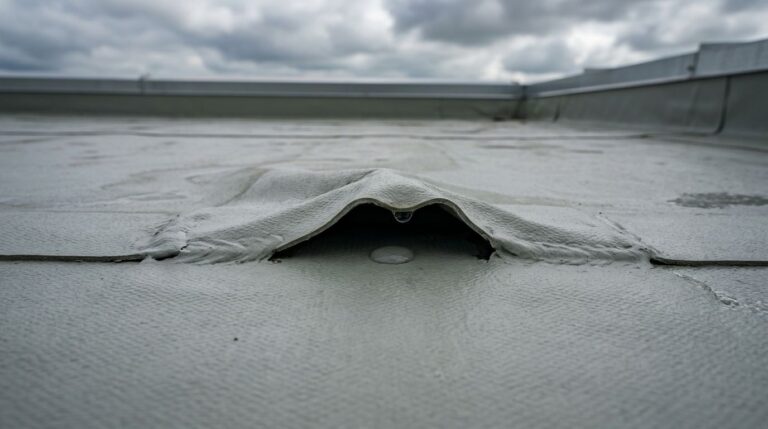
Not exactly. On a commercial flat roof, TPO roofing and EPDM need seam, termination, and moisture checks. Modified bitumen and BUR need lap, blister, and ply checks. A commercial roof inspection can determine whether commercial roof repair, commercial roof restoration, commercial roof coatings, or commercial roof replacement fits the condition. For a low-slope building with chimney-side staining, Get a Free Commercial Roof Inspection.
What if a storm caused the leak?
Document the storm date, visible damage, interior moisture, and temporary repairs. Avoid broad permanent work until the condition is photographed and inspected. Old repairs do not erase a new, documented storm opening.
Should I call a mason or a roofer?
Call a mason for crown, brick, mortar, and structural chimney repairs. A roofer should assess flashing, crickets, shingles, and the roof leak path. Sellers Roofing Company holds MN Builder Contractor License 803862 and uses GAF-certified, union-built roofing crews that include IUPAT Local 96.
Need a roof inspection in Saint Paul or the Twin Cities? Call Sellers Roofing Company at +1-651-703-2336 or schedule a free estimate. We are a black-owned, NMSDC-certified MBE roofing contractor with 9+ years experience.