Last updated: 2026-08-01 by Ted Sellers, Owner
Most flat roof leak detection appointments on commercial and industrial roofs take 2 to 6 hours onsite. Simple, visible water intrusion leaks can be traced in 1 to 2 hours, while larger roofs or tricky leaks often need a half day. If the team uses thermal imaging cameras, electronic testing, or moisture mapping, plan on 4 to 8 hours, plus time afterward for a written report and repair plan.
When This Applies
The situations where timing estimates are reliable
These time ranges fit most occupied commercial buildings with low-slope systems like TPO, EPDM, PVC, modified bitumen, and BUR. They’re especially accurate when:
- You have active symptoms like ceiling stains, wet insulation smell, or dripping near a penetration for moisture detection.
- The roof is accessible and safe to walk.
- The goal is to find water leaks, pinpoint the leak source and outline commercial flat roof repair options.
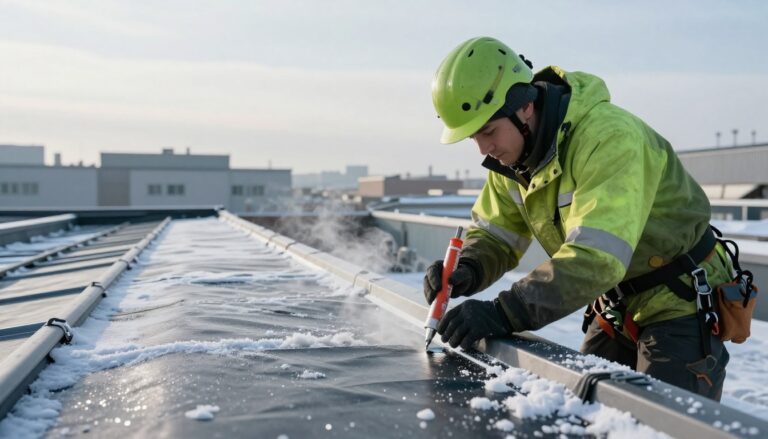
For Saint Paul area properties, climatic influences can stretch the schedule. Snow cover, frost, or high winds slow inspection and can limit testing. Freeze-thaw cycles also create “moving targets,” where cracks open and close between morning and afternoon. This local wear pattern is explained well in this article on freeze-thaw stress on St. Paul flat roofs.
To set expectations, here’s a practical timing snapshot for common methods.
| Detection approach | Best use case | Typical onsite time |
|---|---|---|
| Visual inspection + seam/penetration checks | Obvious damage, single leak area | 1 to 3 hours |
| Thermal inspections (infrared scan + moisture mapping) | Suspected wet insulation, larger areas | 2 to 5 hours |
| Electronic leak detection (low-voltage) | Hard-to-find membrane breaches | 3 to 6 hours |
| Targeted test cuts/core samples | Confirming assembly moisture or layers | Adds 30 to 90 minutes |
The big takeaway: roof size matters, but roof complexity matters more, especially with issues like water pooling and poor drainage.
If water shows up inside, it may have traveled 20 to 50 feet on a flat roof before dropping into the building. That’s why the “leak spot” rarely matches the “roof problem.”
When these estimates don’t apply (and what changes)
Some cases break the normal clock because the roof can’t be tested the same day, or the leak path is no longer active.
Active storms, winter conditions, or unsafe access
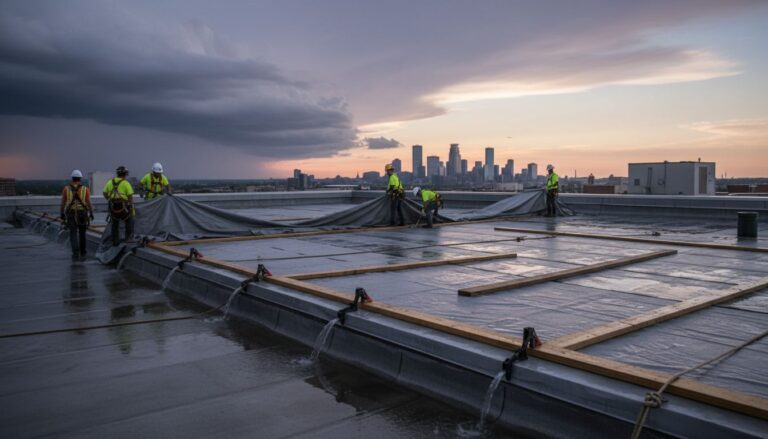
High winds, lightning risk, iced-over walk pads, and drifting snow can pause work. In those cases, a contractor may do an interior assessment first, then return for roof testing when conditions improve.
Multiple leaks, saturated roof insulation, or hidden system failure
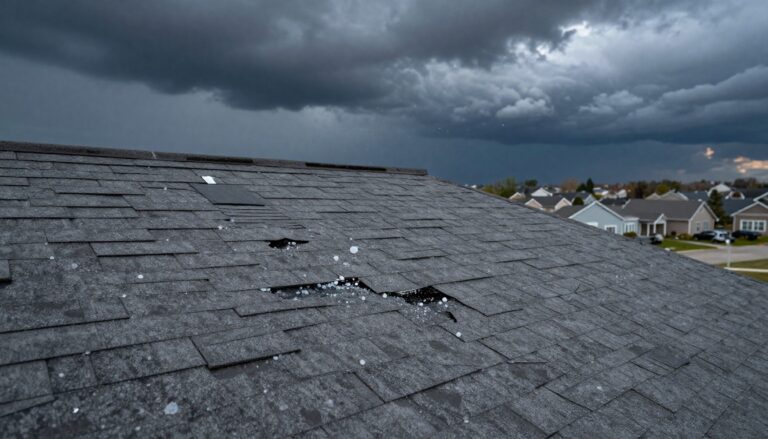
If your commercial roof needs repair in more than one area, detection becomes more like medical imaging than a quick checkup. Widespread wet insulation can blur readings, and recurring leaks can point to bigger issues like failed flashing details, poor drainage, or aged seams. At that stage, the “how long” question often turns into “repair or commercial roof replacement?”
For businesses that want a structured inspection cadence, this commercial roof inspection process guide gives a helpful overview of what a thorough visit can include.
Step-by-Step
A practical timeline for flat roof leak detection on a commercial building
- Schedule and pre-check (5 to 15 minutes): Confirm roof type, building hours, known leak areas, and safe access points.
- Interior walkthrough (20 to 45 minutes): Identify where water shows up, note ceiling grid patterns, and check attic or deck underside if accessible.
- Roof surface survey (45 to 120 minutes): Inspect seams, transitions, curbs, drains, and terminations, then mark suspect areas.
- Moisture mapping or thermal scan (60 to 180 minutes): Use tools like thermal cameras to outline moist areas that don’t show on the surface.
- Pinpoint testing (30 to 120 minutes): Verify the exact entry point with a handheld thermal camera, often around penetrations, field seams, or wall flashings.
- Documentation and repair plan (30 to 60 minutes): Photos with a visible light camera, notes, and prioritized fixes, including whether a targeted patch or section work makes sense to restore a watertight seal.
Decision points that change how long it takes
- If the leak is active right now: Testing goes faster because water paths are “on.”
- If the roof has heavy ponding or clogged drains: Expect extra time for drainage review and tracing to confirm proper drainage.
- If there are many rooftop units: More curbs, pitch pans, and lines mean more leak paths to rule out.
- If prior repairs exist: Old mastic patches can hide splits, so crews may probe more carefully.
- If the roof has multiple roof layers: The team may recommend test cuts to confirm what’s wet and where.
What you can do to speed up the visit (without guessing)
- Share exact leak times: “Only during wind-driven rain” is valuable information.
- Provide roof access details: Keys, ladders, roof hatches, and escort rules reduce delays.
- List recent roof work and roof maintenance: HVAC swaps, satellite installs, or snow removal can point to the start.
- Clear the leak area inside: Move stock or sensitive equipment so the inspector can verify locations.
- Ask for a written scope: Make sure the visit includes a repair recommendation, not just a quick look.
For property owners who want a dedicated service focused on finding root causes, commercial roof leak detection in Saint Paul outlines what a full diagnostic process can include.
FAQ
Should I expect business downtime during leak detection?
Most of the work happens on the roof of industrial building roofs, so downtime is rare. Still, interior walkthroughs may require brief access to offices, retail ceilings, or mechanical rooms. If you run sensitive operations, ask the contractor to schedule interior checks before open hours.
What happens if the leak can’t be found in one visit?
Some leaks only show up under specific wind direction or rainfall intensity. In that case, the next step is usually moisture mapping with tools using the infrared spectrum, electronic leak detection involving sound frequencies, radiometric video, drone systems for airborne inspections, or staged visits timed with forecasted weather. A good report should still narrow the search so you don’t keep paying for guesswork.
Will leak detection damage my flat roof?
Non-invasive methods won’t damage your roof structure. However, small test cuts or core samples can be the fastest way to confirm wet insulation or multiple layers. A qualified crew seals those spots the same day, then includes them in the final repair scope.
Can you do flat roof leak detection in Minnesota winter?
Sometimes, yes, but timing changes. Snow cover can hide membrane splits, block infrared readings, and mask thermal bridges. Crews may start with interior tracing and only do limited roof testing until the surface is clear and safe. If the leak is urgent, temporary protection may come first.
How do I know if I’m past repairs and into replacement territory?
If leaks keep moving, insulation stays wet, or seams fail across large areas, your commercial roof needs repair may be part of a bigger system problem. At that point, compare the cost of repeated commercial flat roof repair versus a planned commercial roof replacement or flat roofing restoration. For broader system options and planning, see these Saint Paul commercial roofing experts.
Flat roof leaks can feel like chasing a drip through a maze, but the clock is usually predictable once access and conditions are clear. Plan for 2 to 6 hours for most commercial leak investigations, and longer when advanced testing is needed. Most importantly, treat detection like diagnosis, because the right fix starts with the right location; delaying it risks roof degradation, and that’s where real savings begin.
Need a roof inspection in Saint Paul or the Twin Cities? Call Sellers Roofing Company at +1-651-703-2336 or schedule a free estimate. We are a black-owned, NMSDC-certified MBE roofing contractor with 9+ years experience.