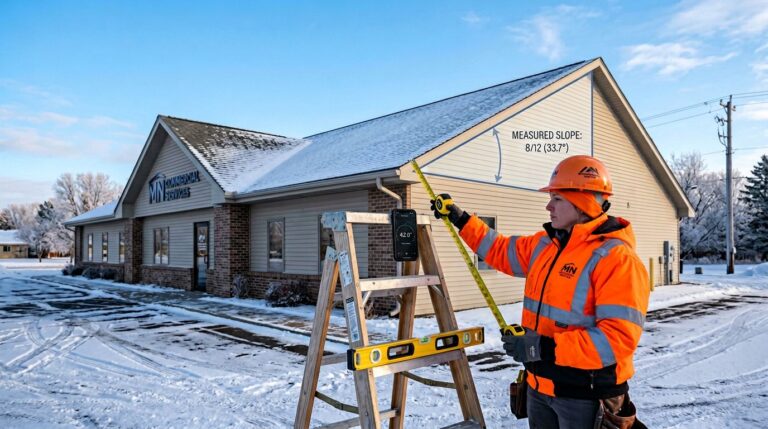
Last updated: 2026-08-22 by Ted Sellers, Owner
A proof of loss Minnesota is a signed, usually notarized statement that tells the insurer what happened, when it happened, what was damaged, and how much you are claiming. For a Minnesota roof claim, it turns photos, estimates, and inspection findings into a formal sworn submission. Don’t sign it until the roof scope and dollar amount are supported by real evidence.
A storm can leave a small opening that leads to a large claim. The proof of loss is where the details of a property insurance claim need to hold together.
Key Takeaways
What to remember before signing
- A Minnesota proof of loss is a sworn claim document, not the same thing as the first notice of damage.
- The form should accurately match your homeowner’s insurance policy details, inspection findings, repair estimates, photos, and date of loss.
- Don’t guess at the amount of damage when hidden moisture or wet insulation may still be present.
- A roof insurance claim can include emergency dry-in work, but separate that work from permanent repairs.
- Minnesota homeowners may face a 60-day proof of loss requirement after receiving proper written notice from the insurer.
When a Proof of Loss Applies to a Roof Claim
Storm damage, disputed scope, and major repairs
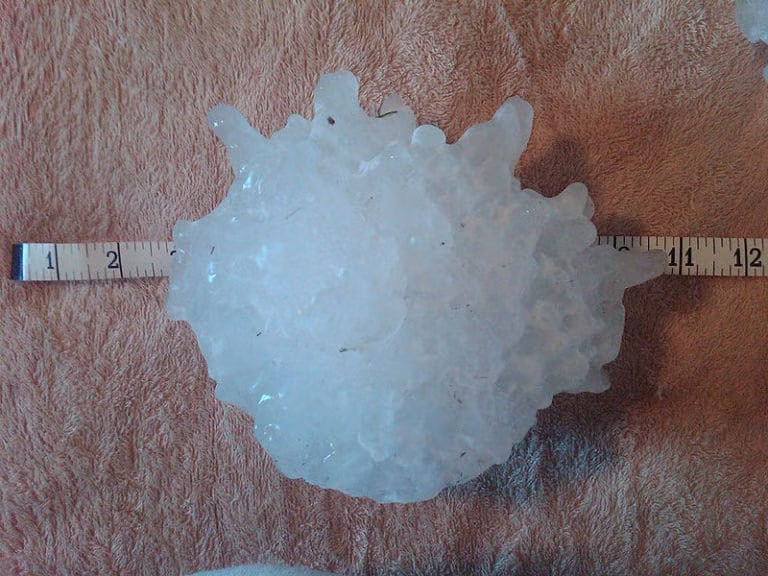
A proof of loss in Minnesota usually applies when an insurance carrier requests one after a hailstorm, wind event, tree strike, fire, or major water intrusion. Significant damage from these events may eventually lead to a total loss designation for the property. This document, often called a Sworn Statement in Proof of Loss or Statement of Loss, is a serious legal filing. By signing it, you are certifying that the information provided is accurate and true.
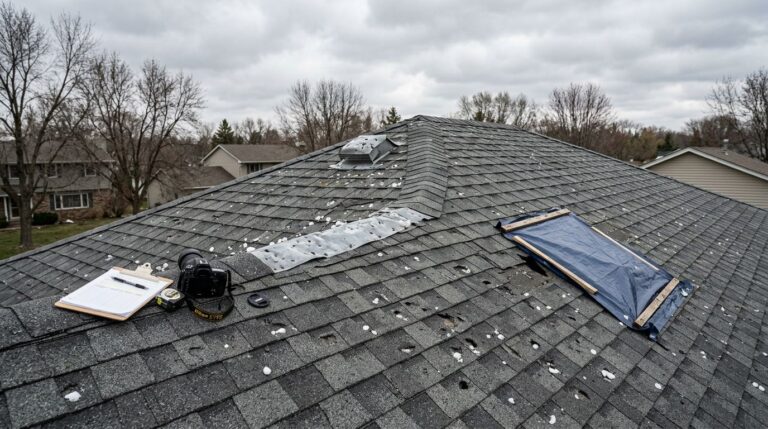
It matters most when the claim amount is substantial or the damage is not obvious from the ground. Hail damage on a roof may show bruised asphalt shingles, dented vents, damaged pipe boots, or cracked skylights. A metal roofing claim may involve dented panels, bent seams, damaged coatings, or loosened clips.
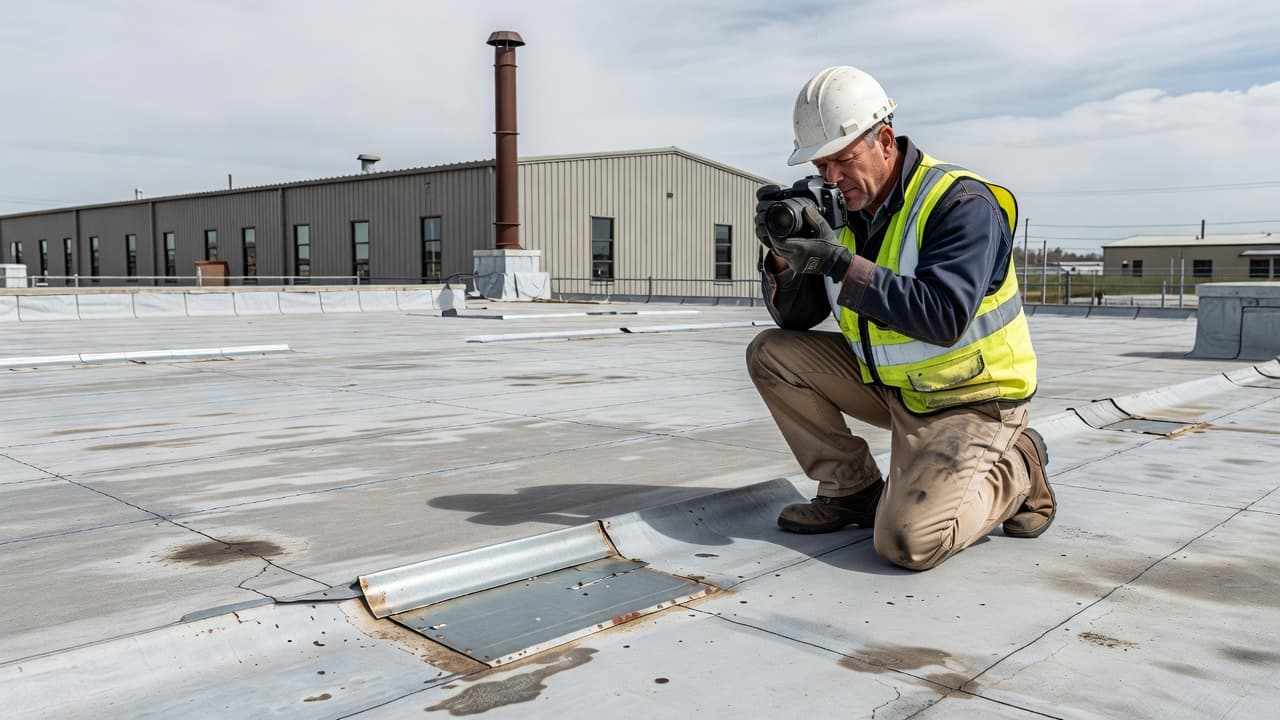
Low-slope systems need closer review. TPO roofing, EPDM, modified bitumen, and BUR can fail at seams, flashings, edge metal, drains, and penetrations. Water may travel across a commercial flat roof before it reaches a ceiling tile. The stain is often the exit point, not the roof opening.
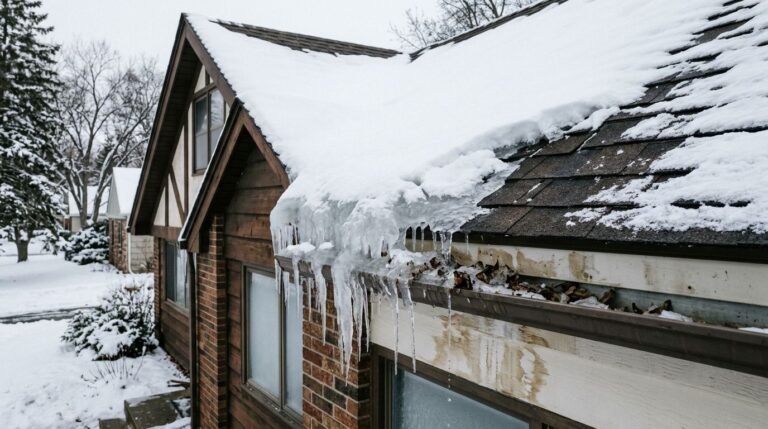
A proof of loss does not fit routine aging, deferred maintenance, or elective upgrades. Commercial roof restoration and commercial roof coatings can extend service life, but they are not automatically part of a covered storm claim. The same is true for ice dam removal. It may stop an active leak, yet coverage depends on the policy and the cause of damage.
A proof of loss should state the damage you can support, not the work you hope to do.
For homeowner claims, Minnesota Statute 65A.296 allows an insurer to deny a claim for failure to submit a completed proof of loss within 60 days under certain conditions in the state of Minnesota. The carrier must properly provide the form, instructions, and notice. Please be aware that failure to meet these specific deadlines can act as a bar to recovery for the claimant. Commercial policies can use different language, so read the Duties After Loss section instead of assuming the residential rule applies.
How to Complete a Minnesota Proof of Loss
Build the file before you state a dollar amount
- Read the insurer’s request and your policy. Confirm the deadline, the proof of loss form, whether notarization is required, and what the carrier wants attached. Look for the date of loss, claim number, policy number, and requested scope. Don’t confuse a proof of loss with an adjuster’s estimate. The adjuster’s estimate is the carrier’s position. Your proof of loss states yours.
- Document the roof before permanent repairs begin. Take wide photos, close-ups, interior photos, and pictures of temporary protection. Save weather reports, tenant leak logs, invoices, and emergency receipts. Tarping or sealing an active opening is reasonable. Removing damaged membrane, throwing away wet insulation, or replacing a roof before documentation can make causation harder to prove.
- Get a system-specific roof inspection. A commercial roof inspection should identify the membrane type, damage location, moisture spread, flashing condition, and likely source. On TPO roofing or EPDM, ask about open seams, lifted perimeters, punctures, and saturated insulation. On modified bitumen and BUR, ask about torn plies, failed laps, blisters, and water below the surface.
- Match the claimed amount to a written scope. Attach contractor estimates, measurements, moisture maps, test-cut findings, photos, and invoices. State the cost of emergency work separately from the permanent scope of reconstruction or repairing. If the roof can be repaired, the proof may support commercial roof repair or residential roof repair. If insulation is broadly wet or the system has failed across connected sections, commercial roof replacement or residential roof replacement may be the honest scope.
- Review, sign, notarize, and submit with proof of delivery. Check that dates, quantities, addresses, and totals match every attachment. Keep a complete copy. Send it through the claim portal, email, or certified mail, which is often the most reliable way to ensure the insurer receives your documents. A signed proof of loss is sworn. Never inflate the amount or include unrelated work.
A properly executed form gives the carrier a formal number to investigate. The Minnesota Department of Commerce provides consumer guidance noting that insurers generally must accept or deny a claim within 60 business days after receiving a properly executed proof of loss. See United Policyholders’ Minnesota consumer rights guide for the broader claims timeline.
What a Roof Proof of Loss Should Include
The facts, the claimed amount, and the supporting records
Most forms ask for the same core information:
- The insured’s name, property address, policy number, claim number, and policy dates.
- The date of loss, which typically follows the written notice of claim you previously submitted, plus the reported cause, such as hail, wind, falling tree debris, or ice-related water entry.
- A description of damaged building components and the amount claimed.
- Details about other insurance, prior losses, or prior repairs when the form asks for them.
- A sworn signature and notary acknowledgment.
The cause description within the claim form needs restraint. Write what the evidence supports. “Wind lifted membrane at the north parapet and water entered insulation below the seam” is stronger than “roof destroyed.” A vague or overstated explanation gives the carrier room to question the whole submission.
A Saint Paul roofing contractor may find that a leak began uphill from the interior stain. That happens on a warehouse roof, an apartment building, or a property owners home with a chimney cricket. Minneapolis roofing and Twin Cities roofing claims often include freeze-thaw cycles, snow buildup, wind-driven rain, and ice dams. Those facts matter, but they do not replace proof of a sudden covered event.
For a commercial building, Get a Free Commercial Roof Inspection before the proof locks in a repair amount. Leak tracing, moisture readings, and marked roof plans can show whether the problem is localized or tied to a wider section.
Repair, Replacement, and Claim Scope
Don’t let the first visible damage set the whole scope
A carrier may allow a patch while the roof investigation finds wet cover board, failed attachment, or damaged perimeter details beyond the marked area. That does not mean replacement is automatic. It means the written scope needs to follow the roof’s actual condition.
A limited puncture on a TPO roof with dry insulation may support commercial roof repair. Broad moisture, repeated seam failure, or a compromised deck can support commercial roof replacement or even a total loss of the roofing system. On steep-slope buildings, a few damaged asphalt shingles can be repaired. Widespread wind damage, unavailable matching materials, or fractured components may change the analysis. If the insurer refuses a justified scope despite clear evidence, appraisal may be a valid next step to resolve the disagreement. Documenting every detail and interaction helps protect policyholders against bad faith claims if the insurer acts unreasonably during the adjustment process.
Minnesota roofing claims also involve code items. New edge metal, insulation thickness, drainage details, permits, or disposal may appear only after a contractor opens the system. If those items are tied to covered damage, submit photos and a revised estimate as a supplement. Do not quietly add them to the original proof of loss without documentation.
Sellers Roofing Company is a Saint Paul contractor with MN License 803862. Its union-built roofing crews include IUPAT Local 96 roofers, and its work includes GAF certified residential systems. Those qualifications do not decide coverage. Clear field evidence does.
For a plain-language look at the required sworn statement, this Minnesota insurance claim overview describes the proof of loss as a written, signed statement of the claimed value and damage.
Final Thoughts
A proof of loss for a Minnesota roof claim is where the claim becomes formal. It should tie the storm date, roof findings, repair scope, and claimed amount into one documented record.
While preparing your documentation, remain mindful of the statute of limitations for a property insurance claim in the state of Minnesota to ensure you do not lose your legal right to pursue compensation if the claim process is delayed.
Don’t let a ceiling stain or a quick visual check decide the whole claim. The best proof of loss is accurate, complete, and built from the roof system itself.
Frequently Asked Questions
Does signing a proof of loss mean the insurer agrees to pay?
No. Signing confirms your sworn claim amount and facts. The insurer can still investigate, request more records, approve or deny parts of the claim, or even require an examination under oath as part of their formal investigation process.
What happens if I miss the 60-day proof of loss deadline?
Contact the insurer in writing immediately and submit the form as soon as possible. For some homeowner claims, the carrier must meet specific notice requirements before strictly enforcing the deadline. Commercial policy language may differ.
Can I include emergency roof repairs in the proof of loss?
Yes, if the work was necessary to prevent further damage. Include invoices, photos, dates, and a clear description of temporary dry-in work. Keep these emergency expenses separate from permanent replacement costs.
Should I sign the insurer’s proof of loss amount if my contractor found more damage?
Do not sign an amount you believe is incomplete. Ask for the inspection records, obtain your own documented scope, and submit a supported amount. Your documentation should satisfy a prudent person test for damage verification, as hidden moisture or underlying issues can significantly change the correct repair scope.
Can a prior roof repair ruin a storm damage claim?
Not by itself. The carrier may exclude old workmanship issues or wear, but a prior patch does not erase new wind, hail, or impact damage elsewhere. The important question is what caused the current loss.
What happens if I receive a claim check but never cash it?
If an insurer issues payment for a roof claim and the check is never cashed or deposited, the funds may eventually be turned over to the state as unclaimed property. If you find an old claim check that has not been processed, contact your insurance company to see if they can reissue the payment or if you must claim the funds through the state department of commerce.
Need a roof inspection in Saint Paul or the Twin Cities? Call Sellers Roofing Company at +1-651-703-2336 or schedule a free estimate. We are a black-owned, NMSDC-certified MBE roofing contractor with 9+ years experience.