Last updated: 2026-08-01 by Ted Sellers, Owner
PVC roof leak detection works by narrowing the problem from “moisture intrusion inside” to the exact point where the PVC waterproofing membrane or flashing lets water in. Pros use Electronic Leak Detection, combining surface inspection, seam and flashing checks, moisture scanning (often infrared), and electronic membrane testing to trace the leak’s path, pinpoint membrane breaches, and confirm which areas need repair before water spreads farther.
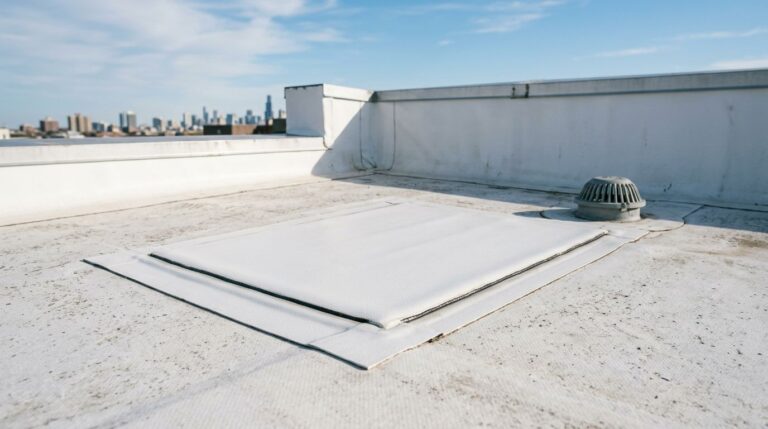
Water on a flat roof doesn’t behave like water on a steep roof. It can travel sideways, slip under a membrane edge, then show up inside far from the real entry point. For owners of commercial roofing systems, that matters because every wrong guess cost money, time, and disruption.
When This Applies
Who PVC roof leak detection helps most
PVC systems show their strengths on commercial buildings, but leak hunting can still feel like chasing smoke. Leak detection is most useful when:
- Interior signs exist, but the roof surface looks “fine” at a glance.
- PVC roofs behave differently than TPO and EPDM systems, where leak detection reveals unique patterns in water migration.
- Leaks appear after wind, hail, or heavy snow loads, which can stress seams and edge details.
- You suspect repeated wet insulation, rising energy bills, or persistent odors.
- The building has multiple rooftop penetrations (HVAC curbs, vents, conduit), where flashing failures often start.
PVC membranes rely on heat-welded seams. When seams split, seam voids develop, flashing loosens, or a puncture forms, water may enter at one point and travel until it finds a low spot to drip. That’s why a stain in one suite can be caused by a breach across the roof.
If you’re comparing repair versus replacement, it helps to understand the whole system, not just the hole. A qualified commercial crew can assess whether the issue is isolated commercial flat roof repair work, or whether the roof is trending toward a broader failure. For local support and system-level evaluation, start with a Saint Paul commercial roofing team like Sellers Roofing Company’s commercial roofing services, which provides roof flashing repair.
A flat roof leak is often like a crack in a swimming pool liner, the water you see isn’t always above the tear.
When PVC leak detection doesn’t work the same way
Some conditions make detection less direct, or change which method is reliable.
If the roof surface is saturated, snow-covered, or actively leaking
Infrared leak detection scans can struggle when the roof can’t heat and cool normally. A scanning platform or moisture detection sensors may be less effective until the surface is clear. Electronic testing can also require controlled wetting and clear sections. In those cases, a contractor may prioritize temporary containment, then return for precise testing when conditions improve. If you want a plain-language explanation of how thermal scans find trapped moisture, see how infrared technology detects flat roof leaks.
If the PVC roof is ballasted or covered with pavers
Anything that hides the membrane slows the process. Crews may need to open “test windows” to access seams and penetrations. The leak might be under walk pads, around equipment screens, or at perimeter edges where wind lifts details first.
If the roof is new or under warranty
On newer PVC systems, the goal often shifts to documentation and root cause. Seam issues, terminations, and flashing details may be tied to installation requirements. A good leak report includes photos, test results, and exact locations, so the right party can correct the issue without guesswork.
Step-by-Step
Field inspection steps that narrow the search
- Confirm the interior leak pattern (rooms affected, timing, weather conditions) via attic inspection or checking for signs below the deck, then note whether it happens during rain, thaw, or HVAC operation.
- Review roof history (age, past patches, added penetrations), because repeat repairs can hide the real weak point.
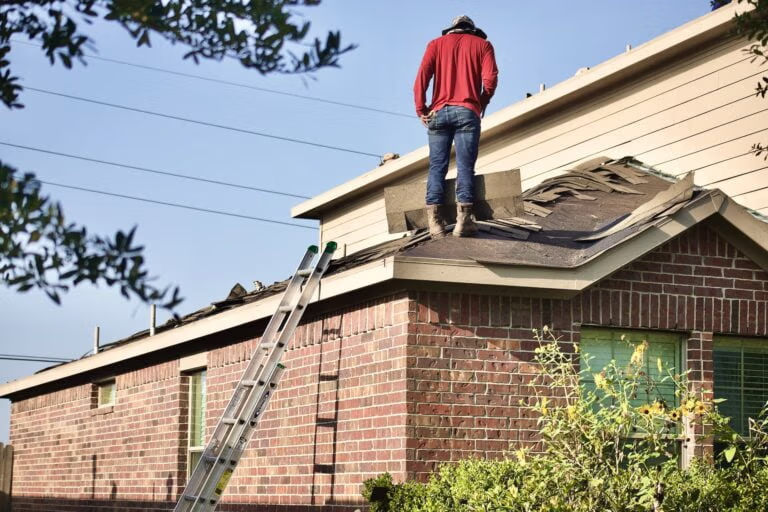
- Walk the roof safely and scan for “obvious” clues first, including punctures, displaced walkway pads, open laps at edges, or cracked sealant at term bars.
- Check drains, scuppers, and ponding zones in roof drainage systems, since standing water increases the chance that small defects become active leaks.
- Inspect flashings at penetrations and curbs, because PVC leaks often start where different materials meet and move at different rates.
- Probe and evaluate welded seams, especially at T-joints, patches, and transitions, since a small seam gap can feed a big interior leak.
Technology steps for roof leak identification that pinpoint the breach on PVC
- Run moisture mapping to outline wet insulation zones, often with thermal imaging technology when conditions allow, then cross-check suspicious areas on foot (moisture “shadows” guide where to test next).
- Employ Electronic Leak Detection when the roof layout fits and a conductive substrate exists under the PVC, using low-voltage scanning platforms per ASTM D7877 or Electronic Field Vector Mapping to locate a breach down to inches by tracking electrical flow to the opening; for walls and curbs, apply a vertical scanning unit. As an alternative for dry testing, consider holiday testing. For a high-level view of the method, see electronic leak detection for flat roofs.
- Open small verification cuts or take limited core samples only where needed, then repair those test points the same day to keep the system watertight.
- Mark confirmed breach locations on the roof plan, photograph details, and record distances from fixed landmarks so the repair crew doesn’t waste time “re-finding” the problem.
Decision steps after the leak is found
- Define the right scope, targeted patching for isolated defects, section replacement if insulation is saturated, or broader restoration if multiple details are failing, as part of quality control testing.
- Decide whether the building is still in repair territory or whether the pattern suggests commercial roof replacement, especially when wet insulation is widespread (mapped via scanning platform) or the membrane is near end of life.
If your commercial roof needs repair but the source isn’t clear, professional documentation matters as much as the repair itself. A focused service like commercial roof leak detection in Saint Paul helps confirm the breach location before crews start cutting and patching.
FAQ
Will PVC roof leak detection find the leak if water shows up far away?
Yes, when the process includes moisture mapping and system checks as part of a forensic leak investigation, not just a quick look at the stain area. Water can travel along insulation seams, decking ribs, or vapor barriers before it drops inside. That’s why pros track patterns, not just points.
Does infrared always work on PVC flat roofs?
Infrared often works well, but it depends on conditions. The roof needs a heat cycle, and the surface can’t be uniformly cold, soaked, or snow-covered. Crews may pair infrared with other methods so the result isn’t based on one tool.
What if it rained last night?
In that case, the contractor may wait for the roof to dry, or switch to electronic testing or targeted verification cuts.
Is electronic leak detection safe for a commercial PVC membrane?
When done correctly, yes. Electronic Leak Detection uses low-voltage methods designed to locate breaches without damaging non-conductive membranes like PVC, TPO and EPDM. The bigger limitation is access and setup, since pavers, ballast, and complex rooftop layouts can slow the work; flood testing methods serve as an alternative for ballasted roofs.
How do you know it’s not condensation or an HVAC issue?
A good leak investigation checks timing and location against mechanical systems. For example, condensation tends to follow duct runs, diffusers, or cold surfaces, while roof leaks align with storms, thaw cycles, and wet insulation zones. Structural concrete waterproofing can sometimes complicate readings if not accounted for. If the pattern is unclear, moisture readings and roof cuts can confirm where water is actually coming from.
What happens after you find the leak, can you repair it right away?
Often, yes, if the defect is small and conditions are safe. Many PVC issues allow same-day patches or seam repairs. For future electronic monitoring, a conductive primer may be applied if required. Still, if insulation is soaked, a lasting fix may require opening and replacing sections, not just sealing the top.
PVC leaks don’t reward guesswork. When the source is confirmed and documented with water tightness verification, commercial flat roof repair becomes faster, cleaner, and easier to budget.
If you’re seeing stains, odors, or repeat call-backs, treat it as a system problem, not a mystery spot on the ceiling, and get the leak traced using modern tech like Electronic Leak Detection for commercial roofing systems.
Need a roof inspection in Saint Paul or the Twin Cities? Call Sellers Roofing Company at +1-651-703-2336 or schedule a free estimate. We are a black-owned, NMSDC-certified MBE roofing contractor with 9+ years experience.