Last updated: 2026-08-27 by Ted Sellers, Owner
A roof claim settlement release is a document that confirms payment for a defined part of a property insurance loss. It should identify the paid damage and amount. In Minnesota, an insurer cannot require a release that gives up rights beyond the claim payment’s subject matter, under Minnesota’s unfair claims practices law.
A release may be reasonable after an agreed repair scope. It becomes a problem when it attempts to close out hidden damage, future supplements, or unrelated parts of the same storm loss.
When a Roof Claim Settlement Release Applies
It applies after the carrier identifies a paid loss
You may receive a release after a hail damage roof claim, wind loss, or interior water claim. The carrier may agree to pay for damaged asphalt shingles, flashing, gutters, or a limited roof repair and ask you to confirm the settlement.
Read the scope before signing. Check the storm date, property address, damaged sections, deductible, depreciation, and whether the payment is actual cash value or replacement cost value.
A roof claim settlement release should match the work being paid. It should not erase a later claim for hidden wet insulation, damaged decking, code-required work, or interior damage that was not evaluated.
It does not settle every roof issue automatically
A check, estimate, or repair approval is not always a final settlement. Minnesota law also prohibits claim checks that state acceptance is a final release of future obligations from the loss.
Do not confuse this with a mortgage company’s release of insurance funds. For major damage, the lender may control a jointly payable check and disburse funds during construction. The Minnesota Department of Commerce explains the usual claim settlement and mortgage check process.
A narrow release for a completed, documented repair is different from a broad waiver covering damage nobody inspected.
Old wear, deferred maintenance, and prior leaks may not be covered. Still, an old patch does not erase a new storm damage roof. The carrier must evaluate the actual cause and condition.
Step-by-Step: Review a Roof Claim Settlement Release
Protect the property and preserve the evidence
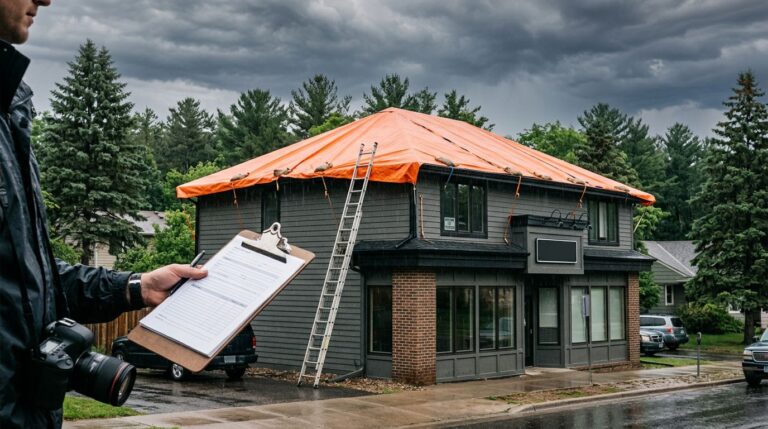
- Stop active water entry with a tarp, temporary seam seal, or interior protection. Save labor tickets, receipts, and photos before and after emergency work. If water is entering now, Call 651-703-2336 for 24/7 Emergency Roofing.
- Read the release line by line. Look for phrases such as “full and final settlement,” “all claims,” “all damages,” or language that reaches beyond the listed roof insurance claim payment.
- Compare the release to the adjuster’s estimate and contractor findings. Make sure every damaged roof section, flashing detail, interior item, and approved supplement appears in writing.
- Request a reinspection before signing if the scope missed damage. Homeowners who receive a certified proof-of-loss request should treat the 60-day deadline seriously. Commercial policies have different terms, so review the actual policy and appraisal clause.
- Keep permanent repairs on hold until cause, scope, and pricing are clear. A residential roof estimate in Saint Paul can document whether the work is a residential roof repair or a larger residential roof replacement.
Match the Settlement to the Actual Roof System
Low-slope roofs need system-specific evidence
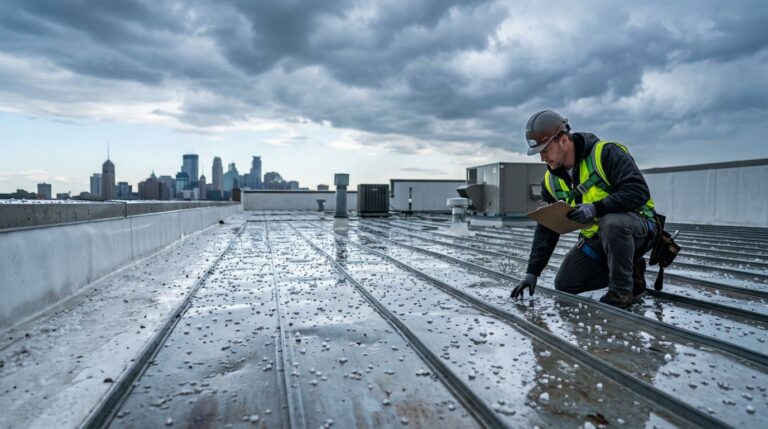
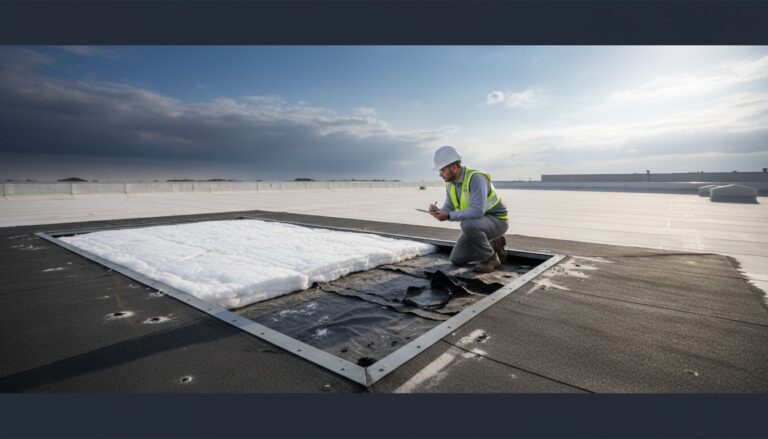
A commercial flat roof does not fail like shingles. TPO roofing and EPDM can show open seams, lifted edges, punctures, split flashings, or concealed wet insulation. Modified bitumen and BUR may have torn plies, failed laps, blisters, or moisture below the surface.
A ceiling stain does not identify the opening. Water can travel under membranes, insulation boards, and metal deck flutes before it reaches a tenant suite. Use commercial roof leak detection when the water path is unclear.
Localized damage may support commercial roof repair. Broad saturation, repeated seam failure, or failed attachment across connected sections can support commercial roof replacement. Commercial roof restoration and commercial roof coatings can extend a dry, sound system. They do not correct an active opening or saturated insulation.
Steep-slope and metal scopes need the same discipline
On asphalt shingles, look for wind lift, missing tabs, broken seals, impact marks, and displaced flashing. Metal roofing requires an inspection of seams, clips, panels, edge metal, and drainage details. Dents alone may be cosmetic, but distorted seams or damaged coatings can be functional damage.
For Saint Paul roofing, Minneapolis roofing, and broader Twin Cities roofing claims, ask for photos, measurements, moisture findings, and a cause-based report. A detailed commercial roof inspection helps separate old deterioration from fresh loss. Get a Free Commercial Roof Inspection before accepting a permanent repair scope.
Final Thoughts on Signing a Release
Keep the release narrow and documented
A roof claim settlement release should close only the paid portion of the loss. It should not force you to give up rights to damage that remains uninspected, unpriced, or disputed.
Minnesota roofing claims move faster when the file is clean: dated photos, temporary repair invoices, material samples, moisture findings, and a written scope. Document first, then settle the documented work.
Frequently Asked Questions
Can I reopen a roof claim after signing a release?
Possibly, but it depends on the release language, policy terms, and what damage was included. A narrow release tied to one payment is different from a signed agreement that clearly addresses a broader known loss.
What if the insurer finds hidden wet insulation later?
Ask for a written supplement review. On TPO, EPDM, modified bitumen, and BUR, moisture mapping or test cuts can reveal damage that was not visible during the first inspection.
Does ice dam removal count as permanent repair work?
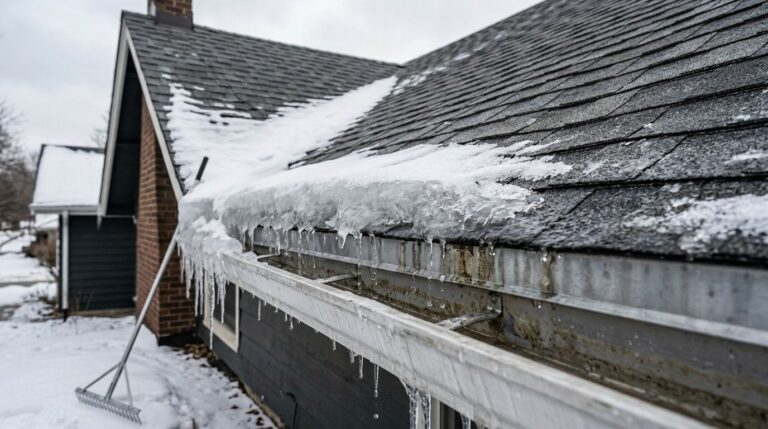
No. Ice dam removal is temporary loss mitigation. Photograph the ice, water staining, and emergency work. The roof still needs an inspection after conditions are safe.
Can a contractor negotiate the settlement release for me?
A contractor can document damage, prepare estimates, and explain repair scope. The policyholder signs the release and remains responsible for coverage decisions. Seek legal advice for a major dispute.
Who can document a disputed Twin Cities roof claim?
Use a qualified, licensed contractor with system knowledge. Sellers Roofing Company provides union-built roofing through IUPAT Local 96 crews and holds MN License 803862. A GAF certified team can document roofing conditions without guessing at the cause.
Need a roof inspection in Saint Paul or the Twin Cities? Call Sellers Roofing Company at +1-651-703-2336 or schedule a free estimate. We are a black-owned, NMSDC-certified MBE roofing contractor with 9+ years experience.