Last updated: 2026-09-28 by Ted Sellers, Owner
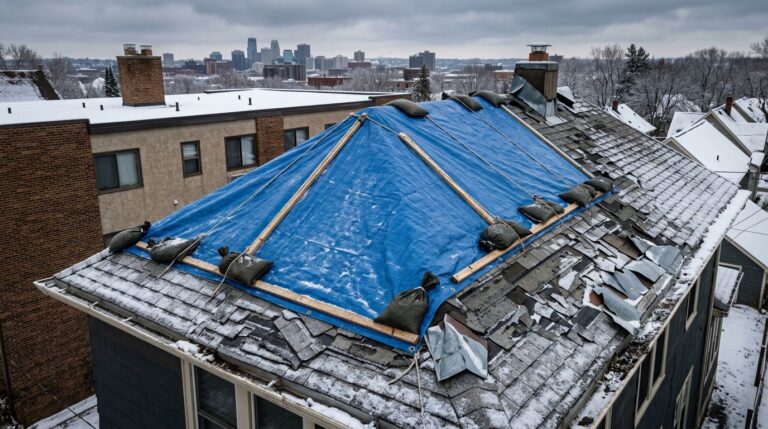
After a Minnesota thaw, a homeowner or building owner may notice a ceiling stain while the roof still looks intact from the ground. Ice dams, drifting snow, drainage backups, hail, wind, freeze-thaw exposure, installation defects, or roof age can create similar symptoms. Ice alone usually doesn’t puncture a sound membrane, but it can expose vulnerable details and lead to hidden roof leaks.
Yes. Minnesota winter conditions can expose defects beneath solar panels, especially around flashing, seams, mounting hardware, fasteners, drains, and roof penetrations. The roof membrane should be inspected separately from the solar equipment, since panel output doesn’t prove the roof is watertight.
This type of solar panel roof damage can remain hidden until insulation or the roof deck shows water damage. Thermal cycling may worsen weak seams, flashing, and fastener points, even when the surface appears intact.
A roof can look fine from the ground while water moves under a membrane or beneath asphalt shingles. When the leak path or equipment condition is unclear, a qualified roofing contractor and solar professional should inspect both systems.
Contents
- Key takeaways about winter ice and roof membranes
- When winter ice threatens membranes beneath solar panels
- How a roofing contractor inspects a roof beneath solar equipment
- How inspection findings guide repair or replacement decisions
- What insurance and warranties may cover
- How to reduce winter risk before the next freeze
- Frequently asked questions and final guidance for Minnesota property owners
Key Takeaways for Solar Panel Roof Damage
Ice exposes weak roof details
Ice usually exposes weak details rather than puncturing a sound membrane. These weak points often involve mount areas, seams, or edge metal, where flashing and sealing can fail.
Solar panels can also change snow movement. Snow may drift or remain longer around rails and lower panel edges, keeping meltwater near roof details.
Before a solar installation, a roofing contractor should evaluate the roof deck and mounting areas. An inspection should distinguish failures at membrane seams, flashing, fasteners, drains, and mounting details from problems caused by installation errors, drainage problems, snow loading, or aging roofing materials.
A working solar system can still sit over a leak
A functioning array can still sit over hidden membrane defects or roof leaks. Modules may produce power normally while flashing has cracked, a membrane seam has opened, or insulation below the roof has become wet.
A ceiling stain is usually where water exits the building, not where it entered the roof.
When Does Winter Ice Damage a Roof Beneath Solar Panels?
Steep-slope homes face ice-dam backup
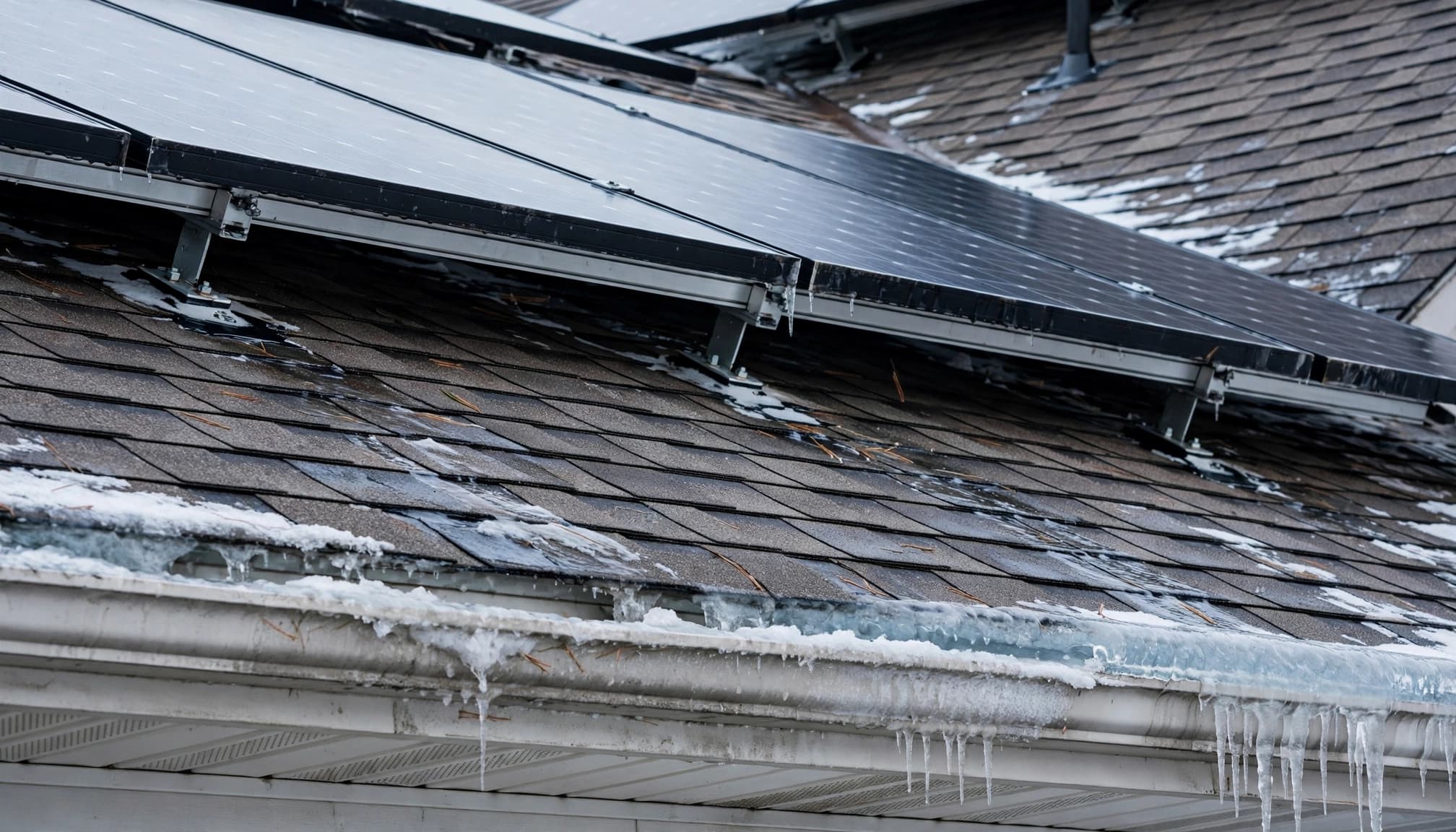
This risk most often affects a shingle roof, especially asphalt shingles, as well as metal roofing and low-slope additions carrying solar panels. Warm air leaks into the attic, melts snow higher on the roof, and runoff refreezes at cold eaves.
Water then backs up beneath shingle courses, underlayment, flashing, and mounting brackets. At roof penetrations, failed penetration seals can worsen underlayment damage and expose the roof deck. Minnesota Commerce guidance notes that sealing accessible attic bypasses helps limit heat loss that contributes to ice dams, as outlined in the Minnesota Technical Reference Manual.
Ice dam removal can limit active water backup, but it doesn’t fix attic air leakage, poor insulation, damaged flashing, or damage from thermal cycling. A roofing contractor can assess whether water has caused structural damage.
Low-slope roofs have different failure points
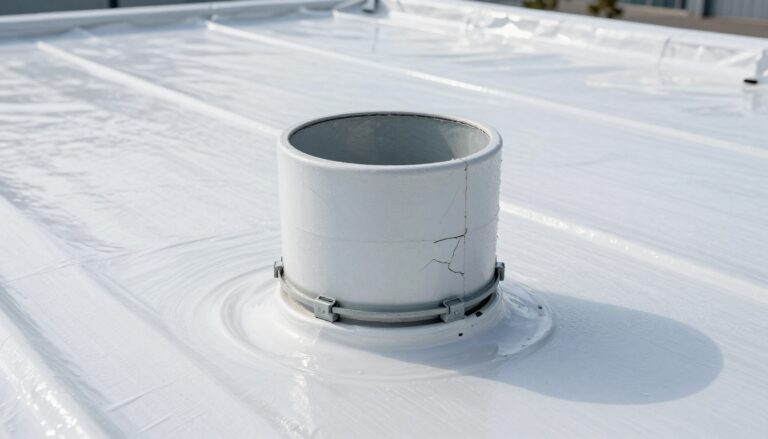
TPO roofing, EPDM, modified bitumen, and BUR systems don’t form classic eave dams the same way shingles do. Their winter risk is ponding and refreezing water at drains, scuppers, seams, curbs, and solar attachment details.
This applies to warehouses, retail buildings, apartments, churches, and offices with a commercial flat roof. Ice-related leaks may instead reflect drainage, flashing, membrane age, or freeze-thaw conditions. A ballasted array may have no penetrations, but clear drainage doesn’t eliminate inspection after major weather.
Before a solar installation, a roofing contractor should review drainage and membrane condition, while structural review considers load capacity and snow drift. Minnesota Department of Labor and Industry guidance states that roof-mounted solar adds system weight and snow-drift loads. Its solar code fact sheet also notes that permits and structural review may be required.
How Do You Inspect a Solar Roof After Winter?
1. Start with safety and documentation
Do not walk an icy roof, remove snow from solar panels, or chip ice near electrical equipment. Move belongings away from active roof leaks, place containers under drips when safe, and keep water away from electrical equipment.
Photograph the roof edge, panel layout, snow pattern, flashing, interior stains, attic moisture, and visible water damage. Record dates of hail, wind, heavy snow, freeze, and thaw events. A hail-damaged roof and winter roof leaks may overlap, but they need separate documentation.
If water is entering now, Call 651-703-2336 for 24/7 Emergency Roofing once conditions are safe.
2. Inspect the roof system, not only the panels
A roofing contractor should inspect the membrane, roof deck, mounting hardware, flashing, and roof penetrations, including lag bolts at each accessible mount. Look for cracked flashing, failed sealant, loose or overdriven lag bolts, damaged mounting brackets, and compromised penetration seals.
On asphalt shingles, check for lifted tabs, cracks, granule loss, exposed fasteners, underlayment damage, and wet decking near eaves.
On membrane roofs, check open membrane seams, edge metal, termination bars, blocked drains, wet insulation, and areas where snow has ponded. Moisture in the roof deck can reveal damage below the surface.
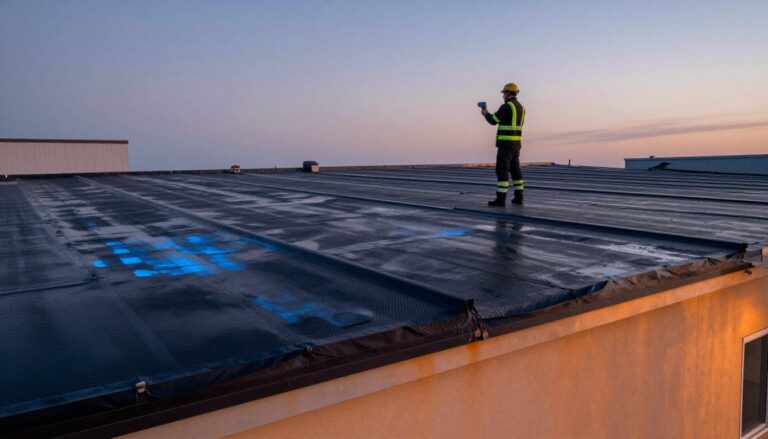
A commercial roof inspection may include infrared moisture scanning, electronic leak testing, or test cuts when the leak path remains unclear.
3. Bring in the solar contractor when equipment is involved
Qualified solar installers should inspect the solar panels, including glass, frames, clamps, rails, conduit, junction boxes, and inverter alerts. That solar system inspection does not replace the roofing contractor’s diagnosis of the roof leak path around the solar panels.
Before panel removal, the roofing contractor and solar company should coordinate. Only a qualified professional installer should disconnect or move equipment. Unplanned work can damage equipment, disturb roof details, and create warranty disputes.
When Is Roof Repair Enough, and When Is Replacement Better?
Localized defects often support repair
A failed flashing detail, isolated fastener or membrane damage, or a limited wet area beneath solar panels may support roof repair. A roofing contractor should match roofing materials to the existing membrane or shingle system, then restore it without compromising the roof warranty.
For commercial properties, a small TPO repair should include inspection of connected seams and the insulation for moisture. Water can travel beneath the membrane, so Commercial roof leak detection in Saint Paul helps trace the path before interior roof leaks appear or the wrong area gets patched.
Widespread moisture changes the scope
A roofing contractor should consider broader replacement for saturated insulation, multiple failing seams, a compromised roof deck, or a membrane near the end of its service life. Commercial restoration and coatings can extend some roofs, but they can’t correct saturated insulation, open seams, failed attachment details, water damage, or structural damage.
On homes, a shingle roof may need replacement when brittle asphalt shingles, rotten decking, or repeated roof leaks show deterioration, especially if aging materials make removing panels risky. A roof near the end of its service life should be evaluated before a solar installation, not after the first leak. Solar panels may require panel removal within a larger roof replacement scope, coordinated with the solar company or qualified solar personnel.
What Should a Minnesota Roof Insurance Claim Include?
Document facts before permanent work
A roof insurance claim needs a clean timeline. Include storm or thaw dates, photos of solar panels, interior conditions, and water damage. Add emergency drying invoices, maintenance records, inspection findings, and moisture readings where available.
Describe observed facts without guessing at the cause. A roofing contractor can document a torn membrane, damaged roof deck, cracked flashing, hail impact, wind-lifted edge metal, or roof leaks. Policy language, cause of loss, and exclusions may treat ice backup, hail, wind, snow load, freeze-thaw exposure, and long-term deterioration differently.
Progressive’s roof damage coverage overview also notes that snow, sleet, and ice damage may be covered depending on the policy. Review your policy with your adjuster and qualified inspectors before permanent work.
Separate workmanship from weather damage
Poor solar installation isn’t the same as storm damage. Failed sealant, missing flashing, improperly placed lag bolts, bad roof penetrations, or improper drainage may point to an installer warranty rather than insurance.
Request the solar contract, roof warranty, solar warranty, building permits, installation photos showing lag bolts, and manufacturer documents. Responsibility should be clear between the solar company and a roofing contractor, especially when solar installers performed the installation around solar panels.
For a covered hail or wind loss, solar panel removal insurance coverage may include storage and reset when tied to that eligible loss, depending on the policy. An old roof needing roof replacement because of age usually isn’t covered as a storm loss.
How Can You Reduce Winter Risk Before the Next Freeze?
Fix heat loss and drainage first
Ice dams point to attic temperature differences, not simply snow on the roof. Seal attic bypasses, correct insulation gaps, verify intake and exhaust ventilation, and keep gutters and drainage paths clear.
Use a roof rake from the ground when practical. Leave a thin snow layer rather than scraping shingles. Never use rock salt or metal tools to break ice around solar panels, flashing, or roof edges.
Before a solar installation, complete a roof checklist. A roofing contractor should evaluate the roof deck, roof age, flashing and sealing, drainage, and roofing materials.
For asphalt shingles, the roofing contractor should determine whether roof repair, roof replacement, restoration, or monitoring is appropriate before solar panels are installed. Solar installers and the roofing contractor should coordinate conduit, attachment details, panel removal, and future access with the solar company. A professional installer should also limit unnecessary roof penetrations.
Use qualified crews and written scopes
For Saint Paul roofing, Minneapolis roofing, and wider Twin Cities roofing work, ask for photos, material details, moisture findings, and a written repair scope. A contractor should explain whether the condition calls for repair, replacement, restoration, or monitoring.
Sellers Roofing Company has completed more than 1,100 residential and commercial roofs since 2017. Its union-built roofing crews include IUPAT Local 96 Roofers, Carpenters Local 322, and Laborers Local 563. The company holds MN License 803862 and is GAF certified.
For aging shingles or active leaks, Get a Free Residential Roof Estimate. Commercial owners can Get a Free Commercial Roof Inspection.
Frequently Asked Questions
Can solar panels cause roof leaks by themselves?
Solar panels don’t normally cause roof leaks. Flashing failures, mounting hardware, failed sealant, poor drainage, and improper roof penetrations cause most problems, especially when winter ice exposes weak details.
Should I replace an aging roof before solar installation?
Usually, yes, if the roof is near the end of its service life. A roofing contractor should assess its condition before a solar system is planned. Removing and reinstalling equipment later adds cost and handling around the roof.
Can hail damage flashing without breaking solar panels?
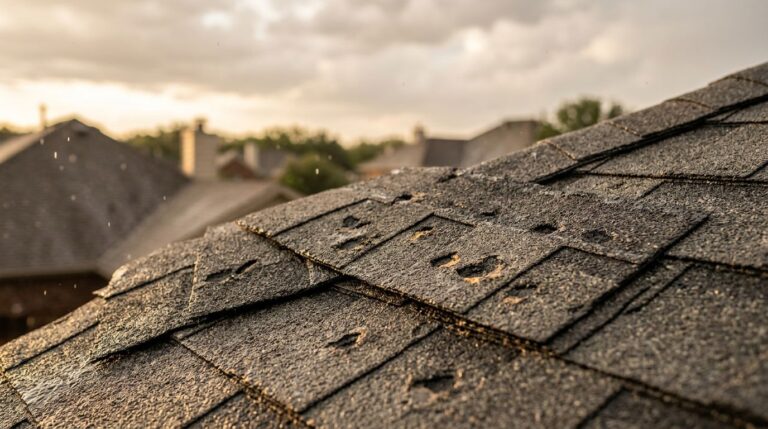
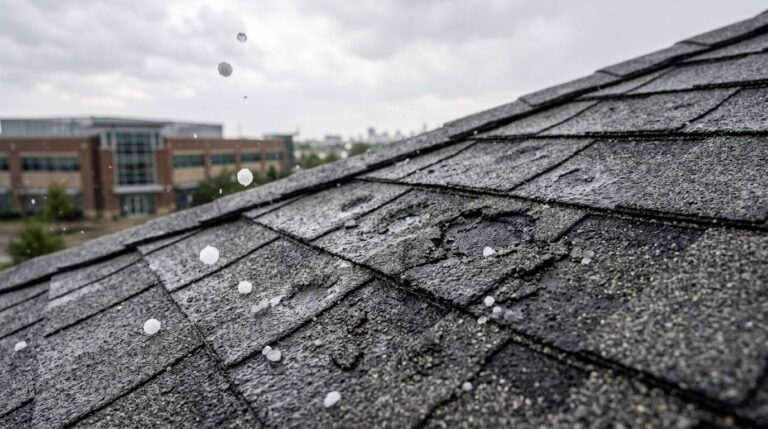
Yes. Hail can dent flashing, loosen clamps, crack sealant, or damage a membrane around mounts while glass stays intact. It may affect lag bolts, but wind and installation defects can cause similar movement.
Can panel removal damage solar panels?
A solar company or qualified solar technician should handle it, with labeling, safe storage, electrical coordination, and a documented reinstallation plan. Confirm the work won’t conflict with your solar warranty.
Does metal roofing eliminate winter risk beneath solar panels?
Metal sheds snow differently than shingles, but it doesn’t eliminate ice at edges, valleys, penetrations, or snow-retention areas. Flashing, drainage, and secure attachments still matter.
Final Guidance for Minnesota Property Owners
Winter ice can reveal hidden membrane defects beneath solar panels, especially near flashing, seams, drainage points, and lag bolts. Roof leaks may reflect ice backup, drainage failures, snow loading, hail, wind, freeze-thaw exposure, installation workmanship, or age-related deterioration.
Document the condition and follow the water path to the roof deck, rather than patching only the visible stain from water damage. For solar panel roof damage, ask a qualified roofing contractor and solar professional to inspect the roof system, penetrations, and electrical components. They should also check for concealed membrane moisture.
Need a roof inspection in Saint Paul or the Twin Cities? Call Sellers Roofing Company at +1-651-703-2336 or schedule a free estimate. We are a black-owned, NMSDC-certified MBE roofing contractor with 9+ years experience.