Last updated: 2026-05-26 by Ted Sellers, Owner
Top Essential Tools for DIY Roof Maintenance: Ensure Effective Care, Safety, and Longevity
Roof maintenance combines the right implements and protective gear to prevent costly damage, extend service life, and ensure homeowner safety. This guide reveals the critical safety equipment, inspection devices, cleaning implements, repair instruments, tool care routines, material-specific recommendations, and cutting-edge technologies that empower you to perform essential tools for DIY roof maintenance with confidence. You’ll learn how to select and use ladders, harnesses, binoculars, moisture meters, gutter scoops, roofing hammers, sealant guns, storage strategies, pro thresholds, asphalt versus metal tool adaptations, and drone-assisted inspections. By following these best practices, you’ll safeguard your roof’s integrity and your own well-being from start to finish.
What Safety Gear Do You Need for Effective DIY Roof Maintenance?
Effective roof maintenance begins with protective equipment that minimizes fall risk, impact injuries, and slip hazards while working at height. Properly selected safety gear not only protects you from accidents but also boosts confidence, enabling precise inspections and repairs. As you outfit yourself for roof work, you establish a foundation for every subsequent task, from inspection to cleanup.
Why Is Ladder Safety Crucial for Roof Work?
A stable ladder provides secure access to your roof and prevents slips or collapses when transferring tools and materials upward. Selecting a ladder with non-slip feet, adequate extension height, and a weight rating above 250 lbs ensures steady footing on uneven ground and roof edges. Inspecting ladder joints, rungs, and locking mechanisms before each use maintains reliability and reduces the chance of sudden failure. Proper ladder placement—angled at 75 degrees and strapped at the roof ridge—establishes the safe entry point essential for every inspection and maintenance phase.
Which Personal Protective Equipment (PPE) Should Homeowners Use?
Homeowners should equip themselves head-to-toe with harnesses, non-slip boots, hard hats, gloves, and safety glasses to guard against falls, punctures, and debris. Each item contributes a specific layer of protection:
- Safety harness with lanyard secures you to a stable anchor, preventing falls.
- Non-slip roofing boots provide traction on wet or sloped surfaces.
- Hard hats shield against falling objects like loose shingles or tools.
- Cut-resistant gloves protect hands during debris removal and repairs.
- Safety glasses keep wind-borne particles and sunlight glare at bay.
This comprehensive PPE ensemble transforms a risky rooftop environment into a controlled workspace where precision inspections and repairs can proceed uninterrupted.
5 Must Have Roof Safety Equipment For Homeowners
Essential roof safety equipment includes safety harnesses, anchoring systems, and non-slip footwear to mitigate fall risks and ensure safety during roof work.
Johnson Restoration, 5 Must Have Roof Safety Equipment For Homeowners (2024-12-11)
This source emphasizes the importance of safety equipment, which is a key aspect of the article’s discussion on safety gear.
How Do Roof Anchoring Systems Prevent Falls?
Roof anchoring systems integrate permanent or temporary anchors, rope grabs, and energy-absorbing lanyards to lock installers in place during elevated work. By affixing anchors to rafters or trusses, these systems distribute arrest forces across structural members and dissipate kinetic energy in the event of a slip. Incorporating shock-absorbing lanyards and self-retracting lifelines makes fall protection automatic, allowing you to focus on inspection or repair tasks without manual restraint adjustments. Anchoring transforms an open roof edge into a secure perimeter, enabling confident navigation across pitches and valleys.
What Are the Essential Tools for Routine Roof Inspection?

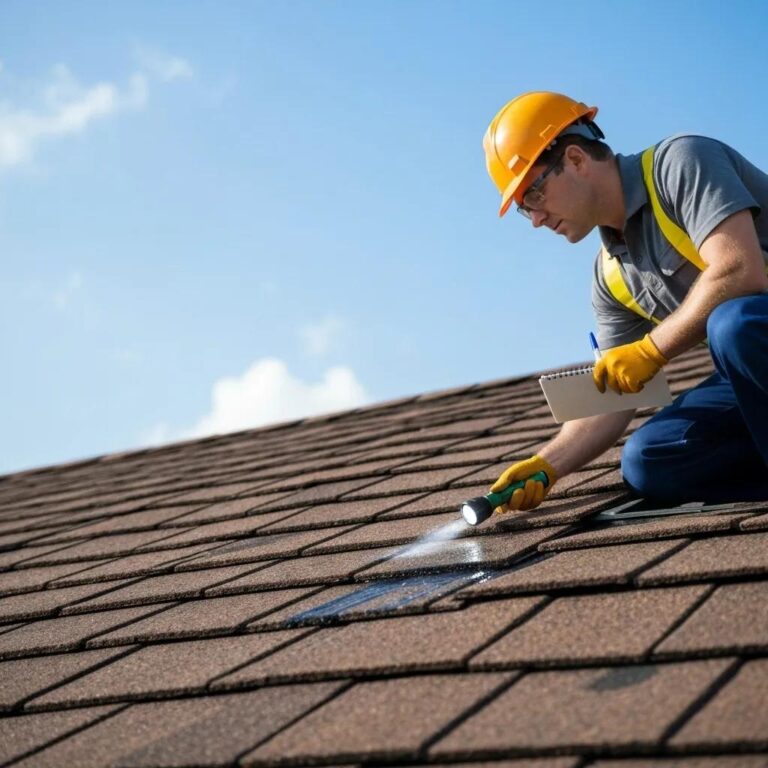
Inspecting a roof requires visual, diagnostic, and measurement tools that expose damage, hidden moisture, and structural irregularities before they worsen. Accurate inspections prevent small issues from evolving into major failures and lay the groundwork for targeted repairs. Preparing the right toolkit ensures you can assess shingle integrity, underlayment condition, flashing alignment, and hidden leaks in one comprehensive survey.
How Do Visual Inspection Tools Help Detect Roof Issues?
Binoculars, cameras, and drones enable distant examination of shingles, vents, and flashing details without stepping on fragile areas. Binoculars with 8× magnification reveal cracked granules and wind-lifted shingles from ground level, while a high-resolution camera captures close-up images for later analysis. Drones equipped with stabilized gimbals offer overhead perspectives, allowing you to pinpoint problem zones on steep slopes safely from ground control. Visual tools accelerate issue identification, guiding more invasive diagnostic steps only where required.
When Should You Use Diagnostic Tools Like Moisture Meters and Thermal Cameras?
Moisture meters and thermal imaging cameras uncover hidden water ingress and insulation voids that evade the naked eye. Use a pinless moisture meter along the decking and sheathing after heavy rain to detect elevated moisture content before mold sets in. Thermal cameras reveal temperature anomalies beneath the roof surface that indicate trapped moisture or air leaks, especially useful during cooler mornings when heat differentials peak. Employ these diagnostic devices whenever visual cues—stained ceilings, moss growth, or sagging decking—suggest underlying deterioration.
Why Are Measurement Tools Important for Accurate Roof Assessment?
Tape measures and pitch gauges quantify roof area, slope, and component dimensions to ensure precise material ordering and installation. Measuring ridge length, valley spans, and overhang projections prevents costly waste or shortages during shingle replacements or flashing upgrades. Pitch gauges calculate roof angle percentages, informing ladder placement, safety line lengths, and compatibility with certain underlayment systems. Incorporating measurement data into your inspection report guarantees repairs fit perfectly and adhere to manufacturer specifications.
These measurement tools solidify your inspection findings with exact figures, ensuring subsequent repair plans align precisely with the roof’s dimensions and pitch.
Essential Tools for Conducting a Thorough Roof Inspection
A thorough roof inspection requires essential tools such as safety gear, ladders, tape measures, flashlights, and moisture meters to detect potential issues and ensure safety.
Roofing Insights, 7 Essential Tools for Conducting a Thorough Roof Inspection (n.d.)
This source provides a list of essential tools for roof inspections, which aligns with the article’s focus on inspection tools.
Which Tools Are Best for DIY Roof Cleaning and Debris Removal?

Removing debris, leaves, moss, and algae prolongs shingle life and prevents gutter clogging, water pooling, and roof rot. Cleaning tools range from gutter scoops to roof rakes and eco-friendly scrubbing solutions, each suited to a specific maintenance task. Selecting the right implements speeds cleanup, reduces surface damage, and prepares the roof for seamless inspection and repair.
What Gutter Cleaning Tools Make Maintenance Easier?
Gutter scoops, leaf blowers, and extension poles swiftly clear downspouts and troughs of leaves and sediment. A narrow-bladed gutter scoop accesses tight channels without overstretching, while a battery-powered leaf blower with a curved nozzle detaches debris without splashback. Extension poles let you reach gutters from the ground, minimizing ladder moves and fall risk. Combined, these tools transform arduous gutter clearing into a quick, efficient process.
How Can You Effectively Remove Moss and Algae from Your Roof?
Soft-bristle brushes, garden sprayers, and oxygen-based cleaning solutions lift moss and algae without harming shingles. Brushing gently along the grain loosens growth without dislodging granules, while sprayers deliver a biodegradable solution that breaks down spores over 48 hours. Frequent soft cleaning prevents root penetration into underlayment and stops moisture retention that accelerates shingle degradation.
What Are the Best Tools for General Debris Clearing on Roofs?
Roof rakes and leaf blowers remove branches, leaves, and light snow with minimal roof contact. A roof rake equipped with adjustable tines clears flat and pitched areas from the ground, while a variable-speed blower dislodges debris and dries damp surfaces. Using these non-abrasive tools preserves shingle granule integrity and prevents inadvertent surface damage during seasonal cleanups.
What Are the Must-Have Tools for Minor Roof Repairs and Sealing?
After inspection and cleaning, minor repairs seal leaks and replace damaged shingles, shielding the roof from further moisture intrusion. Having the right repair instruments on hand minimizes repair time and ensures professional-quality results without unnecessary replacement costs. Proper tools enable you to address flashing failures, loose shingles, and small punctures swiftly.
Which Tools Are Essential for Shingle Repair?
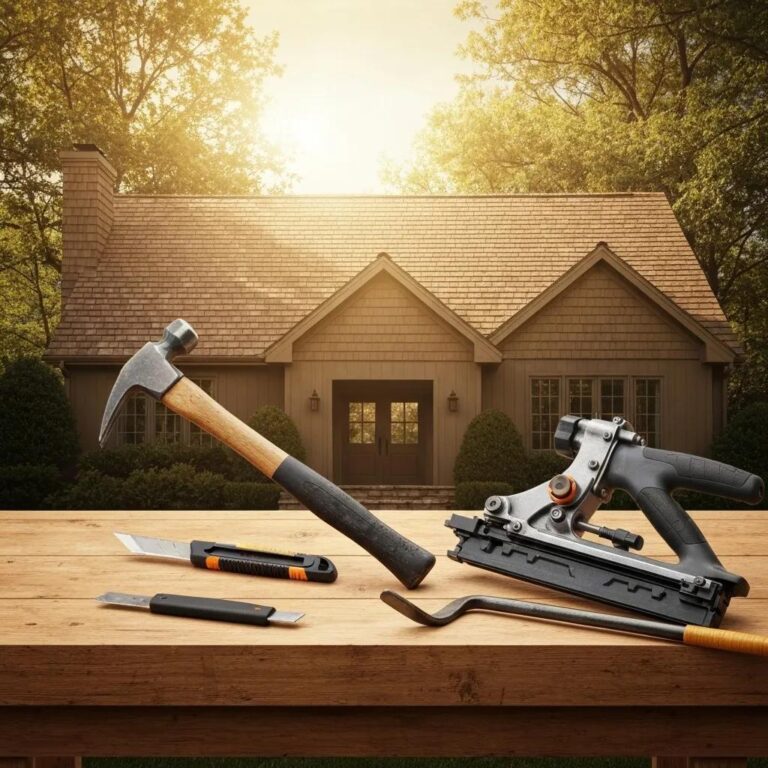
Roofing hammers, utility knives, shingle removers, and roofing nailers streamline the shingle replacement process. A roofing hammer with a magnetic nail starter and shingle remover bar pries up old nails and shingles cleanly. Utility knives score and trim new shingles to fit, and a pneumatic roofing nailer secures them at manufacturer-specified nail patterns. This quartet of tools allows precise removal and installation, restoring a watertight shingle layer.
7 Must Have Roofing Tools For Roof Repairs
Essential tools for roof repairs include a utility knife for cutting materials, a hammer for securing shingles, and a sealant gun for preventing leaks.
Community Pro Roofing, 7 Must Have Roofing Tools For Roof Repairs (2025-08-01)
This source lists essential tools for roof repairs, which is directly relevant to the article’s section on repair tools.
How Do Flashing and Sealant Tools Prevent Roof Leaks?
Caulking guns, aviation snips, and roofing cement create durable seals around vents, chimneys, and valleys to block water ingress. The caulking gun applies consistent bead sizes, roofing cement trowels fill gaps, and snips cut flashing to custom shapes that conform to complex roof intersections. These tools ensure flashing adheres tightly to both the roof deck and vertical surfaces, eliminating common leak points.
What General Repair Tools Support Structural Fixes?
Pry bars, drills, and circular saws enable deck replacement and underlayment reinforcement for advanced repairs. Pry bars lift deteriorated decking boards cleanly, drills power screw or nail guns for secure fastening, and a circular saw cuts new boards to exact dimensions. Structural tools facilitate sectional deck replacement, restoring surface strength before re-sheathing and shingle installation.
These instruments provide the power and precision necessary to complete minor roof repairs that defend against leaks and structural decay.
How Can You Maintain and Store Your DIY Roof Maintenance Tools?
Tool longevity hinges on proper cleaning, lubrication, and organized storage that prevents corrosion, wear, and misplaced implements. Well-cared-for tools perform reliably when you need them, reducing unexpected downtime during urgent repairs. Establishing a maintenance routine now preserves your investment and ensures every future project begins with dependable equipment.
What Are the Best Practices for Cleaning and Storing Roofing Tools?
After each use, remove debris and residue from hand tools and power tools, then apply a light coat of rust-inhibiting lubricant to metal surfaces. Store tools in labeled bins or on pegboards within a dry, climate-controlled workshop or garage to prevent moisture damage. Keep sharp edges sheathed and electrical cords coiled neatly to avoid accidental cuts and wire fatigue.
When Should You Call a Professional Instead of DIY?
Call a professional when roof pitch exceeds 6:12, damage spans more than 25 percent of the roof area, or structural frame issues become apparent. Professionals hold advanced safety certifications, specialized equipment like scaffold systems, and warranty-backed workmanship for complex repairs. Recognizing these limits protects both your safety and your roof’s long-term integrity.
How Does the Cost-Benefit of DIY Tools Compare to Professional Services?
Investing in a basic roof maintenance toolkit—typically $300 to $800—pays off through savings on inspection visits, minor repairs, and seasonal cleanups. By contrast, a single professional service call can start at $400 for inspection alone, excluding repair labor and materials. Over five years, routine DIY maintenance can reduce professional repair bills by up to 60 percent, making your tool collection a smart long-term investment.
How Do Different Roof Types Affect Your Choice of Maintenance Tools?
Roof materials vary in hardness, fragility, and surface texture, demanding specialized implements to avoid damage and ensure effective care. Tailoring your toolkit to asphalt shingles, metal panels, or cedar shakes maximizes cleaning efficiency, repair quality, and overall roof longevity. Understanding material-tool compatibility guides you in selecting implements that work in harmony with each roof type.
What Tools Are Recommended for Asphalt Shingle Roofs?
A soft-bristle brush, pneumatic nailer calibrated for 1¼-inch roofing nails, and a biocide-infused moss spray deliver safe debris removal and precise shingle replacement on asphalt surfaces. The soft brush clears granule buildup without abrading the mat layer, while a nailer ensures consistent nail depth, preventing over-penetration that can puncture the underlayment.
Asphalt Roof Shingles Maintenance and Care Guide
Regular inspections, cleaning, and gutter maintenance are crucial for preserving the integrity and extending the lifespan of asphalt shingle roofs.
Freeman Exteriors, Asphalt Roof Shingles Maintenance and Care Guide (2025-03-29)
This source provides maintenance tips for asphalt shingle roofs, which is relevant to the article’s material-specific recommendations.
Which Tools Are Best for Metal and Cedar Shake Roofs?
Non-metallic roof rakes, panel-compatible screwguns with neoprene washers, and cedar-safe cleaning solutions prevent scratches and errant corrosion on metal and wood roofs. Roof rakes equipped with polyurethane-tipped tines slide under snow and debris without gouging paint or cedar fibers. Screwguns with adjustable torque settings secure metal panels firmly and protect shake shingles from splitting.
Metal Roof Maintenance
Metal roofs require regular inspections and cleaning to prevent issues like leaks or corrosion, and to prolong their lifespan.
RoofClaim, Complete Guide to Metal Roof Maintenance (n.d.)
This source discusses the importance of regular maintenance for metal roofs, which is relevant to the article’s discussion of material-specific tool adaptations.
What Emerging Technologies Can Enhance DIY Roof Maintenance?
Innovative devices like drones and thermal imaging cameras bring professional-grade diagnostics within every homeowner’s reach, enabling safer, faster, and more detailed roof assessments. Incorporating these technologies into your toolbox uncovers hidden damage early and reduces the need for risky manual inspections. Embracing advanced inspection methods bolsters your DIY maintenance accuracy and overall roof health.
How Can Drones Improve Roof Inspection Accuracy and Safety?
Drones equipped with high-resolution cameras and GPS mapping fly over roofs without exposing you to falls or weather hazards. They collect geotagged imagery that reveals shingle misalignment, granule erosion, and flashing gaps with millimeter-level precision. Automated flight paths ensure complete coverage, and live video feeds let you intervene on the spot, streamlining condition surveys and reducing human error.
Drone Roof Inspections: A Comprehensive Guide
Drone roof inspections use drones equipped with cameras and sensors to assess roof conditions, capturing high-resolution images and data to evaluate the roof without physical access, improving safety and efficiency.
UAV Coach, Drone Roof Inspections: An In-Depth Guide [New for 2025] (2025)
This source highlights the use of drones for roof inspections, which is a cutting-edge technology mentioned in the article.
What Are the Benefits of Using Thermal Imaging Cameras for Roof Damage Detection?
Thermal cameras detect subtle temperature differences across roof surfaces, pinpointing moisture intrusion, insulation voids, and air leaks invisible to visual inspection. By highlighting cold spots where moisture accumulates, they guide targeted repairs that stop leaks before they compromise framing or interior finishes. Non-invasive and rapid, thermal diagnostics integrate seamlessly into seasonal maintenance routines for proactive roof care.
Regularly cleaning, inspecting, and repairing your roof with the right safety gear, inspection instruments, cleaning tools, repair implements, storage practices, material-specific adaptations, and innovative technologies ensures lasting performance. Proper maintenance extends shingle lifespans, prevents costly structural damage, and reduces dependency on professional services. Investing time in tool selection and care fosters homeowner empowerment while safeguarding property value. Embracing these essential tools for DIY roof maintenance today sets the stage for a resilient, leak-free roof for years to come.
Need a roof inspection in Saint Paul or the Twin Cities? Call Sellers Roofing Company at +1-651-703-2336 or schedule a free estimate. We are a black-owned, NMSDC-certified MBE roofing contractor with 9+ years experience.