Last updated: 2026-09-07 by Ted Sellers, Owner
Tornado roof damage on Minnesota asphalt shingles usually appears as missing or lifted shingles, sharp creases, torn seal strips, exposed underlayment, bent flashing, and debris strikes. Damage often clusters at ridges, eaves, hips, and wind-facing slopes. A roof can look mostly intact yet leak after wind breaks its water-shedding layers.
Tornadoes can create obvious blow-offs, but the more common problem is selective wind damage. One slope may be torn up while the rest of the roof looks normal.
When Tornado Roof Damage Applies
Recent tornado, severe wind, or debris impact
This applies after a confirmed tornado, a severe thunderstorm with rotating winds, or a storm that left branches, siding, gutters, or shingles on the ground. It also applies when you hear rattling during the storm, find granules below downspouts, or notice a new attic or ceiling stain afterward.
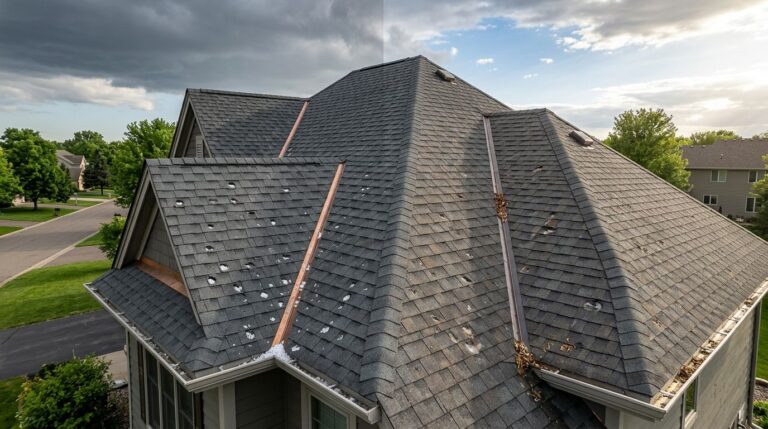
Minnesota’s spring and summer storms can combine wind, rain, and hail in one event. A hail damage roof can have impact marks along with wind-lifted shingles. Those are separate damage patterns, and both should be documented.
When the damage may have another cause
Not every loose shingle is tornado damage. Age, poor fastening, brittle shingles, repeated freeze-thaw cycles, and an old leak can cause similar symptoms. Curling across an entire roof usually points to age. Fresh wind damage is more often concentrated, abrupt, and tied to a recent weather date.
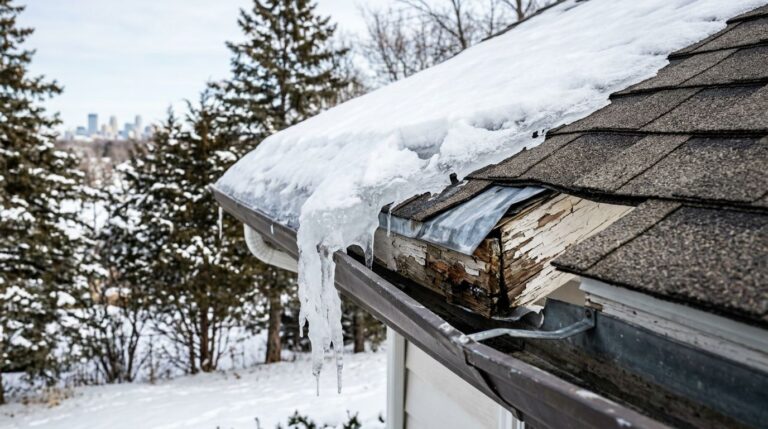
Ice buildup can complicate the picture. If winter water backed up under shingles, ice dam removal may be part of protecting the roof, but it doesn’t explain a fresh crease or a missing shingle after a wind event.
What Tornado Damage Looks Like on Asphalt Shingles
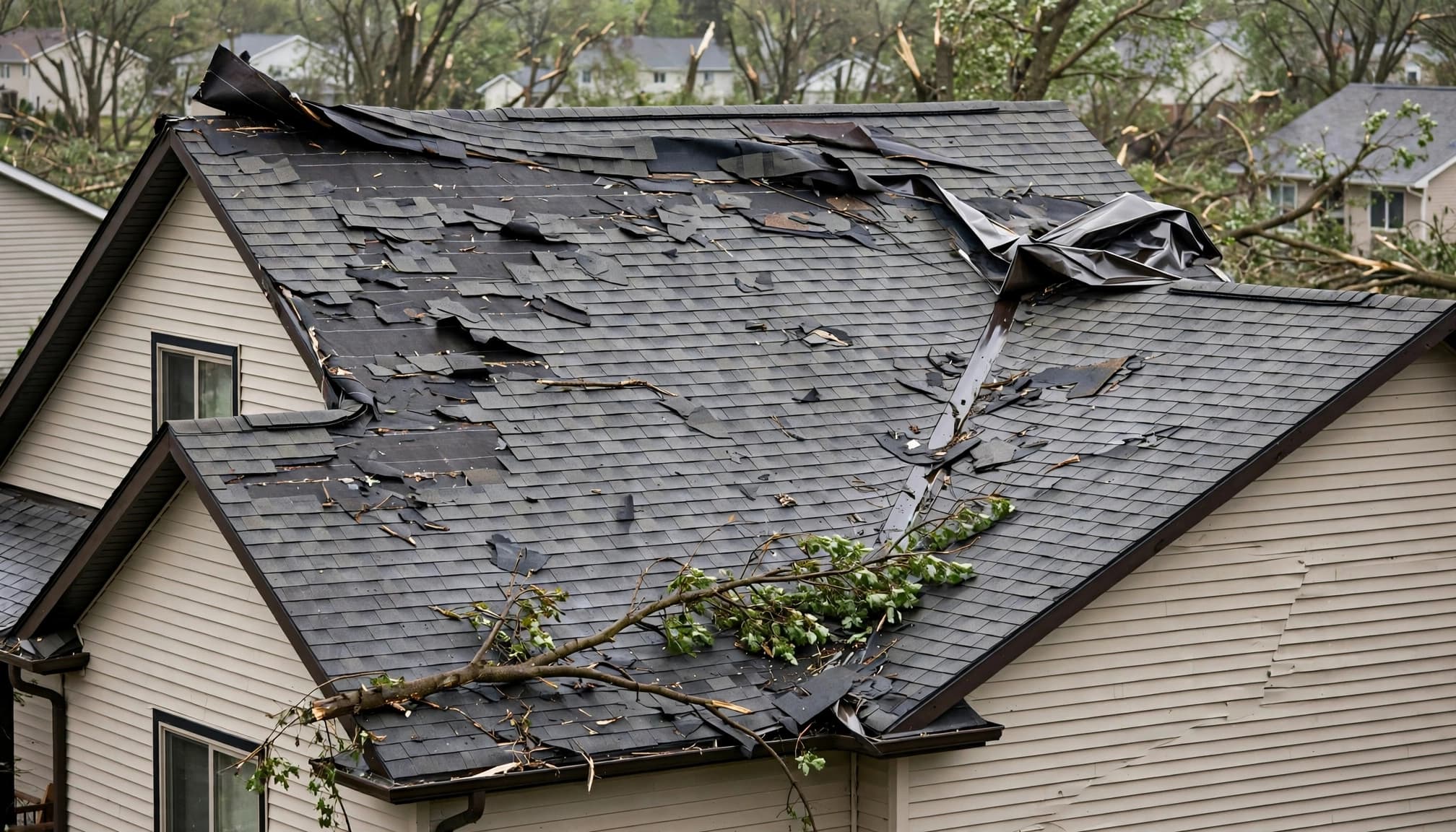
Lifted, creased, or missing shingles
High wind gets under the lower edge of an asphalt shingle and breaks the seal strip. The shingle may bend upward, crease across the tab, or tear away completely. A crease is not cosmetic. It can fracture the asphalt mat and shorten the shingle’s service life.
Look closely at the roof’s edges, ridge caps, hips, valleys, and the slope facing the storm. Tornado winds can change direction quickly, so damage may appear on more than one side.
Exposed underlayment and damaged roof details
A missing shingle exposes underlayment, nails, and roof deck edges to rain. Wind can also lift ridge caps, pull off pipe-boot flashing, bend drip edge, crack a gable vent, or loosen chimney flashing.
Debris damage matters too. A branch can knock off granules, split shingles, or punch through a weak area. On a storm damage roof, the visible opening may be small while water reaches the decking and attic below.
A ceiling stain does not identify the roof opening. Water can travel along decking, framing, and insulation before it appears indoors.
Step-by-Step: What to Do After a Tornado
1. Check safety before checking the roof
Stay clear of downed power lines, hanging branches, broken glass, and unstable structures. Do not climb onto a roof after a tornado. Tornado debris is dangerous, and wet shingles are slick even for trained crews.
Use National Weather Service tornado safety guidance to confirm conditions are safe before walking around the property. Photograph damage from the ground, including siding, gutters, vents, windows, and debris.
2. Stop active water without erasing evidence
If rain is entering, use a temporary tarp or emergency dry-in after taking photos, if it can be done safely. Save invoices and note the date and work completed. Temporary mitigation protects the building and supports a claim.
Avoid broad tear-off work, a full reroof, or permanent patches before the roof is inspected. Those actions can remove proof of what wind did. For an active leak, Call 651-703-2336 for 24/7 Emergency Roofing.
3. Get a documented roof inspection
A professional inspection should identify the roof material, affected slopes, damaged components, likely cause, and whether the roof needs a targeted fix or broader work. Ask for clear photos and a written scope.
A detailed commercial roof inspection is different from a residential shingle inspection. Low-slope systems may hold hidden moisture well beyond the visible opening.
4. Open a fact-based roof insurance claim
Report the storm date, the known damage, and any active leak. Keep the description factual. “Wind lifted ridge shingles and rain entered the attic” is better than broad statements about total destruction.
For a roof insurance claim, keep storm photos, contractor findings, temporary repair receipts, insurer correspondence, and damaged material when possible. FEMA’s disaster preparedness resources also recommend keeping important records accessible after severe weather.
5. Compare repair scope before authorizing permanent work
Do not compare only the insurer’s total payment with a contractor’s total estimate. Compare shingles, flashing, underlayment, ventilation, decking, disposal, permits, and code-required work.
A focused residential roof repair can solve isolated wind damage. Widespread creases, exposed decking, or multiple failed slopes may make residential roof replacement the sounder decision. Homeowners can Get a Free Residential Roof Estimate before choosing a permanent scope.
Tornado Damage Versus Normal Roof Wear
Fresh wind damage has a pattern
Fresh tornado damage often has torn edges, clean breaks, displaced shingles, exposed fasteners, and damage that follows wind flow. You may find matching shingle pieces or ridge cap fragments in the yard.
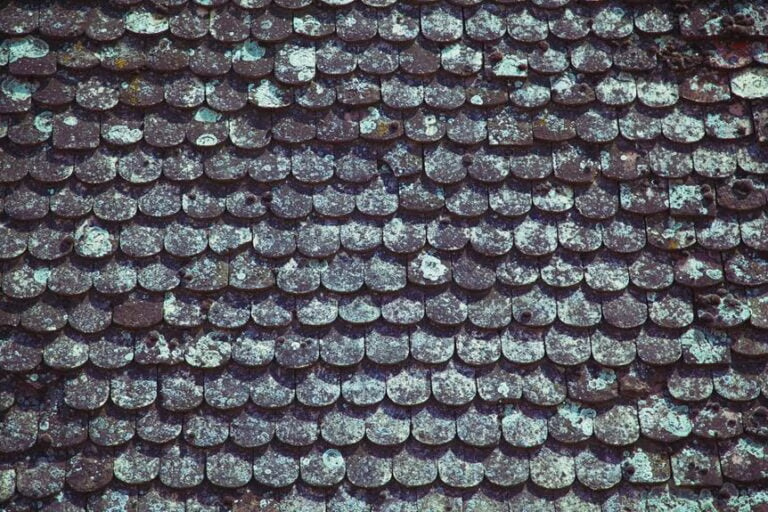
Old wear looks different. It usually includes widespread granule loss, brittle cracking, curling tabs, algae staining, and gradual deterioration across large areas. A prior repair does not cancel coverage for a new wind opening elsewhere on the roof.
Hail and metal damage need separate review
Hail bruises asphalt shingles by knocking away granules and fracturing the shingle mat. Tornado wind lifts or creases shingles. One storm can do both.
Metal roofing can show dents, loosened panels, damaged clips, distorted seams, and bent flashing. A dent may be cosmetic, but a disturbed seam, coating, or drainage path needs repair. The inspection must separate surface appearance from functional damage.
Tornado Damage on Commercial Flat Roofs
Single-ply and built-up systems fail differently
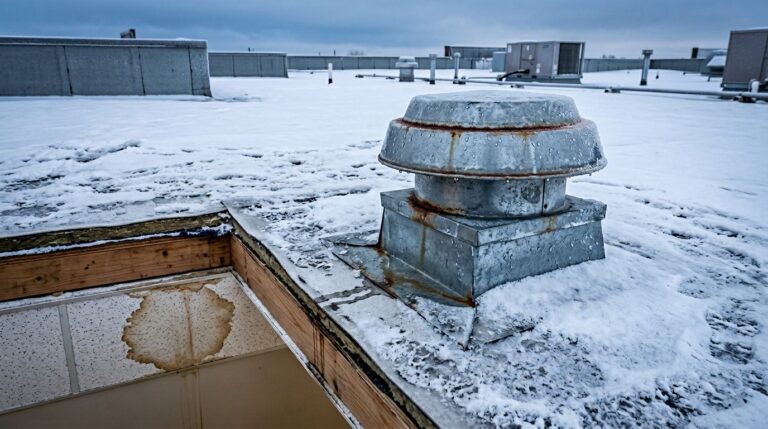
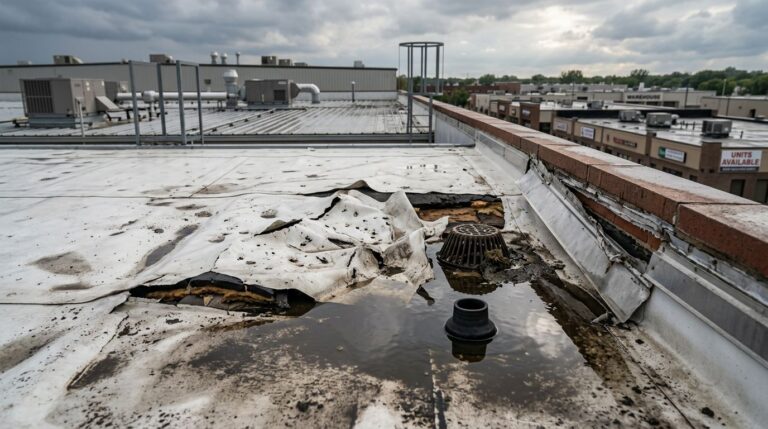
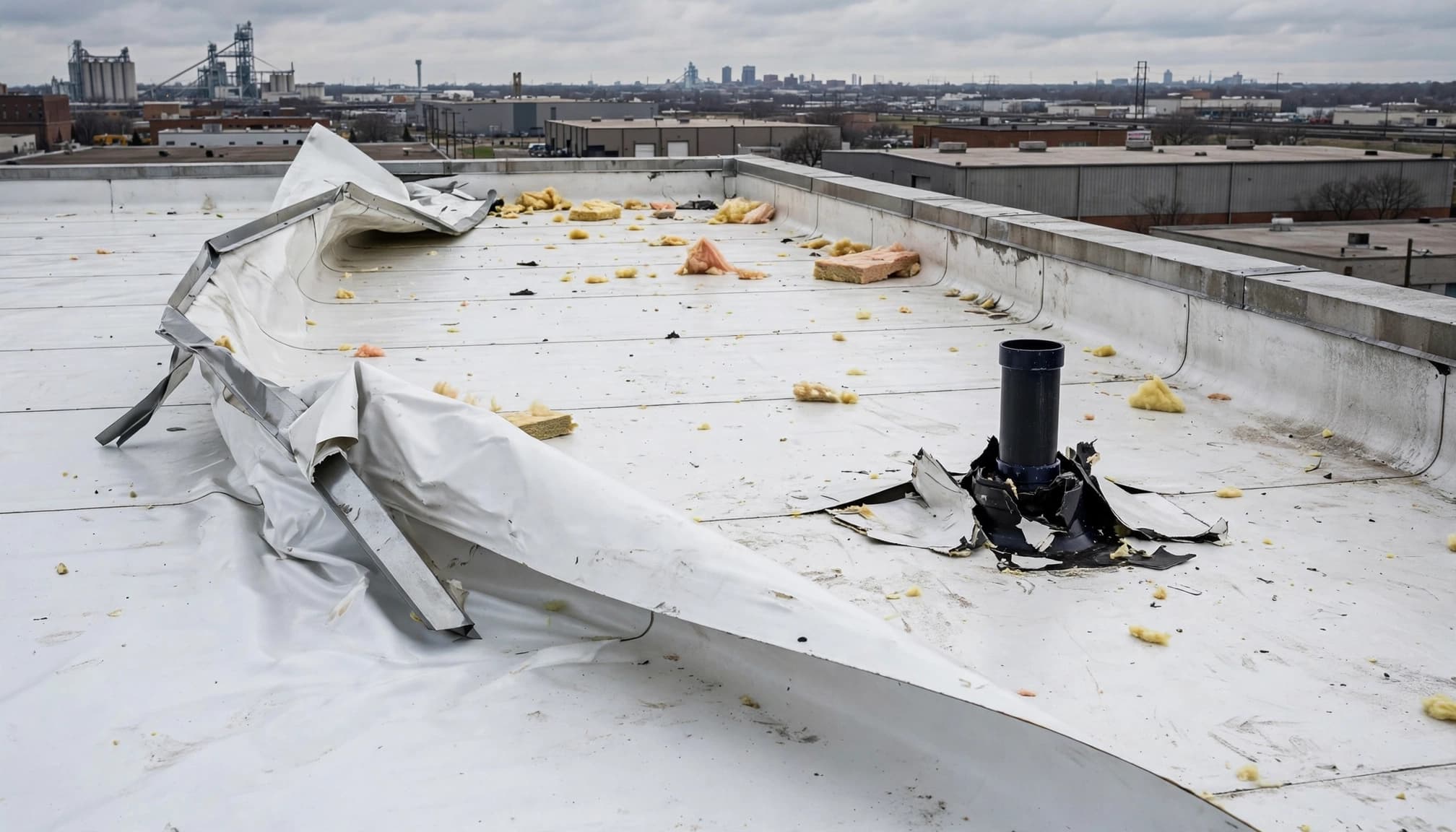
A commercial flat roof does not have shingle tabs to crease. On TPO roofing and EPDM, inspectors look for open seams, lifted membrane, loose edge metal, split flashing, punctures, and wet insulation. Wind can enter at a parapet edge and peel back material across a large area.
Modified bitumen and BUR, also called built-up roofing, can develop torn laps, blisters, displaced gravel, fractured surfacing, and loose base flashings. Water can move under the membrane before it reaches a ceiling tile.
Hidden moisture changes the repair decision
A small opening does not always mean a small loss. Infrared scans, moisture mapping, and test cuts can show whether insulation is wet beyond the visible tear. Use commercial roof leak detection in St. Paul when the leak source or moisture extent is unclear.
If the roof remains dry and damage is isolated, commercial roof repair may be enough. Wide moisture spread, repeated seam failures, or displaced membrane can justify commercial roof replacement instead.
Repair, Restoration, or Replacement?
Match the work to the actual damage
A targeted repair can replace missing shingles, reset flashing, repair a vent, or seal a limited membrane opening. It works when surrounding materials remain secure and dry.
Commercial roof restoration may fit an older low-slope roof with a sound substrate and limited damage. Commercial roof coatings are not a fix for wet insulation, open seams, or failed edge details. A coating applied over active failure can trap the problem below the surface.
Use qualified local crews and written scopes
Saint Paul roofing and Minneapolis roofing projects face the same cold-weather pressure points: wind, snow loads, ice, and freeze-thaw movement. Good Twin Cities roofing work accounts for those conditions instead of treating a Minnesota roof like one in a mild climate.
Sellers Roofing Company has completed more than 1,100 roofs since 2017. Its union-built roofing crews include IUPAT Local 96 roofers, and the company holds MN License 803862. GAF-certified installation and a written scope help establish quality standards, but the evidence still decides the insurance claim.
Commercial owners can Get a Free Commercial Roof Inspection to determine whether storm damage is isolated or system-wide.
Frequently Asked Questions
Can a roof have tornado damage without missing shingles?
Yes. Wind can break adhesive seals or crease shingles without blowing them off. Those shingles may stay in place but lose their ability to resist future wind and rain.
Check the shingle edges
A lifted edge, broken seal strip, or sharp horizontal crease needs inspection even if the roof looks intact from the driveway.
Should I tarp my roof before the insurance adjuster arrives?
Tarp it if water is entering and conditions are safe. Take photos first, keep the tarp temporary, and save receipts. Do not start broad permanent repairs before the condition is documented.
Will insurance pay for tornado roof damage?
Many policies cover sudden wind damage, but coverage depends on the policy language, deductible, exclusions, and proof of cause. Insurers commonly exclude long-term wear, maintenance failures, and unrelated upgrades.
What if the adjuster says the roof only needs a small repair?
Ask for the line-item scope and compare it with the inspection report. If tear-off later reveals wet decking, damaged flashing, or broader moisture, submit documentation for a supplement before permanent work moves too far ahead.
Can a commercial building stay open during a roof leak?
Only if the affected area is safe and can be isolated. Keep people away from wet electrical equipment, sagging ceilings, slick floors, and damaged inventory. Protecting occupants comes before maintaining normal operations.
Final Takeaway
Tornado damage is not always a roof stripped bare. It can be a few creased shingles, a lifted ridge cap, a bent flashing detail, or an open seam that admits water during the next storm.
The strongest response is fast documentation, temporary protection, and a system-specific inspection. That preserves the roof, the building, and the evidence needed to choose the right repair.
Need a roof inspection in Saint Paul or the Twin Cities? Call Sellers Roofing Company at +1-651-703-2336 or schedule a free estimate. We are a black-owned, NMSDC-certified MBE roofing contractor with 9+ years experience.