Last updated: 2026-05-26 by Ted Sellers, Owner
Understanding DIY Roof Repair: A Complete Breakdown of Material Costs You Can Expect
Repairing your own roof can save hundreds—even thousands—of dollars compared to hiring a contractor, but material costs still add up quickly. This guide demystifies understanding DIY roof repair costs by breaking down every expense category, from shingles to safety gear, and reveals strategies for budgeting with confidence. You’ll discover:
- What DIY roof repair entails and key cost categories
- Common repair types with exact material requirements
- Detailed price ranges for shingles, metals, underlayments, sealants
- Essential tools and fall-protection equipment investment
- Hidden expenses, risks, and when professional help makes sense
- Smart budgeting tips, inspection techniques, and permit considerations
With clear tables, actionable lists, and real-world examples, this article empowers homeowners to plan repairs accurately, avoid surprises, and maintain a safe, watertight roof.
What Is DIY Roof Repair and Why Consider It?
DIY roof repair refers to a homeowner performing maintenance or fixes without hiring a professional, which directly reduces labor expenses and fosters greater project control. Tackling small-scale repairs—like replacing shingles or patching leaks—requires basic roofing knowledge and manageable materials. For example, swapping out five damaged asphalt shingles yourself can cost under $50 for parts, while labor alone would exceed $200.
What Does DIY Roof Repair Involve?
DIY roof repair involves inspecting damage, gathering materials, performing removal or patching tasks, and applying protective finishes. A structured approach ensures each step—assessment, procurement, installation, cleanup—flows seamlessly into the next, reducing mistakes. For instance, measuring roof pitch accurately prevents ordering incorrect shingle quantities and minimizes waste before beginning the repair.
What Are the Main Cost Categories in DIY Roof Repair?
Material, tool, and safety equipment costs form the three main expense categories in a DIY roof repair project. Materials include shingles, flashing, underlayment, and sealants; tools range from hammers to nail guns; safety gear covers harnesses and anchors. A small leak patch might cost $15 in sealant and flashing tape but require a $100 fall-arrest kit to perform safely.
How Can DIY Roof Repair Save You Money?
DIY roof repair saves money by eliminating contractor labor rates—often 60% of total project costs—while leveraging affordable materials and amortizing tool purchases over multiple uses. Completing simple tasks yourself builds confidence, reduces scheduling delays, and keeps your warranty intact if manufacturer guidelines permit homeowner installation.
What Are the Most Common DIY Roof Repair Types and Their Material Needs?
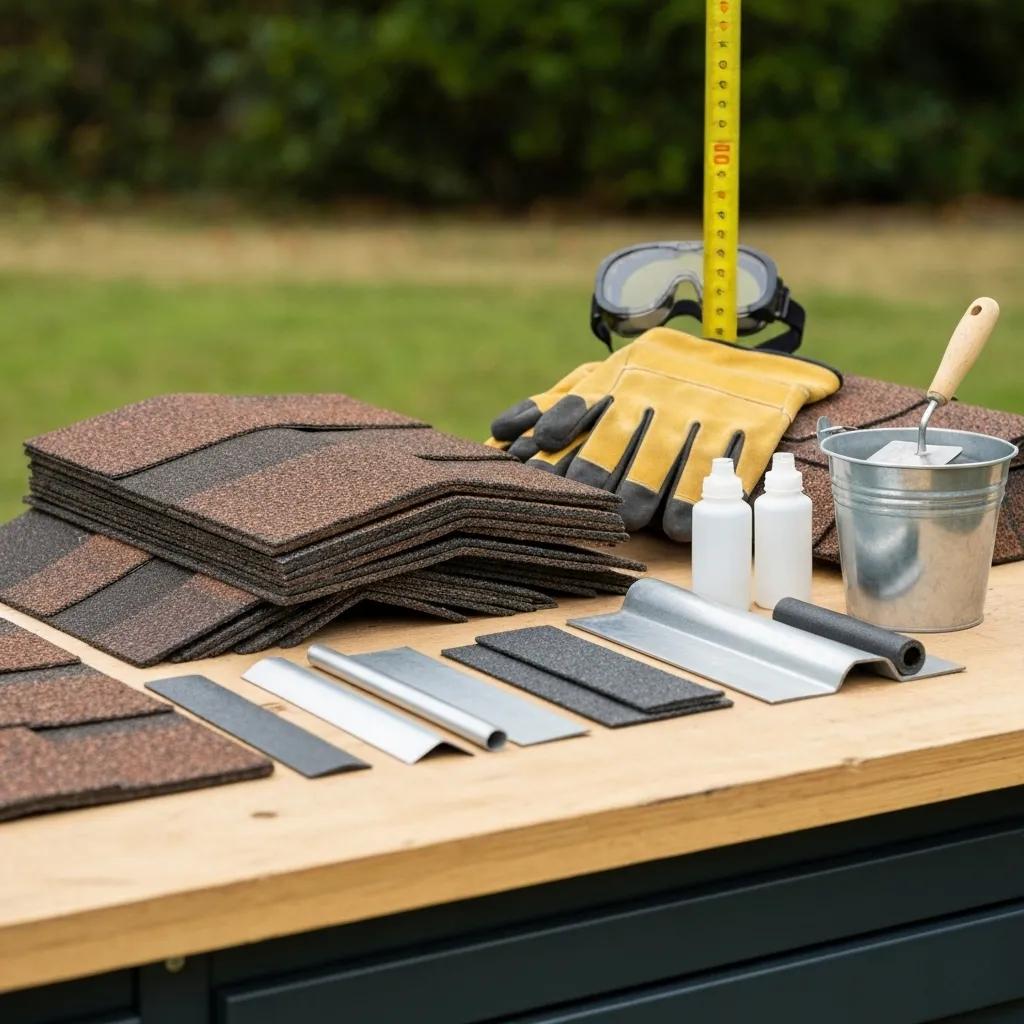
Homeowners frequently tackle shingle replacement, leak patching, flashing repair, and gutter debris removal themselves to address localized issues before they escalate. Each repair type demands distinct supplies and influences overall budgeting.
How Much Does Asphalt Shingle Replacement Cost?
Replacing five to ten standard three-tab asphalt shingles typically requires shingles, roofing nails, underlayment patch, and sealant strips.
A small 10-shingle repair averages $50–$80 in materials. Proper sealing prevents water intrusion and extends shingle lifespan, setting the stage for assessing leak patch requirements.
What Materials Are Needed for Small Leak Patching?
Patching a minor roof leak requires roofing cement, compatible sealant, and flashing tape to bridge gaps around penetrations gracefully.
- One tube of roofing cement
- A roll of butyl flashing tape
- A squeeze-tube roof patch sealant
Estimating $10–$15 per leak, homeowners can seal cracks around vents or skylights quickly, preventing interior water damage.
What Does Flashing Repair Require in Materials and Cost?
Repairing deteriorated flashing around chimneys or vent pipes mandates updated flashing kits, roofing nails, and high-quality sealant.
- Flashing kit (galvanized metal)
- Corrosion-resistant roofing nails
- Silicone roof sealant
A complete chimney flashing repair runs $30–$50 in materials, with proper adhesion crucial to avoid recurring leaks.
What Tools and Materials Are Needed for Gutter Cleaning and Debris Removal?
Clearing gutters and removing rooftop debris uses minimal materials but requires safe access.
- Extension ladder with stabilizers
- Work gloves and eye protection
- Heavy-duty trash bags or tarp
Expect $5–$10 for gloves and disposal supplies. Routine cleaning prevents ponding water and underlayment damage that could lead to costly repairs.
How Much Do Roofing Materials Cost for DIY Repairs?
Material prices vary widely by type, quality, and region. Understanding cost per square foot and durability helps homeowners choose options that fit both budget and performance requirements.
What Are the Prices and Types of Asphalt Shingles?
Asphalt shingles remain the most affordable roofing option, with three main varieties:
Asphalt Shingle Costs
Asphalt shingles are a popular and affordable roofing option, with costs varying based on the type of shingle. 3-tab shingles are the most basic and budget-friendly, while architectural shingles offer a more dimensional appearance and greater durability.
How Much Does Metal Roofing Material Cost for DIY?
DIY metal roofing uses standing seam panels or corrugated sheets.
Metal Roofing Costs
Metal roofing offers durability and longevity, but comes with a higher upfront cost compared to asphalt shingles. Different types of metal roofing, such as corrugated steel and standing seam, have varying costs per square foot.
Total cost for a small section (100 sq ft) averages $200–$700 depending on style, with added underlayment essential for condensation control.
What Are the Costs of Wood, Tile, and Slate Roofing Materials?
Premium materials boost curb appeal but command higher investments:
What Are the Costs of Underlayment and Roofing Accessories?
Underlayment and accessories create the crucial waterproof barrier beneath roofing materials:
How Much Do Sealants and Adhesives Cost for Roof Repairs?
Sealants and adhesives provide localized waterproofing around penetrations and seams.
A complete leak-repair kit for a typical small roof patch can cost $20–$30 in adhesives and flashing materials.
What Essential Tools and Safety Equipment Are Needed for DIY Roof Repair and What Do They Cost?

A safe, efficient DIY roofing project depends on the right tools and fall-protection gear. Without investing in these essentials, the risk of costly accidents and substandard repairs increases dramatically.
Why Is Fall Protection Equipment Crucial and What Is Its Cost?
Proper fall protection prevents catastrophic injuries by securing workers with harness, anchor, and lanyard systems.
Fall Protection Equipment Costs
Fall protection equipment is crucial for safe DIY roof repair. A complete fall-arrest kit typically includes a harness, anchor point, and lanyard, with costs ranging from $150 to $270.
Spending $150–$270 on a compliant fall-arrest kit is non-negotiable for safe rooftop access, laying the foundation for efficient tool use.
What Basic Hand Tools Are Required and Their Price Range?
Every DIY roofer needs a standard toolkit to make precise cuts, fasten materials, and remove debris:
- Hammer and Pry Bar: $10–$25 each
- Utility Knife: $5–$10
- Tape Measure and Chalk Line: $5–$15
With a one-time outlay of $50–$75 for hand tools, homeowners gain durable implements that support multiple projects.
When Are Power Tools Like Roofing Nail Guns Worth the Investment?
A roofing nail gun dramatically speeds installation of shingles and underlayment, reducing fatigue and improving nail placement accuracy. Renting costs $25–$50 per day, while a mid-range purchase runs $150–$300. For projects over 200 shingles, buying yields ROI through time savings and consistent nailing depth.
What Are the Costs of Ladders and Access Equipment?
Allocating $200–$350 for reliable access equipment ensures safe transitions between ground and roof.
What Are the Hidden Costs and Risks of DIY Roof Repair?
Beyond materials and tools, homeowners must account for time, mistakes, warranty impacts, disposal fees, and potential injuries that can inflate a project’s real expense significantly.
How Does Time Investment Affect the True Cost of DIY Repairs?
Time spent on roof repairs represents labor value that could be applied elsewhere: a weekend project of 16 hours equates to roughly $800 in foregone work if valued at $50 per hour. Factoring in planning, procurement, and execution, time investment can rival material costs.
What Are the Risks of Improper Installation and Resulting Water Damage?
Mistakes such as incorrect shingle alignment or inadequate flashing installation often lead to leaks, mold growth, and structural rot—resulting in secondary professional repairs that far exceed initial DIY savings. Investing in proper technique and inspection reduces these long-term risks.
How Can DIY Repairs Void Manufacturer Warranties?
Performing unauthorized repairs can void shingle or underlayment warranties, transferring repair liability to the homeowner. Many manufacturers require certified installation to maintain coverage, making professional work a safer option for extensive replacements.
What Are the Waste Disposal Costs Associated with Roof Repair?
Tear-off debris and packaging require disposal through dumpster rental or municipal fees. Renting a small roll-off container typically costs $300–$500, while local hauling services charge $100–$200 per ton. Budgeting for waste removal prevents unexpected expenses after project completion.
What Are the Potential Injury and Medical Costs from DIY Roofing?
Roofing falls and tool mishaps generate significant medical bills: the average cost for a fall-related injury exceeds $20,000 once hospitalization and rehabilitation are included. Prioritizing safety gear and conservative project scopes can minimize the risk of expensive medical interventions.
When Is DIY Roof Repair Cost-Effective Compared to Hiring a Professional?
Assessing the scale, complexity, and safety demands of each repair helps determine whether DIY truly saves money or simply shifts hidden costs onto the homeowner.
What Types of Repairs Are Best Suited for DIY?
Minor repairs—such as replacing a handful of shingles, sealing small leaks, or clearing gutters—fall within easy DIY scope. These tasks require limited materials, basic tools, and minimal safety equipment, making them cost-effective for first-time roofers.
When Should You Hire a Professional Roofer?
Complex jobs—full roof sections, heavy slate or tile installations, structural repairs around chimneys—demand specialized expertise, equipment, and warranties that professionals provide. Hiring a contractor ensures compliance with building codes, reduces liability, and preserves material warranties.
How Do DIY and Professional Repairs Compare in Cost and Long-Term Value?
DIY vs. Professional Roof Repair Costs
DIY roof repair can save money by eliminating labor costs, but it also carries risks. Professional roofers offer warranties and expertise, which may justify higher costs for complex projects.
How Can You Budget Smartly for DIY Roof Repair Material Costs?
Accurate budgeting starts with thorough assessment, savvy sourcing, and careful planning to align expenses with project scope and local regulations.
How Do You Accurately Assess Roof Damage Before Repair?
Conduct a systematic roof inspection from ground level with binoculars, then safely ascend using a harness and ladder for close examination. Note missing shingles, cracked flashing, and underlayment gaps, photographing each issue to create a precise materials list and prevent over- or under-ordering.
What Are the Best Strategies for Sourcing Affordable Roofing Materials?
Buying materials in bulk at contractor supply stores, shopping end-of-season sales, or purchasing slightly older inventory can yield savings of 10–20%. Balancing cost with brand reputation ensures quality materials that withstand weather while keeping budgets in check.
How Should You Plan and Prepare for a DIY Roof Repair Project?
Develop a detailed project timeline that accounts for weather windows, permit acquisition, and tool availability. Pre-cut materials on the ground when possible, stage tools at roof edge, and assemble helpers to streamline installation and reduce on-roof time.
What Permits Might You Need and How Do They Affect Costs?
Local jurisdictions often require building permits for significant roof repairs or material changes. Permit fees range from $50–$300 depending on scope. Incorporating permit costs into the budget ensures compliance and avoids fines that can exceed the original repair estimate.
Roofing Permit Fees
Local jurisdictions often require building permits for roof repairs, with fees varying depending on the scope of work. Permit fees can range from $50 to $300, and incorporating these costs into the budget is essential to avoid fines.
Repairing your roof yourself demands careful material cost assessment, investment in safety gear, and realistic evaluation of hidden expenses. Simple fixes like shingle swaps and leak patches can yield significant savings when executed with quality products and proper techniques. For complex or high-risk projects, professional services offer warranties and expertise that may justify higher costs. With accurate inspection methods, strategic sourcing, and thorough planning, homeowners can achieve a durable, watertight roof on a smart budget.
Need a roof inspection in Saint Paul or the Twin Cities? Call Sellers Roofing Company at +1-651-703-2336 or schedule a free estimate. We are a black-owned, NMSDC-certified MBE roofing contractor with 9+ years experience.