Last updated: 2026-10-03 by Ted Sellers, Owner
A split cedar shake noticed after a winter thaw needs a condition assessment, not an automatic replacement recommendation. Freeze-thaw cycles can contribute to cedar shake damage when moisture enters weakened wood, but a crack alone doesn’t establish the cause.
Wind, hail, installation defects, and weathering can produce similar damage. Start by checking whether the split affects water shedding and whether nearby shakes remain secure.
Contents
- When This Applies
- How Freeze-Thaw Can Contribute to Cedar Shake Damage
- Which Warning Signs Need Attention?
- Step-by-Step
- When Is Repair Enough, and When Is Replacement Necessary?
- How Can You Reduce Further Winter Damage?
- What Should You Document for an Insurance Review?
- Frequently Asked Questions
- Get the Cause and Repair Scope Right
When This Applies
Homes and buildings with real cedar roofing
This guidance applies to Saint Paul homes with natural cedar shakes, including roofs with cedar only on dormers or additions. It also applies to churches, offices, and mixed-use buildings with steep cedar-covered sections.
Wood shingles and shakes aren’t identical products. Shingles are sawn; shakes can be split or sawn, depending on the product. Both require evaluation of the wood, fasteners, flashing, and underlying roof assembly.
An older north-facing slope, shaded valley, or debris-filled roof intersection deserves close inspection because moisture can persist there. That location supports an investigation, not a diagnosis.
Roof systems that need a different inspection
Synthetic cedar-look products require their manufacturer’s inspection criteria. Damage to asphalt shingles or metal roofing shouldn’t be evaluated using wood-splitting criteria.
A building may combine cedar accents with a commercial flat roof. TPO roofing, EPDM, modified bitumen, and built-up roofing (BUR) require system-specific checks of seams, flashing, drainage, and membrane condition.
Keep those findings separate. A split shake over an entrance doesn’t establish that the building’s main low-slope roof needs replacement.
How Freeze-Thaw Can Contribute to Cedar Shake Damage
Moisture can enlarge existing weaknesses
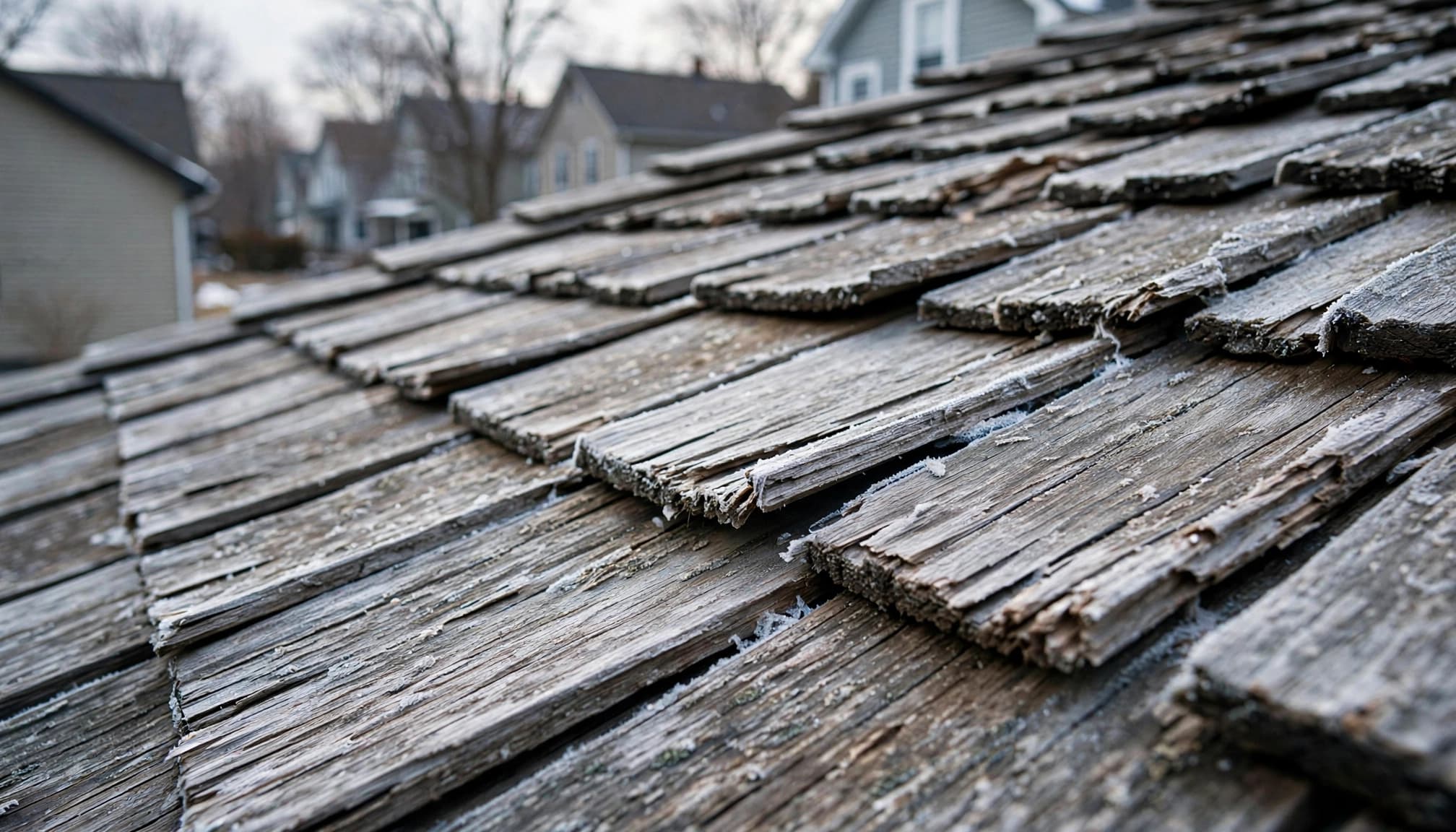
Cedar absorbs and releases moisture. Wetting and drying cause dimensional movement, while weathering can leave surface checks and weakened fibers.
When water freezes within existing openings, it can place additional stress on the surrounding wood. Repeated exposure can contribute to an existing split becoming more extensive.
The effect depends on the wood’s condition and exposure. Freeze-thaw splitting isn’t inevitable, and there’s no established local frequency for St. Paul homes in the available guidance.
Oregon State University’s wood roof maintenance guide provides background on wood roofing products and their care. Material condition remains central to a useful inspection.
Winter conditions can expose another roof problem
Snowmelt may reveal a leak that was already developing around flashing, loose shakes, or deteriorated underlayment. The timing alone doesn’t prove freezing caused the opening.
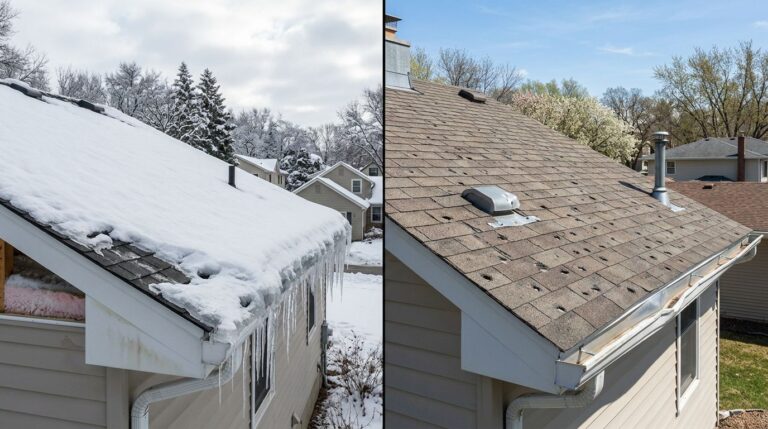
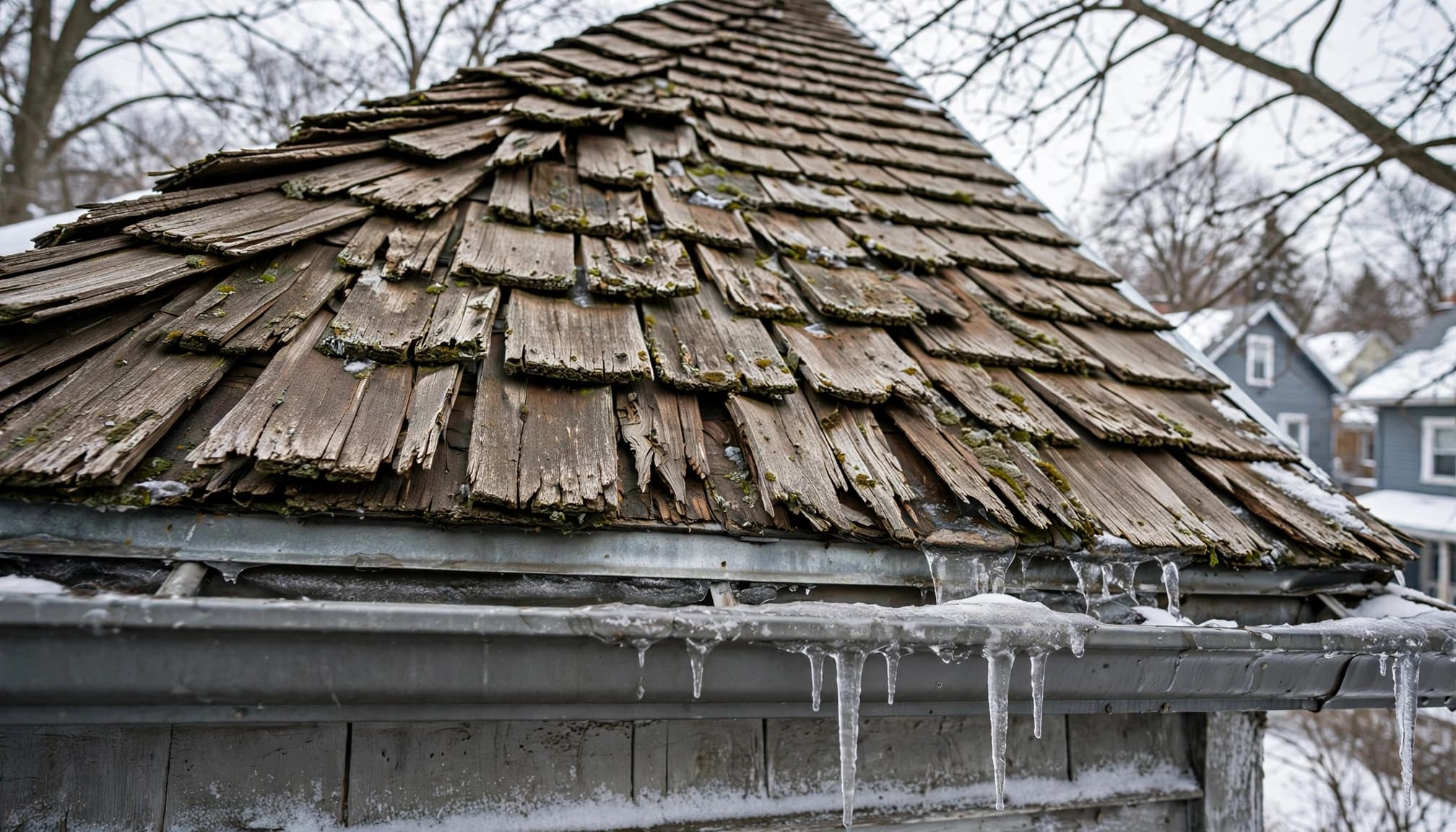
Ice dams create a separate water-entry mechanism. Meltwater can back up behind ice at the eaves and reach areas normally protected by water-shedding overlaps.
An inspection should distinguish damaged wood from water backup and defective flashing. Those problems can occur together, but they require different repair scopes.
Which Warning Signs Need Attention?
Check the split’s effect on water shedding
A weathered surface check isn’t equivalent to a through-split. The important questions are whether the shake remains intact, securely fastened, and properly overlapped.
Concern increases when the opening exposes underlying material, follows a joint in the course below, or accompanies missing wood. Lifted edges and displaced shakes also reduce the roof’s ability to shed water.
Gray color alone doesn’t establish cedar shake damage. Inspectors need to evaluate depth, position, surrounding material, and the possible water path.
Separate moisture-related deterioration from storm evidence
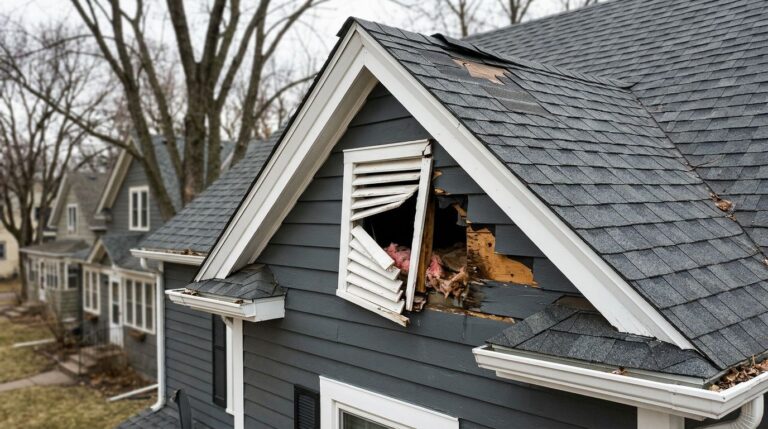
Wind damage often includes shifted rows, missing pieces, lifted corners, or disturbed ridge caps. Sellers Roofing’s cedar wind-damage warning signs describe these displacement clues.
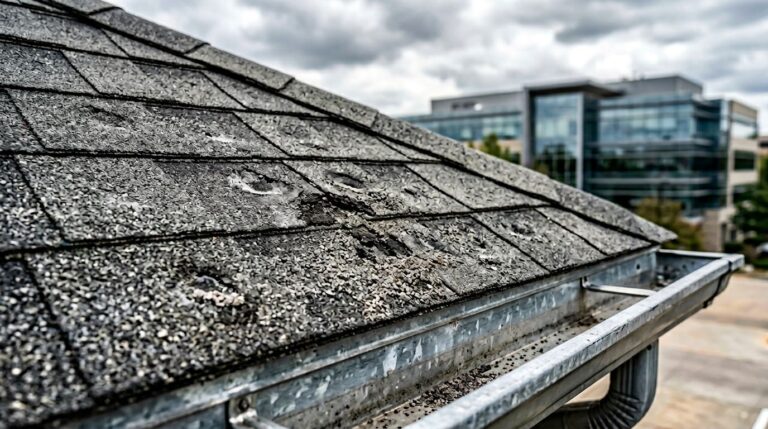
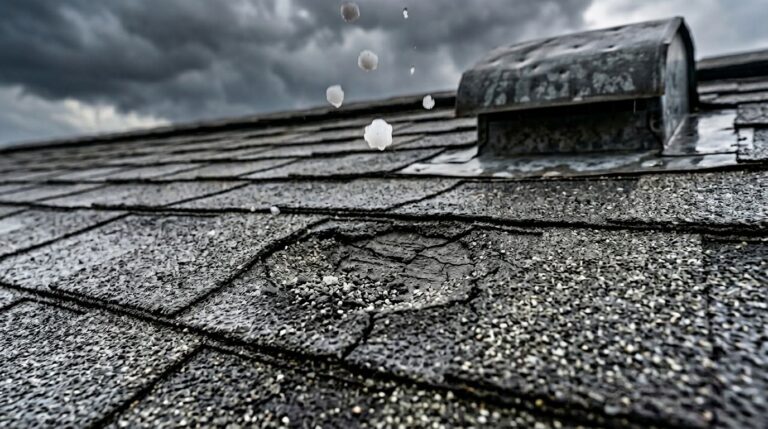
Hail can leave impact-associated splits, crushed fibers, chipped corners, or broken tips. A fresh-looking split without an impact mark doesn’t establish hail damage.
Moisture exposure may help explain deterioration concentrated near shaded valleys or eaves. However, no location pattern proves freeze-thaw damage. Fresh edges, roof position, storm timing, and fastening condition must be considered together.
Step-by-Step
Record visible conditions without walking the roof
- Inspect from the ground with binoculars or phone zoom. Check eaves, valleys, ridges, dormers, and roof intersections. Photograph displaced shakes, visible openings, and flashing movement. Don’t climb onto icy cedar or assume a dry-looking shake provides secure footing.
- Check gutters, downspouts, and the ground for cedar fragments. Record where debris collected. Pieces below one roof section help identify an inspection area, but they don’t establish whether wind, deterioration, or another event caused the break.
- Inspect accessible interior areas for ceiling stains, damp insulation, musty odors, or drips after snowmelt. Photograph the location and date. Don’t disturb wet electrical fixtures or enter an attic where access, footing, or structural conditions are unsafe.
Obtain a diagnosis before approving the work
- Request an inspection that evaluates shake condition, fastening, course overlap, flashing, underlayment, and accessible decking. Ask the contractor to distinguish observed defects from suspected causes. Ground photographs alone cannot establish concealed moisture or deck deterioration.
- Ask for a written scope identifying the affected slopes and proposed repairs. The estimate should explain whether individual shakes can be replaced without damaging surrounding material and whether flashing or underlying components also need work.
- Review urgency separately from replacement need. Active leakage requires prompt protection and repair planning. Widespread deterioration may require a larger project, but an isolated opening doesn’t justify replacing otherwise serviceable roof sections.
When Is Repair Enough, and When Is Replacement Necessary?
Localized damage can support targeted repair
Residential roof repair is appropriate when damaged shakes are confined to a repairable area and surrounding material remains sound. The repair must restore the roof’s water-shedding assembly, not cover the visible crack.
A contractor may need to replace damaged shakes, correct fastening, and repair nearby flashing or underlying defects. Access matters because brittle neighboring shakes can break during removal.
Sealant smeared over a split doesn’t reconnect wood fibers or correct defective overlap. A repair proposal should address the actual entry path.
Widespread deterioration changes the decision
Residential roof replacement becomes a stronger option when deterioration affects multiple areas, adjacent shakes won’t tolerate repairs, or repeated leaks indicate broader assembly failure.
Don’t use color or one damaged slope as the sole replacement trigger. Evaluate the whole roof, including concealed conditions where inspection findings justify further investigation.
For mixed-use properties, separate cedar repairs from commercial roof replacement decisions. Commercial roof restoration and commercial roof coatings address eligible low-slope systems; they aren’t substitutes for replacing structurally split cedar.
A repair is only useful if the surrounding roof can support it without creating additional failures.
How Can You Reduce Further Winter Damage?
Reduce moisture retention on the roof
Remove accumulated leaves, needles, and branches using methods appropriate for cedar. Keep drainage paths open and investigate areas where debris repeatedly collects.
Avoid aggressive pressure washing. It can damage wood fibers and force water into the assembly. Cleaning or treatment recommendations should match the roof’s condition and the product guidance.
The Cedar Shake & Shingle Bureau’s cedar roof care guidance connects roof performance with installation, care, and maintenance. None of those measures repairs an existing through-split by itself.
Address ice dams and attic moisture separately
Ice dam removal can relieve an immediate obstruction, but recurring ice requires investigation of heat loss, air leakage, insulation, ventilation, and roof geometry.
Ventilation alone won’t correct every ice-dam problem. Warm indoor air leaking into an attic can heat the roof deck even when vents are present.
Don’t chip ice off cedar with sharp tools. Impacts can break shakes or damage flashing. Use qualified help when ice threatens drainage or water is entering the building.
What Should You Document for an Insurance Review?
Keep observations separate from the claimed cause
For a roof insurance claim, retain dated photographs, prior inspection records, repair invoices, and notes about when leaks or visible changes appeared.
Photograph each roof elevation before documenting individual defects. Wide views establish location; closer views show splits, displaced material, impact marks, and exposed layers.
Sellers Roofing’s guidance on documenting damage after a storm provides a practical starting point. Don’t label every winter-discovered split as storm damage. Report what changed and let the inspection establish the evidence.
Request a scope that separates roof systems
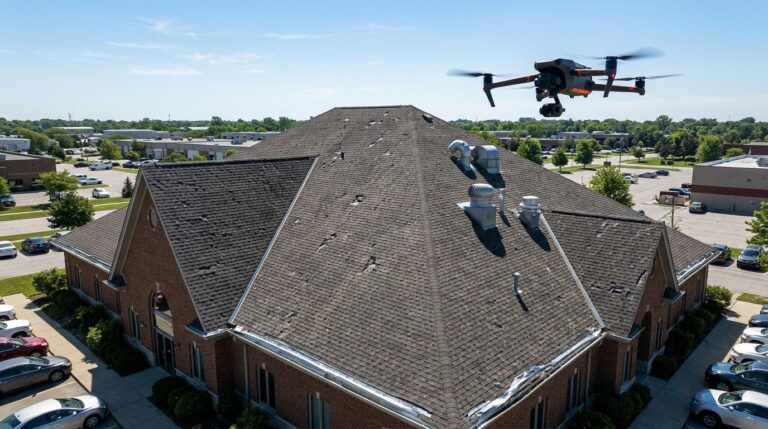
For commercial properties, a commercial roof inspection should identify which assembly is leaking. Water beneath a cedar entrance roof may originate at flashing adjoining a membrane roof.
The commercial roof repair scope should separate immediate protection, damaged materials, and unrelated maintenance. Preserve records of emergency work and removed material when safe and appropriate.
An inspection documents conditions and supports a repair recommendation. It doesn’t determine policy coverage or guarantee a claim result.
Frequently Asked Questions
What if the shakes have cracks but the attic is dry?
A dry attic doesn’t prove the covering is sound. Overlapping courses may still prevent water entry under current conditions. Have the cracks evaluated before assuming they’re harmless, especially where shakes are loose or underlying material is visible.
Will a split cedar shake close permanently in warmer weather?
Wood dimensions can change as moisture conditions change, so a gap may look different later. Broken fibers don’t reconnect. A smaller visible opening after warming doesn’t establish that the shake has recovered its original condition or performance.
Can roof cleaning make splitting worse?
Aggressive cleaning can erode fibers, loosen weakened pieces, or introduce water beneath the covering. A contractor should assess deteriorated cedar before cleaning. Existing splits need condition-based repair decisions rather than a cleaning treatment intended to conceal them.
Should I wait until spring to have the roof inspected?
Don’t delay assessment of active leaks, displaced shakes, or exposed underlying material. Winter access may limit hands-on inspection, but ground observations and interior checks can guide immediate protection. Detailed exterior work should proceed only when conditions permit safe access.
Does one damaged cedar section mean the entire building needs reroofing?
No. Cedar dormers, steep accent roofs, and adjoining low-slope roofs are separate inspection areas. Their connections need evaluation, but localized cedar damage doesn’t establish failure of a membrane roof or justify replacing every roof section on the property.
Get the Cause and Repair Scope Right
Confirm what failed
Freeze-thaw exposure can contribute to splitting in weakened, moisture-exposed cedar, but the crack alone doesn’t identify its cause. The decisive findings are water-shedding performance, secure attachment, surrounding condition, and evidence of concealed damage.
Arrange a documented assessment
Sellers Roofing Company holds MN Builder Contractor License 803862 and is located at 801 Transfer Road, Saint Paul. For suspected storm-related damage, request a professional damage assessment that identifies the affected components before you approve repair or replacement.
Need a roof inspection in Saint Paul or the Twin Cities? Call Sellers Roofing Company at +1-651-703-2336 or schedule a free estimate. We are a black-owned, NMSDC-certified MBE roofing contractor with 9+ years experience.