Last updated: 2026-10-23 by Ted Sellers, Owner
Short answer: Dark shingles ice dams are not a simple cause-and-effect problem. Dark asphalt shingles absorb more sun and can melt surface snow sooner, but ice dams form when roof areas stay warm enough to melt snow while eaves remain below freezing. In Minnesota, attic air leaks, weak insulation, and poor ventilation matter far more than shingle color.
A black or charcoal roof can reveal a heat-loss problem sooner. It doesn’t create that problem by itself.
When Dark Shingles Ice Dams Apply
Homes with uneven roof temperatures
This question applies most to Minnesota homes with snow-covered, sloped roofs and living space below the attic. Saint Paul, Minneapolis, Roseville, Maplewood, and Shoreview homes often see repeated thaw-and-refreeze cycles from December through March.
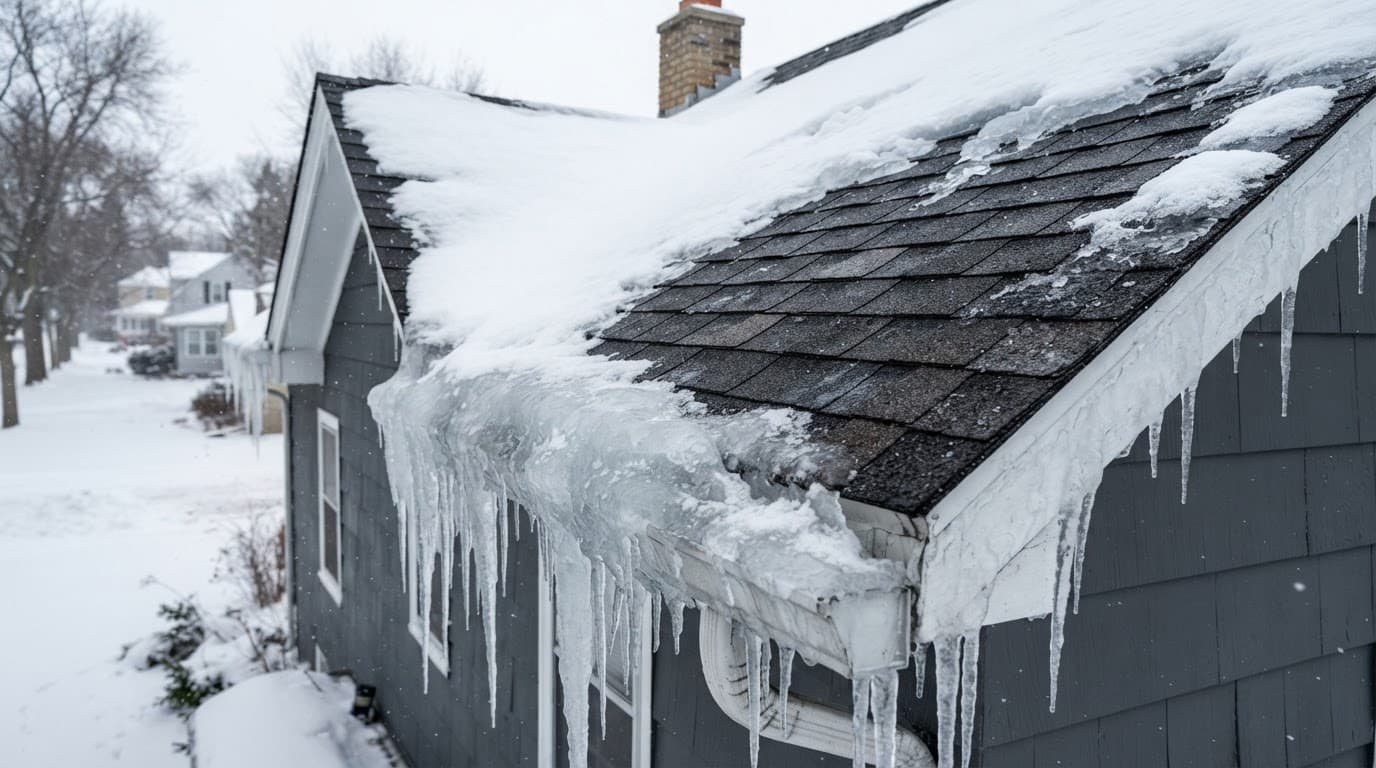
Sun hits dark shingles, the roof surface warms, and snow starts to melt. If meltwater reaches a cold overhang, it freezes. More meltwater piles behind that ice ridge, then works beneath shingles and into the house.
Dark shingles may speed up that first melt on a sunny day. Still, the root cause is usually a warm roof deck caused by heat escaping from below.
A properly insulated and ventilated attic can have dark shingles without chronic ice dams. A poorly sealed attic can develop major ice dams beneath light-gray shingles.
Ice dams form because of a temperature difference across the roof, not because the roof is dark.
The dark-versus-light shingle comparison makes the same practical point: darker surfaces can melt snow earlier, which may also clear roof snow faster during late-winter sun.
Roofs where color isn’t the main concern
Color is less important on a steep roof with a cold attic, continuous soffit-to-ridge ventilation, and adequate ceiling insulation. It also matters less during long stretches of subzero weather, when even dark roofs may not warm enough for much melting.
A metal roofing system sheds snow differently than asphalt shingles. Snow can release in heavy sheets, which creates its own safety and gutter concerns. Dark metal still absorbs solar heat, but insulation, air sealing, roof geometry, and snow retention hardware determine how it performs in winter.
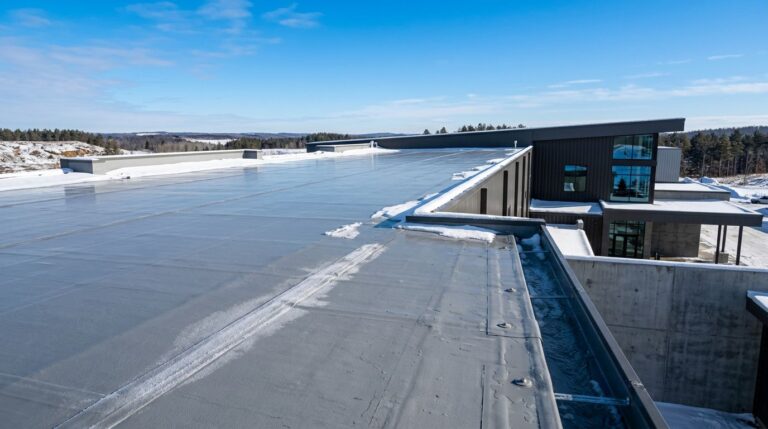
Low-slope commercial systems work differently. TPO roofing, EPDM, modified bitumen, and BUR roofs do not typically form classic shingle-edge dams. They can still hold snow, ice, and ponding water around drains, parapet walls, curbs, and rooftop equipment.
For a commercial flat roof, standing water after thawing can enter through seams or flashing defects. The ceiling stain may appear far from the actual opening. That calls for commercial roof leak detection, not a quick patch above the drip.
Why Dark Shingles Ice Dams Can Seem Connected
Solar gain changes the timing of snowmelt
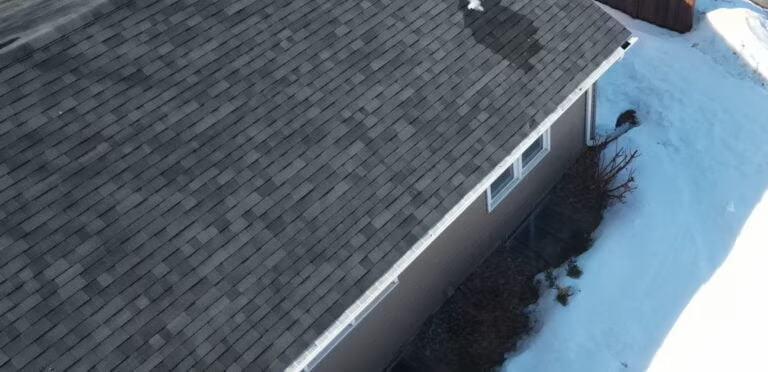
Dark roofs absorb more solar energy than pale roofs. That can make a south-facing slope clear faster after a sunny February snowfall. On the other hand, water may run to the shaded north-facing eave and refreeze there.
The appearance can be misleading. You see bare dark shingles above a thick band of ice and assume the color caused the dam. More often, the dark roof exposed a building-envelope issue that was already there.
Heat loss near recessed lights, plumbing stacks, attic hatches, duct penetrations, and chimney chases warms limited areas of the roof. Snow melts in streaks above those spots. That uneven pattern is a useful diagnostic clue.
The eave is the freezing zone
The roof section above a heated room can rise above 32 degrees. The eave extends beyond the exterior wall, receives less heat from the house, and stays cold. That temperature split creates the ice dam.
The University of Minnesota’s home energy guidance explains why attic air sealing and insulation work together. Insulation slows heat transfer, while air sealing stops warm indoor air from reaching the attic.
A dark roof does not replace either task. Neither does a heated cable. Heat cables can create drainage channels, but they don’t correct attic heat loss. Poor installation can also damage roofing materials or create an electrical concern.
Step-by-Step: Reduce Ice Dam Risk Before the Next Freeze
Inspect the evidence before choosing a fix
- Look for snow patterns from the ground. Bare strips above the living area, paired with thick snow at the eaves, often point to heat loss. Photograph the roof after fresh snow and again after a sunny day.
- Check the attic safely. Look for frost on roof sheathing, wet insulation, dark staining, or damp wood near vents and penetrations. Frost can come from indoor humidity as well as air leakage, so document the pattern before assuming the roof is leaking.
- Trace interior water carefully. A stain at an exterior wall may come from an ice dam, but water can travel along framing before it appears. A chimney, skylight, or wall flashing detail may be the actual entry point.
- Arrange a professional inspection if shingles are lifting or water is active. A documented residential roof repair scope separates ice-dam intrusion, age-related wear, and fresh storm damage. Homeowners can Get a Free Residential Roof Estimate when the roof needs a written repair or replacement recommendation.
Correct the heat path, not only the ice
- Air-seal the attic floor. Seal gaps around wiring, plumbing vents, top plates, chimney chases, and the attic access. Keep required clearances around heat-producing fixtures and chimneys.
- Bring insulation up to the needed level. Minnesota homes need enough attic insulation to keep ceiling heat inside the conditioned space. Don’t compress existing insulation or block soffit ventilation with loose-fill material.
- Maintain clear intake and exhaust ventilation. Soffit intake must communicate with the attic, usually through baffles. Ridge vents, box vents, or other exhaust methods must be sized as part of the full system.
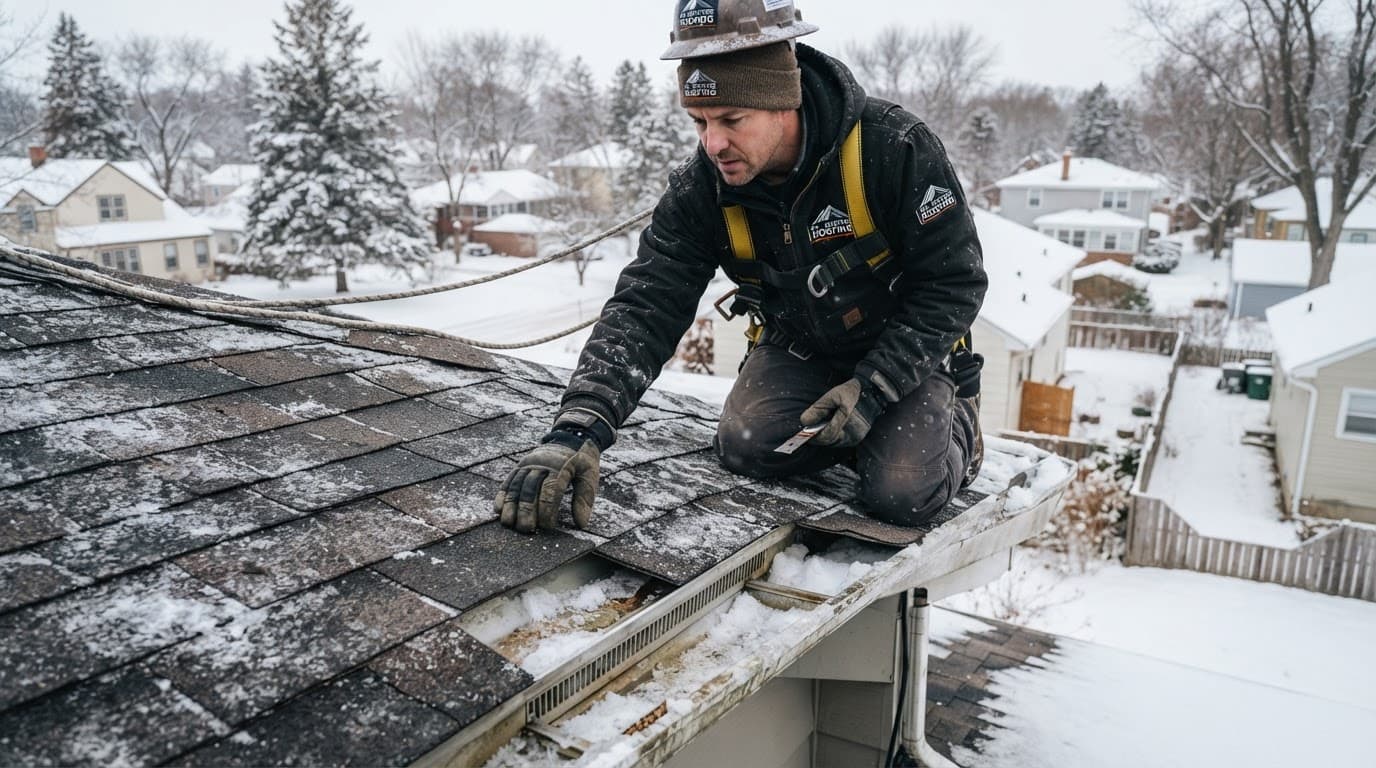
- Remove snow and ice with the right method. A roof rake used from the ground can reduce snow load near the lower roof edge. Avoid chopping ice with axes, shovels, or sharp tools. That can tear shingles, bend gutters, and turn a winter problem into a residential roof replacement.
- Use professional ice dam removal for active leaks. Low-pressure steam is the preferred approach because it melts ice without prying against the shingles. The Twin Cities steam ice dam removal guidance also warns against mechanical removal methods that can damage the roof.
What Property Owners Should Document
Separate winter damage from storm damage
Ice-related water entry is not always an insurance claim. Coverage depends on the policy, the cause of loss, maintenance history, and the damage found. A roof insurance claim is stronger when a covered event created an opening and the resulting interior damage is documented.
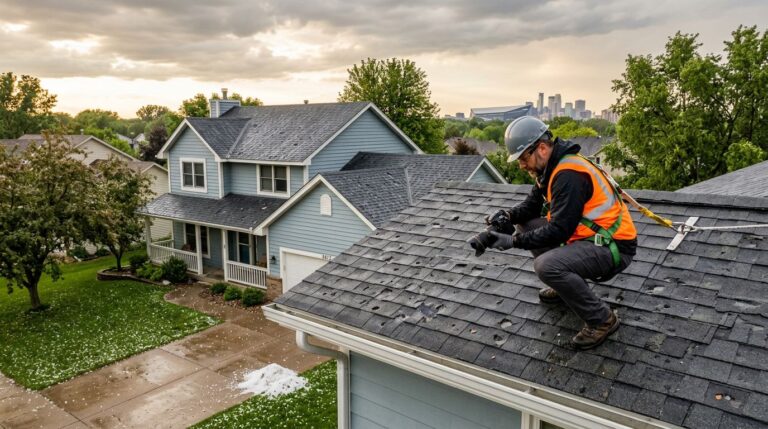
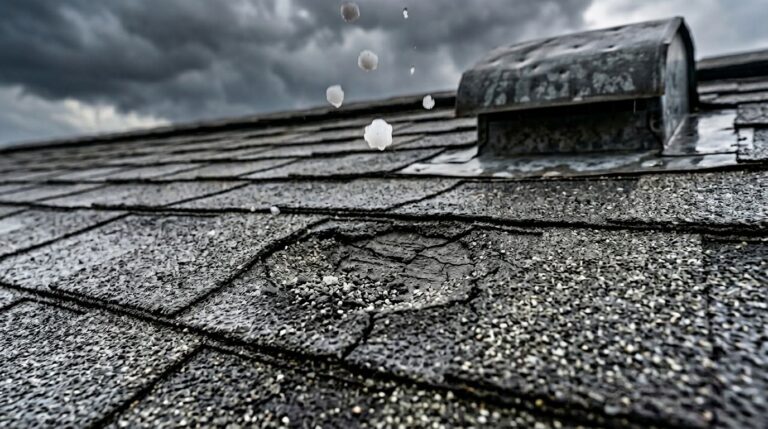
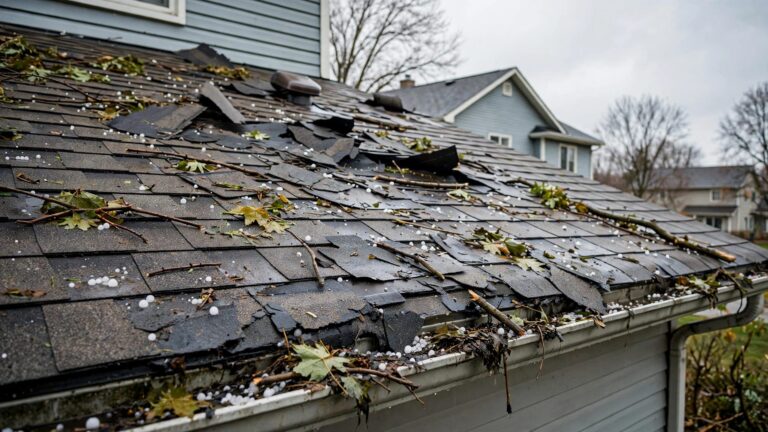
A hail damage roof or storm damage roof may have lifted shingles, cracked flashing, punctured membrane, or damaged vents. Those conditions can allow winter moisture in, even if ice buildup becomes the visible symptom later.
Take dated photos of ceiling stains, attic frost, roof edges, gutters, damaged materials, and snow patterns. Save emergency invoices and keep removed materials available until they are photographed.
Do not authorize broad permanent repairs before the cause is clear. Temporary drying and protection are sensible. Replacing large roof sections can erase evidence needed to distinguish old wear from fresh damage.
Know when the scope changes
A small leak may need commercial roof repair or residential roof repair. Widespread wet insulation, repeated seam failures, brittle shingles, or extensive deterioration can point toward commercial roof replacement or residential roof replacement.
Commercial owners should not assume a coating fixes every winter issue. Commercial roof restoration and commercial roof coatings can extend the life of a sound system, but they do not fix saturated insulation, failing drainage, or an active membrane leak.
Sellers Roofing Company is located at 801 Transfer Road in Saint Paul and holds MN License 803862. Its IUPAT Local 96 roofers work on Twin Cities roofing systems affected by snow, wind, and freeze-thaw movement. For buildings with recurring leaks, Saint Paul commercial roofing services can evaluate the roof assembly, drainage, flashings, and insulation as one system.
FAQ
Will switching to lighter shingles stop ice dams?
No. Lighter shingles may absorb less solar heat, but they won’t stop attic heat from warming the roof deck. Correct air sealing, insulation, and ventilation before selecting color for ice-dam control.
Can dark shingles help snow melt off a roof?
Yes, on sunny days. Faster melting can reduce snow cover on exposed slopes. It can also feed more water to a cold eave, so the attic and roof edge still need proper temperature control.
Is ice dam removal safe for asphalt shingles?
Professional steam removal is safer than striking ice with a shovel or chisel. Mechanical scraping can remove granules, crack shingles, bend gutters, and damage flashing.
Should I call for emergency help if water is dripping inside?
Yes. Protect belongings, place containers under the leak, and avoid wet electrical areas. For an active roof leak, Call 651-703-2336 for 24/7 Emergency Roofing before the next freeze expands the damage.
Can commercial buildings get ice-related roof leaks?
Yes. Flat commercial roofs may not show a classic eave dam, but snowmelt can refreeze at drains, scuppers, parapets, and rooftop curbs. A commercial roof inspection can identify blocked drainage, wet insulation, and seam failures before water spreads through the building.
The Practical Answer for Minnesota Roofs
Dark shingles can change how fast snow melts, but they don’t create ice dams on their own. Heat escaping into the attic is the problem worth fixing.
If your roof develops bare patches, thick eave ice, attic frost, or interior staining, document it before guessing at the cause. A cold, dry roof deck with controlled ventilation gives any shingle color its best chance of making it through a Minnesota winter. Compare available materials in our asphalt shingle roofing service.
Need a roof inspection in Saint Paul or the Twin Cities? Call Sellers Roofing Company at +1-651-703-2336 or schedule a free estimate. We are a black-owned, NMSDC-certified MBE roofing contractor with 9+ years experience.