Last updated: 2026-11-04 by Ted Sellers, Owner
GAF Timberline HDZ and CertainTeed Landmark are both suitable architectural shingles for Minnesota homes. HDZ offers a conditional 15-year wind warranty without a maximum wind-speed limit, while Landmark lists 15-year coverage at 110 mph, with a 160 mph upgrade available. Your decision should turn on the complete installation scope, exact product specifications, and warranty coverage.
For a useful GAF vs CertainTeed shingles comparison, start with the conditions beneath the roof covering.
What Actually Causes Damage on Asphalt Roofs in Harsh Winter Climates?
When this comparison applies
This comparison covers standard Timberline HDZ and standard Landmark for steep-slope residential roof replacement. Landmark PRO, Landmark ClimateFlex, and impact-resistant products have separate specifications. Their features don’t automatically apply to standard Landmark.
The same distinction applies to commercial properties. An apartment building with pitched shingle roofs can use this comparison. A commercial flat roof requires a different assessment of drainage, insulation, and membrane attachment.
Minnesota roofing conditions expose both brands to cold-weather handling, seasonal expansion, wind uplift, and snowmelt. Neither product corrects an undersized drainage detail or poorly ventilated attic.
How winter stresses either shingle system
Asphalt stiffens in cold weather. Walking on brittle shingles or bending them during repairs can crack the material. Meanwhile, repeated temperature changes stress aging shingles and their seals.
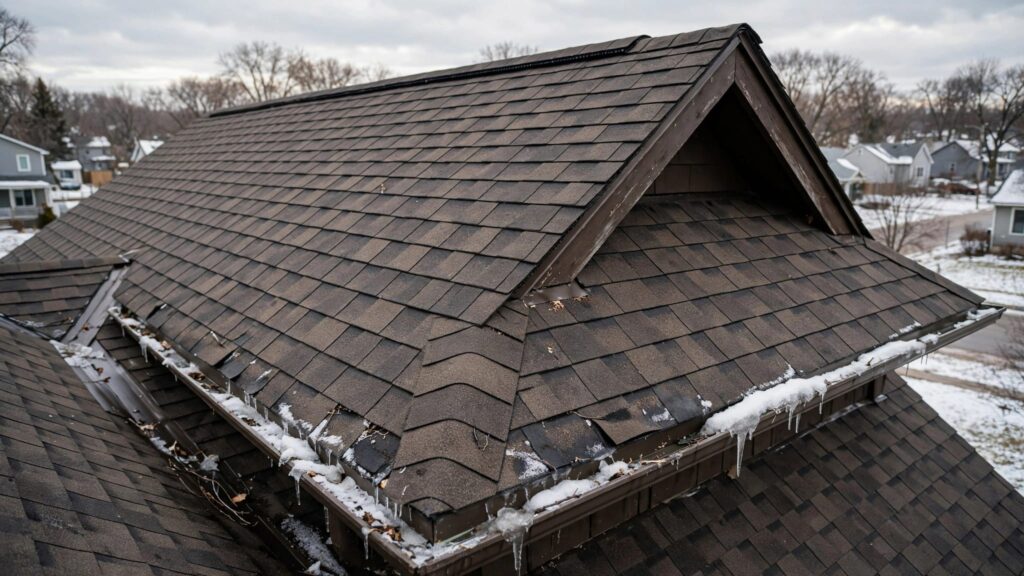
Ice dams form when snow melts over a warmer roof area and refreezes near colder eaves. Water then backs up beneath shingles, which shed flowing water but aren’t a waterproof basin.
Minnesota’s eave ice-barrier requirement extends at least 24 inches horizontally inside the exterior wall line. That measurement doesn’t start at the gutter. Wide overhangs require additional coverage.
Ice-and-water membrane limits leakage consequences, but attic air sealing and insulation address heat loss. Heavy snow loading also requires a structural assessment when decking or framing shows deflection.
How Do You Inspect and Document the Damage?
Follow the roof’s drainage path
Start indoors and at ground level. Property owners shouldn’t climb an icy, steep, or storm-damaged roof. A contractor can inspect the surface with suitable access and fall protection.
The field inspection should follow this order:
- Inspect attic staining, damp insulation, and deck deflection before evaluating the roof covering.
- Examine eaves and rakes for lifted edges, failed starter attachment, and concentrated granule loss.
- Follow valleys uphill, recording debris, damaged shingles, open seams, and deteriorated metal.
- Inspect wall and chimney flashing for separation, loose counterflashing, and water-entry paths.
- Examine pipe boots for cracking, then document field-shingle bruises, creases, exposed fasteners, and ridge damage.
Granule loss patterns matter. Uniform weathering across exposed surfaces differs from scattered impact marks. A dark spot alone doesn’t establish hail damage.
Record conditions without damaging the evidence
Photograph each roof plane, then take closer images of individual defects. Include a scale beside suspected hail strikes without pressing into the shingle.
Record the roof slope and location of each defect. Also document interior staining before cleanup or ceiling repairs. These records help separate an active leak from an older moisture event.
Don’t lift sealed tabs merely to demonstrate possible wind damage. Forced lifting can create the condition the inspection is supposed to assess.
For an occupied building with uncertain leak paths, roof-surface observations should connect to attic findings rather than stand alone.
Repair vs. Replace: What Determines the Right Scope?
Compare the condition, not just the roof’s age
Localized residential roof repair makes sense when surrounding shingles remain flexible and securely attached. Widespread cracking, repeated leakage, or extensive storm damage changes that calculation.
Use these planning distinctions when comparing proposals.
| Factor | Localized repair | Full replacement |
|---|---|---|
| Cost range | Approximately $450 to $1,200 for limited accessible work | Approximately $450 to $900 per roofing square installed |
| Remaining service life | Depends on the surrounding roof’s condition | Starts a new roof assembly’s service period |
| Insurance implications | May address a limited covered loss | Requires documentation supporting the replacement scope |
| Material compatibility | Needs compatible dimensions, exposure, and fastening | Allows one coordinated shingle and accessory system |
These figures describe different scopes. A repair visit doesn’t include widespread decking replacement, and a basic replacement allowance doesn’t price every concealed defect.
Decide whether the existing shingles can accept a repair
A repair requires more than finding a similar color. Shingle dimensions, course exposure, nail placement, and seal-strip position must work together.
Older shingles can fracture when a contractor opens surrounding courses. If repairs would damage adjacent material, the practical repair area grows. However, one difficult repair doesn’t automatically justify replacing every roof plane.
For aging roofs, compare the cost of the immediate work against the condition of valleys, flashing, and remaining roof planes. Our guide to comparing asphalt shingle options broadens that material decision.
Neither a lifetime limited warranty nor a familiar brand name establishes how many serviceable years remain on an existing roof.
Which Material Specifications Matter for This Replacement?
How do HDZ and standard Landmark differ?
GAF’s Timberline HDZ specifications identify LayerLock construction and the StrikeZone nailing area. LayerLock bonds the laminated shingle layers; it doesn’t replace correct fastening or sealing between courses.
CertainTeed’s Landmark product specifications describe NailTrak, an extra-wide nailing area with defined fastening lines. Landmark also lists a Class A fire rating, lifetime limited warranty, and 10-year SureStart protection.
Both products offer 25-year algae-discoloration coverage under their respective terms. HDZ’s StainGuard Plus coverage applies to packages bearing that designation. Landmark uses StreakFighter protection.
Algae protection affects staining. It doesn’t establish resistance to hail, wind, or ice-dam leakage.
Which upgrades require separate specifications?
HDZ carries a UL 2218 Class 3 rating only when the package bears that statement. That laboratory classification isn’t a hail-damage warranty.
If impact resistance drives the purchase, compare separately designated products, including Malarkey Legacy Class 4 IR and CertainTeed Landmark IR. Standard Landmark shouldn’t inherit an impact rating from another Landmark product.
Underlayment also belongs in the specification. Synthetic underlayment and asphalt felt have different handling and tear characteristics; neither substitutes for the required eave ice barrier. Valley membrane coverage must follow the selected roof detail.
Low-slope roof areas need their own assembly. A 60-mil TPO membrane, 45-mil versus 60-mil EPDM, modified bitumen, and BUR aren’t interchangeable shingle alternatives. Commercial roof coatings also require a suitable existing substrate. Commercial roof restoration can’t correct saturated insulation or unsound decking.
How Does Insurance Affect the Shingle Decision?
Separate covered storm damage from deterioration
A roof insurance claim concerns the cause and extent of damage under the policy. It doesn’t turn normal wear into a covered event.
Adjusters evaluate storm timing, physical damage, and applicable policy terms. Contractors document quantities, access requirements, material condition, and the work needed to complete a repair.
For hail damage, photograph impact locations and associated fractures or bruising. For wind damage, record creased tabs, displaced shingles, and affected flashing. Include interior water intrusion evidence, but don’t assume every ceiling stain came from the reported storm.
Emergency protection and permanent repairs need separate documentation. Keep photographs and invoices for temporary work that limits further damage.
Keep insurance and manufacturer warranties separate
Manufacturer coverage addresses defined product or system failures. Homeowners insurance addresses covered losses under a separate contract.
GAF’s WindProven warranty terms require specified GAF accessories. Those include starter strips, roof-deck protection, ridge-cap shingles, and a qualifying leak barrier or attic ventilation.
Its lack of a maximum wind-speed limit doesn’t mean the building can withstand any storm. Structural loads and installation requirements still apply.
Likewise, Landmark’s advertised 160 mph upgrade isn’t automatic with every Landmark installation. The proposal must identify the actual warranty package.
GAF’s warranty resources distinguish available coverage documents. Product-defect protection, workmanship coverage, and weather-related coverage shouldn’t appear as one undifferentiated promise.
What Does a Professional Roof Contractor Do Differently?
Step-by-Step: What should happen during replacement?
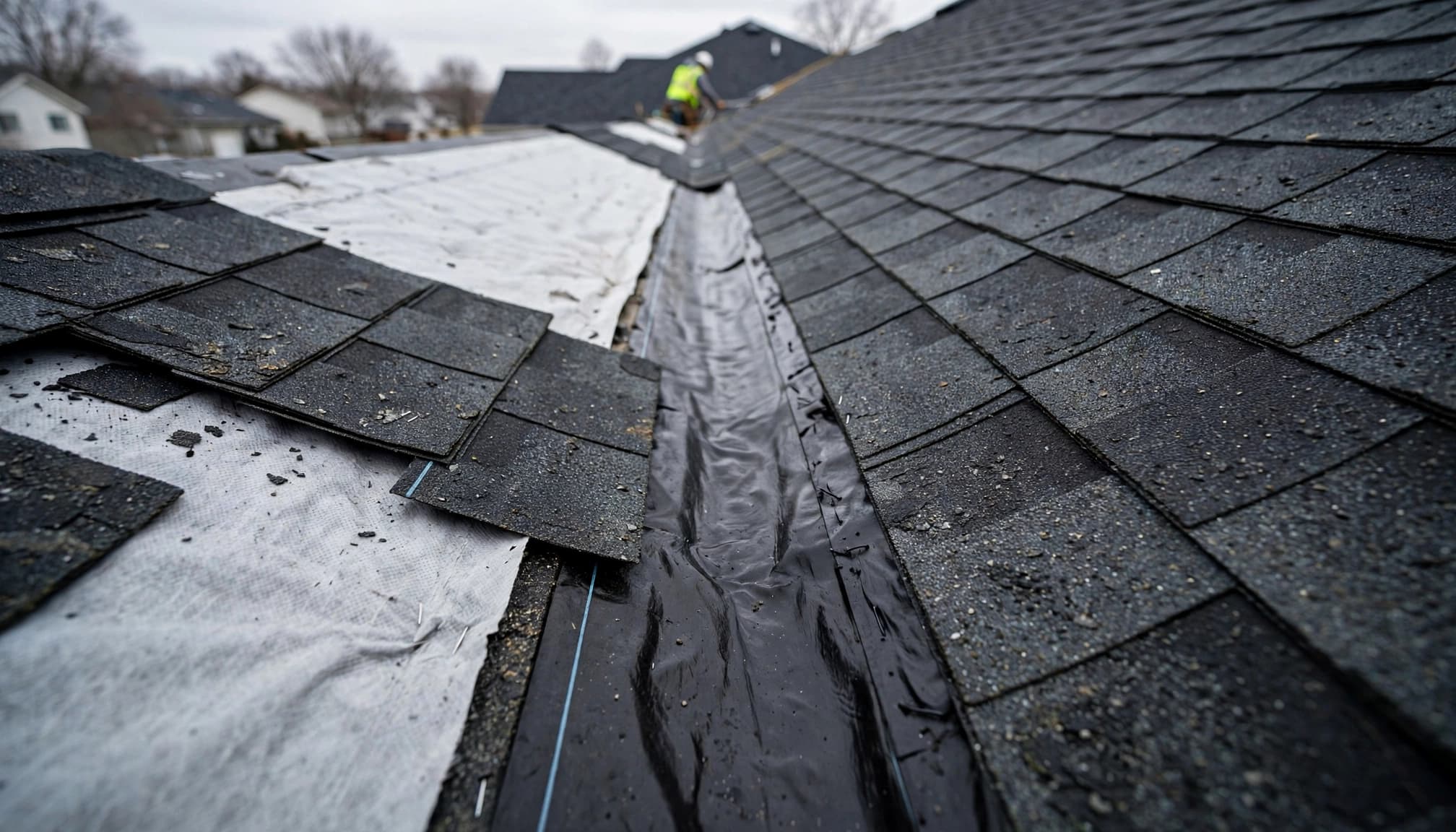
- Remove the existing covering and inspect the exposed deck before installing new underlayment.
- Cut deteriorated sheathing back to sound material and provide supported panel edges or blocking where required.
- Install the specified eave protection, valley assembly, and flashing details before covering those areas.
- Fasten shingles through the manufacturer’s designated zone with the required penetration and placement.
- Replace deteriorated pipe boots and complete ridge, ventilation, and cleanup work before closing the project.
The HDZ specification sheet identifies the product’s fastening features. A wide nailing zone helps installers, but it doesn’t correct overdriven nails or unsupported decking.
Cold-weather work also requires attention to handling and sealing. Shingles installed before sustained warm weather may need manufacturer-directed hand sealing rather than an assumption that sunlight will finish the job.
How should ventilation and workmanship be documented?
Ventilation starts with net free ventilating area, or NFA. That measures the actual open area available for airflow, not the outside dimensions of a vent.
The contractor should calculate intake and exhaust capacity against the applicable attic-ventilation requirements. Blocked soffits can defeat an otherwise adequate ridge vent. Additional exhaust without adequate intake doesn’t solve the imbalance.
At Sellers Roofing Company, our GAF and CertainTeed SELECT certifications are separate credentials from Minnesota Builder Contractor License 803862. Neither certification alone establishes which enhanced warranty belongs in a particular contract.
For union-built roofing, affiliation also remains separate from product coverage. Our Roofers Local 96 affiliation doesn’t replace a written scope, fastening requirements, or warranty registration.
What Are the Cost Ranges for These Shingles in Minnesota?
What is a reasonable replacement allowance?
For 2026 Twin Cities budgeting, approximately $450 to $900 per roofing square installed is a broad architectural-shingle replacement allowance. One square equals 100 square feet of roof surface.
A $600-per-square midpoint gives useful context for a straightforward replacement. However, that figure doesn’t establish a Timberline HDZ price or a Landmark price.
The building’s floor area isn’t its roof area. Pitch, overhangs, dormers, and attached roof sections affect material quantities. Waste also increases with complicated layouts.
Our discussion of Minneapolis roof replacement costs addresses the project conditions behind those differences. A complete estimate should identify measured roof area and the work included.
What changes the final installed price?
Deck condition can outweigh a small shingle-price difference. Multiple tear-off layers increase labor and disposal. Steep slopes require additional access and fall-protection measures.
Flashing replacement, chimney work, ventilation corrections, permits, and local inspection requirements also affect the total. Saint Paul roofing projects with tight access can require different staging than an open suburban lot.
Compare HDZ and Landmark on identical scopes. If one estimate includes new step flashing and the other reuses existing metal, the total isn’t a clean material comparison.
An impact-resistant upgrade should also identify the exact product rather than a generic “premium shingle” allowance.
Commercial roof replacement and commercial roof repair require separate pricing methods. Membrane attachment, wet-insulation removal, drainage, and rooftop equipment prevent a residential shingle rate from pricing that work accurately.
Frequently Asked Questions About HDZ and Landmark
Can I replace damaged Landmark shingles with GAF Timberline HDZ?
Only if dimensions, exposure, fastening, and surrounding conditions support a compatible repair. Similar appearance doesn’t establish compatibility. A mixed repair can also leave a visible color difference because existing shingles have weathered, even when the replacement material starts with a similar color.
Will either shingle prevent ice dams on my Minnesota home?
Neither shingle prevents heat loss through the attic. Ice-dam control depends on air sealing, insulation, ventilation, and roof geometry. If ice dam removal becomes necessary, professional removal limits the risk of breaking cold shingles or damaging the eave membrane with tools.
Does Class 3 or Class 4 mean insurance will pay less?
An impact classification doesn’t establish an insurance discount or a smaller deductible. Those depend on the policy and carrier program. GAF’s Class 3 explanation describes a product category, not a promise about claim payments or protection against every hail event.
What happens if I sell the house after replacing the roof?
Transfer provisions depend on the warranty issued for that installation. Keep the invoice, product identification, installation date, and warranty documents together. A lifetime limited warranty doesn’t automatically provide identical coverage to every later owner, and transfer deadlines can affect the next owner’s protection.
Can I install metal roofing instead of either shingle?
Yes, but metal roofing requires a separate assembly and estimate. Panel attachment, flashing, condensation control, and snow shedding change the scope. Roof areas above entrances may also need designed snow retention, so the comparison should extend beyond the price of the panels alone.
Which Shingle Should You Put on Your Minnesota Roof?
Choose the documented package
HDZ is a reasonable choice when its nailing features and conditional WindProven coverage fit the project. Landmark is a reasonable choice when its profile, color selection, and specified warranty package suit the building. Neither brand name compensates for damaged decking, incomplete flashing work, or poor attic conditions.
The strongest GAF versus CertainTeed comparison uses the exact products and the same installation scope. Standard shingles and impact-resistant upgrades belong on separate lines.
Put the scope ahead of the logo
Your estimate should identify underlayment, ice-barrier coverage, flashing replacement, ventilation work, and the issued warranty. It should also explain decking-repair charges before tear-off exposes concealed damage.
For a property-specific comparison, Get a Free Residential Roof Estimate. We’ll assess the existing roof and define the replacement work. Choose between HDZ and Landmark after that scope is clear, because the complete roof assembly determines how either product performs through a Minnesota winter.
Need a roof inspection in Saint Paul or the Twin Cities? Call Sellers Roofing Company at +1-651-703-2336 or schedule a free estimate. We are a black-owned, NMSDC-certified MBE roofing contractor with 9+ years experience.
