Last updated: 2026-10-10 by Ted Sellers, Owner
Yes. Hail can crack a clay tile without shattering it or dislodging pieces. A roof tile can remain in place while a hairline crack affects water shedding. Hail damage requires an impact assessment: crack pattern, tile support, storm evidence, and pre-existing condition matter more than appearance alone.
Contents: When This Applies; Step-by-Step; What Size Hail Damages Tile?; Repair Costs and Insurance; Frequently Asked Questions; Conclusion.
When This Applies
Clay and concrete tile roofs
This guidance applies to Minnesota homes and commercial buildings with a tile roof. Clay tile typically has a smooth surface; concrete tile has rougher exposed ends, greater porosity, and often a painted finish. Color alone doesn’t identify the material. Avoid walking on tile, since foot traffic can cause breakage.
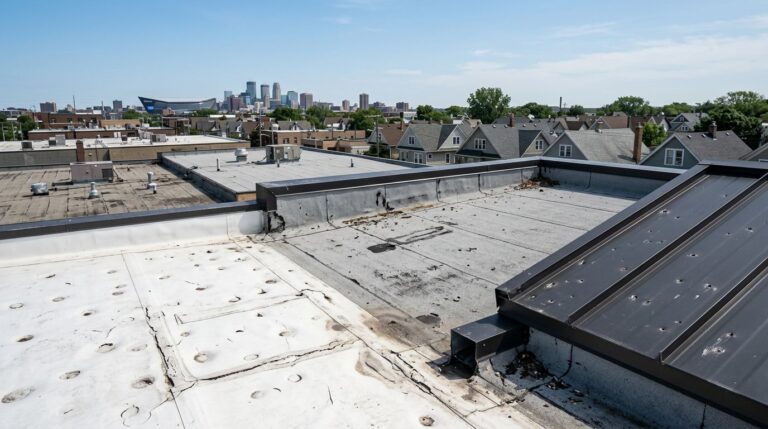
A commercial flat roof needs a different assessment. TPO roofing, EPDM, modified bitumen, and BUR don’t fracture like tile.
Minnesota winter damage can complicate the diagnosis
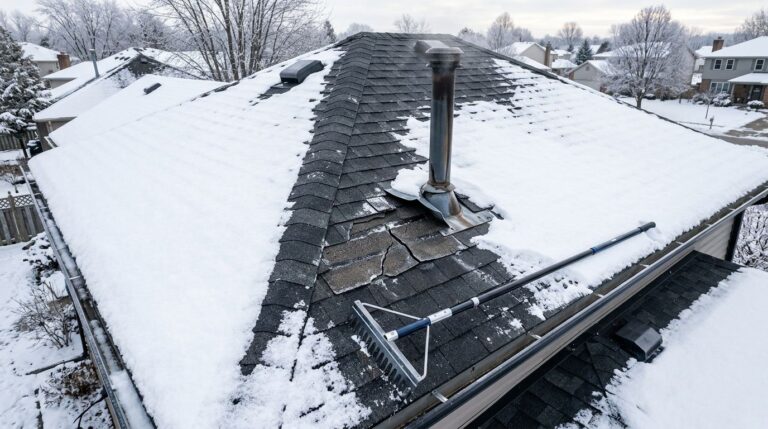
Freeze-thaw movement can enlarge existing cracks. Further freeze-thaw cycles can widen a fracture. Ice dams can cause water entry without hail damage.
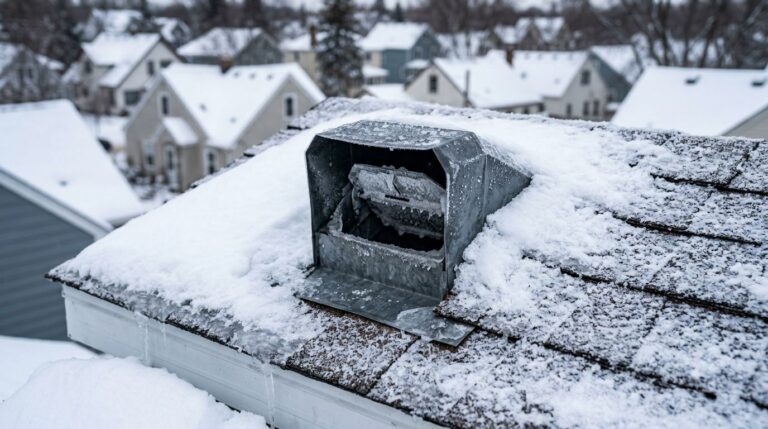
For Saint Paul and Minneapolis properties, separate storm-date impacts from older winter leaks, snow-loading problems, and damage associated with previous roof installation or ice dam removal.
Step-by-Step
1. Identify the material without walking on it
Use binoculars, existing roof records, or an accessible spare tile. Don’t climb onto wet clay tile. It’s slippery, and unsupported clay tile can break under foot traffic.
An experienced tile roofer should assess access before inspecting closely. An inspection shouldn’t create new damage.
2. Compare fracture patterns
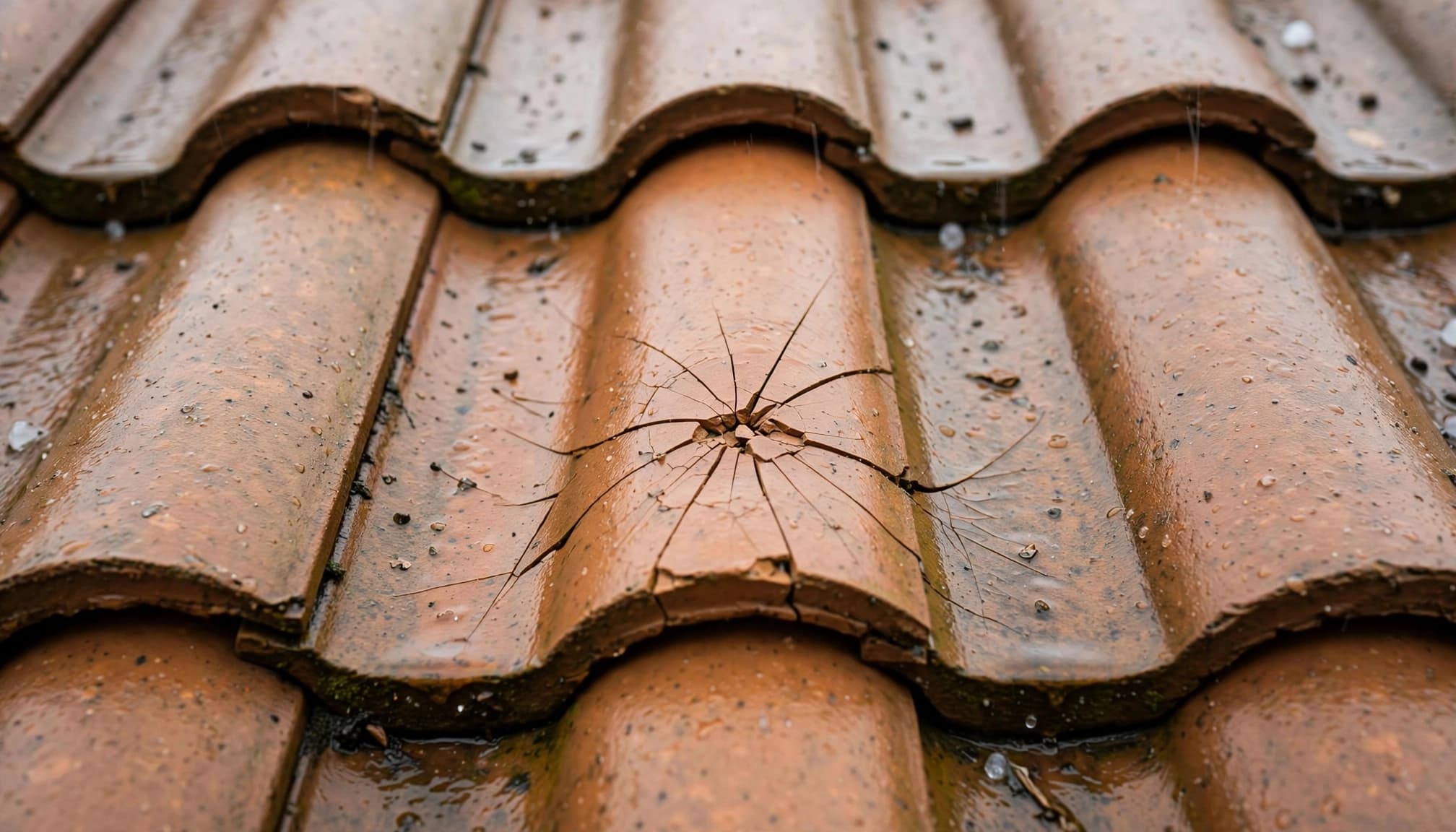
Hail impact can cause crescent-shaped edge fractures, shattered tiles, or star-shaped cracks around an impact point. These patterns can suggest a cause but don’t establish it alone. Nearby spatter marks support the assessment but don’t prove functional damage.
Horizontal or vertical cracks more often point to handling, installation, or foot traffic. Lower-right corner cracking commonly indicates restricted thermal movement from improper spacing.
3. Document performance and storm evidence
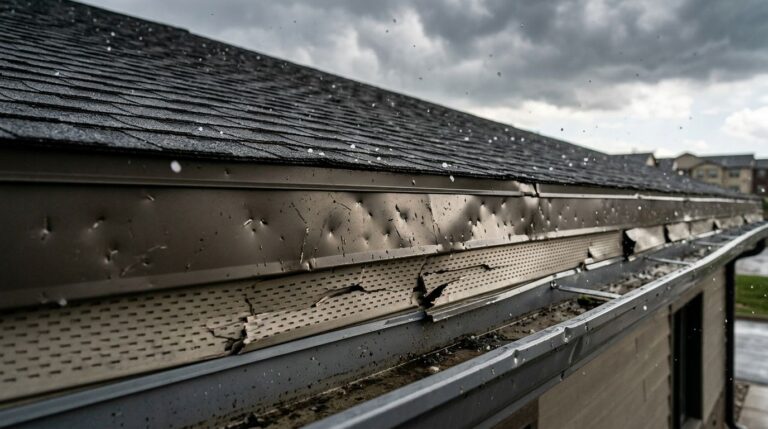
Photograph affected slopes, unaffected comparison areas, dented vents, gutters, and interior staining. Save original images, storm dates, and mitigation receipts to document possible hail damage.
Functional damage reduces water shedding and allows water beneath the tile. Burnish marks without fractures, penetrations, or chips are cosmetic. A crack requires assessment even when no piece is missing.
What Size Hail Damages Clay Roof Tiles?
Published thresholds depend on impact conditions
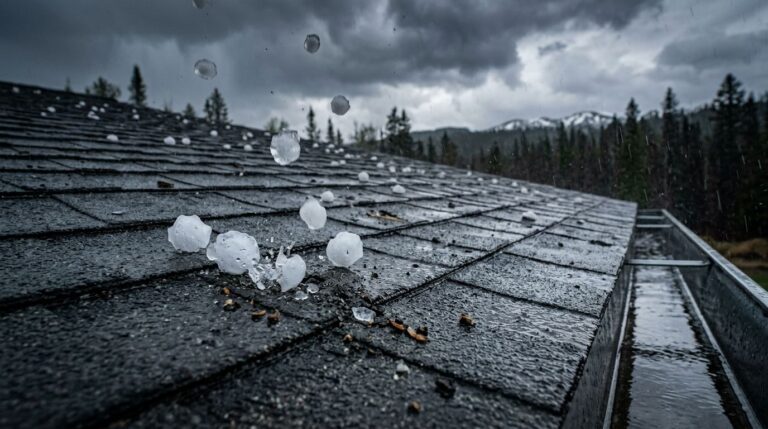
A hailstone under about 2 inches generally doesn’t damage sound, properly installed clay or concrete tile. This general estimate for hail size doesn’t exclude vulnerable edges or weakened tiles.
The MDPI technical review of tile impacts summarizes different test conditions. Greenfeld reported damage to red clay tile at 2 inches in the center and 1 3/4 inches at unsupported edges.
The review also gives perpendicular-impact thresholds of 1 1/2 inches for clay and 1 3/4 inches for concrete.
Why these figures differ
Hail size can produce different results based on impact speed, angle, tile profile, support, and impact location. A threshold is a test result, not a guarantee that a roof is safe.
Concrete testing demonstrates edge vulnerability
In ice-ball tests on 13 concrete tile products, 1.25-inch balls fractured corners on four. At 1.5 inches, six remained unbroken. At 2.5 inches, all broke.
These findings show why tests can’t establish or rule out hail damage from hail size alone. Unsupported corners can fail before the main tile surface.
What Do Tile Repairs and Insurance Claims Cost?
A technical review of hail losses cites a historical $850 million annual average, not a current estimate. CoreLogic estimated roughly $250 million in Texas residential damage after the April 11, 2016 storm.
Repair versus replacement costs
Modernize estimates clay tile and concrete tile repairs at $600 to $2,500 or more. Shingles Calculator estimates Minnesota replacement at $9.50 to $19 per square foot.
These are planning ranges, not guaranteed estimates. Reconstruction costs depend on material, access, availability of matching tiles, and underlayment condition. Isolated damage may call for residential roof repair, while widespread fracture can support residential roof replacement. Hire roofers experienced with tile work.
Build a storm-specific claim record
Obtain a written inspection before permanent repairs erase evidence. Give the insurer prompt notice when findings support covered hail damage.
Separate fresh impacts from old cracks. If the insurer disputes whether damage came from the storm or mechanical damage, document the evidence for both possible causes. The hail deductible guidance explains another part of out-of-pocket exposure. Request reinspection when the carrier omits documented storm-related work; supplements should address covered damage, not unrelated upgrades.
Frequently Asked Questions
Can a cracked tile wait if there’s no leak?
An intact underlayment can temporarily conceal water entry after hail damage. A dry ceiling doesn’t prove the cracked tile is performing properly.
How long should clay roof tiles last?
Clay tiles commonly have a service life of at least 70 years. Underlayment, flashings, and fasteners can need work sooner.
Are clay tiles more hail-resistant than asphalt shingles?
There’s no universal ranking for hail resistance. Asphalt shingles can suffer hidden damage, clay can crack, and metal roofing can dent. Product ratings and the condition of the full assembly both matter.
What if matching replacement tiles aren’t available?
Discontinued profiles can complicate spot repairs. The written scope should address compatible replacements and necessary adjoining work. Matching difficulties don’t guarantee insurance-funded replacement.
What happens if the insurer calls it mechanical damage?
Request the reason and policy language in writing. A second inspection can compare crack patterns, storm-date evidence, and prior condition. An engineer can assess disputed causation.
Conclusion
Base the repair on function
A clay tile doesn’t have to shatter to sustain damage. Radial cracks, vulnerable edges, and reduced water shedding deserve assessment before Minnesota’s freeze-thaw weather widens an opening.
Get a written scope before permanent work
Twin Cities owners can Get a Free Residential Roof Estimate to document storm damage and assess repair scope when cracked tiles need a documented repair decision.
Need a roof inspection in Saint Paul or the Twin Cities? Call Sellers Roofing Company at +1-651-703-2336 or schedule a free estimate. We are a black-owned, NMSDC-certified MBE roofing contractor with 9+ years experience.