Last updated: 2026-09-28 by Ted Sellers, Owner
A planned home sale adds pressure after hail damage, but rushing into a decision can create bigger problems for the seller and buyer. This guide explains how to document the roof, understand the claim, and make a supportable repair decision.
What Should You Do If Hail Damages Your Roof Before a Home Sale?
If hail damages your roof before a home sale, document the condition, report any potential claim promptly, obtain a roof-specific inspection, and keep repair or claim records ready for the buyer. Do not promise a repair outcome until the roof and policy have been reviewed.
If hail may have damaged your roof before a sale, pause the listing work long enough to document the loss, obtain an independent roof report, and protect active leaks. A hail damage roof may need repair, an insurance review, or a price adjustment, depending on the roof system, including metal roofing. Do not hide known damage or authorize broad permanent work before the evidence is captured.
Key Takeaways
- Document the hail damage from the ground, protect active leaks, and preserve photos, removed materials, and emergency invoices.
- Obtain a written roof inspection before listing or authorizing permanent work, separating fresh hail impacts from ordinary aging, prior repairs, and installation defects.
- Review insurance deadlines, deductibles, and payment terms, but keep insurance decisions separate from the duty to disclose known roof damage to buyers.
- Choose repair, replacement, or a sale credit based on the roof’s documented condition, the insurance scope, and the requirements of the buyer, lender, and insurer.
- Keep a complete sale-ready file with the inspection, photos, estimates, claim correspondence, invoices, warranties, and permits.
When a hail damage roof issue affects a home sale
This applies when a hailstorm struck while you owned the home and you see new roof impacts, missing shingles, bruised shingles, damaged gutters, leaking ceilings, or scattered debris. It applies even when the roof is not leaking yet.
A buyer’s inspector, lender, and insurer may all view the roof differently. A clean report gives you a factual answer before the property goes under contract.
Separate fresh hail impacts from ordinary aging
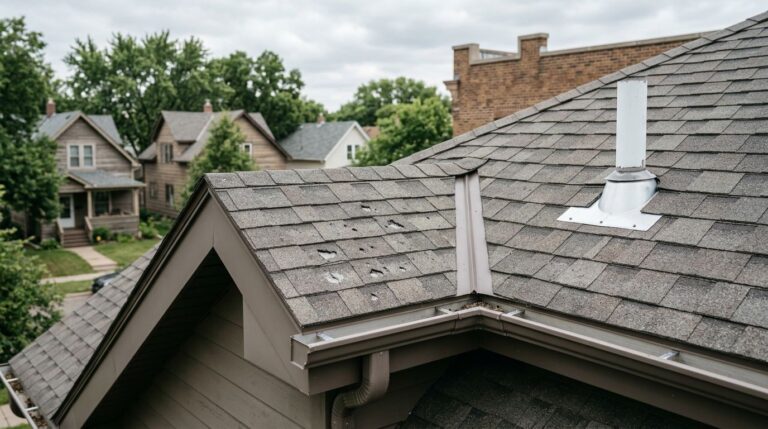
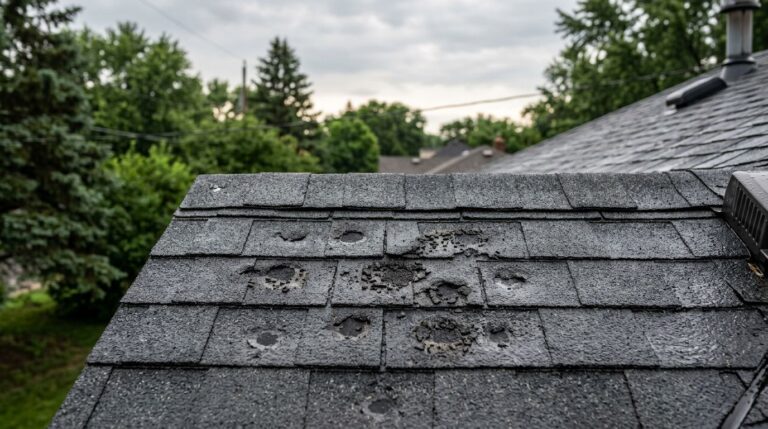
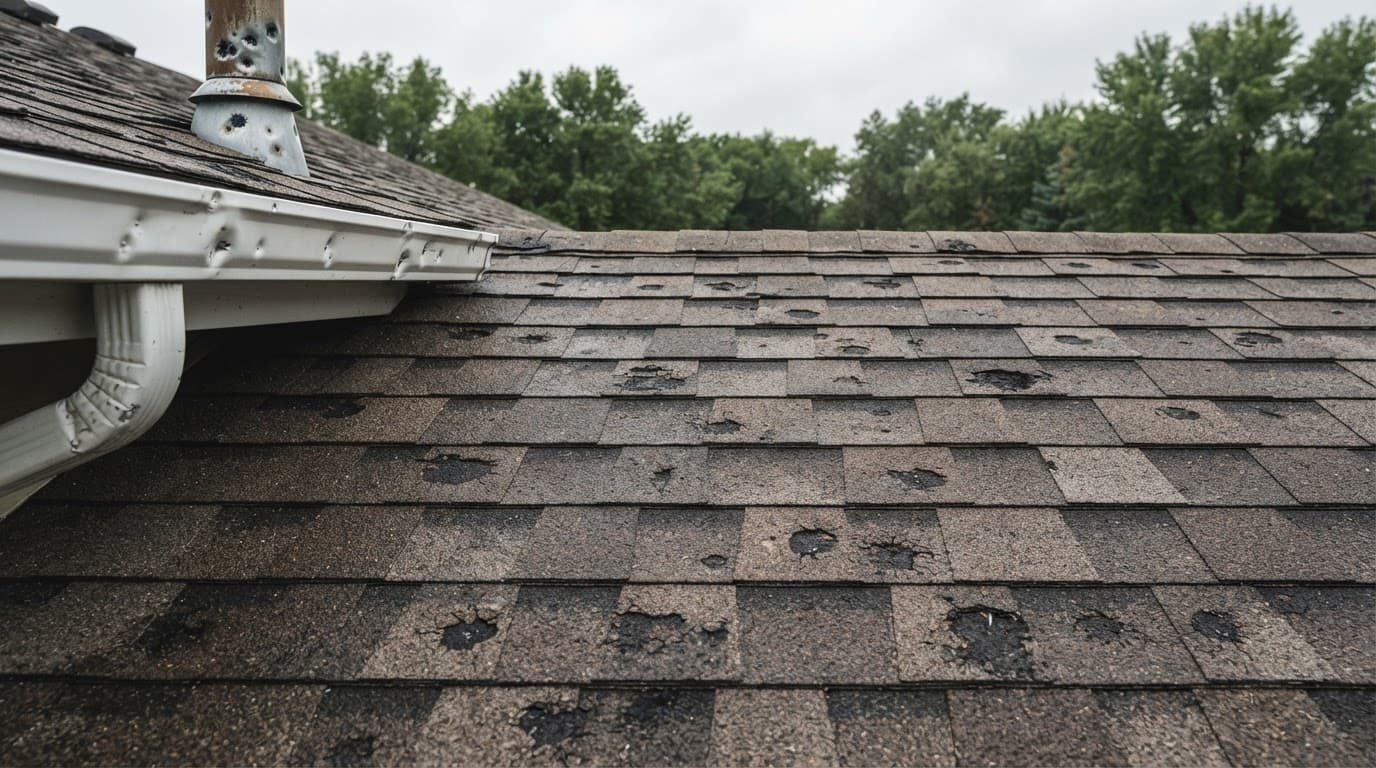
On asphalt shingles, fresh hail damage may include circular impact marks, displaced shingle granules, soft bruised areas, cracked tabs, or exposed fiberglass matting.
Check soft metals too. Dented roof vents, gutters and downspouts, window screens, roof flashing, and air-conditioner fins can support the storm timeline. The size and distribution of hailstones can help explain why impacts vary across the roof.
Normal aging usually looks broader and more even. Widespread loss of shingle granules, uniform granule loss, curling, brittle shingles, worn sealant, and old patching do not prove hail damage. Wood shakes can split, clay tiles can crack, and stone coated metal can chip or lose its coating. Metal roofing may show dents, but a dent alone does not prove its weather barrier or underlayment failed.
Step-by-Step Actions Before You List the Home
Keep the evidence and the building safe
- Stay off a storm-damaged roof. Move furniture and electronics away from active drips. If water is reaching wiring, shut off the affected circuit if it is safe to do so. For active intrusion, Call 651-703-2336 for 24/7 Emergency Roofing.
- Photograph the property from the ground. Take wide shots of each roof slope and close photos of dents, loose shingles, shingle granules, vents, gutters and downspouts, ceiling stains, and other property damage. Save the original files and note the storm date.
- Order a written inspection before guessing at the scope. Ask the roofer to separate fresh impact damage from wear, previous repairs, and installation defects. Have the report note whether impact or moisture reached the roof decking. For a documented repair or replacement option, Get a Free Residential Roof Estimate.
- Read the policy before opening a roof insurance claim. Check the reporting deadline, deductible, roof payment basis, and exclusions. State Farm’s roof-claim guidance also stresses prompt reporting and documentation after weather damage.
- Stop further water damage, but keep work temporary. A properly secured tarp or limited dry-in can be necessary. Photograph the roof before it is covered, keep removed materials if possible, and save every emergency invoice.
- Build one sale-ready file. Include the inspection report, photos, repair bids, insurance correspondence, paid invoices, warranties, and permits. This record is more useful than verbal assurances.
Keep insurance and seller disclosure separate
Give buyers a clear, documented answer
Filing an insurance claim or receiving its payment does not remove your disclosure duty. In Minnesota, residential sellers generally must disclose known material facts that could adversely affect a buyer’s use or enjoyment of the property. Review the requirements in this overview of Minnesota seller disclosure law with your agent or real-estate attorney.
Describe facts without overstating them. “Roof inspected after the June hailstorm, repair completed, invoice attached” is stronger than a vague statement that the roof is fine.
A temporary tarp limits additional damage. A permanent patch before photos and inspection can erase the line between fresh storm damage and older wear.
Ask the insurance adjuster for its full line-item estimate. Then compare it with the contractor’s measurements, photos, and scope, including photos that document displaced shingle granules. A small payment does not always close the matter. Some policies pay actual cash value first and release recoverable depreciation after completed work.
Decide whether repair, replacement, or a sale credit fits
Base the choice on condition, not closing pressure
Localized hail damage on a newer roof may call for residential roof repair. Material and condition matter, along with the documented impact pattern. Multiple damaged slopes, brittle shingles, discontinued materials, or widespread impacts may support residential roof replacement. Metal roofing and newer shingles may have different repair options, but an impact resistance rating doesn’t guarantee the roof avoided damage.
A seller can sometimes offer a credit or reduce the price rather than complete the work. That route works only when the documented scope and repair costs are acceptable to the buyer, lender, and insurer, and permitted by the purchase agreement. Buyers often prefer completed work because a new storm damage roof can complicate insurance binding before closing.
Avoid storm chasers who appear after a hailstorm, demand a quick signature, or promise claim approval. Choose a contractor with current licensing, insurance, local references, and a detailed written scope. For claim questions or consumer complaint information, start with the Minnesota Department of Commerce.
A commercial flat roof needs different evidence
Membrane systems can hide the actual damage
A commercial flat roof does not show hail damage the same way asphalt shingles do. TPO roofing and EPDM can develop punctures, displaced seams, damaged flashing, or compressed insulation beneath an intact-looking surface. Modified bitumen and BUR can show fractured surfacing, torn plies, blisters, and opened laps.
A commercial roof inspection should identify the membrane type, damage pattern, moisture spread, drains, parapet walls, and roof penetrations. Moisture testing should assess the insulation, underlayment, and roof decking beneath an intact-looking membrane. Water can migrate under the membrane before appearing inside, so a ceiling stain may be far from the opening.
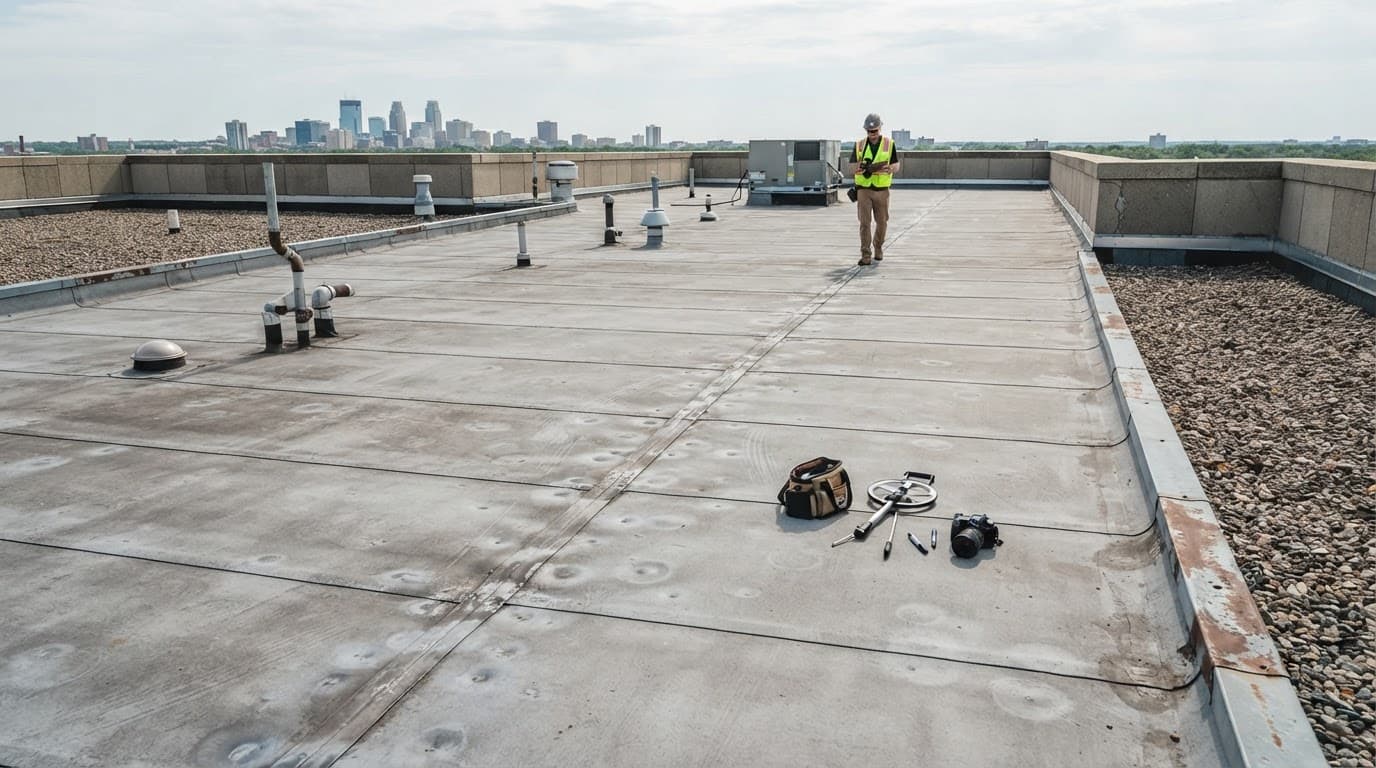
A localized puncture may support commercial roof repair. Saturated insulation, widespread seam failures, or a failing system may point to commercial roof replacement. Commercial roof restoration and commercial roof coatings are appropriate only after moisture testing confirms the roof assembly is dry and structurally sound.
For hard-to-trace intrusion, infrared commercial roof inspection can document moisture beyond the visible leak. Property owners can also Get a Free Commercial Roof Inspection.
Minnesota weather can complicate the timeline
Keep hail, ice, and old wear in separate categories
Hail does not erase other Minnesota roofing problems. Ice dam removal, freeze-thaw cracking, snow loads, wind damage, and old flashing failures may exist alongside a fresh hail loss. Age-related shingle granules and prior leaks may also be present. The inspection should identify the cause of each condition.
Across Saint Paul, Minneapolis, and the Twin Cities, roofing reports should record the storm date and roof age. They should also identify the roof system, such as metal roofing, previous repairs, and visible collateral damage. That makes the claim and home sale easier to explain.
Check qualifications before authorizing work. Sellers Roofing Company holds MN Builder Contractor License 803862. Its union-built roofing crews include IUPAT Local 96 roofers, and buyers can ask whether a contractor is GAF certified for the proposed shingle system.
Final decision before closing
Put facts ahead of the closing date
A home is harder to sell when buyers can’t see what roof damage occurred. They also need to know what was repaired and who performed the work. A dated inspection, targeted repair plan, and complete file reduce that uncertainty.
The best outcome isn’t always a full replacement. The documented condition, policy, and home’s actual needs should guide the decision.
Frequently Asked Questions
Should I file a hail claim before listing my house?
Get an inspection first if the damage isn’t obvious. Filing an unnecessary insurance claim can create a record without producing a useful payment. If damage is documented and may be covered, report it within the deadline stated in your policy.
How large do hailstones need to be to damage a roof?
There is no universal size threshold. Hailstones around one inch can damage vulnerable roofing materials and soft metals. Metal roofing, roof age, storm wind, and impact direction all affect the result.
Can I sell the home before the roof repair is complete?
Yes, if the buyer agrees and the condition is properly disclosed. The sale contract should clearly state who completes the repair, how payment is handled, and whether insurance proceeds are assigned or retained.
What if the adjuster says the damage is normal wear?
Ask for the written basis of that decision. Provide the inspection report, dated photos, collateral hail evidence, and a line-by-line contractor scope. A reinspection may be appropriate when the first review missed documented damage.
Does a roof need to leak before hail damage matters?
No. Hail can shorten roof life, damage flashing, open seams, or affect protective surfaces before water enters the home. A lack of leakage doesn’t prove the roof escaped damage. A written report can show whether the damage affects function or is only cosmetic.
For the larger documentation and claim process, read our Minnesota roof storm damage and insurance claims guide.
Need a roof inspection in Saint Paul or the Twin Cities? Call Sellers Roofing Company at +1-651-703-2336 or schedule a free estimate. We are a black-owned, NMSDC-certified MBE roofing contractor with 9+ years experience.