Last updated: 2026-05-26 by Ted Sellers, Owner
How to Identify and Understand Hail Damage Signs on Your Roof
Early detection of hail damage on a roof can save thousands in repair costs and prevent leaks from undermining your home’s structure. In this guide, I share professional insights on identifying hail impact signs, conducting safe inspections, material-specific damage patterns, repair versus replacement decisions, insurance claim navigation, and future protection strategies. You’ll learn how to spot granule loss on asphalt shingles, dents in metal panels, cracks in tile, and hidden leaks, plus when to call in experts like Roofing Experts St. Paul. By following this roadmap for identifying hail damage on roofs, you’ll gain actionable knowledge, avoid costly surprises, and ensure your property stays watertight.
What Are the Common Signs of Hail Damage on Roofs?
Common hail damage involves visible surface deformations, material loss, and weakened components that compromise roof integrity. Recognizing these signs early allows you to schedule timely repairs and avoid water infiltration.
How Does Granule Loss Indicate Hail Damage on Asphalt Shingles?
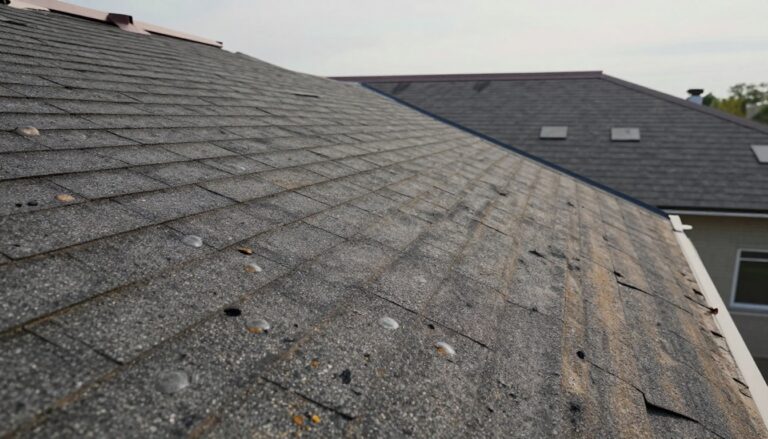
Granule loss occurs when hailstones chip away the protective mineral layer on asphalt shingles, exposing the underlying mat and accelerating UV degradation. You’ll spot loose granules in gutters or downspouts, while bare spots on shingles reveal accelerated wear. Identifying granule loss promptly prevents shingle brittleness and extends roof lifespan.
- Inspect gutters and downspouts for dark granule deposits after storms.
- Look for bare patches on shingle surfaces where the color appears uneven.
- Monitor roof valleys and edges where hail impact concentrates granule loss.
Granule depletion compromises shingle protection against heat and moisture, inviting cracks and leaks that can escalate into structural damage.
Hail Damage on Asphalt Shingles
Hailstones can damage asphalt shingles by removing the protective granules, which exposes the underlying mat and accelerates UV degradation. This damage can lead to cracks and leaks, shortening the roof’s lifespan if not addressed promptly.
This citation supports the article’s discussion on how hail impacts asphalt shingles and the importance of identifying granule loss.
What Do Bruises, Dents, and Cracks Look Like on Different Roofing Materials?
Hail bruising appears as dark, circular impressions on soft materials and dents on rigid surfaces, while cracks manifest as visible fissures that invite water entry. Distinguishing these signs by material ensures precise damage assessment and repair planning.
Bruises and dents weaken protective layers, while cracks create pathways for water intrusion—early recognition of each material’s damage signature guides targeted repairs.
How Can You Spot Damage on Roof Components Like Gutters, Flashing, and Vents?
Hail damage extends beyond shingles into gutters, flashing, vents, and other fittings that protect roof intersections. Noticing indentations, splits, or loosened fasteners on these components helps prevent hidden leaks.
- Check metal gutters and downspouts for round dents and paint chips.
- Inspect flashing around chimneys and skylights for torn edges or displaced seams.
- Examine vent covers and ridge caps for fractured plastic or bent metal.
Failing to address component damage invites water entry at vulnerable junctions, making comprehensive inspection vital before minor issues escalate into leaks.
What Are the Early Warning Signs of Roof Leaks Caused by Hail?
Roof leaks from hail damage begin as subtle stains, dripping sounds, or discolored attic insulation long before visible indoor water. Spotting these early warning signs helps you intervene before structural rot or mold develops.
- Look for brown water stains on ceiling drywall or attic sheathing.
- Listen for dripping in attic spaces when it rains.
- Feel for damp insulation or mildew odors in hidden roof voids.
Recognizing leak indicators fast prevents moisture buildup and ensures your home stays dry, safeguarding both framing and indoor air quality.
How Can You Safely Inspect Your Roof for Hail Damage?

A safe hail damage inspection starts from the ground and uses visual aids and checklists to minimize ladder time. Following step-by-step techniques protects you from falls and ensures thorough coverage of all roof areas.
What Are the Step-by-Step Ground-Level Inspection Techniques?
Inspecting from ground level involves scanning roof surfaces with binoculars, checking gutters, and logging damage before ascending. This method ensures homeowner safety while capturing initial evidence of hail impact.
- Use binoculars to scan every roof plane for dents, bruises, and missing granules.
- Walk property perimeter to inspect gutters and downspouts for debris and granules.
- Photograph all suspected damage and record locations for professional follow-up.
- Note damage concentration—roof valleys, ridges, and south-facing slopes often show the worst impact.
- Compare current roof condition with pre-storm photos to confirm new hail damage.
This structured ground-level survey sets the stage for targeted close-up inspections and helps you decide whether to climb onto the roof safely.
Which Roof Areas Should You Focus on During a Hail Damage Check?
Hailstorms concentrate damage in areas where wind-driven stones strike hardest: ridgelines, valleys, and exposed slopes. Focusing on these zones maximizes inspection efficiency and accuracy.
- Ridge caps and hip lines receive direct impact due to wind turbulence.
- Roof valleys channel falling debris, intensifying stone collisions.
- South-facing slopes often experience more hail accumulation.
- Around vent stacks, skylights, and chimneys where flashing and seals are vulnerable.
Prioritizing these critical zones ensures you don’t miss the earliest signs of material failure or leaks requiring swift repair.
When Is It Necessary to Call a Professional Roofing Contractor for Inspection?
Calling a professional is essential when damage is extensive, beyond safe DIY assessment, or when insurance documentation is required. Expert contractors use specialized tools and provide official reports.
- Visible widespread dents, granule loss, or cracked shingles across multiple roof planes.
- Difficulty accessing steep or multi-story roofs safely.
- Need for moisture meters, thermal imaging, or chalk tests to detect hidden leaks.
- Requirement of a certified inspection report for insurance claims.
For reliable evaluation, schedule a detailed assessment with Roofing Experts St. Paul—our trained team offers comprehensive inspections and insurance support, including personalized recommendations and documentation. Explore our “Wayzata roofing services” for local expertise and prompt attention.
How Does Hail Damage Differ Across Roofing Materials?
Hail impact manifests uniquely on asphalt, metal, tile, wood, and flat roofing systems. Understanding each material’s response guides accurate repair methods and material-specific preventive strategies.
What Are the Unique Signs of Hail Damage on Asphalt Shingles?
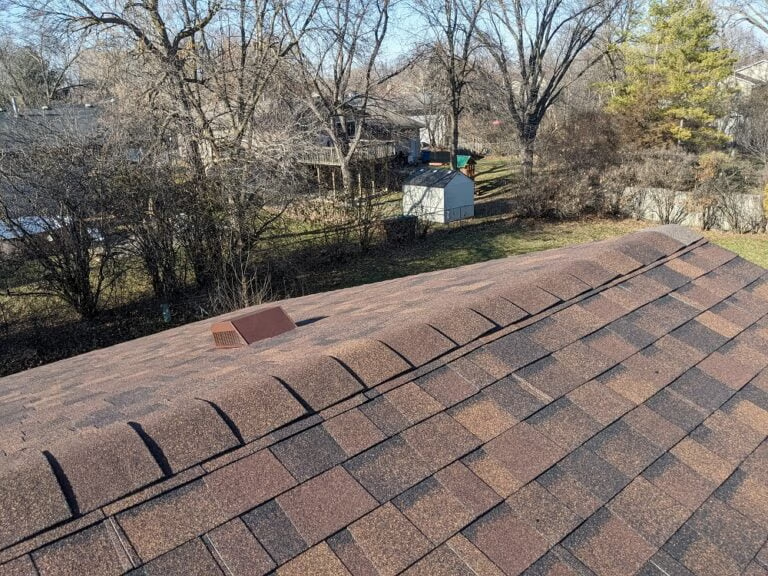
Asphalt shingles bruise when hail dents the granule surface, causing dark spots and granule displacement that expose the shingle mat. Extreme impacts produce splits or missing tabs.
- Circular bruises appear as darker, indented areas on the shingle surface.
- Granule displacement leaves bare, smooth spots where rain runs off more quickly.
- Tab edges may crack or tear under severe blows, creating water-intrusion points.
Early detection ensures you replace only damaged shingles rather than entire sections, reducing repair burden and cost.
How Does Hail Affect Metal Roofs: Dents, Punctures, and Coating Damage?
Metal panels dent when hail strikes, and high-velocity storms can puncture exposed fastener holes or seam areas. Coating breaches lead to corrosion.
Dented metal panels weaken structural rigidity, and coating chips accelerate rust—repairing dents and recoating promptly halts progressive corrosion.
What Should You Look for on Tile, Wood Shake, and Flat Roofs After Hail?
Hail stones crack or chip brittle tile edges, splinter wood fibers, and deform built-up layers on flat roofs. Signs vary by composition but always merit close examination.
- Clay and concrete tiles show fractured corners and loose pieces in valleys.
- Wood shakes exhibit splintered grain and surface checks that channel water.
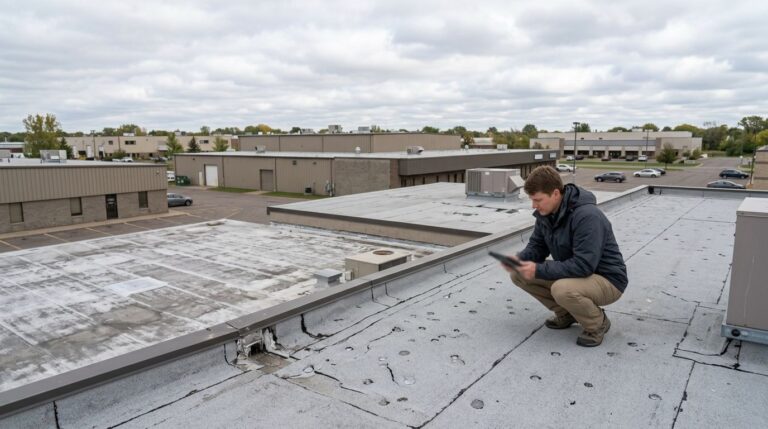
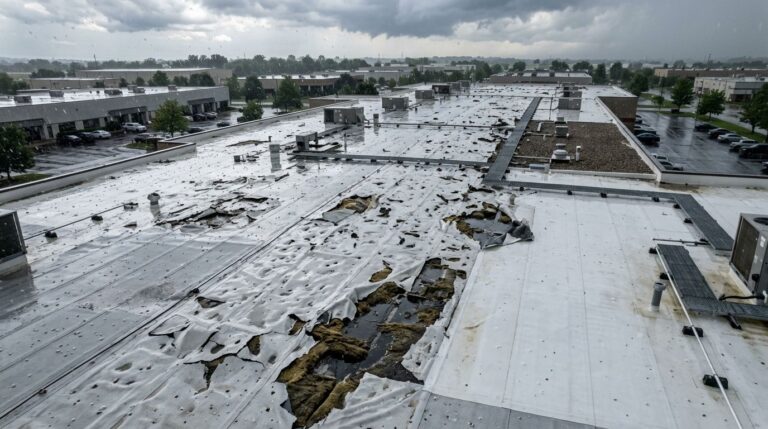
- Flat roofs may form ponding areas where hail has compressed insulation or bitumen layers.
Documenting these distinct damage points helps you select appropriate restoration methods—whether replacing individual tiles, treating wood surfaces, or reinforcing flat-roof membranes.
What Are Your Options for Repairing Hail-Damaged Roofs?

Repair strategies range from shingle tab replacement to full-system restoration. Matching repair scope to damage severity minimizes costs while ensuring roof performance.
When Is Roof Repair Enough vs. When Is Replacement Necessary?
Repair suffices when isolated shingles, panels, or components suffer minor impacts; replacement is required for widespread or structural damage that exceeds 30–40% of roof coverage.
- Repair indicated for individual dented panels or up to 10% of shingle tabs.
- Replacement advisable if granule loss affects entire roof plane or multiple material layers are compromised.
- Structural underlayment and decking damage often demand full-system replacement.
Balancing repair versus replacement protects warranty coverage, optimizes budget, and ensures long-term roof resilience.
How Do Repair Costs Vary Based on Damage Severity and Materials?
Repair costs depend on material type, damage extent, and accessibility. Asphalt shingle spot repairs run $200–$600, while extensive metal panel or flat roof restorations can exceed $5,000.
Understanding cost drivers helps you budget accurately and choose solutions that extend roof life without over-investing in premature replacement.
What Are the Best Roofing Materials to Resist Future Hail Damage?
Impact-resistant materials, like Class 4-rated shingles, coated metal panels, and specially formulated tile composites, deliver superior hail protection and reduce repair frequency.
- Class 4 asphalt shingles offer multi-layer reinforcement against hail up to 1 inch.
- Galvalume and aluminum panels resist dents and coating loss when properly coated.
- Synthetic slate and polymer-modified tiles combine flexibility with impact resilience.
Impact-Resistant Roofing Materials
Selecting impact-resistant roofing materials, such as Class 4 asphalt shingles, can significantly reduce the risk of hail damage. These materials are designed to withstand impacts from hailstones, offering better protection compared to standard roofing products.
This citation reinforces the article’s recommendation to use impact-resistant materials to protect against hail damage.
Selecting high-performance materials during repair or replacement invests in long-term protection and lower maintenance cycles.
How Do You Navigate the Hail Damage Insurance Claim Process?
Filing a hail damage claim accurately and promptly ensures you recover repair costs and avoid claim denials. A structured approach streamlines adjuster reviews and settlement speed.
What Are the Essential Steps to Filing a Hail Damage Roof Insurance Claim?
The claim process involves documenting damage, notifying your insurer, securing estimates, and collaborating with adjusters to finalize coverage.
- Document all damage with photos and notes immediately after the storm.
- Contact your insurance provider to report the event and policy specifics.
- Obtain at least two detailed repair estimates from licensed contractors.
- Schedule the adjuster’s visit and present evidence of hail impact.
- Review the adjuster’s report and negotiate coverage if items are omitted.
Following each step closely avoids procedural delays and ensures full recovery under your policy terms.
How Can You Document and Prove Hail Damage for Insurance Adjusters?
Comprehensive documentation combines photographic evidence, date-stamped notes, and professional inspection reports to satisfy adjuster requirements.
- Capture wide-angle and close-up photos of every damaged roof section.
- Record storm date, hail size, and wind conditions from local weather reports.
- Obtain a certified inspection report from Roofing Experts St. Paul detailing damage and repair recommendations.
Well-organized evidence expedites claim approval and minimizes disputes over damage extent.
What Are Common Pitfalls and How to Work Effectively with Insurance Adjusters?
Missed deadlines, insufficient documentation, and accepting initial lowball estimates can derail your claim. Proactive communication and clear evidence build trust with adjusters.
- File claims within policy timeframes, often 30–60 days after the event.
- Provide both aerial and ground-level photos to show impact breadth.
- Challenge discrepancies politely by presenting contractor-backed cost breakdowns.
Partnering with experienced contractors who liaise with adjusters enhances claim accuracy and settlement value.
What Is the Difference Between Replacement Cost Value (RCV) and Actual Cash Value (ACV)?
RCV covers full repair expenses without depreciation, while ACV subtracts material age and wear, leaving you responsible for depreciation costs.
- Replacement Cost Value reimburses current material and labor expenses in full.
- Actual Cash Value deducts depreciation, reflecting roof age and condition.
- Policies vary—verify your coverage type to anticipate out-of-pocket expenses.
Understanding RCV versus ACV ensures you choose policies that minimize depreciation impact on hail damage claims.
How Can You Prevent Future Hail Damage to Your Roof?
Routine maintenance and selecting impact-resistant systems bolster roof defenses against future hailstorms, reducing repair frequency and prolonging service life.
What Maintenance Practices Help Protect Your Roof from Hail Damage?
Regular roof care—clearing debris, tightening fasteners, and inspecting seals—minimizes weak points that hail exploits.
- Trim overhanging branches to prevent falling limbs during storms.
- Clean gutters and valley areas so water drains quickly and reduces ice buildup.
- Seal flashings and vent boots annually to maintain watertight integrity.
- Replace worn or missing shingles before hurricane-force storms arrive.
Consistent upkeep preserves roof strength and prevents minor issues from escalating during severe weather.
Which Impact-Resistant Roofing Materials Offer the Best Protection?
Materials rated Class 4 under UL 2218 testing deliver proven impact resistance, cutting hail damage by up to 75% compared to standard products.
- Class 4 Asphalt Shingles – Reinforced fiberglass mat resists cracks and granule loss.
- Polymer-Modified Tile – Synthetic compositions combine flexibility with chip resistance.
- Coated Metal Panels – Galvalume and aluminum alloys with protective finishes deter dents and corrosion.
Investing in certified impact-resistant systems lowers insurance premiums and future repair bills.
How Does Local Weather in St. Paul Influence Hail Damage Risks?
St. Paul’s position in the upper Midwest exposes it to frequent spring and summer hail events driven by warm, moist Gulf air colliding with cooler northern systems.
- Minnesota ranks third in annual hail frequency, with 40–60 hail days per year.
- Late spring storms bring the largest hail sizes, often exceeding 1 inch in diameter.
- Rapid temperature shifts create strong updrafts that form dense hailstones.
Understanding local storm patterns helps you schedule inspections post-season and select materials suited for Minnesota’s hail climate.
What Are the Most Frequently Asked Questions About Hail Damage on Roofs?
Homeowners often wonder how to recognize damage, what to expect from insurance, and how professionals detect hidden issues. Clear answers reduce uncertainty and empower informed decisions.
How Can You Tell If There Is Hail Damage on a Roof?
Identifying hail damage involves spotting surface depressions, missing granules, and broken components that were not present before the storm. A side-by-side comparison with pre-storm photos quickly confirms new damage, and professional moisture-meter scans detect concealed leaks behind roofing layers.
What Does Hail Damage Look Like on Asphalt Shingles?
On asphalt shingles, hail manifests as dark, circular bruises where granules have been knocked off and the felt mat is exposed. Over time, these bruise sites become brittle, leading to edge cracks or tabs breaking away under wind or temperature changes.
Does Homeowners Insurance Cover Hail Damage Repairs?
Most standard homeowners policies include hail damage coverage under their dwelling protection, subject to your deductible. Replacement Cost Value (RCV) policies reimburse full repair costs, while Actual Cash Value (ACV) policies factor in depreciation, affecting your out-of-pocket share.
How Do Roofers Confirm Hidden Hail Damage?
Professional roofers use moisture meters, infrared cameras, and chalk tests on shingle surfaces to reveal impact fractures and water penetration that are not visible to the naked eye. A certified inspection report outlines both surface and concealed damage for effective repair planning.
Why Choose a Local Roofing Contractor for Hail Damage Inspection and Repair in St. Paul?
Local contractors bring area-specific expertise, rapid response after storms, and a deeper understanding of St. Paul building codes and insurance requirements. Partnering with neighborhood experts ensures both quality work and smoother claim processes.
What Expertise Does a Professional Roofing Contractor Bring to Hail Damage Assessment?
A certified roofer applies systematic inspection protocols, specialized tools like infrared scanners, and industry-standard repair procedures to accurately gauge damage and recommend cost-effective solutions. Their training and certifications guarantee workmanship that meets or exceeds manufacturer warranties.
How Does a Local Contractor Assist with Insurance Claims?
Local roofing professionals prepare detailed scope-of-loss reports, coordinate adjuster visits, and submit comprehensive estimates that align with policy guidelines. Their established relationships with insurers expedite claim approvals and ensure coverage matches necessary repairs.
What Are the Advantages of Choosing Roofing Experts St. Paul for Hail Damage Services?
Roofing Experts St. Paul combines GAF Master Elite certification, prompt storm-damage response, and transparent pricing to deliver reliable hail repair and replacement. Our St. Paul team offers free inspections, detailed reports for insurance claims, and durable impact-resistant material options that protect homes against Minnesota’s evolving hail patterns.
Detecting and addressing hail damage early protects your home from leaks, structural issues, and escalating repair costs. By following these identification methods, inspection techniques, repair guidelines, and insurance claim steps, you gain the confidence to manage any hailstorm aftermath. Investing in impact-resistant materials and partnering with local experts like Roofing Experts St. Paul secures your roof against future storms. Stay proactive, document every damage sign, and schedule professional assessments to keep your roof—and your home—safe for years to come.
Need a roof inspection in Saint Paul or the Twin Cities? Call Sellers Roofing Company at +1-651-703-2336 or schedule a free estimate. We are a black-owned, NMSDC-certified MBE roofing contractor with 9+ years experience.