Last updated: 2026-10-16 by Ted Sellers, Owner
Yes. Hail can chip, crack, or puncture natural slate roof tiles in the Twin Cities, especially when the stone is thin or weathered. Impact resistance reduces the risk of hail damage, but doesn’t prevent storm damage.
Isolated damage is often repairable. A qualified slater should separate fresh impacts from installation defects before recommending replacement or documenting an insurance claim.
Table of contents
- When This Applies
- What Size Hail Can Natural Slate Withstand?
- Step-by-Step
- Should You Repair or Replace a Hail-Damaged Slate Roof?
- Frequently Asked Questions
- The Next Step for Your Slate Roof
When This Applies
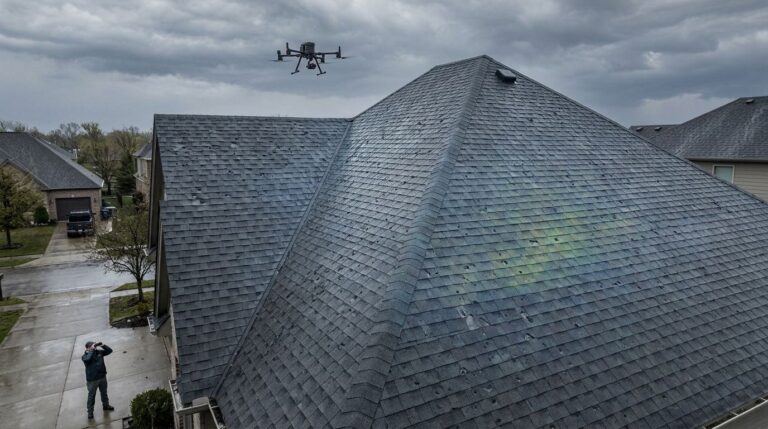
Natural slate after a recent storm
This guidance applies to natural stone roofs on homes and commercial buildings in Saint Paul, Minneapolis, and surrounding communities. Synthetic slate, asphalt shingles, and metal roofing require different damage assessments.
A chipped edge alone doesn’t establish hail damage. The fracture pattern, surrounding impacts, and roof condition matter.
Older slate and cold-climate exceptions
Soft black slate over 50 years old can require less impact energy to break. Age alone doesn’t condemn the roof.
Minnesota freeze-thaw cycles can enlarge existing openings. Ice dams and installation defects can also cause leaks, so an inspection must distinguish hail damage from normal wear.
What Size Hail Can Natural Slate Withstand?
What the laboratory ratings show
The FM 4473 testing standard uses ice balls to measure the impact resistance of new rigid roofing.
North Country Slate reports these FM 4473 results from tests with ice balls:
| Slate thickness | Ice-ball diameter | Approximate speed | Rating |
|---|---|---|---|
| 1/4 inch | 1.75 inches | 69 mph | Class 3 |
| 3/8 inch | 2 inches | 76 mph | Class 4 |
The tested 3/8-inch slate showed no visible cracking or breakage.
Why an installed roof can perform differently
These results describe the impact resistance of tested products, not every slate roof. Stone quality, thickness, deterioration, support, and impact angle affect how an installed roof performs.
Single-layer sidelap installations can be more vulnerable to leaks after a hailstrike. Damage can also concentrate on the slope facing the storm’s wind direction.
Step-by-Step
Inspect safely and identify the damage
- Photograph conditions from the ground. Use binoculars to locate missing pieces, fresh-looking fractures, and debris that may indicate hail damage. Photograph ceiling stains and attic moisture where safely accessible. Don’t walk on slate; foot traffic can break sound tiles.
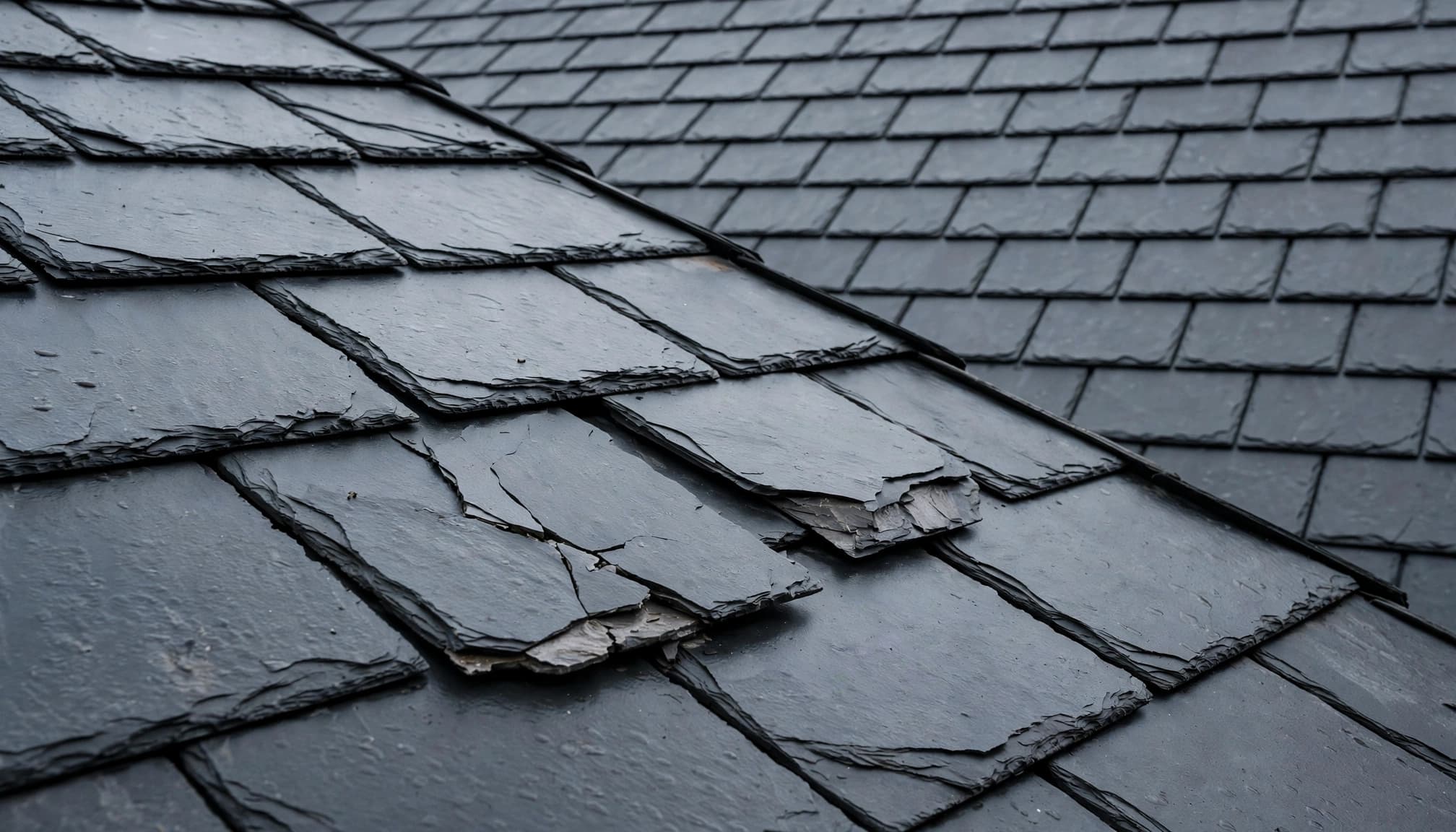
- Have a qualified slater or roofing inspector examine the roof. InterNACHI’s slate inspection guidance describes a typical hail puncture: a clean entry hole on the impact side and a larger, ragged hole underneath. The inspector should compare the impact-side entry hole with the underside fracture pattern and document affected slopes and other possible causes.
Preserve evidence and report the loss
- Build a dated record before permanent repairs. Include digital overview photos, close-ups of broken tiles, the storm damage date, wind direction, interior damage, prior roof records, and emergency-work receipts. Arrange temporary protection for an active roof leak. Avoid unnecessary tear-off that destroys evidence, but don’t delay work needed for safety or damage control.
- Report the loss promptly. Minnesota Commerce’s residential claim guidance directs homeowners to contact their insurer immediately. Notice requirements and filing deadlines are policy-specific, so there’s no universal waiting period. Keep the inspection, estimate, photographs, and insurer correspondence together. An insurance claim should document physical damage and a repair scope, not rely on a hail map alone.
Should You Repair or Replace a Hail-Damaged Slate Roof?
Isolated damage usually supports repair
A slater can replace individual damaged pieces with slate hooks or copper bibs. Sound surrounding slate often remains serviceable.
The written scope should cover broken tiles, flashings, attachment problems, and water damage. Hidden leaks may appear indoors later. Unrepaired moisture promotes mildew and mold.
Widespread damage needs a documented count
North Country Slate gives 20% to 30% damaged slates as a general replacement guideline. Some evaluators use 8% to 10%. Neither range is a universal insurance requirement.
Record damaged counts and inspected totals for each slope. Replacement decisions also depend on slate strength, damage distribution, repair access, and the risk of breaking adjacent pieces.
A few broken tiles don’t justify residential roof replacement by themselves. Widespread brittleness or damage that prevents durable repairs may warrant a full roof replacement.
Frequently Asked Questions
Can a hail map prove my roof was damaged?
No. A hail map supports the storm timeline, but it can’t prove an individual slate broke. Roof-specific photos and fracture findings establish the physical condition.
How much does slate roof repair cost after hail?
The cost depends on the number of damaged tiles, roof access, and the scope of repairs. Insurance reimbursement depends on your policy and the claim findings.
What if the insurer attributes everything to age?
Request the written explanation and supporting inspection findings. Compare them with dated condition photos, maintenance records, and documented fresh fractures. An older roof can sustain a new covered loss.
Does a flat-roof addition need a separate inspection?
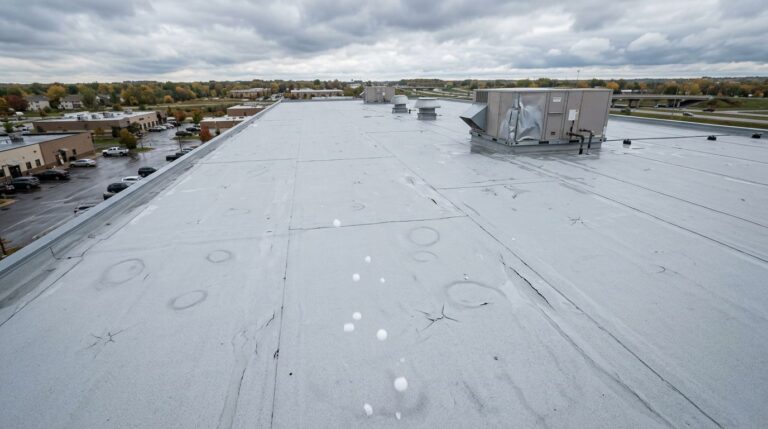
Yes. TPO, EPDM, modified bitumen, and BUR roofs need system-specific inspections. A commercial flat roof may have hidden insulation damage that isn’t visible at the surface.
How soon can a roof leak appear after a hailstorm?
Document when staining appears and arrange a prompt leak-source evaluation. Delayed staining alone doesn’t establish the cause. The water path and roof findings must connect the leak to the damage, since trapped moisture can also lead to mildew and mold.
The Next Step for Your Slate Roof
Hail can damage natural slate without making the entire roof unrepairable. The decision should follow documented fractures and roof condition, not storm size alone.
Need a roof inspection in Saint Paul or the Twin Cities? Call Sellers Roofing Company at +1-651-703-2336 or schedule a free estimate. We are a black-owned, NMSDC-certified MBE roofing contractor with 9+ years experience.