Last updated: 2026-08-01 by Ted Sellers, Owner
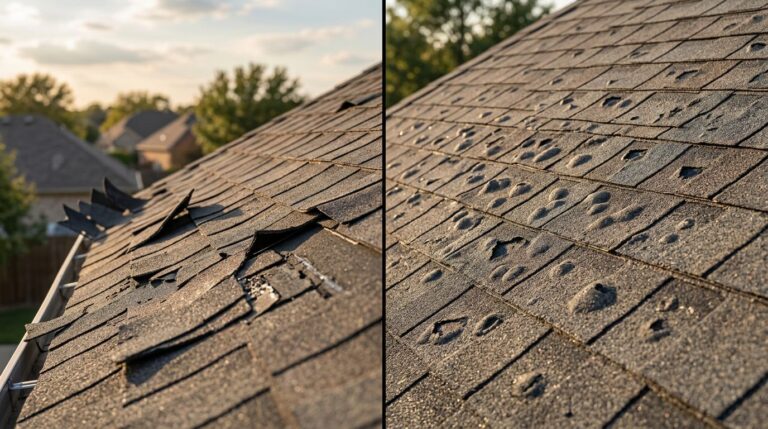
Short answer: hail damage leaves random, sudden impact marks. Normal wear shows up as even aging over time. On a hail damage roof, you’ll often see circular bruises, sharp granule loss, and matching dents on metal parts nearby. Wear looks smoother and more uniform, with fading, edge erosion, and gradual granule loss across large areas.
That rule matters most after a storm, when one wrong guess can turn a small repair into a leak over tenants, equipment, or stock.
When This Applies
Best fit for commercial buildings with shingled roof sections
This applies to business owners who have asphalt shingles on all or part of a building. That includes offices with pitched entries, retail storefront canopies, churches, mixed-use buildings, and multifamily properties.
It also fits buildings with more than one roof type. For example, a storm can hit shingle slopes, metal trim, and low-slope sections at the same time. If you manage one of those properties, local Saint Paul commercial roofing experts can inspect the whole system instead of one section in isolation.
If you want a second source for visual clues, this overview of roof hail damage gives a helpful big-picture look at impact size, age, and storm timing.
When this won’t give you a full answer
This quick check won’t settle every case. Old, brittle shingles can crack from age. Wind can tear tabs in ways that look storm-related. Foot traffic can also scrape granules off in odd spots.
That’s why pattern matters more than one mark. If the roof shows even fading, curled edges, and slow granule loss across broad areas, you’re likely looking at age, not hail.
Mixed roof systems need a wider check
Many businesses don’t have only shingles. If the same storm also hit membrane areas, you may need commercial flat roof repair on the low-slope sections even when the shingled area only needs minor work.
Step-by-Step
1. Start with the pattern, not one mark
Hail damage is messy. The marks usually appear in scattered, coin-sized spots, not in neat rows. You may see dark dots where granules got knocked away, plus sharp-edged bruises that don’t match the roof’s normal wear path.
Normal wear looks more orderly. It often shows up along edges, in water-flow paths, and on slopes with long sun exposure. The loss is gradual, not sudden.
2. Look closely at the surface texture
A hail strike often feels like a bruise. The spot may look slightly soft, crushed, or freshly exposed. Around it, granules can seem torn away instead of gently thinned over time.
By contrast, worn shingles usually look dry, faded, and consistent. The surface ages like old sandpaper. It doesn’t have that sharp, fresh hit.
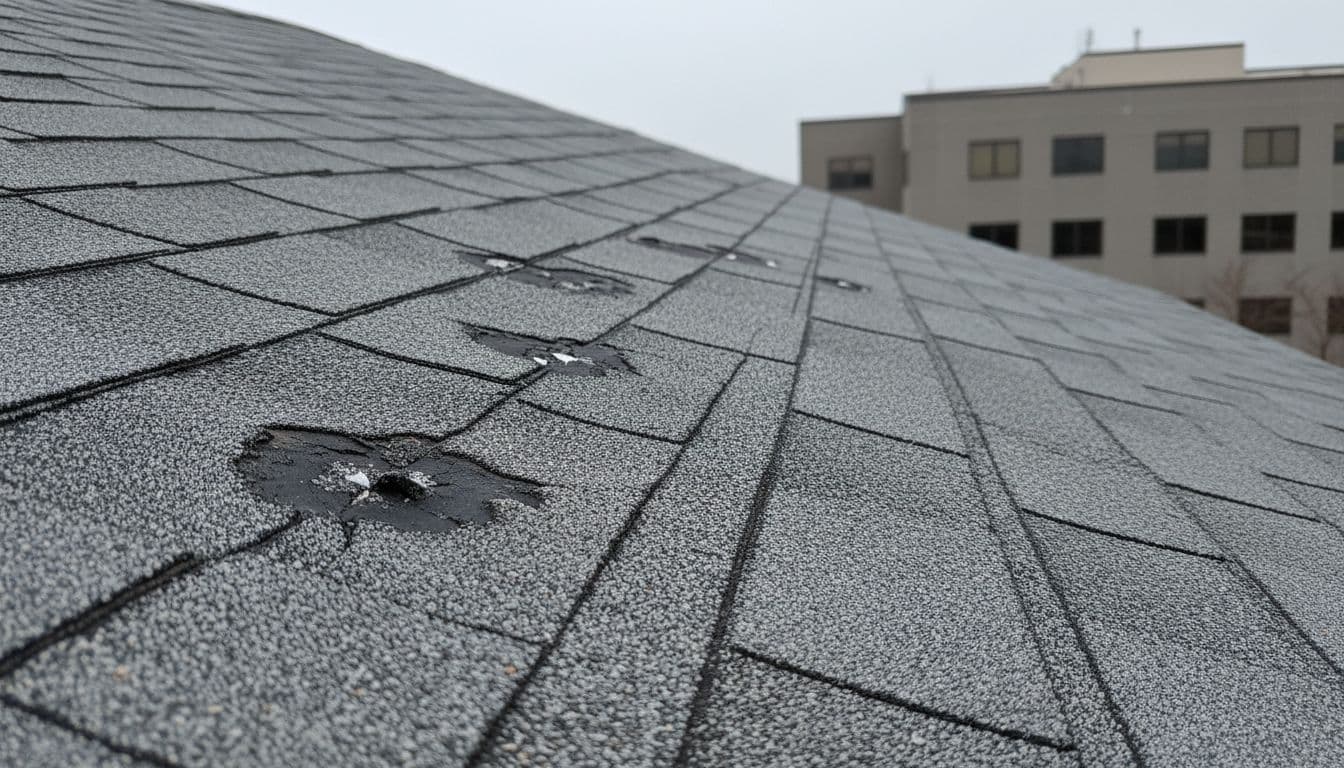
Hail hits look random and fresh. Age shows up in a pattern.
3. Compare the shingles with metal parts nearby
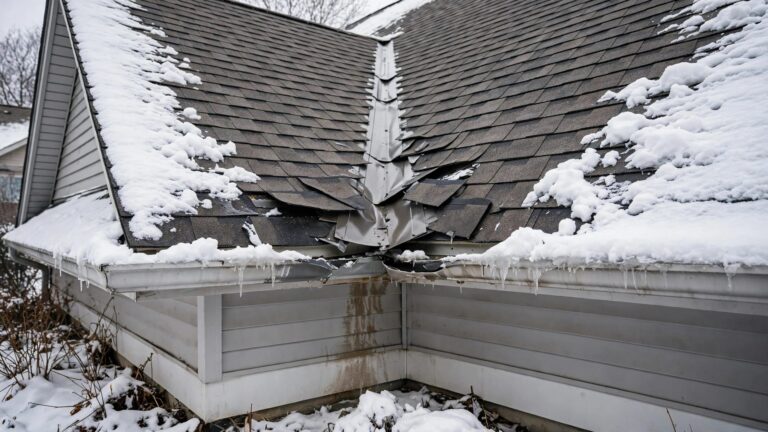
Don’t judge shingles alone. Check soft metals, vents, flashing, downspouts, and rooftop units. If hail caused the shingle marks, you’ll often find matching dents on those surfaces too.
That cross-check is one of the best ways to separate hail from age. Sun and time don’t dent metal. Hail does.
On older roofs, use a storm date
An old roof can hide new damage. If you know when hail hit, compare that date with fresh marks, new leaks, or a sudden pile of granules. Good records help, and this guide to documenting hail damage explains why photos and dates matter.
4. Check gutters and downspouts for fresh granules
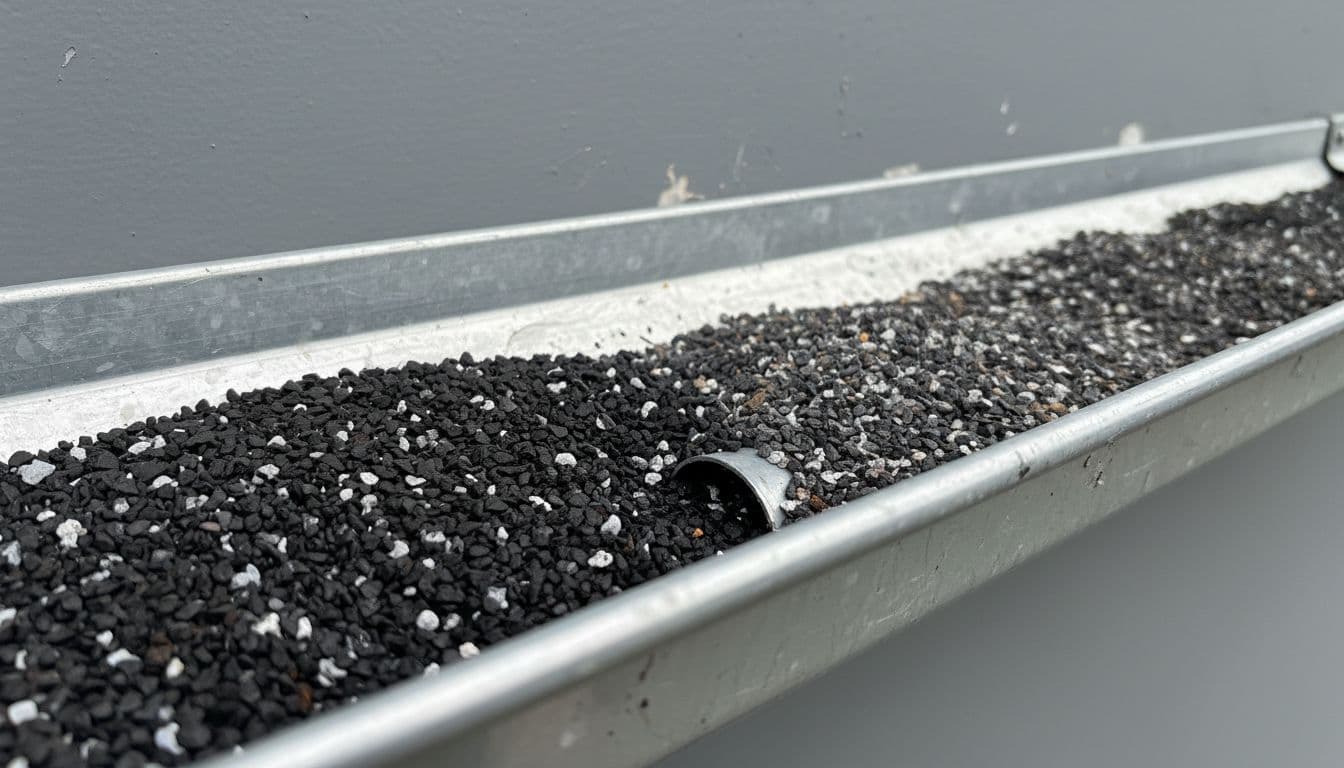
Fresh hail damage often knocks off dark granules fast. After a storm, you may find a heavier-than-normal buildup in gutters or at downspout exits. Those granules usually look newer and darker than the dusty material that comes from long-term wear.
Normal aging sheds less dramatically. It’s slower, lighter, and more consistent over time.
5. Decide whether it’s repair, monitoring, or replacement
If the hits are limited and the roof still has life left, targeted repair may be enough. If interior stains show up, the commercial roof needs repair right away, even if the damage looks small from outside. Water rarely travels in a straight line, so hidden moisture can spread well past the impact area. In those cases, commercial roof leak detection Saint Paul can help confirm where the problem starts.
When repair is enough
A few isolated bruises on a newer roof often point to spot repairs, sealant work, or limited shingle replacement.
When replacement is smarter
Widespread bruising, fractured mats, and an aging system can make commercial roof replacement the better call. Patching an old roof full of fresh impacts often buys only a little time.
Frequently asked questions after a hailstorm
Can small hail still damage shingles?
Yes, especially on older roofs. Small hail may not crack every shingle, but it can loosen granules and shorten service life.
What if only one roof slope has marks?
That can still be hail. Storm direction, wind, and roof angle often make one slope take the hardest hits.
Will insurance cover normal wear?
Usually no. Policies commonly treat wear, age, and poor upkeep differently from sudden storm damage.
Can hail damage cause leaks days later?
Yes. A bruise can break the shingle surface first, then water finds its way in during the next rain. That delayed leak is common on commercial properties.
Should you inspect right after the storm?
Yes, but do it safely. The closer your inspection is to the storm date, the easier it is to separate fresh impact from old weathering.
If the marks look sudden, scattered, and backed up by dents on nearby metal, treat them as hail damage until proven otherwise. If the roof ages evenly across broad areas, you’re likely seeing normal wear.
For business owners, speed matters. A fast, documented inspection can stop a minor hit from turning into leaks, tenant complaints, or a much larger repair bill.
Need a roof inspection in Saint Paul or the Twin Cities? Call Sellers Roofing Company at +1-651-703-2336 or schedule a free estimate. We are a black-owned, NMSDC-certified MBE roofing contractor with 9+ years experience.