Last updated: 2026-09-28 by Ted Sellers, Owner
Solar panels make a hail inspection more complicated because some roof areas and attachment details are concealed. This guide explains why the roof and solar system should be documented together after a storm.
How Is Hail Damage Inspected Under Solar Panels?
Hail damage under solar panels should be inspected by documenting exposed roof areas, panel condition, attachments, flashings, wiring clearances, and accessible materials. Do not remove panels without a coordinated plan; the inspection should distinguish roof damage from solar-equipment concerns.
Can hail damage solar panels and the roof beneath them? Yes. Inspectors document the storm, module glass, racking, and exposed roof first. After the array is made safe, they inspect mounts and flashings, then lift or remove selected modules when needed. On low-slope roofs, moisture mapping and test cuts can confirm impact damage beneath the membrane.
Minnesota’s hail, freeze-thaw cycling, and snow load make hidden roof details worth checking before water reaches a ceiling. The inspection must follow the roofing system, not a generic panel checklist.
When This Applies
Roof types, storm conditions, and access limits
This process applies after a hailstorm on homes, apartments, warehouses, churches, retail buildings, and other properties with rooftop solar. It matters most when the system sits over a commercial flat roof, but it also applies to asphalt shingles and metal roofing on steep-slope homes.
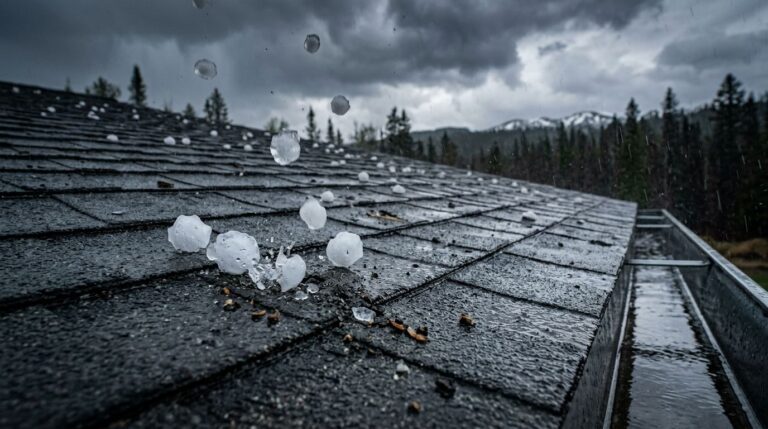
A hail damage roof may show broken module glass, dented frames, loose clamps, bent rails, damaged flashing, punctured membrane, or crushed insulation. The panel array can hide impact marks that would otherwise be easy to see.
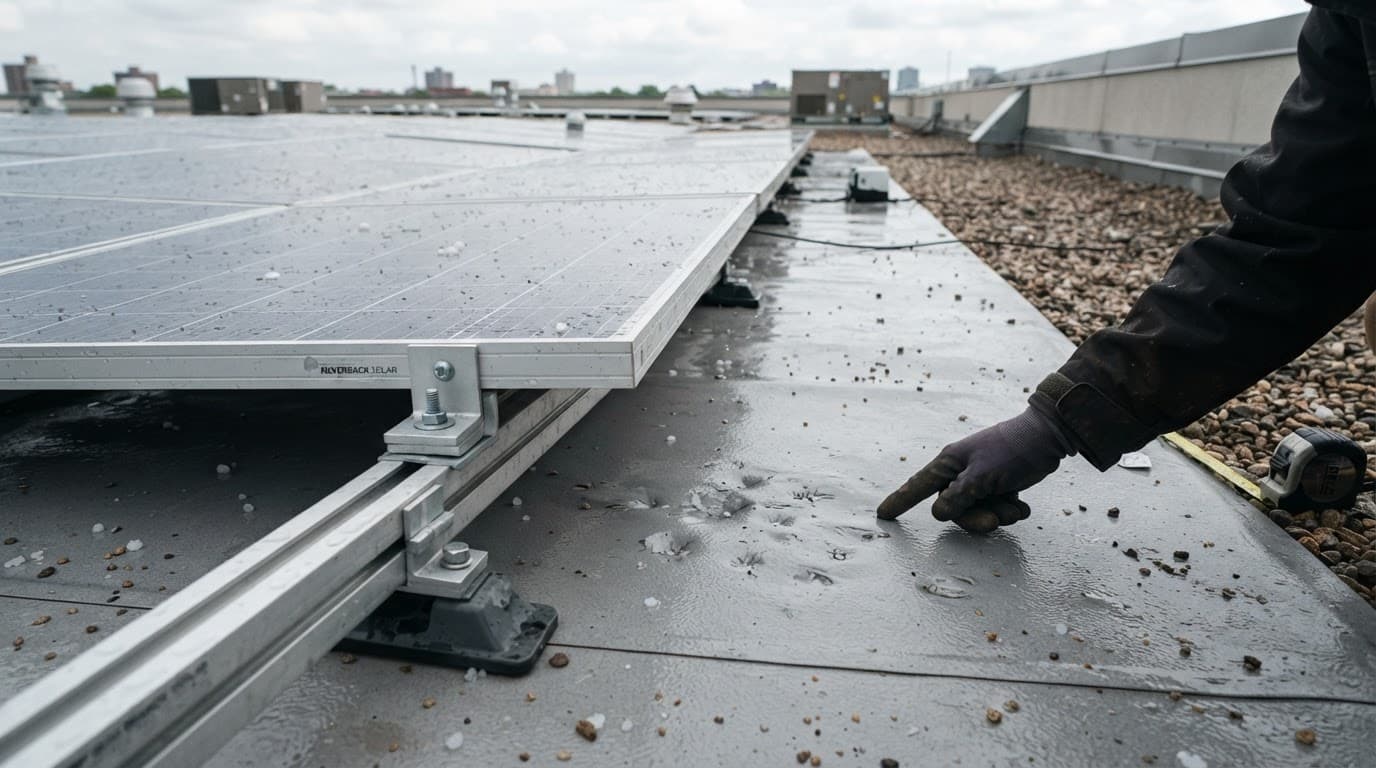
Inspection may need to wait if panels are covered by snow, ice, or standing water. Ice dam removal is a separate safety issue on steep roofs. Crews should not walk a slick roof or handle solar equipment during lightning, active high winds, or unsafe electrical conditions.
Not every dent means the roof needs replacement. Cosmetic marks on a metal panel frame may not affect function. A cracked mounting flashing, torn membrane, loose fastener, or wet insulation is different. Those conditions can turn a storm damage roof into an active leak.
Can Hail Damage Solar Panels and the Roof Beneath Them?
Step-by-Step Inspection Process
- Document the storm and the visible condition before work begins.
The inspector records the storm date, hail size reports when available, roof type, panel layout, interior stains, and all visible impact points. Wide photos establish location. Close photos capture cracked glass, chipped coatings, split sealant, displaced clamps, and damaged flashing. This file helps separate new impact damage from old wear before a roof insurance claim is submitted. - Inspect the solar system from the panel side.
A qualified solar technician checks module glass, frames, junction boxes, rails, clamps, conduit, and inverter alerts. Production data can flag a system issue, but it cannot prove the condition of the roof below. Solar modules are designed to tolerate standard impact testing, yet that does not make the mounting hardware or roof assembly immune to damage. A solar storm damage inspection can help identify panel-side defects that need a solar contractor’s attention. - Check every roof penetration and attachment point.
Solar arrays are commonly attached through flashing systems, standoffs, clamps, or ballasted supports. The inspector checks whether flashing is cracked, sealant bonds are broken, fasteners have shifted, or rails have moved. On a steep-slope roof, that includes the shingles surrounding each attachment. On a low-slope system, it includes boots, curbs, seams, and membrane patches around supports. A panel should never be lifted casually. Disconnecting and removing modules needs coordination with the solar installer so the array can be reinstalled correctly. - Open access only where the evidence supports it.
Inspectors often begin at panel edges, service corridors, drains, parapet walls, and areas near visible impact. If the roof cannot be fully seen, selected modules may be temporarily removed to inspect the concealed field. Drone photos are useful for documenting the array, but a drone cannot confirm whether insulation is wet beneath a membrane. This is where a proper commercial roof inspection becomes more than a surface walk. - Use roof-system testing to find hidden moisture.
TPO roofing and EPDM can develop punctures, split seams, damaged terminations, or wet insulation beneath an intact-looking surface. Modified bitumen and BUR may show torn plies, bruised surfacing, failed laps, blisters, or substrate damage. Moisture meters, infrared scans, electronic leak testing, and limited test cuts help map the spread. Thermal readings require care because solar-panel shading changes roof temperature. The inspector compares readings in shaded and exposed areas instead of treating one cool spot as proof. - Trace the water path and write a repair scope.
A ceiling stain is often the exit point, not the entry point. Water can move under membrane laps, insulation boards, deck flutes, or framing before it appears indoors. The final report should identify the membrane or shingle system, damaged details, moisture extent, temporary protection needed, and whether the work is commercial roof repair, residential roof repair, or a larger project. Hail can bruise a membrane without causing an immediate leak, so waiting for water inside is a poor inspection standard.
Deciding Between Repair, Restoration, and Replacement
The condition below the panels controls the scope
A small puncture with dry insulation may need targeted commercial roof repair. A damaged flashing at one solar mount on asphalt shingles may call for a localized residential roof repair. The decision changes when moisture has spread, seams are failing across connected sections, or removal will disturb too much aged material.
Findings that change the scope
| Inspection finding | Typical direction |
|---|---|
| Isolated puncture, sound membrane, dry insulation | Targeted repair and solar-array reinstallation |
| Aged but dry membrane with no active seam failure | Commercial roof restoration or commercial roof coatings may be considered |
| Widespread wet insulation, repeated seam failures, damaged deck | Commercial roof replacement |
| Broad hail damage across a steep roof system | Residential roof replacement may be more practical than scattered repairs |
Commercial roof coatings and restoration systems can extend a sound roof. They do not correct saturated insulation, failed attachment, or an active water path beneath solar panels. Coating over impact evidence before the claim is documented can also make the cause harder to prove.
If water entry remains unclear, commercial roof leak detection in Saint Paul can trace the source before permanent work closes off the evidence.
Build a Clean Claim File Before Permanent Repairs
Photos, moisture findings, and written scope matter
Open the claim promptly if hail created an opening or damaged functional roof components. Keep dated photos, weather notes, emergency invoices, panel inspection records, moisture maps, test-cut findings, and damaged materials when safe to store them. A narrow, fact-based file is stronger than a broad statement that the entire roof is ruined.
Temporary dry-in work is appropriate when water is entering. Keep it temporary until the inspection is complete. Permanent patches, membrane removal, or discarded wet insulation can make it harder to determine whether damage came from one storm or long-term wear.
For commercial owners in Saint Paul, Minneapolis, and the wider Twin Cities roofing market, Get a Free Commercial Roof Inspection before authorizing solar-panel removal or a membrane repair. Homeowners with a steep-slope scope can Get a Free Residential Roof Estimate.
Sellers Roofing Company has completed more than 1,100 roofs since 2017, including 801 residential and 300 commercial projects. Its union-built roofing crews include IUPAT Local 96 tradespeople and work under MN License 803862. Ask any contractor whether its crew understands both the roof system and solar access requirements. A GAF certified steep-slope roofer is not automatically qualified to diagnose a low-slope membrane below an array.
Frequently Asked Questions
Do all solar panels need to be removed after hail?
No. Removal is not automatic. Inspectors start with exposed edges, mounts, flashings, accessible roof areas, and moisture testing. Selected modules are removed only when the concealed roof cannot be evaluated another way or evidence points to damage below the array.
What if the panels look fine but the building leaks?
The roof may still be damaged. A panel can survive hail while flashing, membrane seams, insulation, or attachment points fail. On large roofs, water may travel several feet before it reaches a ceiling tile or wall.
Can a roofing crew disconnect the solar array?
Only qualified personnel should handle electrical disconnects and solar-system work. The roofing contractor and solar installer should coordinate the removal, storage, reinstallation, testing, and warranty requirements before panels move.
Will insurance pay for hidden roof damage under panels?
Coverage depends on the policy and the documented cause of loss. Photos, storm timing, moisture readings, test cuts, and a written scope can show why the concealed work is tied to the hail event rather than age or skipped maintenance.
What if water is entering during another storm?
Protect people, electrical equipment, inventory, and finished spaces first. Use temporary dry-in measures when conditions are safe, then document them. For active water entry, Call 651-703-2336 for 24/7 Emergency Roofing.
The Roof Under the Array Still Needs Proof
Solar panels protect part of the roof from view, not from hail damage. A complete inspection checks the modules, racking, flashings, roof surface, insulation, and water path as one assembly.
The strongest result is a documented scope that matches the actual condition below the array. That is how Minnesota roofing owners avoid a small hidden defect becoming a larger repair after the next storm.
For the larger documentation and claim process, read our Minnesota roof storm damage and insurance claims guide.
Need a roof inspection in Saint Paul or the Twin Cities? Call Sellers Roofing Company at +1-651-703-2336 or schedule a free estimate. We are a black-owned, NMSDC-certified MBE roofing contractor with 9+ years experience.