Last updated: 2026-10-22 by Ted Sellers, Owner
If hail during roof replacement interrupts your St. Paul project, stay off the roof during severe weather. Ask your roofing contractor to secure exposed areas when conditions permit. After the hail storm, document installed materials and request a professional inspection as part of the roof inspection. Suspected marks aren’t confirmed hail damage. Notify your insurer promptly about an insurance claim. Resume work only after moisture, repair scope, and payment responsibilities are documented. A hail damage roof assessment can guide residential roofing repairs; full replacement isn’t automatic.
Contents
- When This Applies
- Step-by-Step
- How Do You Assess Hail During Roof Replacement?
- Who Pays for Damage to an Unfinished Roof?
- Frequently Asked Questions
- Conclusion: Restart With a Documented Scope
When Does Hail During Roof Replacement Affect Minnesota Homes and Commercial Roofs?
An interrupted residential roof replacement
This applies when hail strikes during residential roofing work, after underlayment installation, or after some new asphalt shingles are installed. Each stage creates different exposure.
The contractor must identify which areas were finished, temporarily protected, or open when the storm arrived. Completed slopes still need a roof inspection to document hail damage.
Existing defects and other roof systems
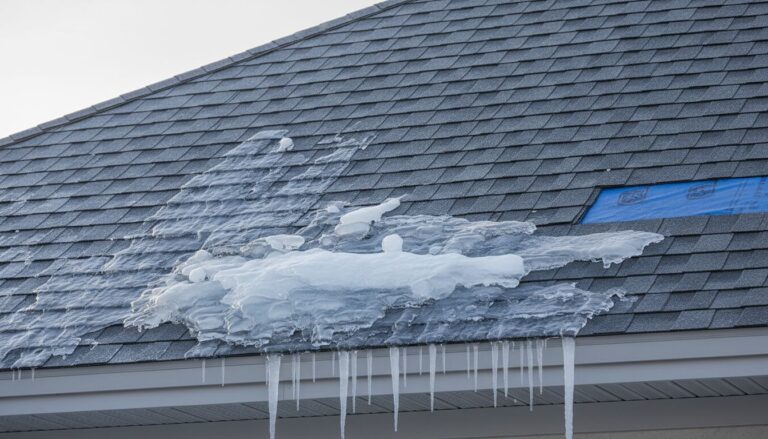
This process doesn’t establish that older leaks, installation defects, or ordinary wear came from hail. Keep previous repairs and ice dam removal records separate, since they may matter to a manufacturer warranty.
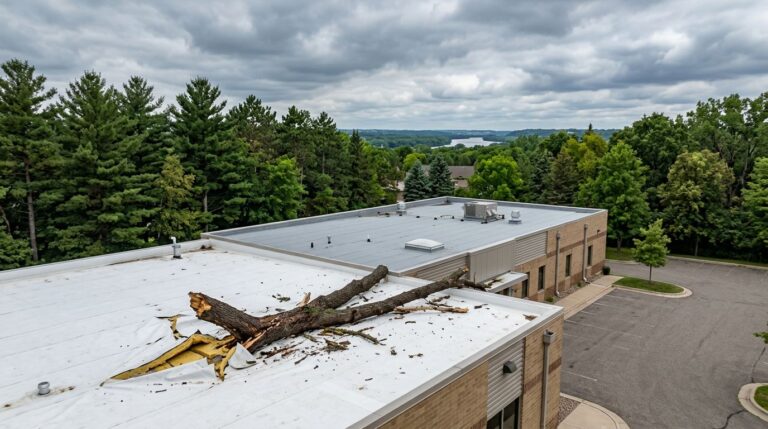
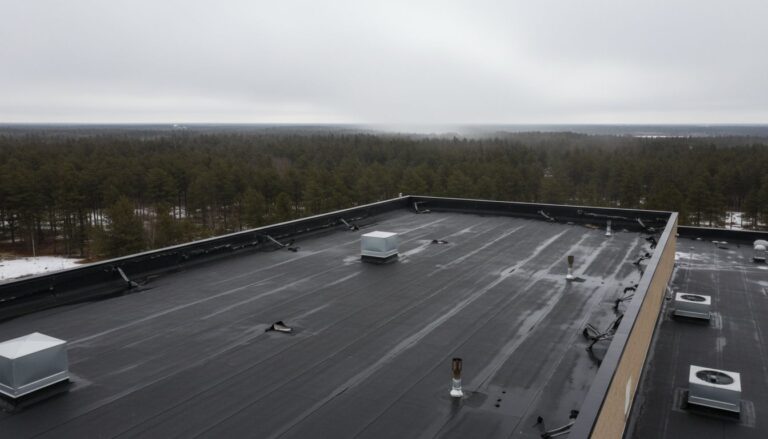
Flat-roof additions need system-specific checks. A hail damage roof assessment looks different for TPO, EPDM, modified bitumen, and BUR than for shingles. Mixed-use buildings may also need a commercial roof hail damage assessment.
Step-by-Step
While the storm is active
- Stay indoors and keep household members away from the work zone during a hail storm. Don’t climb a ladder, move heavy debris, or attempt rooftop tarping during hail, lightning, or high winds.
- Contact the project supervisor. If hail during roof replacement leaves areas exposed, ask how the crew will restore temporary weather protection once conditions permit. Ask whether any roof damage is apparent, and report interior water entry immediately. Don’t wait for an insurance inspection.
After safe access returns
- Save pre-storm installation photos, the contract, delivery records, and daily progress updates to show what work was complete. Record the storm date and any observed hailstones, but don’t treat their size as proof of hail damage. Photograph visible exterior damage and interior staining from safe locations.
- Notify your insurer promptly if damage is suspected, ideally within 24 to 48 hours, but check your insurance policy for its reporting deadline. Explain that work was underway and keep your insurance claim record separate from the contractor’s findings. Ask about the wind-and-hail deductible, temporary-repair provisions, and whether construction affects coverage.
- Request a written roof inspection before affected areas are covered, and ask whether the insurer needs a separate professional inspection. Have the contractor distinguish old roofing, newly installed materials, exposed decking, and temporary protection, and document any hail damage. Keep mitigation receipts and obtain a revised scope before authorizing permanent work. Verify any contractor before authorizing work, including one who approaches you unsolicited; storm chasers vary, so check credentials and references. Ask whether the insurance adjuster needs to inspect the site before repairs.
How Do You Assess Hail During Roof Replacement?
Separate surface marks from damaged components
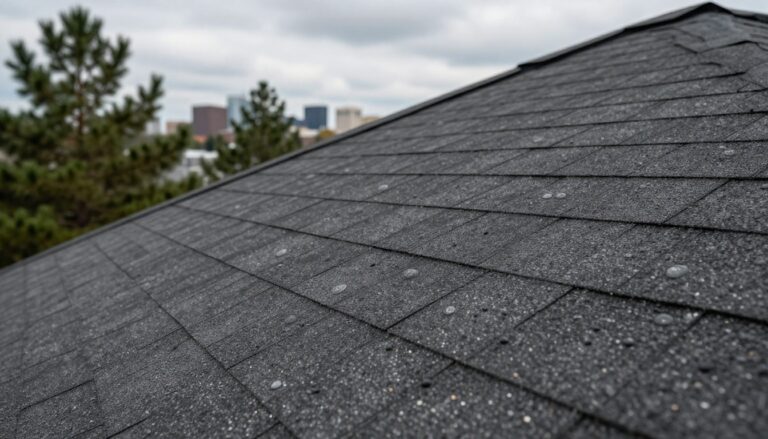
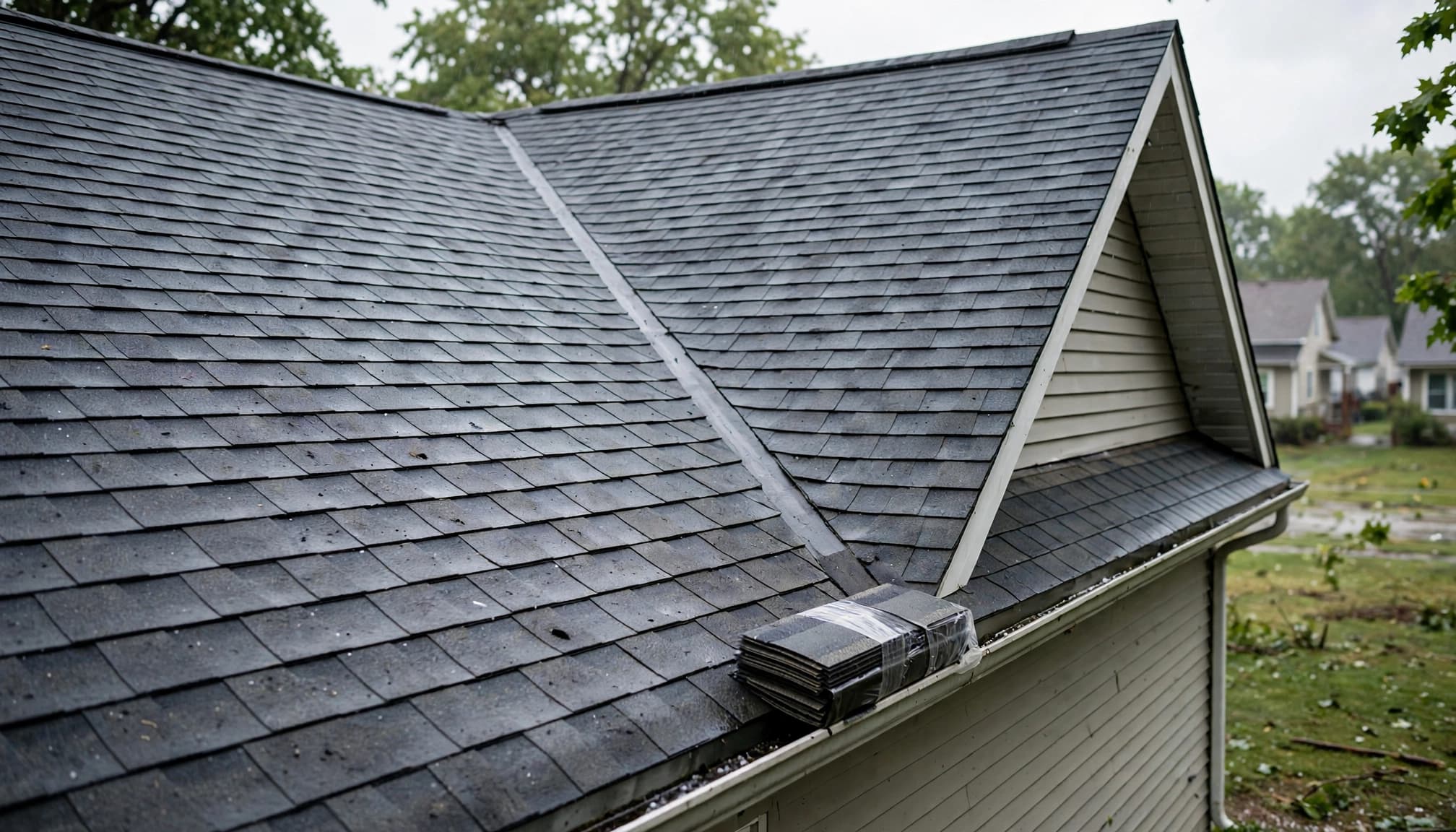
Granule loss alone doesn’t establish hail damage. Installation traffic, manufacturing conditions, blistering, and aging can produce similar marks.
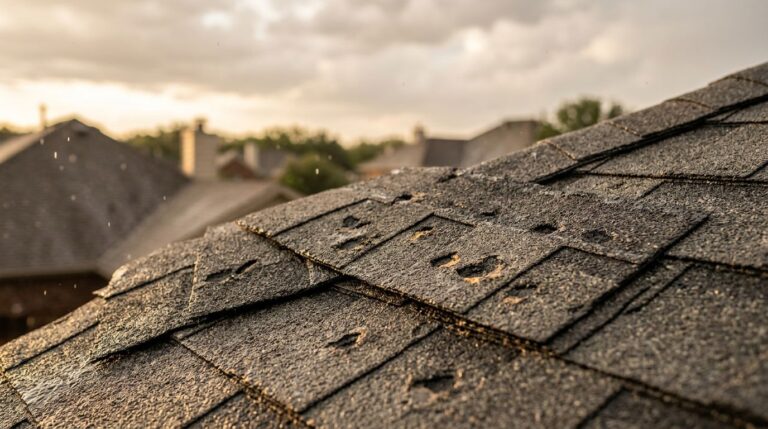
During a professional inspection, a roofing contractor should assess asphalt shingles for impact patterns, shingle bruises, mat fractures, cracks, punctures, and flashing damage. A hail damage roof inspection should interpret these signs in context, since hailstones and other conditions can create similar marks.
Drone photographs document damage distribution but may require close inspection to confirm suspected bruising. Dented gutters support evidence of storm activity, but don’t prove that shingles have functional damage.
Decide between repair and replacement
The revised scope should identify affected materials and explain why each needs repair or replacement. Isolated damage may call for roof repairs. Widespread confirmed hail damage may require full replacement of larger sections.
Inspect exposed decking and insulation for moisture before enclosing them. Wet materials shouldn’t disappear beneath the next roofing layer without assessment.
Keep storm-related corrections separate from unfinished original work. Otherwise, the same materials or labor may enter both estimates.
Who Pays for Damage to an Unfinished Roof?
Separate insurance coverage from contractor responsibility
Payment depends on your insurance policy, construction contract, and documented facts surrounding the loss. Hail damage doesn’t automatically make the contractor liable. An open roof also doesn’t automatically establish negligence.
Ask the contractor for insurance information and a written account of temporary protection. Give your insurer the same timeline, including when the roof damage occurred. If an earlier insurance claim funded the replacement, identify the new storm date and avoid duplicate billing.
Review the adjuster’s scope before restarting
An insurance adjuster evaluates the claimed loss and prepares an estimate under the policy. The contractor documents roof conditions and repair requirements.
For a hail damage roof assessment, compare the adjuster’s scope with the contractor’s documented findings. Review each roof section and component. Request review of omitted damage with supporting photographs and measurements. Minnesota’s guidance on settling insurance claims helps homeowners address settlement questions.
Keep emergency protection separate from disputed permanent work.
Frequently Asked Questions
Can a new roof have hail damage without leaking?
Yes. Water entry may occur later. Dry ceilings don’t rule out damaged roofing components, but surface marks alone don’t establish functional damage.
How much can hail repairs or a full replacement cost?
Costs depend on the damage, roof size, materials, and access. Choices such as impact resistant shingles can affect the estimate. If a contractor offers a free roof inspection, confirm what it includes and whether findings are documented.
Will replacing individual shingles affect the manufacturer warranty?
Check the specific manufacturer’s written terms before approving repairs. Request compatible materials, an approved repair method, and written clarification of remaining coverage. Keep the installation warranty separate.
How soon can roof replacement resume after a hail storm?
Timing depends on the roof’s condition, weather, material availability, and insurer review. Have the contractor assess any impacts from hailstones and document needed repairs before work resumes.
What if I disagree with the adjuster’s estimate?
Submit the contractor’s itemized findings and request reconsideration. If hiring a public adjuster, verify Minnesota adjuster licensing and review fees before signing.
Conclusion: Restart With a Documented Scope
Keep the project record intact
Document hail damage with before-and-after photos. Protect exposed areas and preserve evidence before damaged materials are removed or covered.
Confirm the next work authorization
Have a roofing contractor arrange a professional inspection of the hail damage roof before work resumes. Restart only with written authorization and a scope covering roof condition, moisture, and payment responsibility.
For an assessment from Sellers Roofing Company, MN Builder Contractor License 803862, Get a Free Residential Roof Estimate.
Need a roof inspection in Saint Paul or the Twin Cities? Call Sellers Roofing Company at +1-651-703-2336 or schedule a free estimate. We are a black-owned, NMSDC-certified MBE roofing contractor with 9+ years experience.