Last updated: 2026-09-29 by Ted Sellers, Owner
Yes. Ice dam damage can soak insulation before a ceiling stain appears, creating hidden water damage. Melting snow may enter beneath roof materials near the eaves and travel along framing before reaching drywall. The same attic may also have frost caused by indoor air leakage, so damp material alone doesn’t prove where the water entered. Check the roof and attic while the evidence is fresh.
When This Applies
Which buildings are most exposed?
This applies to homes with snow-covered sloped roofs, especially where ice dams form along an eave as snow melts farther up the roof. Older Saint Paul and Minneapolis homes may have gaps around attic hatches, plumbing stacks, recessed lights, or open wall cavities. Valleys and dormers can concentrate runoff in one location.
It also applies when a room still looks dry. The attic layer sits above the ceiling finish, so it can get wet first. A clean ceiling doesn’t rule out a developing leak.
When should you suspect another cause?
Attic frost isn’t automatically an ice dam leak. Moist indoor air can escape into the attic and freeze on cold nails or roof sheathing. A roof can also leak through failed flashing or storm-damaged shingles without an ice dam.
Cathedral ceilings and finished attics need a different inspection because the insulation is enclosed within the roof assembly. Don’t open finished surfaces until an inspection has narrowed down the likely water path.
How Does Ice Dam Damage Reach Insulation First?
Snow melts on a warm roof and refreezes at the eave
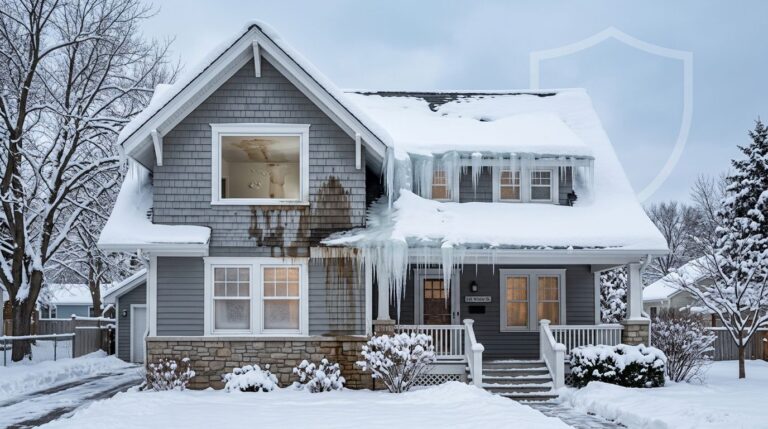
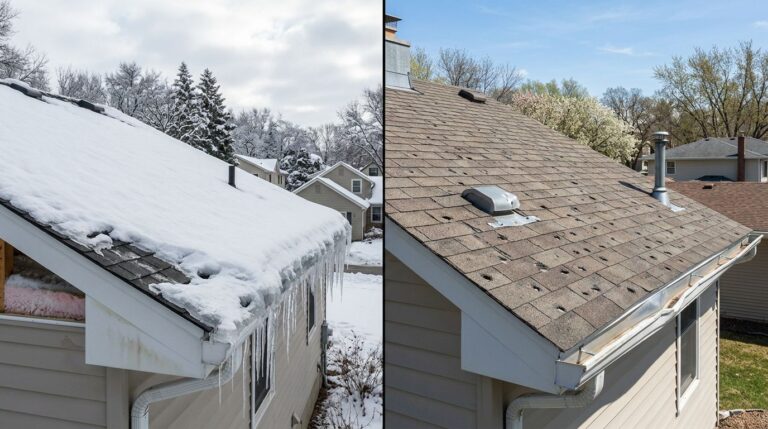
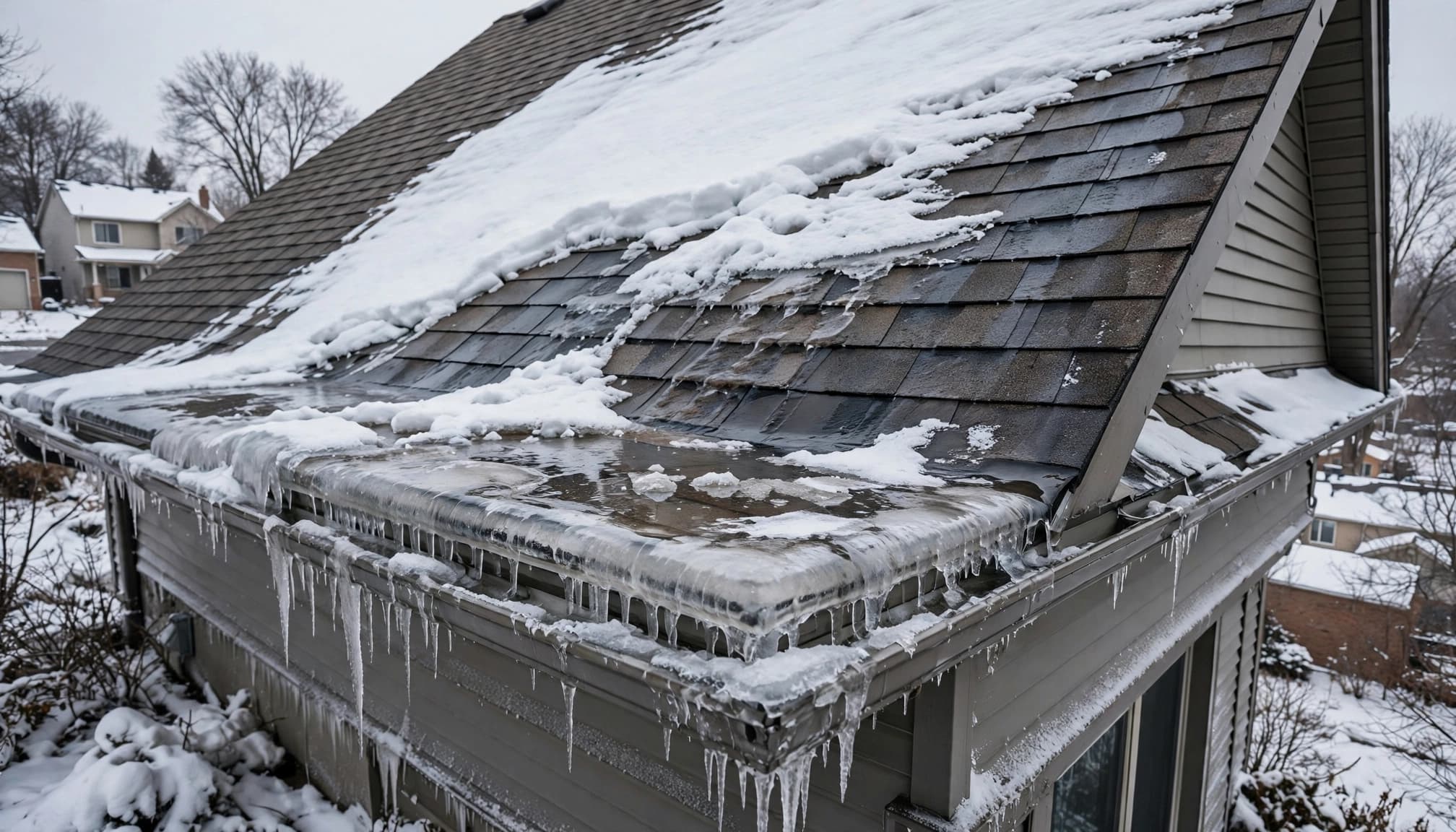
Heat escaping through the ceiling can warm roof decking beneath melting snow. Meltwater runs toward the overhang, which stays colder because it extends beyond the heated wall. Water freezes there and builds a ridge, forming ice dams.
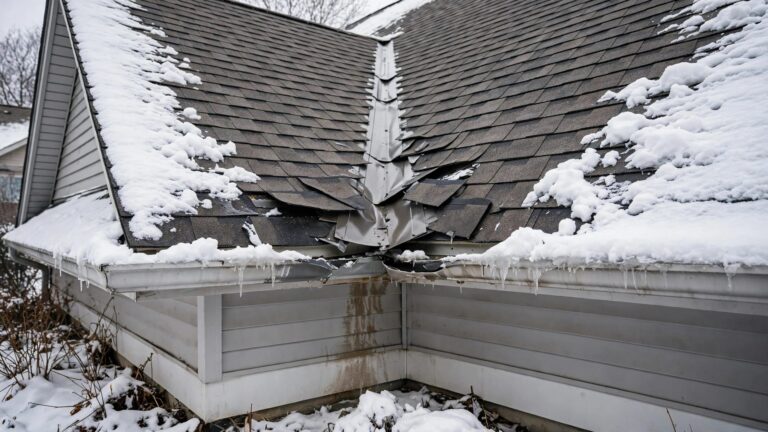
Later meltwater can collect behind that ridge. If it backs up beneath asphalt shingles or through a vulnerable flashing detail, it may reach the roof deck and attic, causing roof damage before water enters a room. The University of Minnesota Extension’s ice-dam guidance explains why controlling heat loss in the attic is central to prevention.
The first wet material may be out of sight
Water doesn’t have to drip straight down. It can follow decking, rafters, nails, or the underside of underlayment before reaching the attic layer. The visible ceiling stain may appear days later or several feet from the entry point.
Wet insulation can lose thermal performance and hold moisture against wood. That creates a second problem: the colder area may collect more frost during the next freeze. The absence of a stain isn’t an all-clear when roof-edge ice and attic moisture appear together.
What Can You Check Before a Ceiling Stain Appears?
Look at the roof from the ground
Photograph the roof after fresh snowfall and during the next thaw. A bare strip above a heated room beside a snow-covered eave can point to uneven roof temperatures. Document any ice buildup, large icicles, an ice ridge, or water spilling behind the gutters, but none proves water entered.
Don’t climb an icy roof to confirm a hunch. Snow can conceal lifted shingles, damaged flashing, and slippery roof edges. Note which side of the building shows the buildup and where nearby rooms sit below it.
Check the attic without disturbing evidence
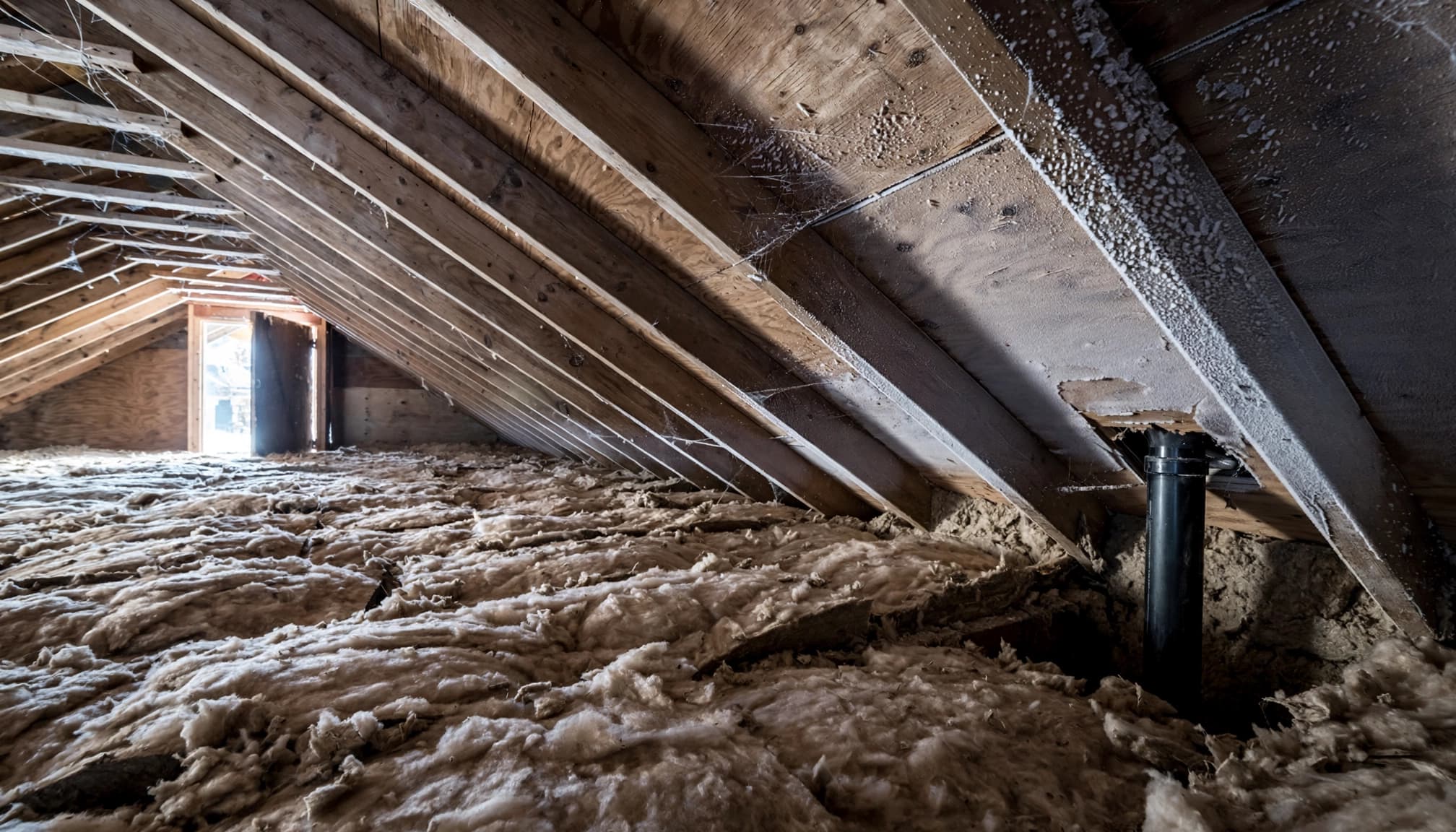
From a safe attic access point, look for damp or compacted insulation, frost on nails, darkened sheathing, and water marks near the eaves. Use a roof inspection to trace water leaks around bath fan ducts and plumbing penetrations. A disconnected duct can add moisture without any roof opening.
Photograph what you find before moving anything. Step only on framing or a secure walkway, never on ceiling drywall. If the area is wet near wiring, stay clear and arrange an inspection.
Step-by-Step
1. Record the conditions while they’re visible
Take dated photos of the ice ridge, roof slope, gutters, attic moisture, and any interior damage. Note when snow fell, when a thaw began, and when you first noticed water. Keep records of earlier repairs if the same area has leaked before.
2. Protect the interior and arrange safe ice removal
Move belongings away from active drips, and keep water clear of electrical equipment. Use a roof rake from the ground to remove loose snow near a reachable eave, and stay clear of falling snow and power lines. Don’t strike bonded ice with an axe, hammer, or metal shovel. Professional low-pressure steam removal may be appropriate when water is backing up.
If water is entering the building, Call 651-703-2336 for 24/7 Emergency Roofing for temporary protection and a roof evaluation.
3. Check both sides of the roof assembly
Once conditions are safe, have the affected roof edge, flashing, gutters, and attic inspected. The inspection should distinguish water entry from condensation and identify how far moisture traveled. A moisture reading or targeted opening can reveal wet material that a surface check might miss.
4. Dry the building before closing it up
Stop the water entry, then remove or dry affected materials as needed and document the work. Don’t cover wet insulation with a new layer. Confirm the roof and attic are dry before making permanent finish repairs.
What Happens to Wet Insulation and Roof Materials?
Decide what can dry and what must be replaced
A small, recently wet area may dry once the leak is stopped. Insulation that’s saturated, compressed, contaminated, or moldy may need replacement. The decision depends on the material type, how much water it absorbed, and whether nearby wood can dry.
Check the roof deck and framing, too. Replacing only the visible material leaves the problem in place if moisture remains trapped above it.
Match the roof repair to the damaged area
Once ice is removed, inspect for lifted shingles, loose edge metal, damaged flashing, and gutter movement. A localized opening may call for roof repairs. Whether more extensive roof repairs are appropriate or residential roof replacement is needed depends on the roof’s overall condition and the extent of documented damage.
Metal roofing sheds snow differently, but ice can still form at valleys, edges, and penetrations. After thawing, follow the water path during an inspection rather than assuming every leak started at the gutter.
How Can You Prevent Another Ice Dam?
Seal the air leaks before improving the thermal layer
Insulation slows heat transfer. It doesn’t stop warm air moving through an open attic hatch or gaps around pipes, wiring, and ceiling fixtures. Find and seal these heat leaks first, using materials suited to each opening. Chimneys and heat-producing fixtures require proper clearances and fire-safe details.
An even thermal layer can then reduce heat loss through the ceiling. Don’t compress the material at the eaves or bury fixtures that aren’t approved for insulation contact.
Keep ventilation and drainage working
Soffit baffles should leave a clear path for intake air, and exhaust vents should be part of a balanced attic ventilation system. Adding a roof vent without checking blocked soffits or a disconnected bath fan can miss the cause entirely.
To prevent ice dams, clear gutters and drainage paths once it’s safe. Heat cables may limit ice in a recurring trouble spot, but they don’t correct attic air leakage or a defective roof detail.
What If the Building Has a Commercial Flat Roof?
Diagnose drainage before calling it an ice dam
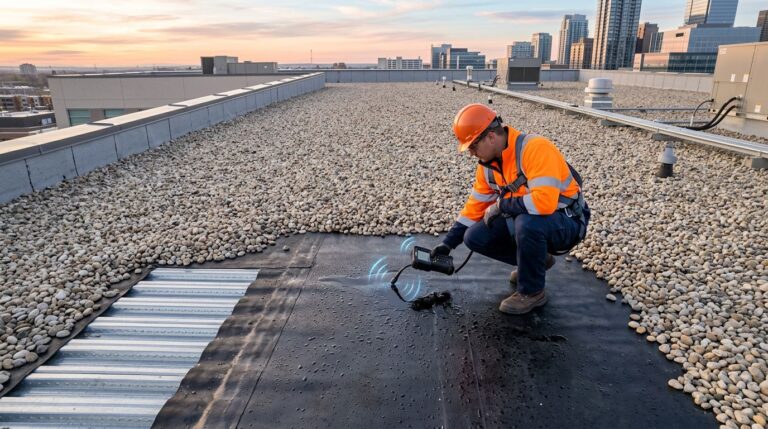
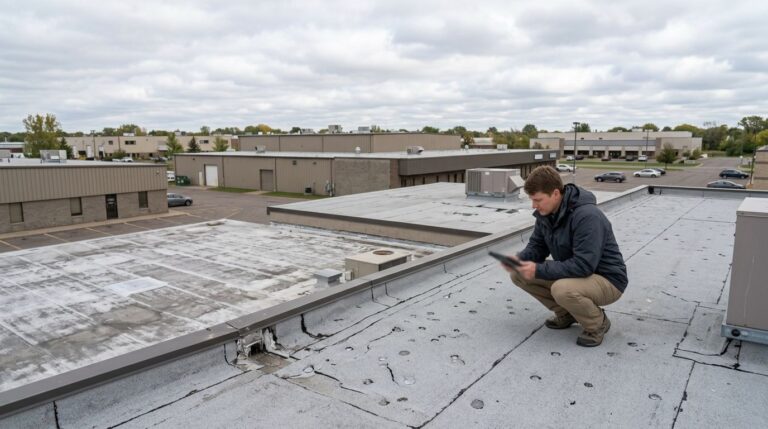
A commercial flat roof usually has a different water problem: melting snow can pond behind ice at a drain, scupper, parapet, or roof transition. TPO roofing, EPDM, modified bitumen, and BUR each have seams and flashing details that need system-specific checks.
Water may travel through roof boards or along the deck before showing inside. Commercial roof leak detection in Saint Paul can help locate the entry point rather than treating the ceiling drip as the source.
Base the scope on what is wet
A commercial roof inspection should document drains, seams, penetrations, and the extent of wet material. A sound roof with one failed detail may need commercial roof repair. Widespread trapped moisture can shift the discussion toward commercial roof replacement. Commercial roof coatings or restoration shouldn’t be applied over wet material.
For seasonal warning signs, use a Saint Paul commercial roof inspection guide.
Will Homeowners Insurance Cover Ice Dam Damage?
Document the loss before permanent repairs
An insurance claim is easier to evaluate when dated records show what happened and when. Photograph roof-edge ice, attic moisture, damaged finishes, and temporary protection. Save removal, drying, and repair invoices. Ask the inspector for written findings that distinguish new water entry from older wear or condensation.
Take reasonable steps to limit further damage, but speak with your insurer before broad permanent work removes evidence. Report what you know rather than guessing at the cause.
Check coverage for damage and removal separately
Coverage depends on the policy and the cause of loss. Allstate’s ice-damage coverage guidance says dwelling coverage may help with resulting water damage, while ice dam removal is unlikely to be covered. Deductibles and exclusions can affect the result.
Ask your homeowners insurance company how it will evaluate wet attic material, roof materials, interior finishes, and emergency mitigation. A dry ceiling does not mean there’s no damage to document.
Key Takeaways
A ceiling stain is a late clue
Ice dam damage can wet attic insulation before drywall changes color. Roof-edge ice plus damp insulation warrants an inspection, even if the rooms below look normal.
The repair has two parts
Stop water entry and dry affected materials first. Then correct the heat loss, ventilation, drainage, or roof defect that allowed the problem to develop.
Frequently Asked Questions
Can attic frost exist without a roof leak?
Yes. Warm, humid indoor air can enter a cold attic and freeze on nails or sheathing. Frost across a broad area suggests an indoor moisture or air-leakage problem, while localized wetting after a thaw may point toward water entry. An inspection should check both possibilities.
Will removing the ice dam stop a ceiling drip immediately?
It can reduce further water backup, but water already beneath roofing or inside the attic may keep moving. Protect the interior and check the attic after the dam is removed. Ongoing dripping calls for a closer roof and moisture inspection.
Is calcium chloride safe to use on roof ice?
Don’t spread ice melt across shingles or use rock salt as a substitute. Chemicals, runoff, and application methods can affect roofing, gutters, landscaping, and nearby surfaces. If ice is bonded to the roof or water is entering, ask a qualified crew about the safest approach.
What if there is no accessible attic?
A finished attic or cathedral ceiling can hide wet insulation within the roof assembly. A contractor may take moisture readings and make a targeted opening after checking the roof exterior. Don’t assume an unstained ceiling means the enclosed material is dry.
How much does professional ice removal cost, and will insurance pay?
The cost varies with roof size, access, ice conditions, and the work required. Photograph conditions first when it’s safe, keep the invoice, and ask your insurer about emergency mitigation requirements. Progressive’s ice-damage coverage guidance notes that policies typically don’t cover the service itself, so confirm your terms before assuming reimbursement.
Conclusion
Check where water can hide
An ice ridge can wet attic insulation while the ceiling below still looks clean. Early attic and roof-edge evidence of winter damage gives you a better basis for deciding what needs to dry or be repaired.
Fix the cause after the leak
Safe removal addresses the immediate backup. A dry, cold roof depends on sound roofing, sealed attic air leaks, appropriate insulation, clear ventilation, and working drainage.
Need a roof inspection in Saint Paul or the Twin Cities? Call Sellers Roofing Company at +1-651-703-2336 or schedule a free estimate. We are a black-owned, NMSDC-certified MBE roofing contractor with 9+ years experience.