Last updated: 2026-08-01 by Ted Sellers, Owner
Commercial roof inspections in Saint Paul aren’t just routine checklists — they require an understanding of Minnesota’s climate stress cycles. The Twin Cities region experiences repeated freeze-thaw expansion, heavy wet snow events, wind-driven rain, and intense summer UV exposure. These seasonal shifts place concentrated stress on roof edges, flashings, drains, and penetrations long before visible interior leaks appear.
For commercial property owners and facility managers, structured inspections are one of the most effective ways to extend roof lifespan, reduce emergency repairs, and document roof condition for insurance and capital planning.
A consistent, ground-level photo routine provides defensible maintenance records while identifying early warning signs common in flat and low-slope commercial roofing systems such as TPO, EPDM, modified bitumen, and built-up roofing (BUR).
When This Applies
Who should use a ground-photo inspection checklist?
This approach fits building owners, commercial owners and property managers who want a repeatable system without getting on the roof. It works well for offices, retail, warehouses, churches, and multi-tenant buildings where small leaks can turn into tenant complaints fast.
It’s also useful when you manage multiple sites. Consistent photos let you compare Building A to Building B, and this year to last year, without relying on memory.
Best-fit roofs and rooflines
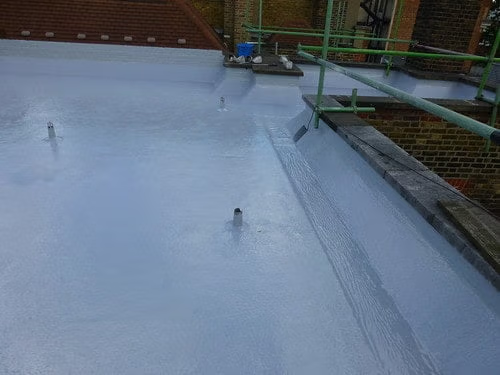
Low-slope roofing and flat roofs (TPO, EPDM, modified bitumen, built-up) often hide problems until water shows up inside. Ground photos won’t catch everything, but they do catch the early clues: edge details loosening, metal coping shifting, staining, and drainage issues that show up on walls and downspouts.
When a ground check isn’t enough
If you see active leaking, sagging rooflines, or loose edge metal after a wind event, don’t wait for the next season. Also, if you can’t clearly see key areas (tall parapet walls, screened rooftop units), a professional inspection is the safer call.
When to do seasonal checks in Saint Paul
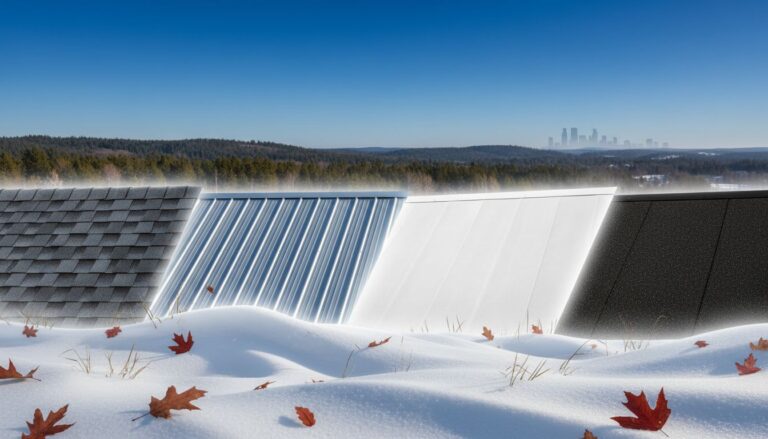
Saint Paul’s Minnesota weather, with freeze-thaw cycles and spring and fall rains, punish roof edges and seams. Summer brings UV exposure and thunderstorms. Fall packs drains with leaves. Winter adds snow load and ice that can force water into tiny gaps.
Extra checks after “big weather”
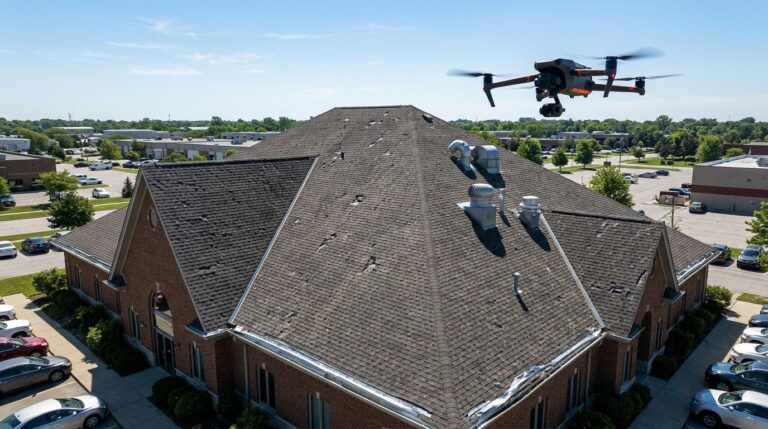
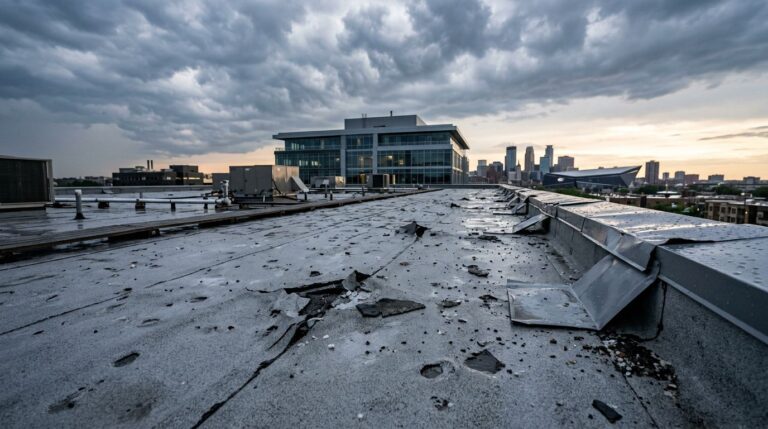
Do an extra photo pass after severe weather events like hail, strong winds, or heavy wet snow. NOAA weather alerts can help you track severe weather events; the NWS Twin Cities forecast office is a reliable reference when you’re documenting when damage likely happened.
Step-by-Step
A ground-photo commercial roof inspection workflow you can repeat
You’re building a “roof story” over time for preventative maintenance. The goal isn’t perfect diagnosis from the sidewalk, it’s consistent evidence that shows what changed, when it changed, and where to send a roofer first.
Tools that make photos more useful
Use a phone with 2x to 5x zoom (or a clip-on telephoto lens), take shots in bright daylight, and stand in the same locations every time for effective photographic documentation. If your camera has a date stamp setting, turn it on.
- Set your baseline photo set (once, then reuse angles).
Walk the full perimeter and take wide shots of each elevation, then zoom shots of roof edges, coping, gutters/scuppers, downspouts, and any visible flashing lines where roofing material meets a wall. Also capture the condition of the roofing material along edges and corners. Name files by side (north, south) and corner (NE, SW) so comparisons are quick. - Spring: check for thaw damage and drainage trouble.
Look for gutters and downspouts spilling water near the foundation, staining below scuppers that signals water damage, and bent or separated edge metal. Take close-ups of any new rust streaks on metal components, since they can point to fastener failure after freeze-thaw and snowmelt. - Spring: scan walls and soffits for “water breadcrumbs.”
From the ground, water often leaves clues below the roofline before it shows up in a ceiling tile. Photograph bubbling paint, dark streaks on masonry, warped soffit panels, and any joints where caulk pulled away. If these signs appear, your commercial roof needs repair even if the leak isn’t visible yet. - Summer: focus on movement, UV wear, and storm hits.
Heat makes materials expand. From ground level, you can’t see membrane wrinkles well, but you can spot what heat stresses first: lifted termination bars, separated counterflashing lines and flashing and sealants, and loose coping caps. After storms, photograph dented metal edges and displaced rooftop accessory covers. - Summer: look for rooftop equipment leak paths.
HVAC equipment and roof penetrations are common leak sources. From the ground, aim for straight-on shots of any visible equipment lines, curb sides, and the roof-to-wall transitions near mechanical areas. If you’re unsure what an inspection typically covers, this commercial roof inspection checklist overview helps you understand the usual components pros document. - Fall: treat drainage like a priority system.
In Saint Paul, fall clogs from debris are a repeat offender, so prioritize debris removal. Photograph gutters, scuppers, roof drains, and downspout outlets during or right after rain if possible. Overflow stains and “clean stripes” on walls (where water sheets down) are strong clues that drains are backing up. - Winter: watch for snow load signals and ice-related backups.
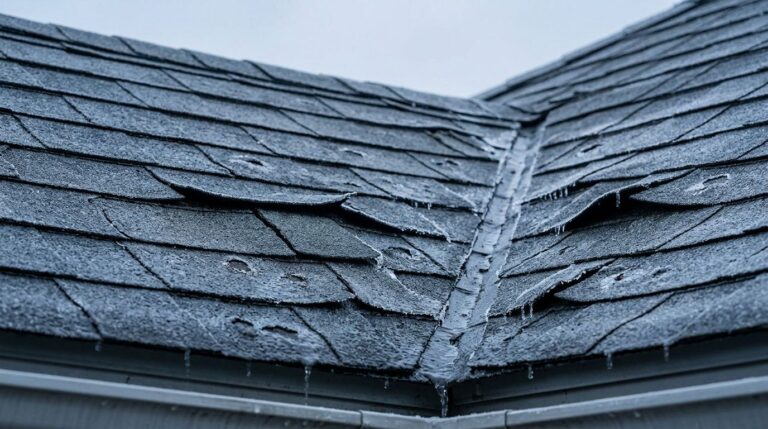
You don’t need to climb to learn a lot in winter. Photograph bowed or drifting areas along the roofline that may signal compromised structural integrity, ice dams and buildup at edges, and icicles near exterior walls (often tied to heat loss or trapped meltwater). If you see interior leaks during a thaw, take interior ceiling photos too, then match them to the exterior wall elevation. - Decide what happens next (monitor, repair, or plan replacement).
Use your photos to sort issues by urgency. Repeated edge movement, chronic ponding water from overflow staining, and recurring interior leaks usually point to real work, not “wait and see.” Local climate and roof age matter; ongoing problems like ponding water can push you toward commercial flat roof repair, and widespread failures can make commercial roof replacement the smarter cost move. - Develop a roof maintenance plan with a commercial roofing contractor. For a deeper explanation of why structured inspections prevent expensive surprises, see why commercial roof inspections matter. When you’re ready to escalate, schedule Saint Paul commercial roofing inspection services and share your photo set up front.
FAQ
Should I do a commercial roof inspection if I can’t see the roof membrane?
Yes. A visual roof assessment from the ground still catches the common failure zones: edges, coping, flashings, drains, wall stains, and equipment lines. You’re looking for changes and symptoms, not a full condition report.
Why do building owners need regular commercial roof inspections?
Insurance compliance often requires proof of roof condition, and factors like poor attic ventilation can harm roof health while raising business risk from hidden failures.
What photos help a roofer the most?
Clear, repeatable angles. Wide shots to show location, then tight shots of the detail. Include at least one photo that shows “where on the building” (corner, door, sign) so crews can find the spot fast.
How do I know if I’m looking at storm damage or normal wear?
If a change appears suddenly after a known event (hail, high wind, heavy snow), it’s more likely damage. If it grows slowly and repeats each season, it’s often wear or a design or drainage issue.
What if I missed the “before” photos?
Start now. A clean baseline today is still valuable, especially before spring rains and summer storms.
What’s the risk of waiting until there’s an obvious leak?
By the time a leak shows inside, water may have traveled far from the entry point. That can mean wet insulation, damaged decking, mold risk, and higher repair cost, even if the exterior opening is small.
Can small edge issues really lead to major work?
They can. Loose coping and failing flashings are like a loose zipper on a jacket. Once wind and water get a grip, problems spread. Early repairs often prevent larger sections from needing tear-off.
What to do if your photos show trouble
Treat your seasonal photo set like a maintenance log, not a one-time project. Use a commercial roof inspection checklist to identify signs of roof leaks, water damage, new staining, loose edge metal, or repeat overflow marks.
Act while the problem is still contained to safeguard your property’s long-term value. A timely commercial roof inspection and targeted repairs usually cost less than disruption, interior damage, and emergency response later.
About Sellers Roofing Company
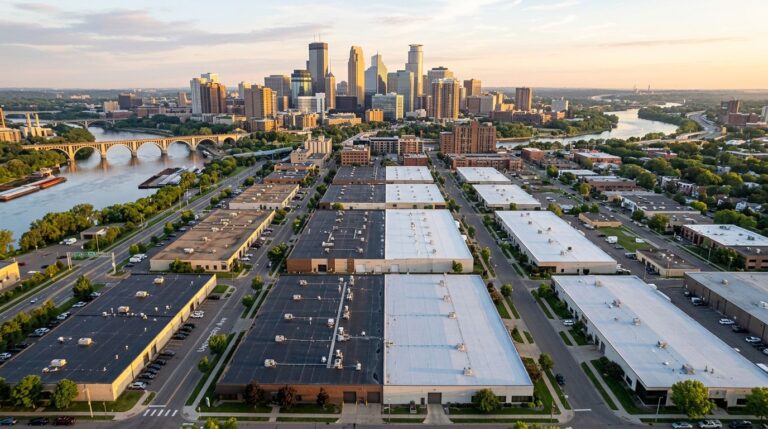
Sellers Roofing Company is a commercial roofing contractor based in Saint Paul, Minnesota, specializing in flat and low-slope roofing systems including TPO, EPDM, PVC, modified bitumen, and built-up roofing (BUR). We provide commercial roof inspections, repair, restoration, and replacement throughout the Minneapolis–Saint Paul metro area.
Need a roof inspection in Saint Paul or the Twin Cities? Call Sellers Roofing Company at +1-651-703-2336 or schedule a free estimate. We are a black-owned, NMSDC-certified MBE roofing contractor with 9+ years experience.