Last updated: 2026-09-07 by Ted Sellers, Owner
If lightning strikes your roof, leave any area with smoke, fire, arcing, or a burning odor, call 911, and stay off the roof and out of the attic. Treat lightning strike roof damage as a fire and electrical event first. Once the site is safe, document visible loss, arrange electrical and roof inspections, use only temporary dry-in work, and notify your insurer.
A small exterior mark can hide damaged wiring, burned decking, lifted flashing, or wet insulation. Acting in the right order protects people, limits water damage, and keeps the evidence needed for a roof claim.
When This Applies
Lightning strike roof damage needs an urgent response
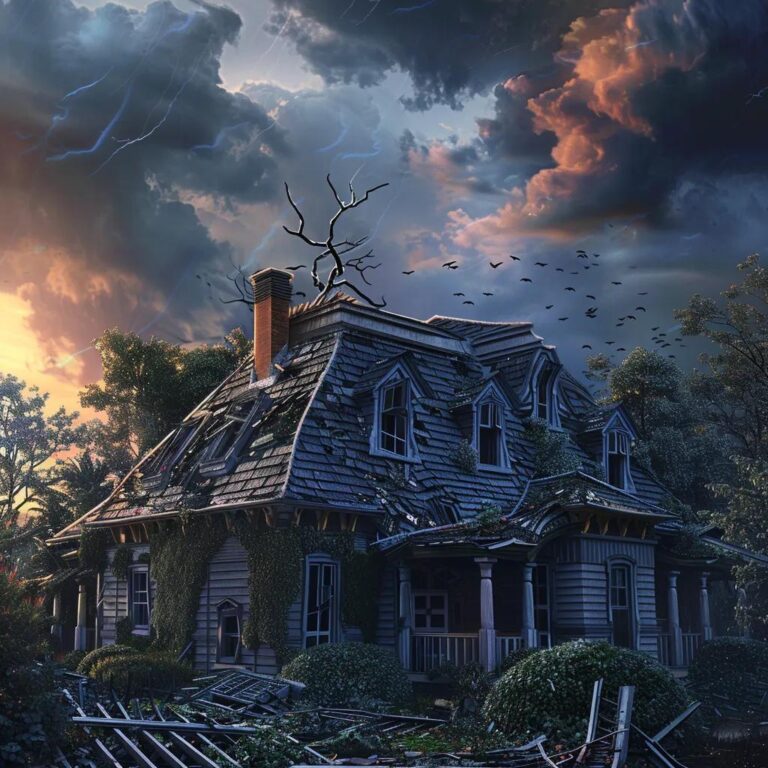
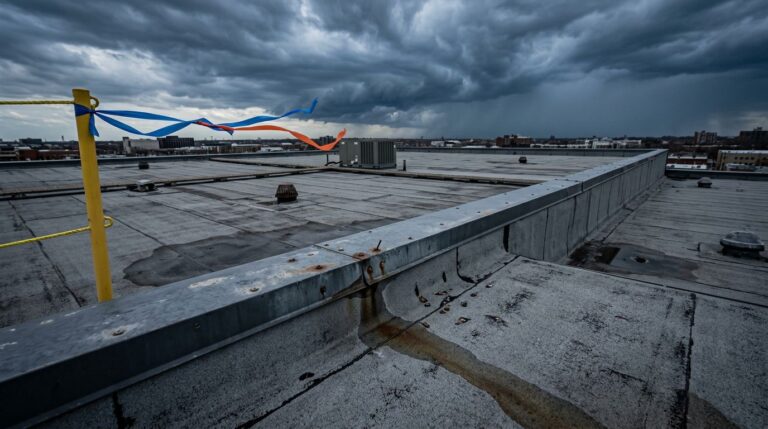
This applies after a direct strike, a strike to a tree touching the structure, or a strike near rooftop equipment. Homeowners, apartment owners, facility managers, and commercial property owners should treat any sudden burning odor, power loss, ceiling stain, cracked material, or damaged metal as a warning.
The National Weather Service’s lightning safety guidance is clear about avoiding exposed areas during a storm. Don’t climb a wet roof to inspect a suspected strike. Wait until the storm passes, then let qualified roofing and electrical professionals assess the building.
This also applies if there is no obvious roof hole. Electricity may travel through metal flashing, gutters, vents, wiring, solar equipment, and rooftop units before it grounds.
When the problem may be something else
A nearby lightning strike does not automatically mean your roof was hit. A hail damage roof may show round bruising, cracked shingle granules, chipped slate, or dented soft metals. Wind damage often leaves lifted edges, displaced asphalt shingles, loosened metal panels, or bent flashing.
Still, don’t dismiss a fresh leak after a storm as normal wear. A roof can have old defects and new lightning-related damage at the same time. The inspection needs to separate them.
Step-by-Step
1. Clear the fire and electrical hazard
- Leave the building and call 911 if you see flames, smoke, sparks, fallen power lines, or smell burning insulation. Don’t assume the danger ended with the strike.
- Keep people away from wet ceilings, electrical panels, outlets, damaged appliances, and cords. Do not reset a tripped breaker or touch rooftop solar equipment.
- If water is entering but there is no active fire, protect people and property from inside the building. For active leaks and emergency dry-in, Call 651-703-2336 for 24/7 Emergency Roofing.
2. Preserve the evidence before permanent work
- Photograph the roof from the ground if possible. Take wide shots of the property, then close photos of charred shingles, broken vents, damaged gutters, trees, interior stains, and wet contents.
- Write down the strike date, approximate time, weather conditions, power outage details, and any alarms that activated. Save security footage if your property has it.
- Use tarps or temporary sealing only when access is safe. Keep receipts for emergency labor and materials. Do not tear off roofing, discard damaged insulation, or repaint stained areas before the inspection.
What a Post-Strike Roof Inspection Should Find
Inspect the entire roof assembly, not only the visible mark
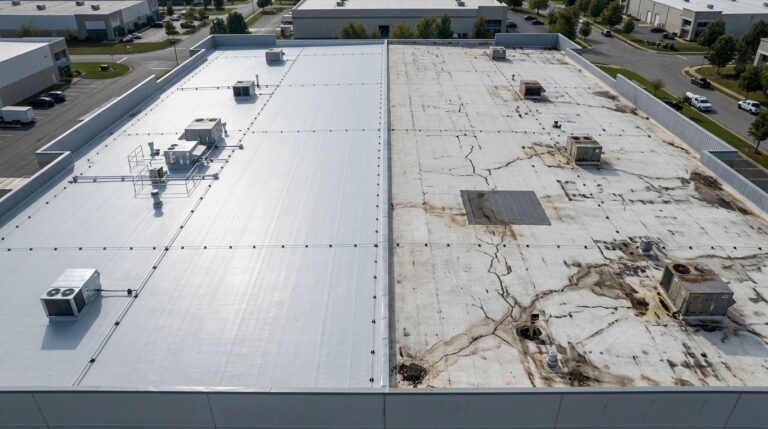
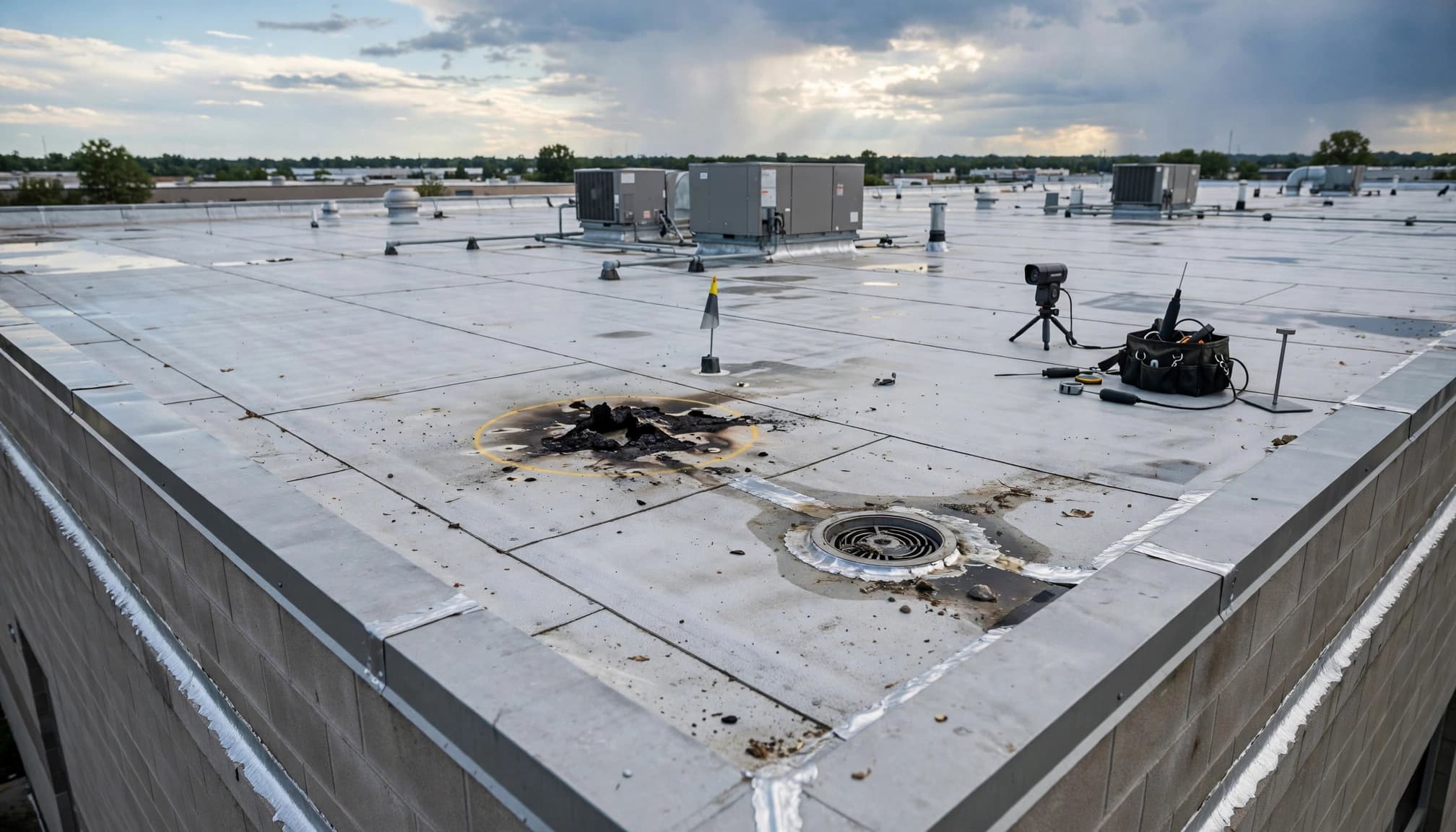
A proper commercial roof inspection checks the roof surface, penetrations, perimeter metal, drains, parapet walls, insulation, deck, and interior leak path. On a commercial flat roof, water can travel beneath the membrane and appear inside many feet from the opening.
TPO roofing and EPDM systems need inspection for punctures, split seams, heat damage, lifted flashings, and wet insulation. Modified bitumen and BUR roofs need checks for torn plies, open laps, blisters, damaged gravel surfacing, and areas softened by trapped moisture.
A moisture scan, test cuts, or core samples may be needed before anyone decides the roof only needs a patch. For hard-to-trace interior leaks, commercial roof leak detection in Saint Paul can identify the entry point and map the affected area.
Steep-slope roofs have different failure points
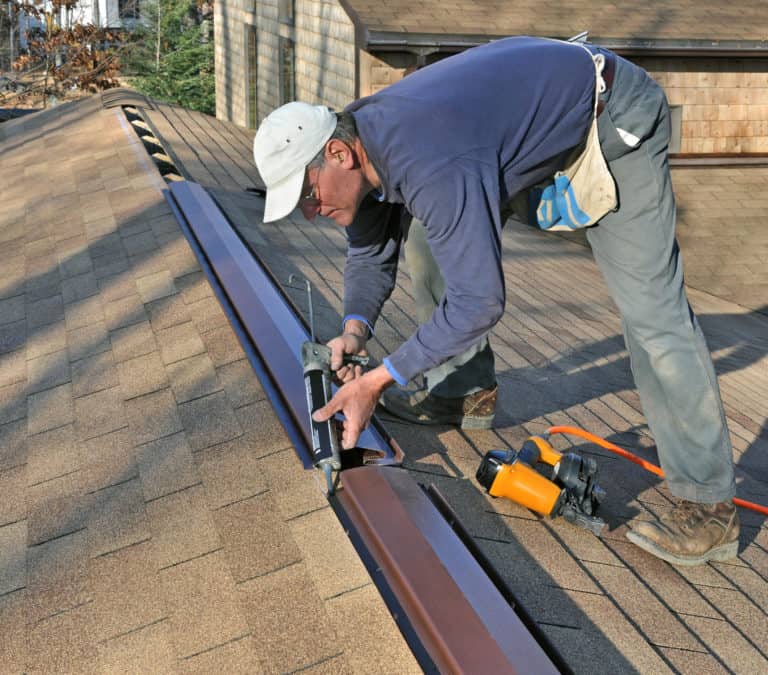
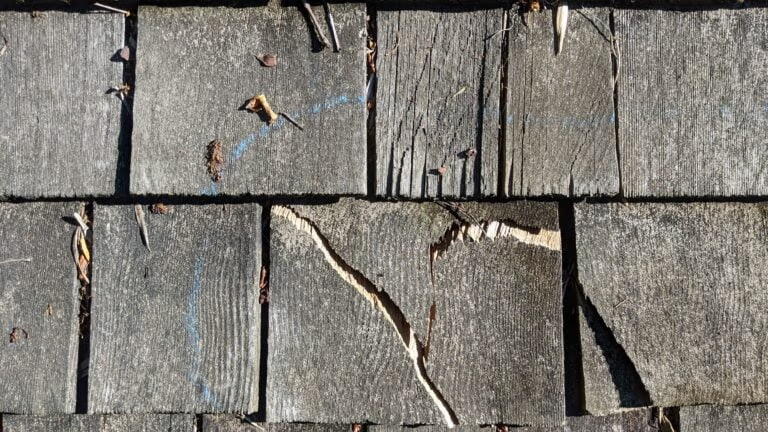
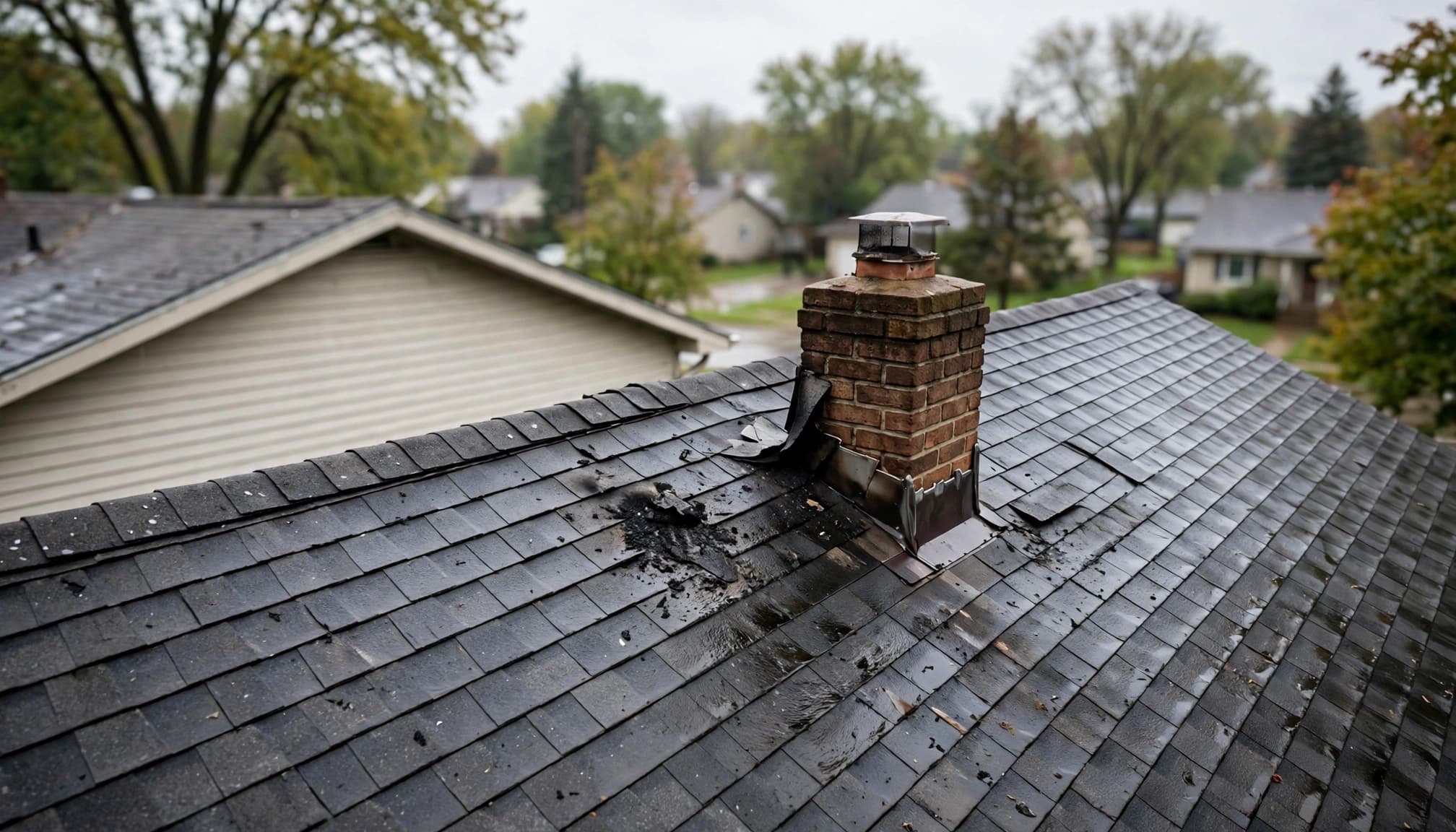
On homes and pitched commercial sections, inspectors check asphalt shingles for scorch marks, fractured tabs, exposed underlayment, and damaged fasteners. Metal roofing requires close review of standing seams, concealed clips, coatings, flashings, and grounding paths.
Chimneys, skylights, ridge vents, pipe boots, and attic wiring deserve extra attention. A roof opening uphill from a chimney can send water along decking or framing before it reaches the ceiling.
A ceiling stain identifies where water appeared, not where it entered. Repairing directly above the stain can leave the real roof opening active.
Decide Between Repair, Restoration, and Replacement
Localized damage may support a targeted repair
Commercial roof repair can work when the damage is isolated, the surrounding membrane is sound, and moisture testing shows dry insulation. A crew may replace a damaged flashing detail, weld a TPO patch, repair a split EPDM seam, or replace compromised shingles.
The same applies to residential roof repair. A few damaged asphalt shingles, a burned pipe boot, or one bent metal flashing section does not always require a complete reroof.
Widespread wet materials change the scope
Commercial roof restoration may be an option if the roof is dry, structurally sound, and nearing the point where seams or surfacing need renewed protection. Commercial roof coatings are not a fix for saturated insulation, burned decking, failing seams, or a roof with active electrical damage.
Commercial roof replacement becomes the better call when moisture spreads through connected sections, the deck is compromised, or repairs would leave a mismatched system with repeat leak risk. The same logic applies to residential roof replacement after extensive heat damage, failed shingles, or water intrusion throughout the roof assembly.
For low-slope properties with active issues, Get a Free Commercial Roof Inspection before approving a permanent scope.
Handle the Roof Insurance Claim With a Clean File
Report facts, not guesses
Open a roof insurance claim promptly. Describe the event and the visible loss without overstating it. “Lightning struck near the west roofline, the power failed, and water entered near the mechanical room” gives the carrier a useful starting point.
Send photos, videos, emergency invoices, the electrician’s findings, and the roofer’s written report. Keep temporary mitigation costs separate from permanent construction. A storm damage roof report should identify the membrane or shingle type, location of damage, moisture findings, and likely cause.
Do not let a first estimate end the conversation. If later testing finds wet insulation, damaged flashing, code-required work, or a larger affected area, the contractor can submit evidence for a supplement.
Use a written scope to compare repair options
Compare line items, not only the final dollar amount. Check tear-off, underlayment, flashings, insulation thickness, edge metal, permits, disposal, and interior protection. Insurance may pay for repair instead of replacement if the damage is limited and repair restores the roof.
For a home, Get a Free Residential Roof Estimate that separates fresh lightning damage from older conditions. That distinction matters if the carrier questions wear, past repairs, or maintenance.
For Saint Paul roofing, Minneapolis roofing, and Twin Cities roofing projects, Sellers Roofing Company provides union-built roofing through crews that include IUPAT Local 96 Roofers. The company is GAF certified, holds MN License 803862, and has completed more than 1,100 residential and commercial roofs since 2017.
Minnesota Weather Can Turn a Small Opening Into a Larger Loss
Freeze-thaw cycles raise the urgency
Minnesota roofing systems take repeated stress from wind, hail, snow, and rapid temperature changes. A small lightning-created opening can admit water during rain, then widen as trapped moisture freezes and expands.
Damaged vents or roof penetrations can also disrupt attic airflow. That can add moisture problems and raise the chance of ice forming at cold roof edges.
Do not treat ice dams as a cosmetic problem
Ice dam removal may be needed after the electrical system and roof structure are cleared for access. Avoid chopping ice with tools that can damage shingles, membranes, or flashings.
On a low-slope building, snow can hide open seams, soft areas, and blocked drains. On a steep roof, snowmelt can back up behind damaged flashing. A temporary tarp buys time, but it does not correct the failed detail underneath.
Frequently Asked Questions
Can lightning damage a roof without leaving a visible hole?
Yes. A strike can damage wiring, fasteners, flashings, insulation, decking, or membrane seams without making a large visible opening. Interior odors, flickering lights, tripped breakers, or delayed leaks are enough reason to arrange an inspection.
Should I tarp the roof before the insurance adjuster arrives?
Use temporary protection if water is entering and it can be done safely. Photograph the damage first, keep the tarp temporary, and save every receipt. Permanent repairs or tear-off work can remove evidence needed to prove the cause and full scope.
Can maintenance staff inspect a commercial roof after lightning?
Not until electrical hazards, wet surfaces, and structural concerns are cleared. Maintenance staff can protect inventory and isolate the affected space from inside. A qualified roofer should inspect a commercial flat roof, especially around equipment, drains, seams, and parapets.
Will insurance cover interior water damage after a lightning strike?
It may, if the lightning strike caused a sudden roof opening and water entered as a result. Coverage depends on the policy, deductible, exclusions, and documentation. Long-term leaks or old maintenance failures are often treated differently.
Does a lightning strike always mean the roof needs replacement?
No. A localized burn, damaged flashing, or small membrane puncture may only need repair. Replacement becomes more likely when testing finds widespread moisture, compromised decking, repeated failures, or damage that can’t be restored with a durable repair.
The Right Order Protects the Building
Safety first, evidence second, permanent repairs last
Lightning can turn a small roof defect into a fire, electrical, and water-intrusion problem within minutes. Get people clear of danger, document the condition, and have the roof and electrical systems inspected before permanent work begins.
The strongest path through lightning strike roof damage is factual and methodical. Find the actual opening, confirm how far damage traveled, and repair the system that exists, not only the stain you can see.
Need a roof inspection in Saint Paul or the Twin Cities? Call Sellers Roofing Company at +1-651-703-2336 or schedule a free estimate. We are a black-owned, NMSDC-certified MBE roofing contractor with 9+ years experience.