Last updated: 2026-09-28 by Ted Sellers, Owner
Hail exclusions are easy to miss because the most important wording is often buried in an endorsement, not the first page of the policy. This guide shows Minnesota homeowners how to find that wording, understand what it changes, and document a roof claim without jumping to conclusions.
How Do You Read Hail Exclusions in a Minnesota Policy?
Minnesota hail exclusions can limit payment for cosmetic roof damage, apply a separate wind-and-hail deductible, or change settlement to actual cash value. Read the declarations page, endorsements, exclusions, loss-settlement clause, and claim duties together; a hail loss may be covered even when the payment does not fund a full replacement.
When This Applies
Policies with wind, hail, or cosmetic-damage language
This applies to Minnesota homeowners reviewing a renewal, responding to a hailstorm, or questioning an adjuster’s roof scope. Look at the policy that was active on the storm date, not the policy you bought later.
Minnesota hail exclusions often appear in an endorsement, not the main policy jacket. The declarations page may only show “Wind/Hail Deductible” and point you to separate form numbers. Pull every listed form before assuming your asphalt shingles, siding, gutters, or metal roofing are fully covered.
The Minnesota Department of Commerce has warned homeowners that state law does not control every cosmetic hail-damage exclusion. Your carrier’s exact wording controls the first coverage decision.
Cases that need a different analysis
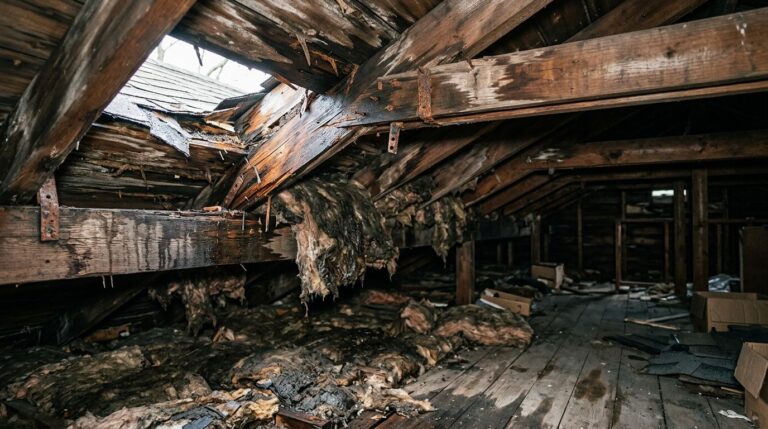
Hail coverage does not turn old wear into a storm loss. Granule loss from age, brittle shingles, chronic leaks, poor installation, and skipped maintenance can be excluded even after a real storm.
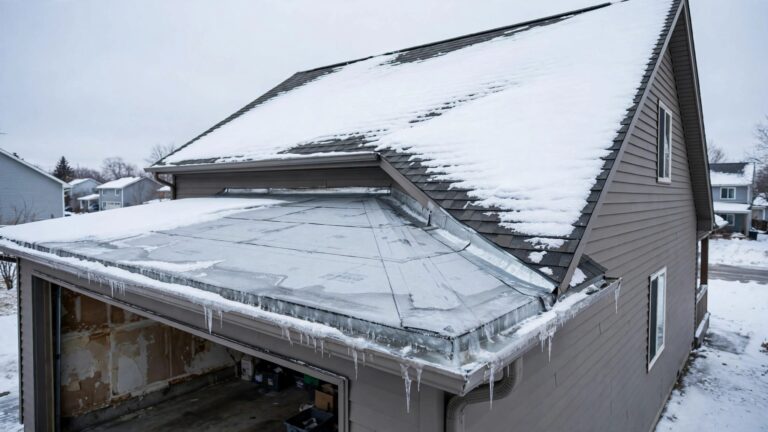
Ice dams are also a separate issue. Ice dam removal may limit added water damage, but it does not prove that hail caused a leak. A roof can have both conditions at once. Document each condition separately.
A dent, stain, or loose shingle is evidence. It is not a coverage decision until the policy language and the cause of damage match.
How to Read Minnesota Hail Exclusions Line by Line
Start with the declarations page and deductible
Find the dwelling coverage limit, then locate any deductible labeled wind, hail, named storm, or percentage deductible. A percentage deductible is based on the insured dwelling limit, not the repair invoice.
For example, a home insured for $400,000 with a 2% wind and hail deductible has an $8,000 deductible. If the covered repair costs $18,000, the deductible still comes out first.
Recent reporting on Minnesota wind and hail coverage changes noted that some homeowners face percentage deductibles of 1% to 2% or more. Don’t rely on last year’s number.
Separate exclusions from payment limits
An exclusion says the carrier will not pay for a described type of damage. A cosmetic exclusion often uses terms such as “marring,” “pitting,” “surface damage,” or damage that does not impair the roof’s ability to keep out weather.
A payment limitation is different. Your policy may cover hail damage but pay actual cash value, or ACV, rather than replacement cost value. ACV subtracts depreciation. Replacement cost coverage may pay in two stages: an initial payment, then recoverable depreciation after completed work and invoices are submitted.
Read the loss-settlement section for these terms:
- “Actual cash value” means age and depreciation reduce the payment.
- “Replacement cost” may require completed repairs before the final amount is released.
- “Like kind and quality” affects materials, flashing, labor, and matching discussions.
- “Ordinance or law” can affect code-required work, but it is not automatic coverage.
Step-by-Step
Document the condition before permanent work starts
- Photograph roof slopes, gutters, vents, screens, siding, interior staining, and any fallen material. Take wide photos and close photos. Record the storm date and preserve weather alerts if available.
- Stop active water safely. A tarp, interior water control, or limited emergency sealing can reduce further loss. Save receipts and photograph the damage before covering it when conditions allow.
- Avoid broad permanent repairs before the damage is inspected. Replacing shingles, discarding wet materials, or sealing a large area too soon can erase evidence of fresh impact or storm-created openings. If water is entering now, Call 651-703-2336 for 24/7 Emergency Roofing.
Open the claim and test the carrier’s scope
- File the roof insurance claim promptly. Use plain facts: hail struck on a known date, roof materials show damage, and water entered if that occurred. Do not guess about causation or promise a repair price.
- Request the insurer’s written estimate, photos, roof diagram, and any engineer report. Read the denial or partial-payment letter line by line. Highlight the exact exclusion, the stated cause, and the settlement calculation.
- Compare the carrier’s scope against a roof-specific inspection. A few damaged shingles may support residential roof repair. Damage across multiple slopes, brittle materials, or an unrepairable system may support a residential roof replacement.
A contractor cannot waive your deductible to make the numbers work. Keep the deductible separate from the contract price and claim settlement.
Test Whether the Damage Is Cosmetic or Functional
Ask what the hail changed
A cosmetic exclusion is not a blank check for the insurer. Ask one direct question: did hail only change appearance, or did it change the roof’s ability to shed water and resist weather?
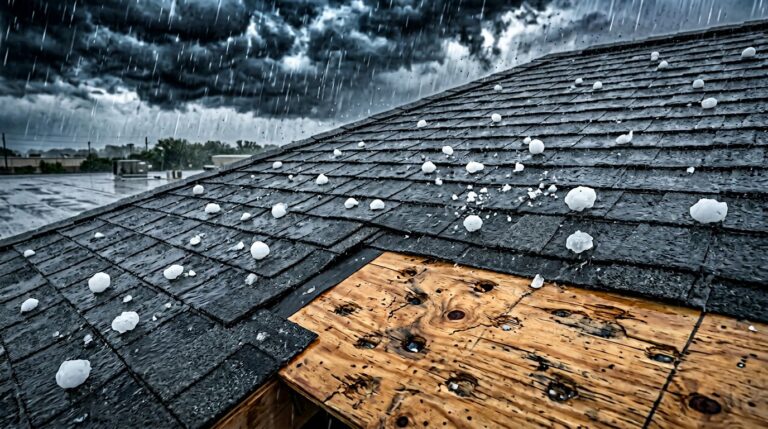
On asphalt shingles, functional concerns can include fresh impact marks, fractured matting, displaced granules that expose asphalt, broken seals, or cracks. A hail damage roof may not leak the same day. Minnesota freeze-thaw cycles can widen a small weakness over time.
With metal roofing, visible dents may be cosmetic. But dents near seams, concealed clips, flashing, drainage channels, or protective coatings may require closer review. The report should explain whether the panel still functions as designed.
Keep mixed causes separate
A roof can have old wear and fresh hail hits. Don’t let either side blur them together. Ask the inspector to identify the location, condition, and likely age of each finding.
This same discipline matters for a storm damage roof claim. A prior repair does not erase a new loss. It does mean the documentation must show what changed after the storm.
Consumer complaints about homeowners insurance have risen as deductibles and hail restrictions became more common. The nonprofit United Policyholders describes Minnesota insurance complaint concerns and the importance of reviewing reduced wind and hail coverage before a loss.
Low-Slope Roofs Need Their Own Evidence
A commercial flat roof does not fail like shingles
A homeowner may own a duplex, office, storefront, or apartment building with a commercial flat roof. Do not use steep-slope shingle logic for that system.
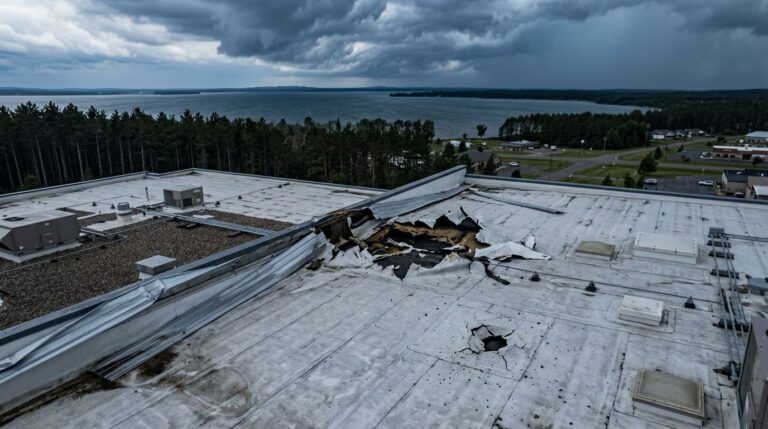
TPO roofing and EPDM can fail through punctures, lifted edges, open seams, split flashing, or wet insulation below an intact-looking membrane. Modified bitumen and BUR can show torn plies, failed laps, blisters, exposed areas, and concealed moisture.
A ceiling stain is often the exit point, not the entry point. Water can move along membrane laps, insulation boards, deck flutes, and framing before it reaches a ceiling tile.
Match the remedy to the findings
A proper commercial roof inspection identifies membrane type, damaged details, drainage, moisture spread, and the likely water path. If the source is unclear, commercial roof leak detection can trace the opening before permanent work hides it.
An isolated breach with dry insulation may need commercial roof repair. A dry, aging system may be a candidate for commercial roof restoration or commercial roof coatings. Neither option fixes saturated insulation, active seam failure, loose attachment, or deck damage.
Those conditions can support commercial roof replacement. Property owners can Get a Free Commercial Roof Inspection before approving a patch, coating, or tear-off.
What to Do If the Carrier Cites an Exclusion
Build a narrow, factual response
Ask for the complete claim file. Request adjuster notes, photographs, measurements, roof diagrams, engineering reports, and the exact policy form used for the decision.
Then respond to the stated reason for denial. If the carrier calls damage cosmetic, submit evidence about function. If it calls the condition wear and tear, show maintenance records, prior dry conditions, storm dates, and photos that separate old deterioration from fresh damage.
A supplement is appropriate when the original scope missed covered work, such as damaged flashing, wet insulation, disposal, or code-required details tied to the covered repair. It is not a way to add deferred maintenance or elective upgrades.
Escalate the right issue
Request a reinspection when the first inspection missed material evidence. If coverage is accepted but the dispute is about price or scope, review the policy’s appraisal clause. If the carrier denies coverage under an exclusion, get qualified insurance or legal advice before authorizing irreversible work.
For disputed steep-slope scopes, Get a Free Residential Roof Estimate. A written scope gives you something concrete to compare against the insurer’s estimate.
Use a Contractor Who Documents the Roof System
The report should answer specific questions
A useful report does more than say “hail damage found.” It identifies the roof material, damaged locations, probable cause, condition of flashing, moisture findings, repairability, and the work needed to restore the assembly.
That standard applies across Saint Paul roofing, Minneapolis roofing, and the wider Twin Cities roofing market. Weather is regional, but every policy form and roof system needs its own review.
Sellers Roofing Company has completed more than 1,100 roofs since 2017, including 801 residential and 300 commercial projects. Its Minnesota roofing crews include IUPAT Local 96 roofers, with Carpenters Local 322 and Laborers Local 563 supporting union-built roofing work.
Credentials still need a written scope
A GAF-certified contractor, manufacturer credentials, or a strong reputation can help you choose a roofer. They do not replace photographs, measurements, and policy language.
Ask for the contractor’s license and a written estimate. Sellers Roofing Company holds MN Builder Contractor License 803862. A technical inspection should explain why a repair is sufficient, or why it is not.
Final Thoughts on Minnesota Hail Exclusions
Read the policy before you accept the scope
The largest surprise in a hail claim is often not the roof damage. It is the deductible, cosmetic exclusion, depreciation holdback, or settlement wording buried in the endorsement.
Read Minnesota hail exclusions as part of the entire policy. Document the roof before permanent work starts, compare the insurer’s scope against the actual system, and keep every disagreement tied to proof. For the broader claim process, use our Minnesota roof storm damage and insurance claims guide.
Frequently Asked Questions
Can my insurer deny a roof claim because the roof is old?
Yes, if old age, deterioration, or poor maintenance caused the condition. Age alone does not erase a documented hail loss. The question is whether the storm caused new covered damage.
Does a cosmetic hail exclusion apply to asphalt shingles?
It can, but the policy wording matters. A carrier may argue that surface marks do not affect performance. Evidence of fractured shingles, lost granules, broken seals, or water-shedding problems can change that analysis.
What if the hail deductible is more than my repair estimate?
You can still report and document the damage. The insurer may confirm coverage but issue no payment because the covered amount does not exceed the deductible. Keep the file, especially if later damage is connected to the same event.
Can I tarp my roof before the adjuster arrives?
Yes, reasonable temporary protection is usually the right move when water is entering. Photograph first if safe, keep receipts, and avoid broad permanent work until the roof is documented.
Will a partial roof repair have to match the rest of my roof?
Not always. Matching depends on the policy language, the damaged area, material availability, and whether a partial repair restores like kind and quality. Ask the carrier to explain its position in writing before work begins.
Need a roof inspection in Saint Paul or the Twin Cities? Call Sellers Roofing Company at +1-651-703-2336 or schedule a free estimate. We are a black-owned, NMSDC-certified MBE roofing contractor with 9+ years experience.