Last updated: 2026-10-06 by Ted Sellers, Owner
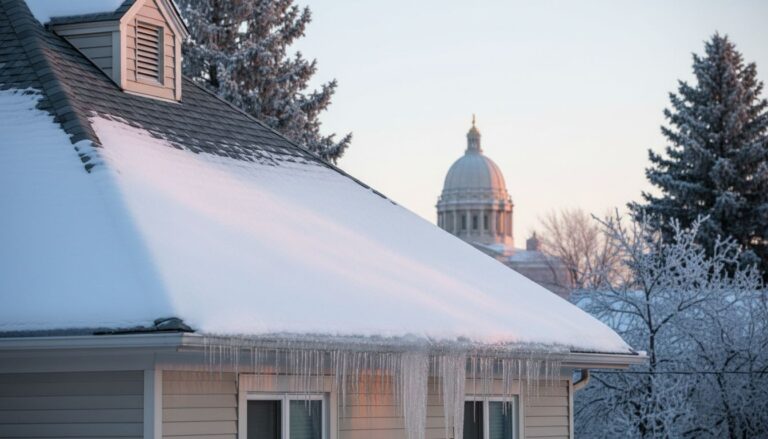
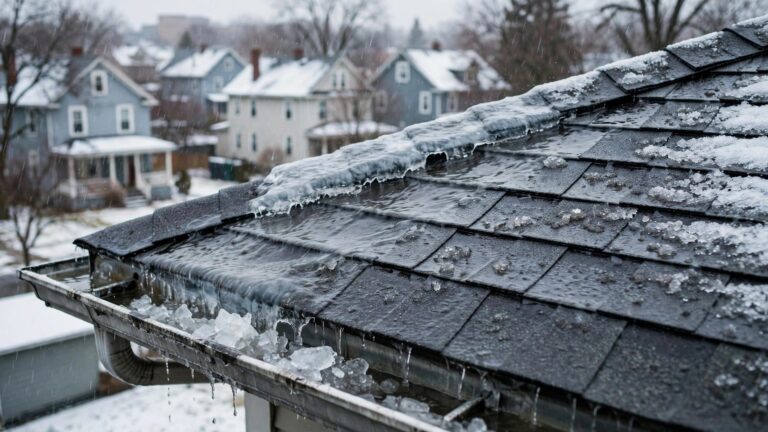
North-facing roof ice dams in St. Paul can persist because shaded slopes retain snow and frozen eaves longer. Household heat can warm the upper roof deck, producing meltwater that refreezes at the colder overhang.
Orientation affects ice persistence, but doesn’t establish the cause. Recurring dams require inspection of heat loss, insulation, ventilation, drainage, and roof defects.
Contents
Causes and immediate action
- When This Applies
- Why Does the North Slope Stay Icy?
- Step-by-Step
Inspection and follow-up
- Does Ice Damage Require Roof Replacement?
- What Changes on Commercial Roofs?
- Frequently Asked Questions
- Keep the Roof Cold and Dry
When This Applies
Which buildings are vulnerable?
This applies to heated homes, duplexes, and multifamily buildings with snow-covered slopes and ice along eaves or valleys. Asphalt shingles and metal roofing can both develop dams.
Older Saint Paul homes with attic bypasses, additions, dormers, or cathedral ceilings need closer evaluation. These details can produce uneven roof temperatures.
When is another diagnosis needed?
A winter ceiling stain doesn’t establish an ice dam leak. Failed flashing, wind-driven snow, or attic condensation can produce similar symptoms.
Unheated detached garages may have different melting conditions. Low-slope commercial buildings also need a drainage-focused inspection rather than an assumed attic repair.
Why Does the North Slope Stay Icy?
How does shade affect snow retention?
North-facing slopes receive less direct winter sunlight. Snow and existing ice can remain after sunnier slopes clear.
That longer retention gives meltwater more opportunities to encounter a frozen roof edge. Shade alone doesn’t explain why the upper roof is melting.
Where does meltwater refreeze?
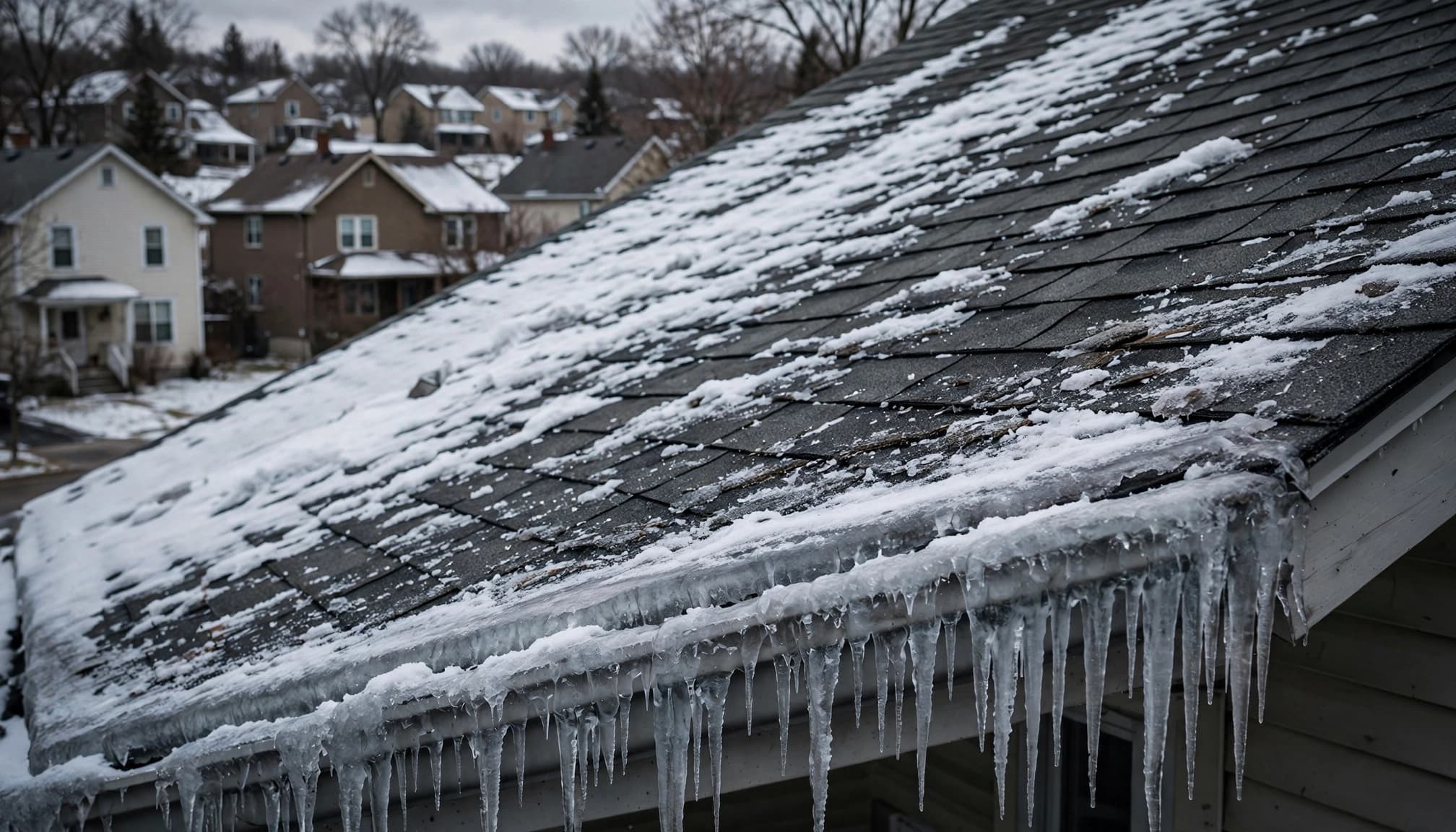
Heat escaping through ceiling openings can warm decking beneath the snow. Water flows downhill toward the overhang, which receives less household heat.
The resulting ridge can trap later runoff. University of Minnesota Extension’s ice dam guidance explains this uneven-temperature mechanism. An inspection must establish which heat paths or roof details are involved.
Step-by-Step
Document conditions and control immediate risk
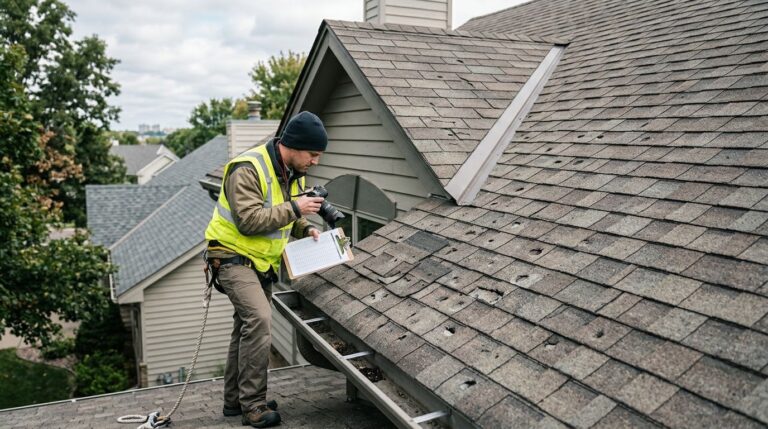
- Photograph both roof slopes from the ground after snowfall and during a thaw. Record bare strips, persistent snow, ice ridges, gutter distortion, and interior staining. Uneven melting is a diagnostic clue, not proof of one defect.
- Protect contents beneath active drips. Stay off icy roofs and keep clear of falling ice. Arrange professional ice dam removal for bonded ice, difficult access, or active leaks. Don’t chop ice or scrape roofing with metal tools.
Inspect before selecting permanent work
- Have ceiling penetrations, attic hatches, chimney chases, ducts, insulation, and roof-edge details evaluated. Cathedral ceilings require assembly-specific investigation. Don’t open finished surfaces until the likely water path is narrowed down.
- Correct confirmed air leaks before relying on added insulation. On vented assemblies, check soffit intake, baffles, and exhaust paths. PNNL’s ice dam prevention guidance addresses air sealing, insulation, and ventilation together. Ventilation cannot compensate for major ceiling leakage.
Does Ice Damage Require Roof Replacement?
When is targeted repair enough?
Localized lifted shingles, flashing gaps, or damaged gutters may need residential roof repair. Inspect the deck and insulation before closing the affected area.
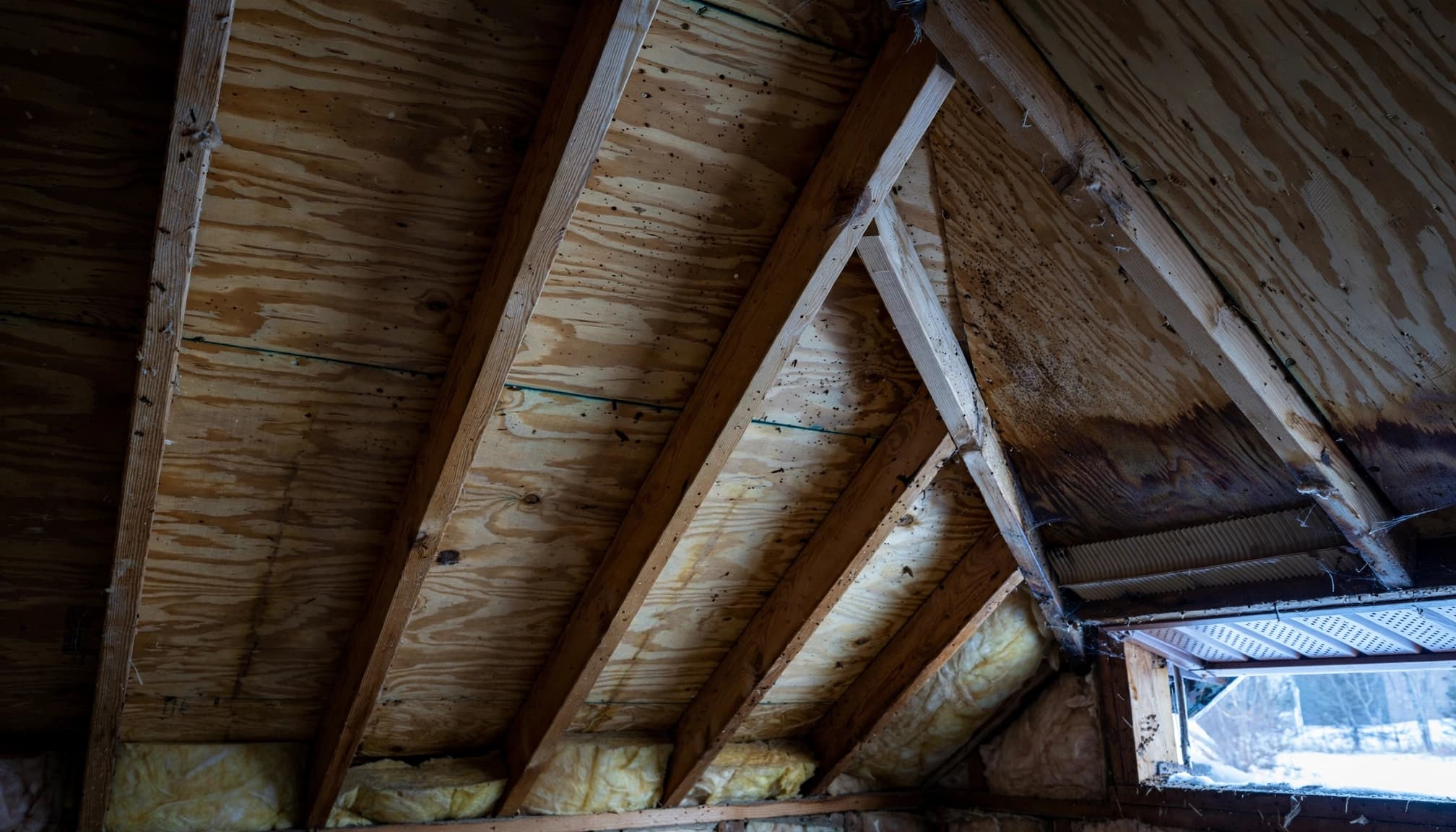
Wet insulation, deteriorated decking, and widespread covering failure require a broader scope. Residential roof replacement should follow documented condition findings, not the presence of icicles alone.
How should storm damage and insurance be handled?
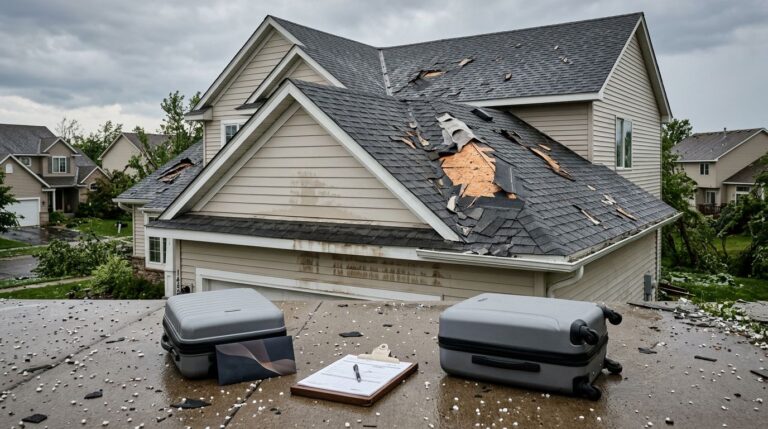
Hail-damaged shingles, punctures, and wind-loosened flashing can admit winter water independently of an ice dam. Separate storm damage from recurring heat-loss conditions.
For a roof insurance claim, preserve dated photographs, inspection findings, and temporary-repair records. Coverage depends on the policy and cause of loss. Ice buildup alone doesn’t establish coverage or justify replacing an otherwise serviceable roof.
What Changes on Commercial Roofs?
Which details need inspection?
A commercial flat roof needs inspection of drains, scuppers, parapets, penetrations, and membrane seams. TPO roofing, EPDM, modified bitumen, and BUR require system-specific evaluation.
Frozen drainage can trap water beneath snow. A commercial roof inspection should also assess insulation moisture and membrane attachment. Commercial roof leak detection in Saint Paul can help investigate water paths beyond the visible ceiling stain.
Can restoration address winter leakage?
Localized seam or flashing defects may qualify for commercial roof repair. Widespread wet insulation or deteriorated assemblies can require commercial roof replacement.
Commercial roof restoration and commercial roof coatings depend on substrate condition and compatibility. Neither corrects blocked drainage or concealed saturated insulation.
Frequently Asked Questions
Can ice dams form on south-facing slopes too?
Yes. Solar melting can feed runoff toward an eave that remains frozen. Roof orientation changes exposure, but any slope can develop uneven temperatures.
Will cleaning the gutters prevent another dam?
Clear gutters improve drainage, but roof-edge ice can form without clogged gutters. Cleaning won’t correct heat escaping through the ceiling.
Would a powered attic fan solve the problem?
UMN Extension advises against mechanical attic ventilation for ice dams. Powered exhaust can draw more indoor air through ceiling leaks instead of correcting them.
What if the attic has frost but no roof-edge ice?
Indoor moisture may be escaping and freezing on cold sheathing or nails. Inspect humidity, air leakage, and exhaust ducts before assuming roof leakage.
Can heat cables or snow guards replace attic work?
No. Heat cables can create limited drainage channels, while snow guards manage sliding snow. Neither corrects the heat path that feeds recurring melting.
Keep the Roof Cold and Dry
What should the lasting repair address?
North-facing ice persistence is a useful clue, not a diagnosis. The durable solution addresses confirmed heat loss, moisture entry, and drainage defects together.
Who can document the conditions?
Request an evaluation that separates removal, roof repair, and building-envelope work. Sellers Roofing Company provides Twin Cities roofing evaluations at 651-703-2336, under MN Builder Contractor License 803862.
Need a roof inspection in Saint Paul or the Twin Cities? Call Sellers Roofing Company at +1-651-703-2336 or schedule a free estimate. We are a black-owned, NMSDC-certified MBE roofing contractor with 9+ years experience.