Last updated: 2026-10-07 by Ted Sellers, Owner
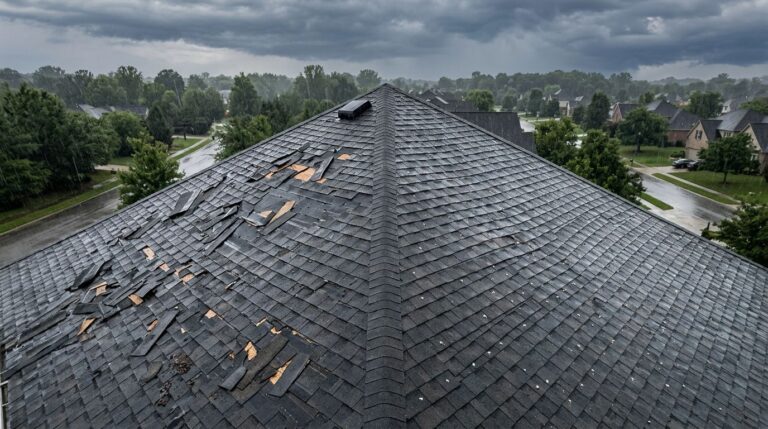
Yes. During a St. Paul storm, wind-driven rain can enter gaps at roof-to-wall flashing, even when shingles remain intact. Wind pressure pushes water toward open laps, loose terminations, and poorly connected wall drainage.
Roof-to-wall flashing leaks require water-path verification. A ceiling stain doesn’t establish the entry point, and caulking the nearest visible joint may leave the actual defect unresolved.
Contents
- When This Applies
- What Causes Roof-to-Wall Flashing Leaks?
- How Are Commercial Wall Transitions Different?
- Step-by-Step
- What Determines Repair or Replacement?
- How Do Minnesota Weather and Insurance Affect the Diagnosis?
- Frequently Asked Questions
- Confirm the Entry Point Before Approving Roof Work
When This Applies
Which buildings need this inspection?
This applies to homes with dormers, attached garages, additions, or upper-story walls beside lower roofs. These intersections collect runoff and require flashing that connects the roof covering with the wall’s drainage plane.
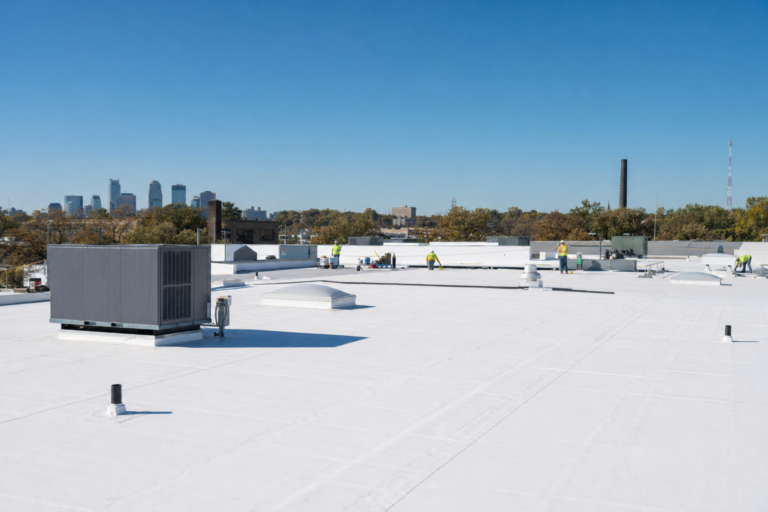
It also applies to commercial buildings with parapets, rooftop penthouses, and walls above lower roof sections. Water near these transitions may enter through roofing, wall cladding, coping, or an attachment detail.
A leak limited to storms from one direction makes the exposed wall intersection a priority. Record that pattern, but don’t treat it as proof of the source.
When should other causes be investigated?
Investigate plumbing, condensation, windows, masonry, drains, and rooftop equipment when the evidence doesn’t match a flashing failure. A stain that grows without rainfall needs a different investigation.
Snowmelt-only leaks also require drainage and ice-dam evaluation. Rain may expose an existing installation defect without creating new storm damage.
Intact shingles don’t rule out wind-related flashing damage. Loose metal and hidden wall connections can fail without visible damage across the roof surface.
What Causes Roof-to-Wall Flashing Leaks?
How does water bypass step flashing?
On asphalt shingles, step flashing uses overlapping metal pieces along a sidewall. Each piece works with a shingle course to discharge water onto the roof below.
The wall’s water-resistive barrier must direct water over the flashing rather than behind it. Building Science Corporation’s roof and wall drainage details describe this connection between wall drainage, step flashing, and shingles.
Open laps, damaged pieces, exposed fasteners, and incorrect layering create entry paths. Wind-driven rain puts water against these defects at angles ordinary runoff may not reach.
At a headwall, where a roof meets the bottom of a vertical wall, inspect apron flashing and its upper protection. Metal roofing requires details compatible with its panel profile and movement.
Why does the kick-out matter?
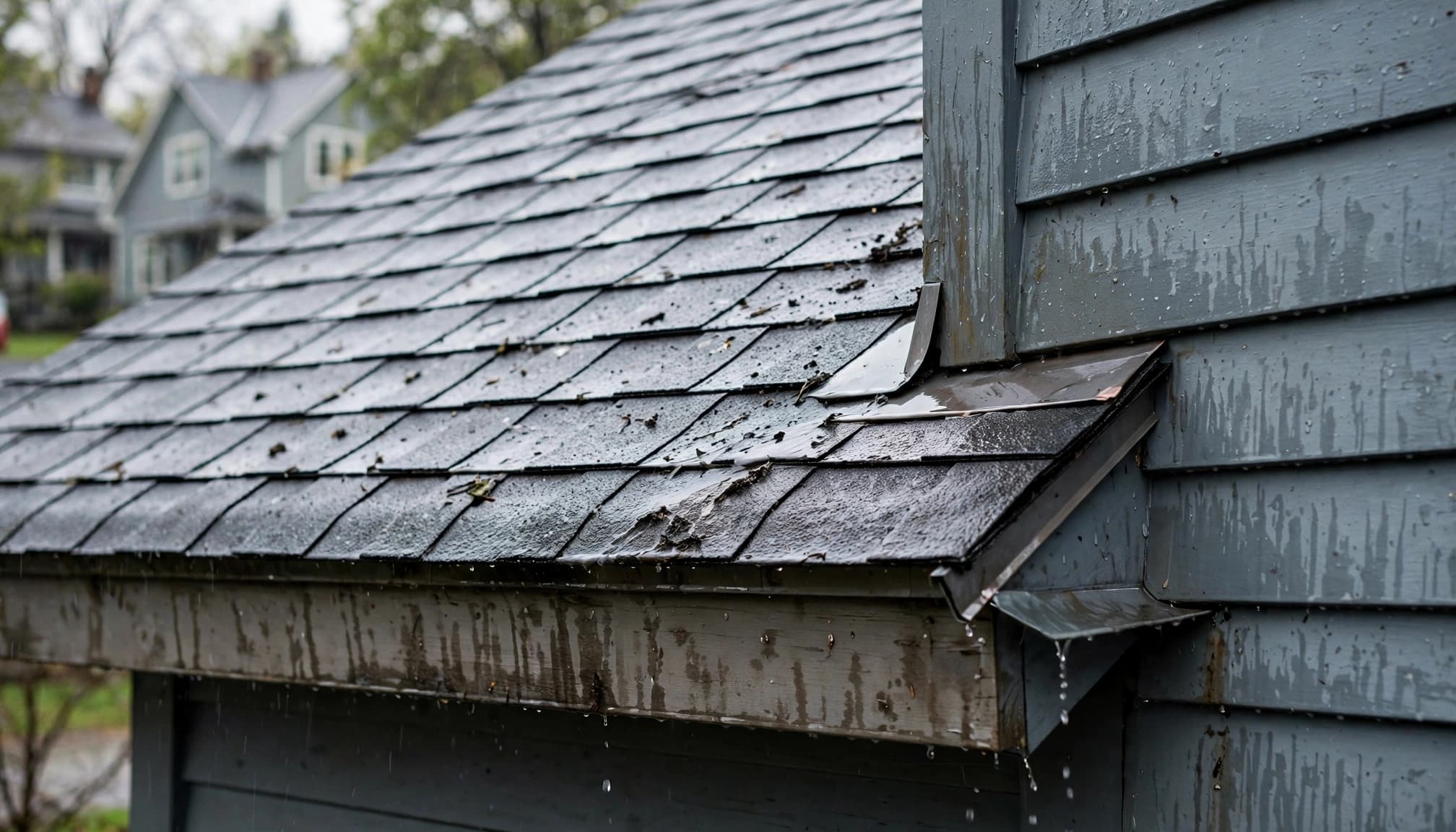
A kick-out diverter belongs where the sloping roof-wall intersection ends at the eave. It directs concentrated runoff away from siding and toward the gutter.
Without it, water can run behind cladding near the roof edge. Look for staining, deteriorated trim, swollen siding, and repeated leakage below that termination.
Building Science Corporation identifies kick-out flashing and water deflection as a building-envelope concern. A sealant bead cannot replace a missing drainage detail.
How Are Commercial Wall Transitions Different?
What should the inspection check on each membrane?
A commercial flat roof uses membrane flashing, attachment details, and upper terminations rather than shingle-by-shingle step flashing.
On TPO roofing, examine welded seams, corners, reinforcement, and wall attachments. On EPDM, inspect system-compatible seams and accessories for separation, shrinkage-related tension, and lifting.
Modified bitumen and built-up roofing, or BUR, need checks for split base flashing, failed laps, deteriorated reinforcement, and separation at transitions.
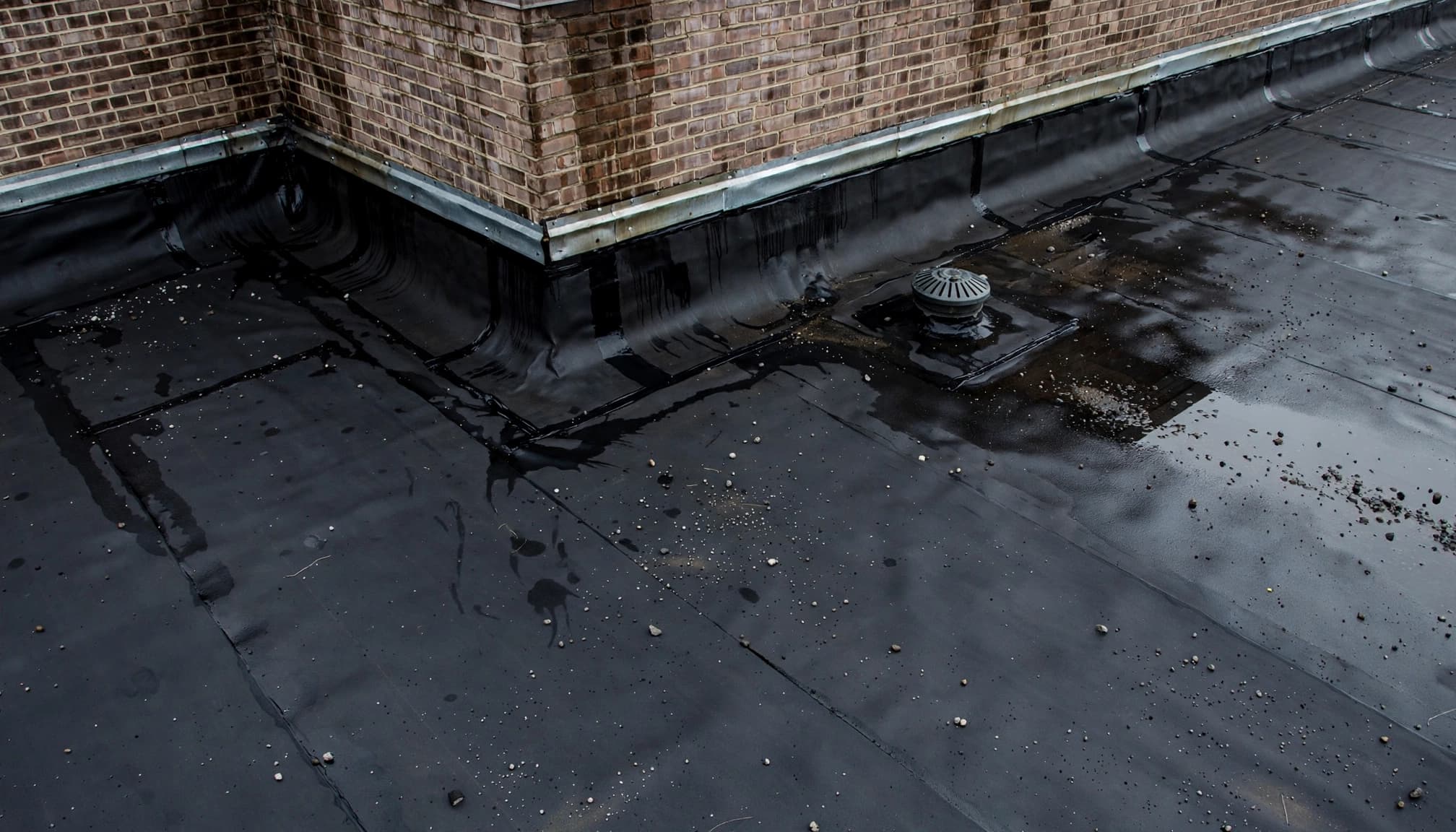
Counterflashing protects the upper edge of the roof flashing. Loose counterflashing, backed-out fasteners, and failed termination seals allow water behind an otherwise intact membrane.
Why can the interior drip be far away?
Water can travel beneath membrane laps, across insulation or cover boards, and along metal deck flutes. The visible ceiling stain identifies where water escaped the assembly.
That movement makes a patch directly above the drip unreliable. An opening at a wall termination may wet roof components beyond the visible defect.
A commercial roof inspection should evaluate both the entry detail and moisture spread. Moisture readings, targeted test cuts, and drainage review help define the repair boundary.
Step-by-Step
1. Secure people and property
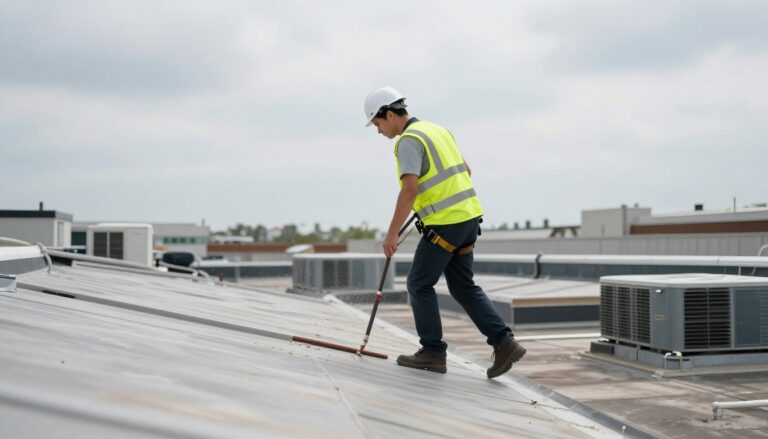
Keep people off wet or storm-damaged roofs. Isolate slippery floors, move inventory, and protect equipment below active leaks.
For active water entry, Call 651-703-2336 for 24/7 Emergency Roofing for temporary stabilization.
If water reaches electrical equipment
Stay clear of affected circuits and fixtures. Have qualified personnel isolate electrical hazards before cleanup begins.
2. Document the leak and weather
Record when the leak started, the affected rooms, and wind direction if known. Photograph exterior elevations and interior damage.
Obtain wide, medium, and close views before installed materials are disturbed. Save previous repair records and inspection photographs.
3. Have the opening and moisture spread verified
Ask the contractor to inspect flashing laps, terminations, siding connections, fasteners, and nearby penetrations. Include coping and drainage where relevant.
Moisture mapping and targeted openings should test suspected paths rather than rely on the stain’s location. Suspected wall leakage needs wall-envelope evaluation too.
4. Request a written repair scope
The report should identify damaged locations, likely cause, affected materials, and testing results. It should distinguish observed defects from unconfirmed possibilities.
Confirm whether the work includes wall access, wet insulation removal, decking repairs, and reconstruction of concealed flashing connections.
5. Stabilize, repair, and verify
Use temporary protection compatible with the roof system. Preserve photographs and invoices before permanent work covers the evidence.
After repair, document the completed detail and interior drying. Review performance after comparable rainfall rather than assuming a dry-weather inspection proves the leak is resolved.
What Determines Repair or Replacement?
When is a localized repair appropriate?
Residential roof repair is appropriate when damage is limited and surrounding shingles, decking, and wall materials remain serviceable. Access may require removing siding or lifting roof covering to rebuild concealed connections.
Commercial roof repair can address a limited seam, corner, or termination failure when the surrounding assembly remains sound. Remove wet components within the confirmed repair area instead of enclosing them beneath a surface patch.
Review roof flashing repair methods when comparing proposed scopes. The permanent repair must restore drainage and attachment, not depend entirely on exposed caulk.
For a home with a recurring wall-intersection leak, Get a Free Residential Roof Estimate that addresses the concealed detail.
What findings justify broader work?
Widespread wet insulation, deteriorated decking, repeated failures, and roofing too brittle to disturb can expand the project. Those conditions may support residential roof replacement or commercial roof replacement.
Roof-to-wall flashing leaks alone don’t establish that the entire roof needs replacement. The decision depends on documented condition and whether a durable repair is practical.
Commercial roof restoration and commercial roof coatings are options for suitable, sound assemblies. They don’t correct saturated insulation, unstable attachments, or missing wall-drainage connections. Compare moisture findings and remaining serviceability before approving either approach.
How Do Minnesota Weather and Insurance Affect the Diagnosis?
What changes during freezing and thawing?
Freeze-thaw cycles can widen existing openings and stress sealant or flashing joints. Ice dams can back water into details that normally shed downhill runoff.
Ice dam removal can relieve immediate backup, but the investigation must also address attic air leakage, insulation, ventilation, and drainage. Removing ice doesn’t repair damaged flashing.
Brick walls deserve attention too. Building Science Corporation’s masonry wall moisture guidance identifies roof-wall interfaces as locations where water concentrates.
When leakage follows a thaw
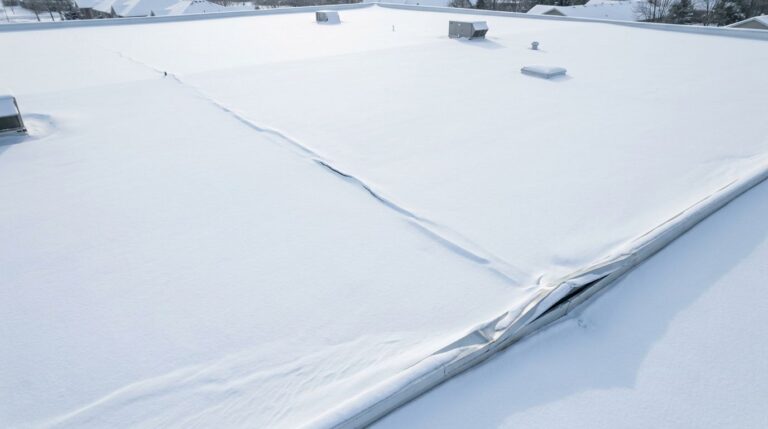
Record snow and ice conditions before they disappear. Compare those observations with the rain-leak history to separate backup from wind-driven entry.
What evidence supports an insurance review?
A roof insurance claim needs a documented cause, physical damage, and repair scope. Storm timing alone doesn’t prove that wind created the opening.
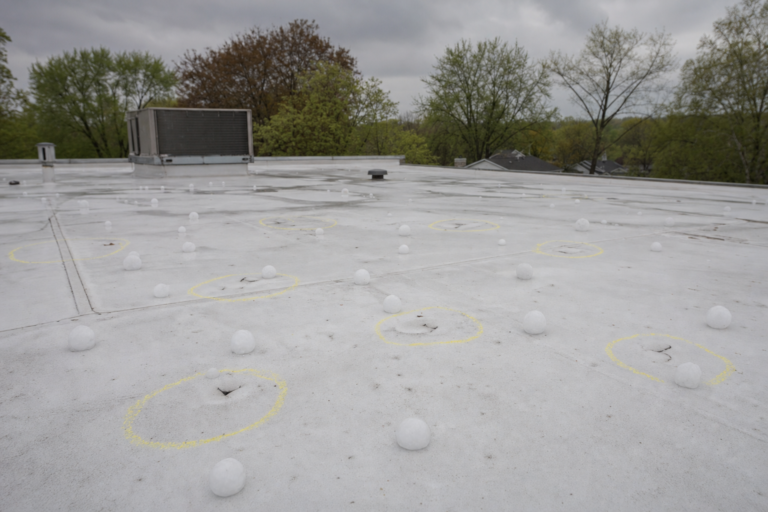
Inspect for loosened metal, torn reinforcement, impact marks, and displaced attachments. A hail damage assessment should distinguish cosmetic dents from punctures or disrupted water-shedding details.
Keep emergency invoices, maintenance records, moisture findings, and photographs. Some policies restrict interior rain coverage unless a covered event first damages the exterior. Commercial and homeowner forms differ.
The same evidence standard applies to Saint Paul roofing and Minneapolis roofing projects. Minnesota roofing inspections should separate fresh storm damage from aging sealant and prior workmanship defects.
Frequently Asked Questions
If the leak stops after the storm, can I wait?
A stopped drip doesn’t establish that the assembly is dry. Insulation and concealed wood may retain moisture after rainfall ends. Schedule evaluation before closing damaged ceilings or repainting stains, especially where the same location has leaked previously.
Can a recently installed roof have flashing defects?
Yes. Reversed drainage layers, incomplete wall integration, and poor attachment can cause leakage on a new roof. Request installation photographs and warranty documents. Have the contractor identify the defect before deciding whether workmanship coverage or storm insurance applies.
Can I reproduce the leak with a garden hose?
A controlled water test may help a qualified investigator isolate an entry point. Uncontrolled spraying can overwhelm details or create misleading leakage. Don’t pressure-wash flashing, force water upward beneath siding, or test while electrical hazards remain unresolved.
Does infrared imaging prove where rain entered?
No. Infrared imaging identifies temperature differences that may indicate moisture under suitable conditions. It doesn’t independently prove the opening or cause. Confirm suspect areas with appropriate moisture readings, physical inspection, or targeted sampling before approving a repair scope.
Can concealed damage increase the repair scope?
Yes. Opening a wall or roof may reveal deteriorated sheathing, wet insulation, or damaged cover board. Photograph those findings before removal. Request a revised written scope and notify the insurer when the findings affect an existing claim.
Confirm the Entry Point Before Approving Roof Work
Require a diagnosis that supports the repair
Wind-driven rain can enter failed roof-to-wall flashing, but permanent work must address the verified opening and affected assembly. Trace water first, then approve a scope that restores roof and wall drainage.
Arrange a system-specific inspection
Sellers Roofing Company is GAF certified, holds MN Builder Contractor License 803862, and uses union-built roofing crews with IUPAT Local 96 members.
Twin Cities roofing owners managing a commercial wall-transition leak can Get a Free Commercial Roof Inspection before choosing a patch, restoration, or replacement.
Need a roof inspection in Saint Paul or the Twin Cities? Call Sellers Roofing Company at +1-651-703-2336 or schedule a free estimate. We are a black-owned, NMSDC-certified MBE roofing contractor with 9+ years experience.