Last updated: 2026-09-28 by Ted Sellers, Owner
Winter wear and fresh spring hail can appear on the same roof, which makes clear documentation important. This article helps Minnesota homeowners separate likely causes and decide what should be inspected further.
How Can You Tell Winter Roof Damage From Spring Hail Damage?
Tell winter roof damage from spring hail damage by documenting the storm date, inspecting the location and pattern of marks, and separating ice, moisture, and age-related conditions from fresh impact evidence. A roof-specific inspection can clarify the cause before a claim or repair decision.
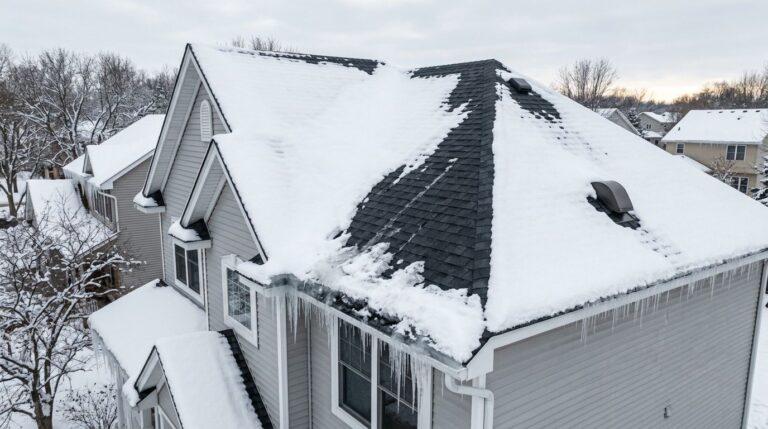
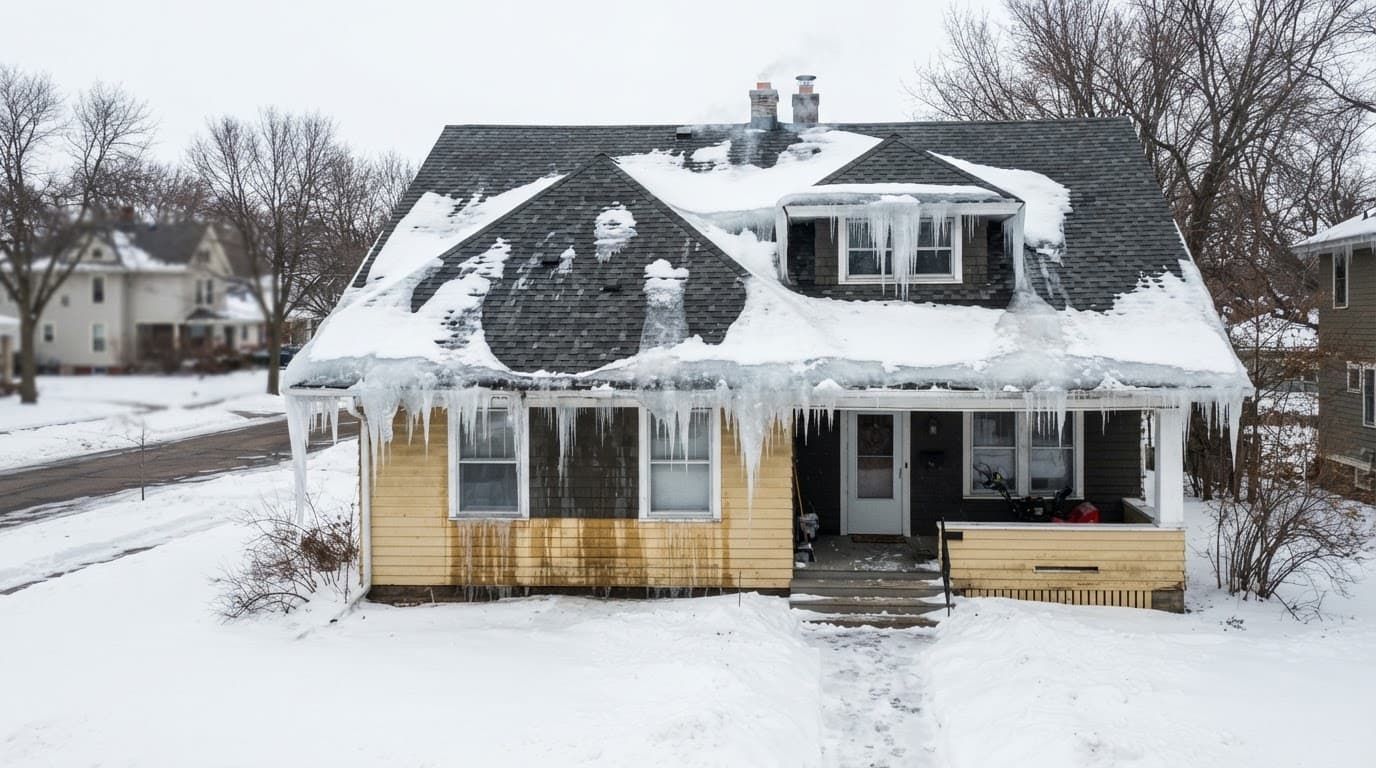
Winter roof damage often follows a melt-and-refreeze pattern commonly caused by ice dams. Signs include ice buildup at the eaves, icicles, attic frost, and ceiling stains near exterior walls.
Spring hail damage leaves scattered impact marks, bruised surfaces, dents in soft metal, chipped areas, and hits on gutters or vents. These visual patterns suggest a cause, but don’t prove it, and roof leaks or water intrusion aren’t automatically hail-related. A timely roof inspection should match the evidence to the weather event and document it before permanent repairs or filing a claim.
When This Applies to Winter Roof Damage
Use this comparison after a clear weather event
This comparison helps distinguish cold-weather roof damage from hail damage after a Minnesota thaw, heavy snow period, or documented hailstorm. It fits homes with asphalt shingles or metal roofing, and commercial properties with pitched roof areas or a low-slope membrane.
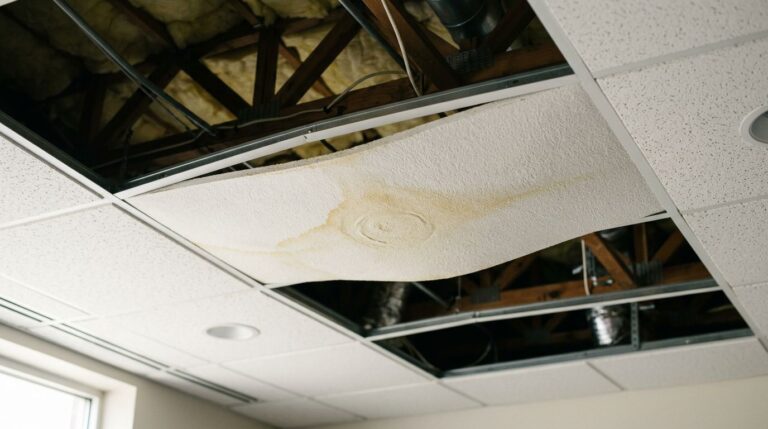
Spring rain often exposes winter problems during Saint Paul and Minneapolis assessments. Ceiling stains near exterior walls can point to an older leak from ice dams that resembles a new storm loss.
It does not settle causation when a roof has chronic leaks, clogged drains, failing seams, or prior water stains. Damage can develop as a freeze-thaw cycle repeats over time. Poor air sealing, attic insulation, or attic ventilation can create uneven roof temperatures. Old wear and fresh hail damage can exist at the same time, so the assessment must separate them.
Treat structural warning signs as an emergency
Leave the building and call for professional help if you see a sagging ceiling or bowed roof deck. Do the same for widening wall cracks, doors that suddenly bind, or repeated loud popping overhead. These signs can indicate structural stress from excessive snow or roof movement.
A roof’s safe snow load depends on its design, age, framing, and the type of snow. Don’t judge safety by snow depth alone. Wet spring snow weighs far more than dry powder.
Step-by-Step: Separate Winter Damage From Hail Damage
1. Start with dates, weather records, and a safe ground survey
Write down when roof leaks, a stain, or another roof change first appeared. Then compare that date with heavy snow, a rapid thaw, strong winds, or a local hail report. Winter damage often develops over days or weeks. Hail damage usually traces back to one storm date.
Inspect from the ground with binoculars. Photograph each slope, gutters, downspouts, roof vents, siding, screens, and soft metal flashing. Avoid walking on an icy, wet, or hail-damaged roof.
Check indoors the same day. Look in the attic for frost, damp insulation, dark decking, rusty nail tips, and new water tracks. Monitor persistent damp insulation or decking for mold and mildew. Ceiling stains near exterior walls often support an ice-dam pattern.
If water intrusion is active, protect people and contents first. Move electronics and inventory away from the leak, then Call 651-703-2336 for 24/7 Emergency Roofing once conditions are safe.
2. Look for the melt pattern that points to winter damage
Ice dams form when snow melts on warmer upper roof sections, then refreezes at cold eaves, creating ice buildup and icicles. Meltwater backs up behind the ice and can travel beneath shingles, underlayment, or flashing. The University of Minnesota Extension’s ice dam guidance explains how uneven roof temperatures drive that cycle.
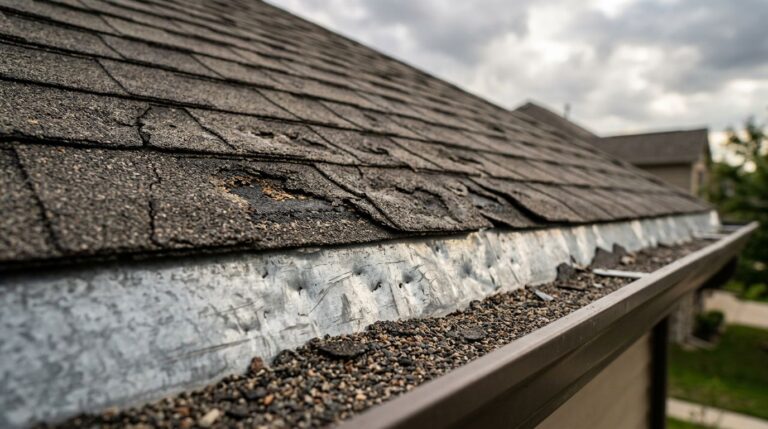
Common signs include curled or cracked shingles near the lower roof edge, pulled gutters, and flashing gaps. Granule loss and water stains below eaves or valleys can also support this pattern. A freeze-thaw cycle can break sealant bonds and open small gaps around chimneys, plumbing vents, and skylights.
For safe snow removal, use a roof rake from the ground. Leave a thin snow layer rather than scraping shingles. Don’t chop ice with metal tools or apply rock salt.
Calcium chloride in a fabric tube can channel a small amount of meltwater. It is temporary, not a permanent solution. Professional ice dam removal with low-pressure steam helps avoid tearing shingles or damaging gutters.
At vulnerable eaves, a properly installed ice and water shield can be part of prevention. It cannot repair an existing leak.
An ice dam is usually a heat-loss and airflow problem, not a reason to keep attacking the roof surface with tools.
Long-term correction often involves air sealing attic bypasses, improving attic insulation, and confirming proper attic ventilation.
3. Look for the impact pattern of a hail-damaged roof
Hail leaves a more random impact pattern than ice. On asphalt shingles, impacts may expose a darker mat, cause granule loss, or create soft bruised spots that feel different from the surrounding shingle. The marks often appear across several slopes, not only along the eaves.
Hail can cause gutter damage, including dents and separated joints, and dent vent caps, window screens, downspouts, flashing, and metal roofing. A dent alone does not always mean functional failure. Flashing damage, cracked coatings, distorted seams, or exposed fasteners matter more than ordinary dents or loose flashing.
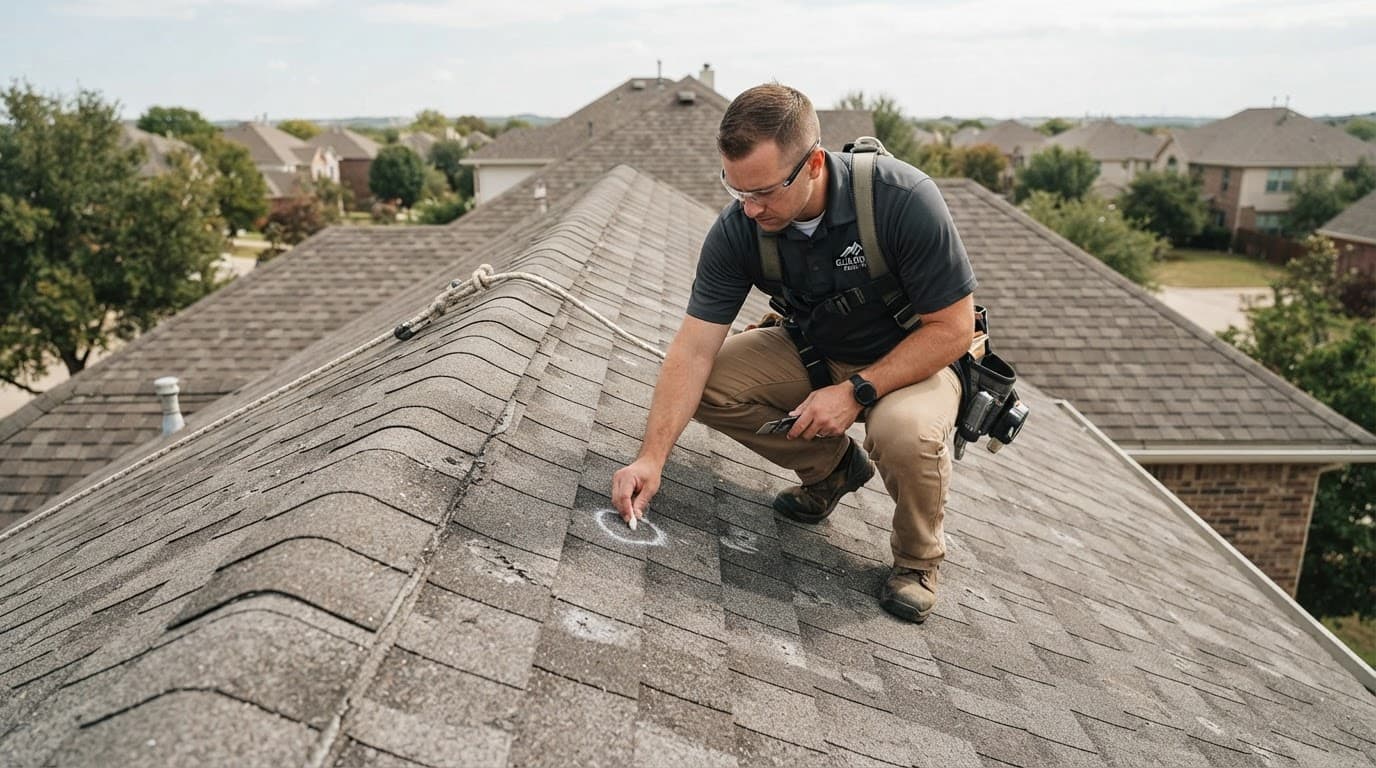
Use the pattern, timing, material condition, and collateral damage together.
| What you see | More likely winter damage | More likely hail damage |
|---|---|---|
| Location | Eaves, valleys, flashing, and attic-side leaks | Random impacts across exposed slopes |
| Shingles | Cracks, lifted edges, ice-related water entry | Bruising, missing granules, exposed mat |
| Metal details | Gutter pull, separated joints, ice stress | Round dents on vents, gutters, and flashing |
| Timing | Thaws, refreezing, or prolonged snow cover | A defined hail or windstorm date |
| Collateral damage | Attic-side moisture, eave stains, and pulled gutters | Dents in screens, vents, siding, and downspouts |
A professional hail damage roof inspection should document test areas, collateral damage, and the condition of each roof slope before repairs erase the evidence.
4. Inspect a commercial flat roof by its system, not by the ceiling stain
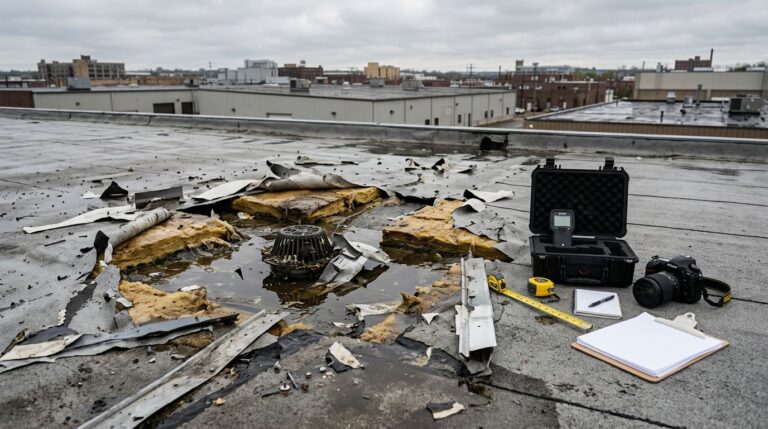
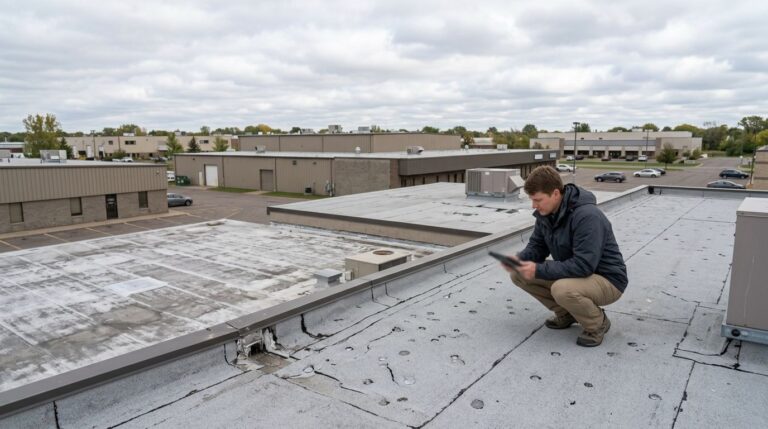
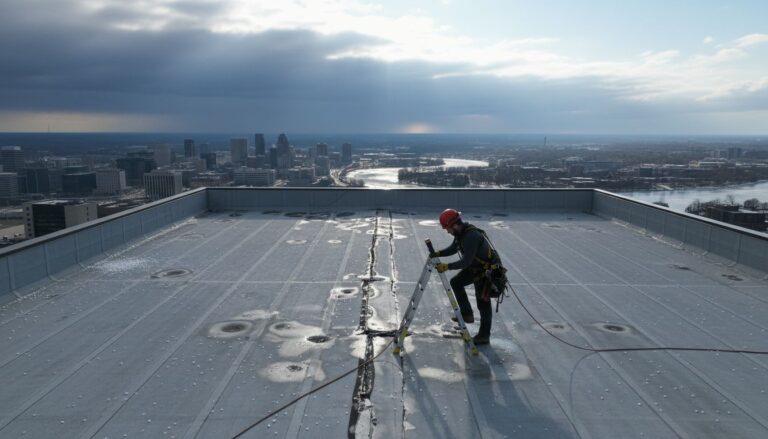
A commercial roof system has different failure points. TPO roofing and EPDM can split at seams, terminations, drain details, or perimeter flashing. Modified bitumen and BUR may show torn plies, failed laps, blisters, displaced surfacing, or impact damage below the visible layer.
Water can travel below membrane laps, insulation boards, cover boards, and metal deck flutes. A ceiling drip may be several feet from the opening. That is why commercial roof leak detection can include infrared moisture mapping, electronic testing, and limited test cuts.
A localized membrane breach with dry insulation may support commercial roof repair. Widespread wet insulation, recurring seam failure, or damaged attachment can support commercial roof replacement. Commercial roof restoration and commercial roof coatings can extend a dry, sound roof system. They do not correct saturated insulation or active leaks.
For warehouses, multifamily buildings, churches, and retail properties, Get a Free Commercial Roof Inspection before choosing a repair, coating, or replacement scope.
5. Preserve evidence before you start a roof insurance claim
Take dated photos before permanent work begins. Save damaged shingles, missing shingles, broken flashings, wet ceiling tiles, and emergency invoices when possible. Missing shingles may reflect wind, age, or another event, so they don’t automatically prove hail. Keep a short log with the storm date, first leak date, rooms affected, and actions taken to limit added damage.
Temporary dry-in work is appropriate when fresh damage lets water in. A tarp or emergency seal should stay temporary until the damage is documented. Broad permanent work can remove the proof needed to distinguish hail, an ice dam, wind, or old maintenance.
A roof insurance claim is stronger when it stays factual. State what you know: “Water entered after hail damaged the north slope” is better than saying the entire roof failed. If the insurer calls the problem maintenance, ask for the reason in writing and submit a cause-based contractor report.
One or two isolated damaged areas may need residential roof repair. Broad brittleness, multiple affected slopes, or repeated water entry may point toward residential roof replacement. Get a Free Residential Roof Estimate when the repair-versus-replacement decision is unclear.
Frequently Asked Questions
Can hail damage a roof without causing an immediate leak?
Yes. Hail can bruise shingles, crack coatings, damage seams, or compress insulation before roof leaks become visible. Waiting for interior water is a poor inspection standard, especially on a commercial membrane roof.
Should I remove all snow from my roof?
No. Safe snow removal means clearing loose snow from the ground with a roof rake when conditions allow. Leave a thin layer to avoid scraping the roof surface. Don’t climb onto an icy roof or strike ice buildup with tools. View large icicles from a safe location, and call a professional if they pose a hazard.
Can ceiling stains tell me where the roof is leaking?
Not reliably. On a steep roof, water can travel along decking or framing. On a low-slope system, it may move beneath the membrane and insulation before reaching a ceiling tile.
Will insurance pay for water damage caused by ice dams?
It depends on the policy language and the cause of loss. Fast documentation, reasonable temporary mitigation, and proof of fresh water entry help. Long-term maintenance issues can lead to coverage disputes.
What credentials should I look for in a Twin Cities roofing contractor?
Ask about Minnesota licensing, manufacturer qualifications, system-specific experience, written scopes, and insurance documentation. Sellers Roofing Company provides union-built roofing with IUPAT Local 96 crews, GAF-certified credentials, and MN License 803862.
Final Assessment
Document the cause before the evidence disappears
The clearest difference is the damage pattern, with cold-weather roof damage following ice dams, meltwater paths, and cold eaves. Attic conditions can signal a freeze-thaw cycle and structural stress, requiring a safety-first response. Hail leaves a defined impact pattern, including flashing damage, across shingles, metal details, and exposed roof surfaces.
A prompt roof inspection protects the building and helps interpret ceiling stains alongside exterior roof conditions. It also gives you a factual basis for repair, replacement, or a roof insurance claim. The right scope starts with the likely cause, before permanent work removes the evidence.
For the larger documentation and claim process, read our Minnesota roof storm damage and insurance claims guide.
Need a roof inspection in Saint Paul or the Twin Cities? Call Sellers Roofing Company at +1-651-703-2336 or schedule a free estimate. We are a black-owned, NMSDC-certified MBE roofing contractor with 9+ years experience.