Last updated: 2026-10-21 by Ted Sellers, Owner
Asphalt shingles can crack around roof vents after Minnesota cold snaps because cold stiffens the asphalt while shingles, decking, and flashing contract at different rates. Cuts and fastening around penetrations can concentrate that stress. Surface-only craze cracking seldom leaks, but splits through the reinforcing mat or failed vent boots need prompt repair.
For installation and material choices, see our asphalt shingle roofing service. For a damaged or leaking roof, explore residential roof repair.
What Actually Causes Asphalt Shingle Cracking in Harsh Winter Climates?
Cold exposes weak points around penetrations
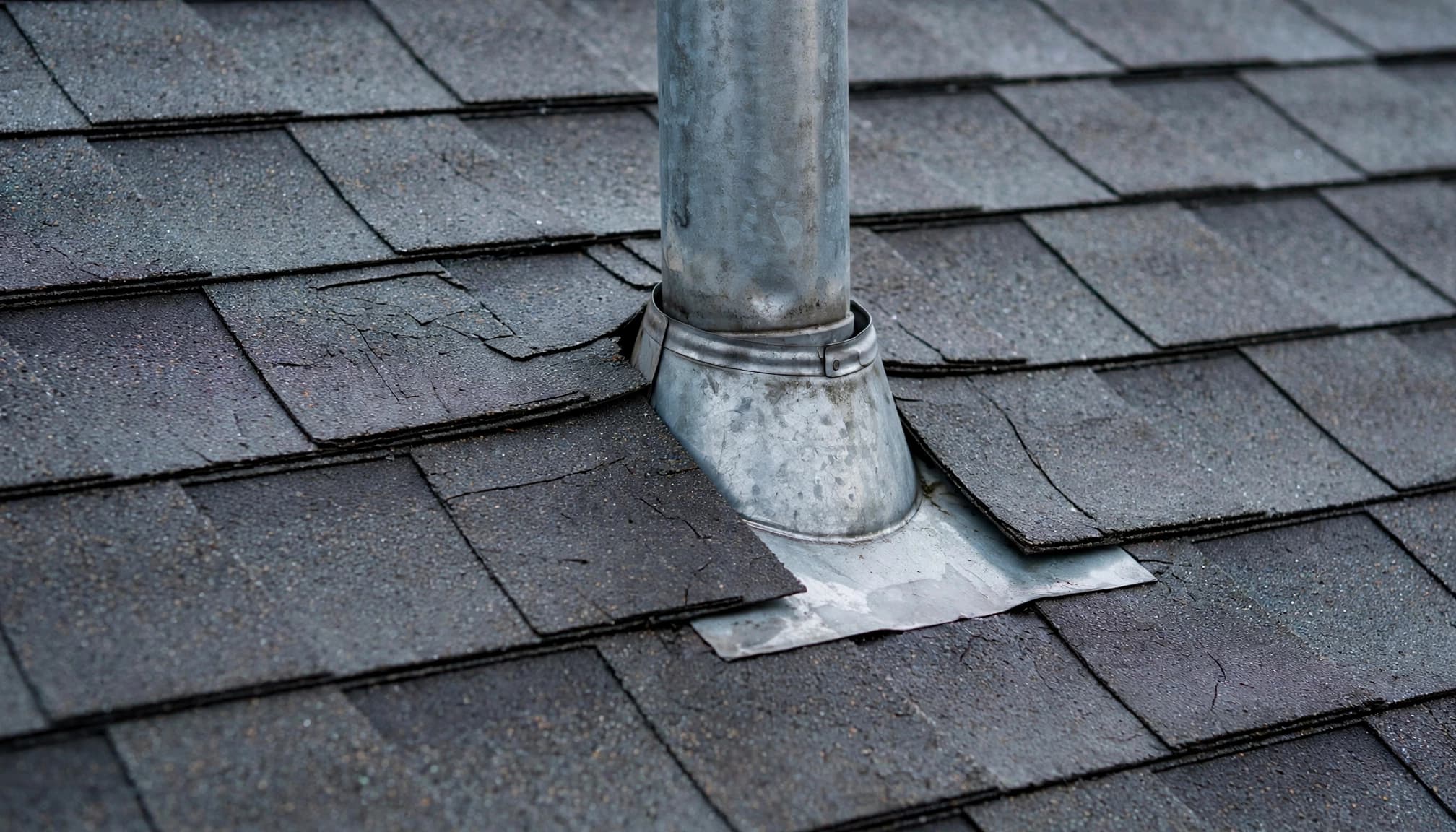
A vent interrupts the shingle field. Installers cut shingles around its flange, and fasteners restrain nearby materials. Those transitions can concentrate movement.
During daytime heating, shingles expand. At night, they contract. A sharp temperature drop adds contraction while making aged asphalt less flexible. Water already inside an opening can freeze and widen it.
Thermal splitting can occur where a shingle bridges a joint in the course below. The shingles and roof deck move differently. Strong adhesive strips on fiberglass shingles can hold bonded sections together while stress concentrates above the underlying joint. Diagonal splits may develop.
Earlier heat damage can show up in winter
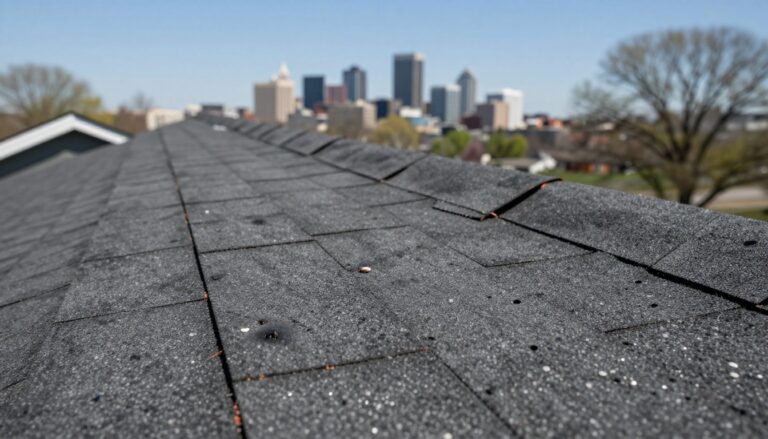
Craze cracking is random damage limited to the surface asphalt. Volatile compounds escape, and the exposed layer shrinks faster than the shingle body. This surface craze cracking can appear before the shingle body deteriorates.
InterNACHI’s shingle cracking and splitting narrative describes powdered-stone filler replacing up to 65% of asphalt in some formulations. It associates excessive filler with faster volatile loss. That figure isn’t a specification for every shingle.
Poor ventilation keeps the roof hotter during summer and accelerates this deterioration. An explanation of Minnesota heat-related shingle damage covers that earlier stage.
A cold snap may reveal an existing weakness rather than cause every crack.
When This Applies
Homes and shingled commercial sections
This guidance applies to asphalt-shingle roofs on houses, apartments, churches, offices, and mixed-roof buildings throughout the Minneapolis and Saint Paul area.
Look closely when cracks cluster beside plumbing vents, exhaust housings, valleys, or old repairs after a temperature drop. Compare those areas with undisturbed shingles on the same slope.
A crack beside a vent doesn’t prove the vent caused it. The surrounding roof may already have widespread aging, hail damage, or installation-related stress.
Conditions that need a different diagnosis
A split rubber pipe boot, separated flashing flange, or attic condensation can produce a ceiling stain without a split shingle.
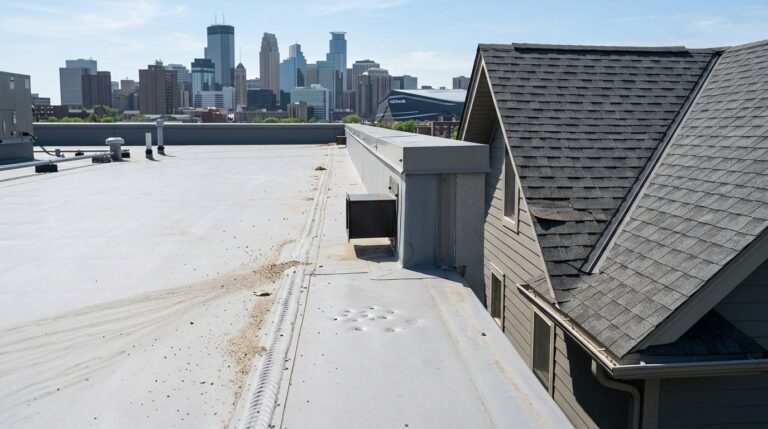
A commercial flat roof also needs a different inspection. TPO roofing, EPDM, modified bitumen, and BUR have membrane, seam, and flashing failure points. Metal roofing requires review of panels, clips, fasteners, and penetration flashings.
On mixed-system buildings, investigate each assembly separately. Water can travel beneath roofing before appearing indoors, so the stain’s location doesn’t establish the entry point.
How to Inspect and Document the Damage
Follow the water-shedding path
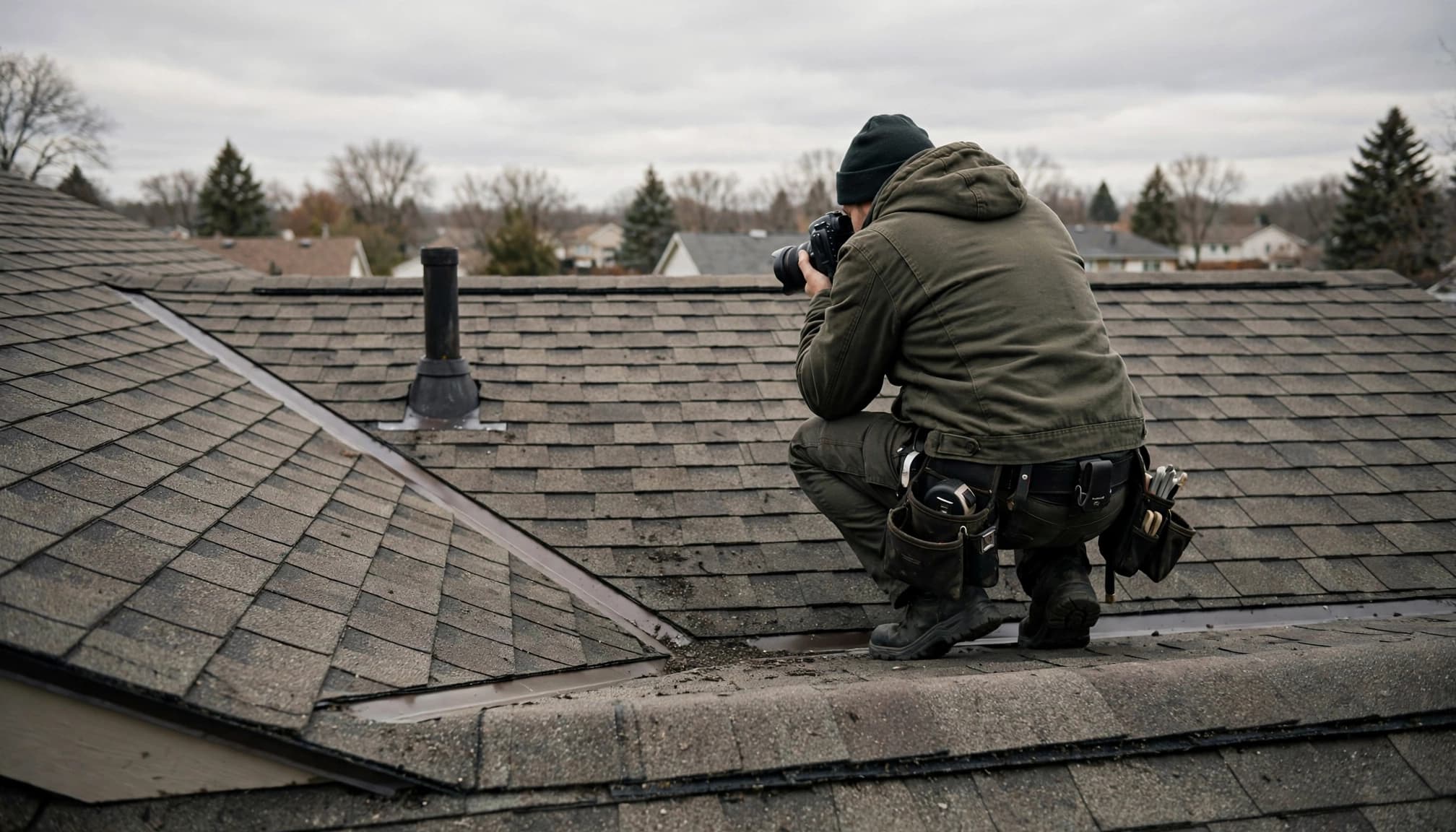
Homeowners should start with ground photographs and accessible interior observations. Leave roof access to a properly equipped contractor. Ice, frost, wet granules, and steep slopes make winter inspection hazardous.
A contractor’s field checklist should follow this order:
- Record each slope, then compare granule-loss patterns around vents with the surrounding field.
- Examine flashing separation, exposed fasteners, and cracked or hardened pipe boots.
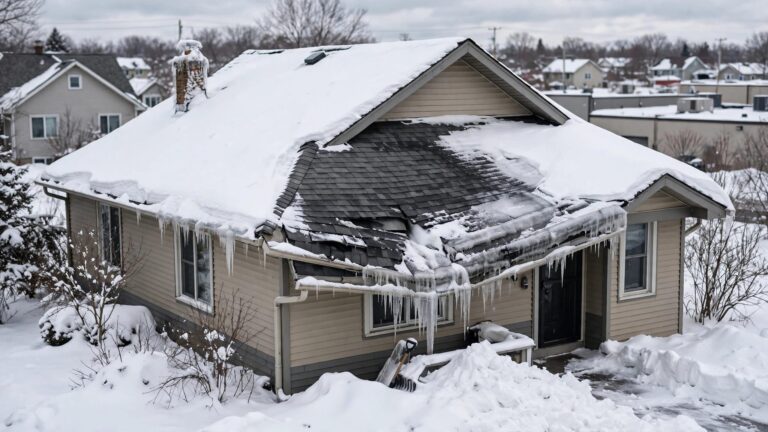
- Follow nearby valleys downhill, noting debris, damaged shingles, and ice-backup evidence.
- Look for deck deflection, raised joints, uneven courses, and disturbed repair areas.
- Match exterior findings with attic staining, damp sheathing, and interior water intrusion.
Photograph each condition close up and again from far enough away to establish its location.
Open only what the diagnosis requires
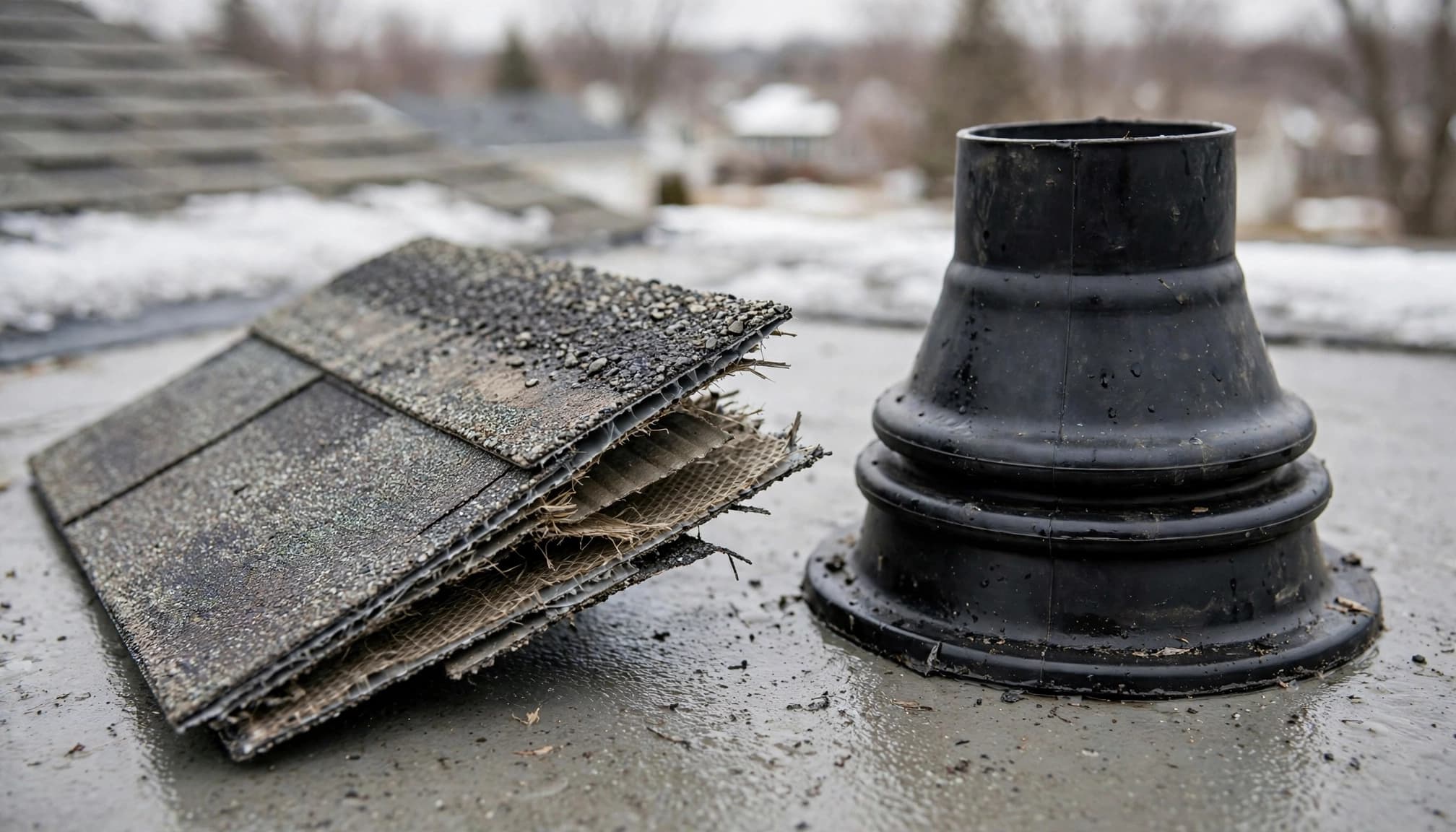
A surface crack stays within the weather-facing asphalt. A split continues through the shingle and reinforcing mat. Photographs alone don’t always establish depth.
Selected shingle lifting or small test openings can reveal wet decking, pulled fasteners, and broken joints without removing broad areas.
Don’t force frozen shingles upward. A cold-day lift can create damage and confuse the cause. Record roof temperature, test locations, and conditions before controlled examination.
Repair vs. Replace: The Decision Framework
Judge depth, spread, and repairability
Surface-only craze cracks seldom leak because the reinforcing layer remains intact and overlapping courses usually provide another shingle beneath them.
A split through the mat needs prompt replacement of the affected shingle. Sealant over the line doesn’t restore reinforcement.
Use these factors to compare the options.
| Factor | Localized repair | Full replacement |
|---|---|---|
| Damage pattern | One vent or a limited cluster | Repeated splits across multiple areas |
| Cost range | Roughly $400 to $2,500 | Roughly $450 to $900 per roofing square |
| Remaining service life | Surrounding shingles remain serviceable | Widespread brittleness or through-mat failure |
| Insurance implications | May fit an isolated covered loss | Requires support for the broader scope |
| Material compatibility | Matching exposure and profile available | Compatible repairs cannot be completed |
These are planning ranges, not a property-specific quote. A roofing square equals 100 square feet.
Separate urgency from replacement scope
An active leak requires protection now. It doesn’t automatically justify residential roof replacement.
Residential roof repair remains reasonable when the surrounding shingles tolerate normal removal and the deck is sound. Replacement becomes more defensible when repairs repeatedly fracture adjacent shingles or cracks have progressed through the mat across several areas.
Material Specs That Matter for This Repair or Replacement
Match the shingle assembly
GAF Timberline HDZ, CertainTeed Landmark, and Malarkey Legacy are named options for replacement planning. Malarkey Legacy carries a Class 4 impact-resistance rating. That rating doesn’t make a roof immune to hail, cold-weather cracking, or flashing failure.
A patch must match shingle dimensions, exposure, thickness, and fastening requirements. Similar color alone isn’t enough.
Synthetic underlayment and asphalt felt also have different handling and exposure limits. Neither replaces properly installed penetration flashing or self-adhered ice protection.
Detail the ice barrier and low-slope transitions
The Minnesota Residential Code governs applicable reroofing requirements. Where required, the eave ice barrier extends to at least 24 inches inside the exterior wall line. That measurement is not 24 inches from the roof edge.
Valley protection follows the roof design and manufacturer instructions. Don’t treat the eave measurement as a universal valley-width rule.
On adjoining flat sections, specify the actual system. A 60-mil TPO membrane and 45-mil or 60-mil EPDM require different seams, adhesives, and penetration details. A thicker membrane doesn’t correct a badly flashed pipe.
Commercial roof coatings cannot reconnect a fractured shingle mat. For separate flashing details required by those assemblies, see flat-roof penetration leaks.
Insurance Documentation and the Claim Process
Establish what caused the present failure
Adjusters evaluate the reported event, physical damage, policy terms, and repair scope. Contractor documentation should separate fresh storm damage from long-term deterioration.
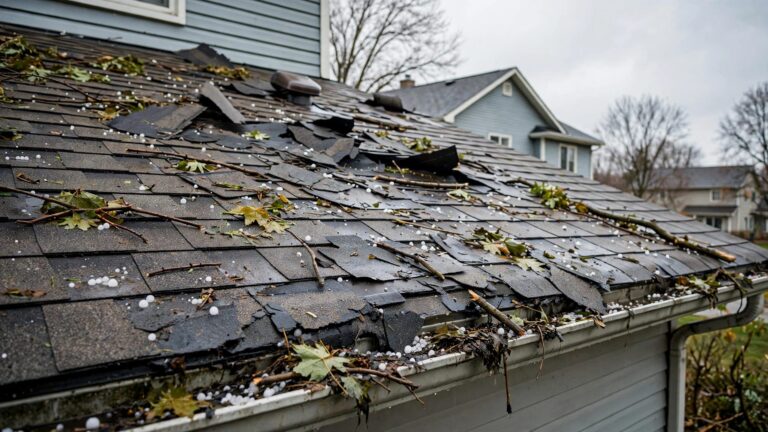
For suspected hail damage, photograph displaced granules, mat fractures, and nearby dents in vent caps or flashing. Include scale and roof-plane views. Don’t scrape granules or press hard enough to manufacture a soft spot.
For wind damage, record lifted or creased tabs, torn seal strips, displaced shingles, and disturbed flashing. Photograph interior stains, wet insulation, and the path of moisture.
A cold snap followed by a visible crack doesn’t establish a covered storm damage roof claim. Timing supports the investigation; the damage pattern must support the cause.
Keep insurance and warranty questions separate
A roof insurance claim concerns covered damage under the property policy. A manufacturer warranty concerns qualifying product defects under its own terms.
Surface aging alone generally presents a different claim issue than wind-created openings or hail-fractured mats.
Warranty coverage also varies. GAF’s warranty resources distinguish available coverage options. Some warranties include an initial non-prorated period, while later coverage or standard options can limit payment. Labor, tear-off, disposal, and accessories aren’t automatically covered on the same terms.
What a Professional Roof Contractor Does Differently
Inspect the deck and rebuild the failed detail
A repair should expose enough material to establish the assembly’s condition. Removing broad sections before documenting the damage can erase useful evidence.
If sheathing is rotten, the crew removes compromised material to supported edges and installs properly supported replacement decking. Covering soft wood with new shingles leaves the underlying failure in place.
A failed pipe boot needs a compatible replacement integrated with the shingle courses. The uphill flange belongs beneath the water-shedding layers, with the downhill portion directing water outward.
Sealant is secondary protection. It shouldn’t carry the entire waterproofing detail.
Calculate ventilation rather than count vents
Net free ventilating area, or NFA, measures the actual open area available for airflow. Vent dimensions alone don’t establish capacity.
A common code baseline is 1 square foot of ventilation per 150 square feet of vented space. Reduction to 1:300 depends on qualifying conditions. Intake, exhaust, vapor control, and blocked soffits all matter.
On mixed commercial buildings, moisture findings also affect scope. Isolated dry damage can support commercial roof repair. Wet insulation extending into adjoining sections may require a wider repair or commercial roof replacement.
Cost Ranges for Vent-Area Shingle Damage in Minnesota
Distinguish a small repair from concealed damage
The repair range above fits many targeted jobs, but scope controls the price. Replacing a few shingles and one accessible pipe boot differs from rebuilding wet decking beneath several courses.
Steep access, multiple roofing layers, difficult material matching, winter protection, and interior moisture investigation add work.
A narrow visible crack can sit above a larger concealed problem. Equally, an ugly surface crack can remain a limited maintenance issue. Price the verified damage rather than the appearance alone.
Budget replacement by actual roof area
Angi’s Minneapolis roof replacement guide lists an average local cost of $5.25 per square foot. Individual bids vary with the building and assembly.
Using the planning range above, a 20-square roof works out to roughly $9,000 to $18,000. That’s roof surface area, not the house’s floor area.
Deck repairs, access difficulty, disposal fees, permit requirements, and upgraded materials can move the total. A useful estimate separates those items instead of hiding them inside one unexplained number.
Step-by-Step
If water is entering
- Move contents away from the leak and collect water where you can do so safely. Stay clear of wet electrical equipment and sagging ceilings. Photograph the interior condition before removing damaged finishes.
- Arrange temporary roof protection without climbing onto an icy roof. Keep records of emergency work and preserve photographs of the opening before it is covered. Ice dam removal should avoid chopping through shingles or flashing.
Once the roof can be evaluated safely
- Have the contractor map cracks, inspect boots and flashing, and compare multiple slopes. Use selected openings where needed. The report should separate surface crazing, through-mat splits, fresh storm damage, and pre-existing deterioration.
- Authorize permanent work after the damage boundary is established. Match each repair to its cause. If opening the roof exposes additional wet decking or insulation, document that condition before extending the scope or submitting a claim supplement.
Frequently Asked Questions
Can a roof leak near a vent when the shingles aren’t split?
Yes. A cracked pipe boot, separated flange, or poorly integrated flashing can admit water. The leak investigation must include the penetration itself and the uphill shingle courses.
Does one shingle breaking during a brittleness test prove the whole roof needs replacement?
No. Roof temperature and handling affect the result. A controlled repairability assessment should compare representative areas and document whether surrounding shingles tolerate the work needed for a normal repair.
Why can relatively new asphalt shingles start cracking?
Installation stress, material formulation, poor ventilation, and physical damage can shorten the time before cracking appears. Early cracking doesn’t, by itself, establish a manufacturing defect or identify who is responsible.
How long should an asphalt-shingle roof last in Minnesota?
A planning range is about 15 to 20 years for three-tab shingles and 25 to 30 years for architectural shingles. These are estimates, not guarantees; ventilation, installation, exposure, and storm history affect service life.
What if the ceiling stain appears several feet from the vent?
Water can travel along decking, underlayment, or framing before dripping indoors. Attic condensation can also leave staining. Trace the moisture path rather than repairing only the roof area directly above the stain.
Keep the Repair Scope Tied to the Damage
Replace failed components, not sound roof sections
The main distinction is surface cracking versus through-mat failure. A cold snap can expose both, but they carry different leak risks and repair needs.
The location beside a vent narrows the inspection area; it doesn’t settle the diagnosis. A failed boot may need one rebuilt detail. Repeated splits, wet decking, or shingles that cannot tolerate repair can justify a broader scope.
Get the findings into a written scope
Keep photographs, moisture findings, test-opening records, and the proposed repair together. That documentation gives the property owner, contractor, and adjuster the same starting point.
Document the shingles, penetration flashing, and surrounding roof before committing to permanent work. A scope based on the damaged assembly should account for concealed conditions that affect the repair. Get a Free Residential Roof Estimate to discuss the findings. The objective is a watertight roof with a repair boundary supported by evidence.
Need a roof inspection in Saint Paul or the Twin Cities? Call Sellers Roofing Company at +1-651-703-2336 or schedule a free estimate. We are a black-owned, NMSDC-certified MBE roofing contractor with 9+ years experience.