Last updated: 2026-09-28 by Ted Sellers, Owner
A commercial drain problem can become more serious when snow melts and nighttime temperatures fall below freezing. This guide explains why drainage details deserve attention before spring thaw accelerates an existing weakness.
Can Heavy Snow Damage Commercial Roof Drains Before Spring Thaw?
Heavy snow can damage commercial roof drains before spring thaw by stressing strainers, drain flashings, nearby membrane, and drainage paths. Document visible conditions, control active water safely, and have the drain assembly inspected before meltwater exposes a larger issue.
Yes. The commercial roof drains Minnesota property managers rely on can be damaged before spring thaw. A frozen or blocked drainage path is more common than a crushed drain bowl, and it can cause roof leaks in a commercial property, even when the visible interior drip is far from the drain.
When This Applies
Low-slope buildings with trapped meltwater
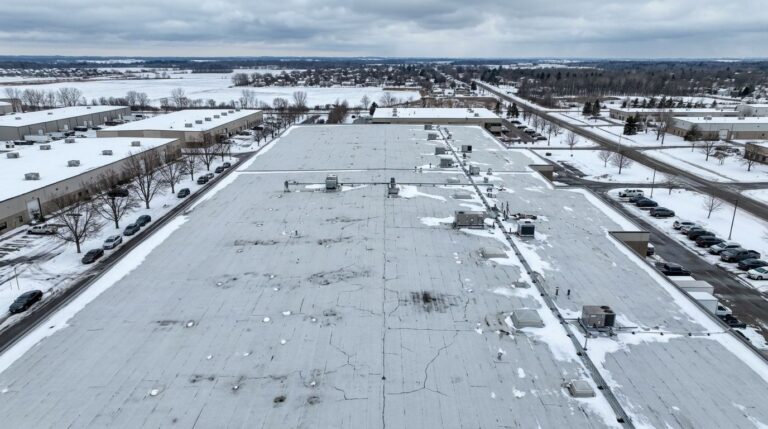
This applies to warehouses, schools, offices, apartments, and retail buildings with a flat commercial roof. Commercial roofing systems, including a tpo membrane, epdm rubber roofing, modified bitumen, and BUR assemblies, depend on drains, scuppers, or gutters to move meltwater off the roof.
It is most relevant during freeze-thaw cycles after deep snowfall, sunshine, daytime melt, and subfreezing nights. The issue differs on steep-slope asphalt shingles or metal roofing, where ice dams and perimeter drainage matter more than internal roof bowls. A residential roof repair or residential roof replacement can address those systems, but it doesn’t solve low-slope drainage issues.
Commercial Roof Drains Minnesota Property Managers Need to Check
Ice turns a drainage system into a dam
Snow can cover a strainer before anyone notices. Heat from the building or sun creates meltwater beside it. In roof drainage systems, night cold turns that water to ice at the drain, leader, scupper, or downspout.
The next melt has nowhere to go, creating drainage issues. Water backs up under flashing, crosses seams, and leaves ponding water in low areas.
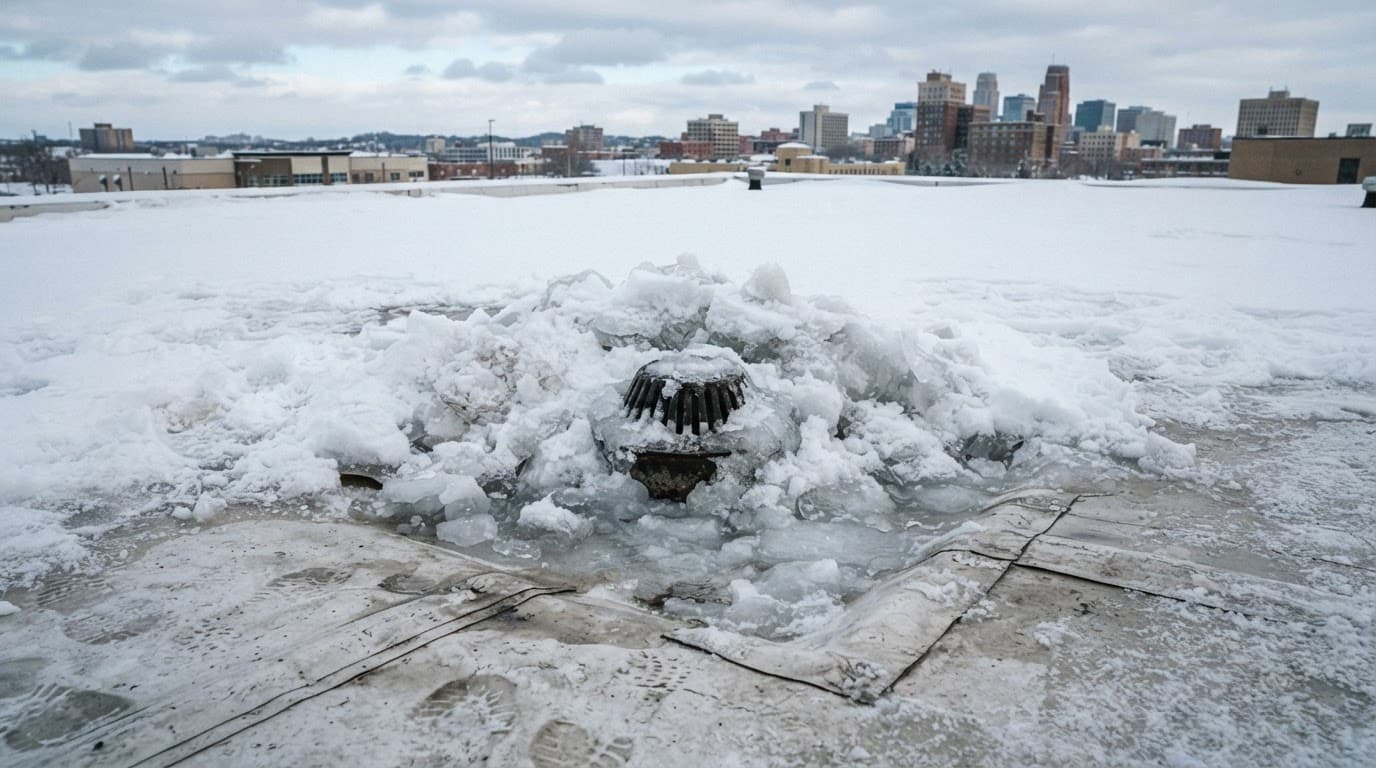
Internal drains route water through interior piping, which reduces pipe-freezing risk. The roof bowls and strainers on internal drains can still freeze, while edge drains, scuppers and downspouts reveal blockages sooner but freeze more easily.
Minnesota code requires roof designs to account for blocked primary drainage and, where water could be trapped, separate overflow drains to limit drainage issues. Review Minnesota’s roof-drainage rule before changing a drain layout or closing an overflow opening.
If a secondary scupper runs during snowmelt, treat it as a blocked-primary-drain alarm, not normal roof drainage.
Step-by-Step
A winter response for Twin Cities property managers
- Inspect from safe locations first. Check scupper outlets, downspouts, mechanical rooms, ceiling tiles, wall tops, and accessible drain areas. Don’t send maintenance staff onto a snow-covered membrane. Look for flow from secondary drains, deep ponding near parapets, bent edge metal, or new staining. Photograph each finding with its location and date.
- Stop active water damage. Move inventory, protect electrical equipment, and contain drips. If water threatens people, power, or operations, Call 651-703-2336 for 24/7 Emergency Roofing. A frozen leader or suspected burst drain pipe may require a commercial roofer and licensed plumber, with both trades coordinated before work begins. Minnesota plumbing rules require piping to be protected from freezing, as outlined in this frozen-pipe prevention guidance.
- Clear only accessible, safe obstructions. A trained crew can remove loose snow around drain sumps and clear debris from strainers without cutting the roof membrane. Don’t chop ice with metal tools, spread salt across the roof, or use open flame. Those shortcuts can damage TPO, EPDM, seams, and drain flashing.
- Have crews trace roof leaks before authorizing commercial roof repair. Water can cross seams, insulation joints, deck flutes, and parapet details before it appears inside. Arrange a commercial leak assessment that checks moisture, drain flashing, slope, and the interior leak path. This helps distinguish drainage issues from a membrane failure. Get a Free Commercial Roof Inspection before approving a permanent repair.
- Document a storm-related loss before broad repairs. A hail-damaged roof membrane or wind-damaged section can fail beside a blocked drain. Photograph conditions, keep removed materials, and save emergency invoices. That file can help document a commercial property insurance claim and separate fresh storm damage from old ponding or missed maintenance.
Know the Drain Design Before the Snow Falls
Internal drains and scuppers fail in different ways
Drain configuration dictates how roof drainage systems move water, where ice forms, and how the building gives a warning.
| Drain type | Winter advantage | Common winter failure |
|---|---|---|
| Internal drain | Interior piping has less exposure to cold air | Frozen roof bowl, blocked strainer, failed drain flashing |
| Scupper and downspout | Overflow is visible at the roof edge | Ice-clogged scupper, frozen downspout, backed-up water at the parapet |
| Gutters and edge drains | Easy to inspect from the ground | Ice buildup, loose hangers, overflow against fascia or walls |
Internal drains are often the better choice for large roofs, but only if the bowl, strainer, flashing, and connected piping stay open. From ground level, inspect downspouts and gutters for ice, loose connections, and overflow signs. Scuppers provide an obvious escape path, while overflow drains offer a secondary path that ice can close quickly during a thaw.
Tapered insulation still matters
Tapered insulation creates positive drainage, so meltwater moves toward the drain instead of collecting in broad, shallow low spots. It can’t overcome a frozen drain, but it reduces the water waiting to enter once the drain opens.
For new drainage work, Minnesota commercial roofs use a 4-inch-per-hour rainfall rate for primary roof-drain sizing. Seasonal cleaning and slope checks are also central to preventing flat-roof drainage issues before winter exposes them.
Choose Repair Scope by What Is Wet
The ceiling stain is usually not the source
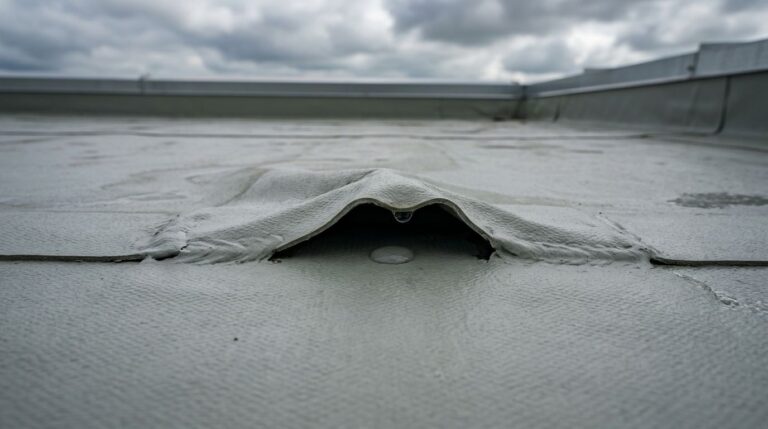
A stain below a drain on a flat commercial roof doesn’t identify the source of roof leaks. Water can travel beneath laps in the roof membrane, through insulation boards, cover boards, and deck flutes before reaching a ceiling tile.
Repair, restoration, or replacement
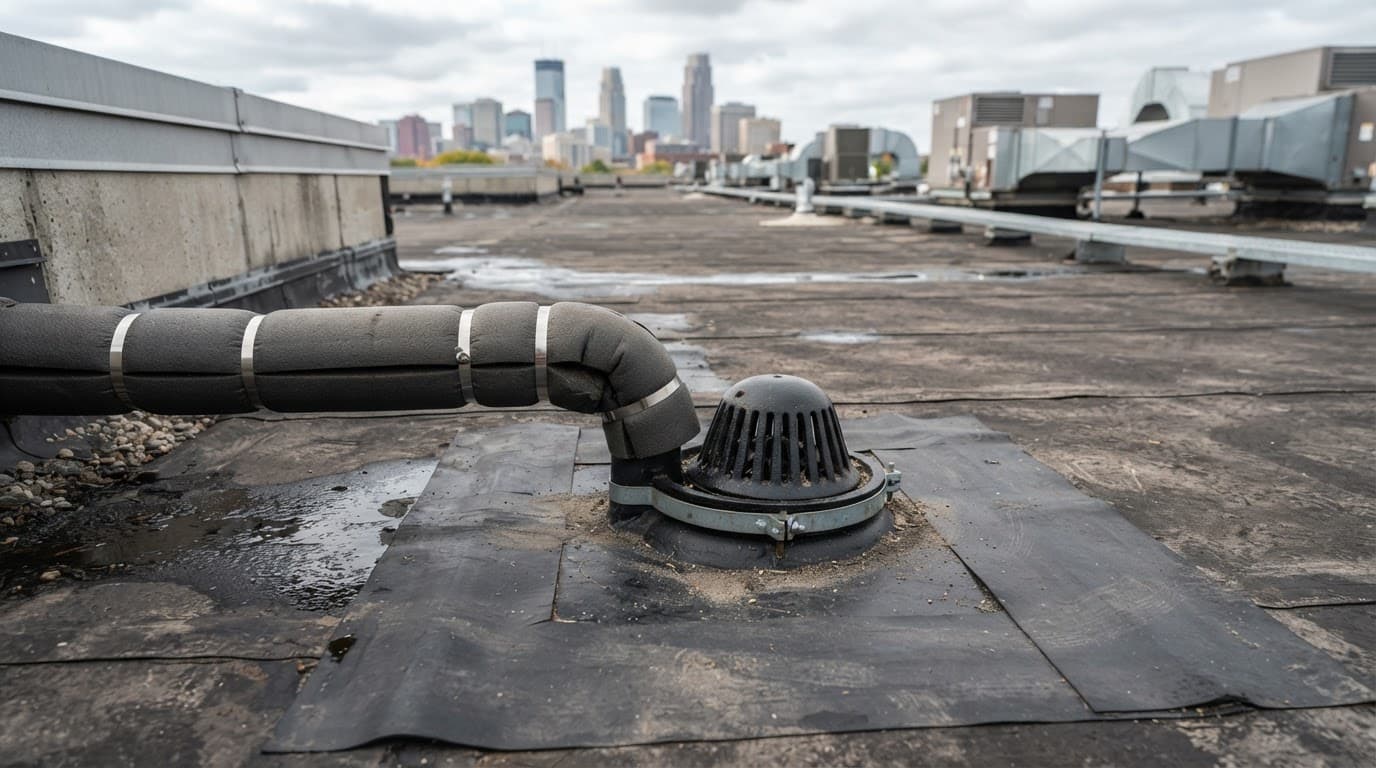
Dry insulation and an isolated flashing failure may support targeted commercial roof repair. Wet insulation or recurring seam separation can point toward commercial roof replacement. Several low areas, ponding water, or inadequate tapered insulation may indicate drainage issues beyond debris.
Commercial roof restoration and commercial roof coatings may extend a sound aging tpo membrane when its condition allows. They don’t repair saturated insulation, an open drain flashing, failed attachment, or deck damage. When the entry point is unclear, commercial roof leak detection services can map the water path before crews close the wrong area.
Build a Pre-Thaw Drain Maintenance Routine
Check drains in fall, winter, and spring
Schedule routine maintenance and a roof inspection in fall and spring. Add a midwinter check after major snowfall, freeze-thaw cycles, or tenant reports of ceiling staining and roof leaks. Clear leaves, roof debris, loose ballast, and material that can cover strainers, edge drains, overflow paths, and downspouts before snow buries them.
Document slope, low spots, tapered insulation, and recurring drainage issues when meltwater stalls to help prevent water damage. Good Minnesota roofing maintenance treats the drain, flashing, membrane, overflow path, and interior evidence as one system. For Saint Paul and the Twin Cities, Sellers Roofing Company can document cleaning, inspection findings, moisture concerns, and repair priorities for each commercial property. That record supports practical roof drainage solutions before spring runoff begins.
Final Takeaway
Keep meltwater moving before it finds another route
Heavy snow doesn’t have to crush a commercial drain to create a costly roof problem. Ice, ponding water, blocked strainers, and stressed flashing can cause damage well before spring arrives.
A secondary overflow, a new ceiling stain, or water standing near a drain is a reason to inspect the roof now. A blocked drain is a roof event, not a condition to watch until the weather warms.
Frequently Asked Questions
Can an internal roof drain freeze even if its piping is inside?
Yes. Internal drains have better-protected piping, but the drain bowl and strainer remain exposed at the roof surface. Snow can cover the drain while meltwater refreezes around it. The pipe may remain open while the roof-level intake is blocked.
How often should roof drains be cleaned?
Clean and inspect them at least twice a year, usually in fall and spring. Add inspections after major storms, nearby construction, wind events, or heavy leaf drop. A midwinter visual check is also warranted after repeated thaw and refreeze periods.
What happens if water ponds around a commercial roof drain?
Ponding adds load, exposes seams to standing water, and can work water beneath flashing or membrane laps. Flow through overflow drains is an alarm, not normal drainage. If the low area remains after the drain is clear, assess the slope and insulation. The problem may be drainage design, not debris alone.
Can maintenance staff remove ice around a scupper?
Only if the area is safely accessible and the crew uses methods approved for the roof system. Chisels, sharp shovels, rock salt, and open flame can damage the membrane or metal. A frozen scupper is often safer for a qualified roofing crew to address.
Why can’t Minneapolis roof drains connect to sanitary sewers?
A sanitary sewer system is intended for wastewater, not snowmelt and roof runoff. Fast thawing can add large volumes of water to the wrong system. Minnesota rules generally direct roof drainage to a separate storm sewer or an approved disposal location, so older connections should be reviewed before repair or replacement work.
For the larger documentation and claim process, read our Minnesota roof storm damage and insurance claims guide.
Need a roof inspection in Saint Paul or the Twin Cities? Call Sellers Roofing Company at +1-651-703-2336 or schedule a free estimate. We are a black-owned, NMSDC-certified MBE roofing contractor with 9+ years experience.