
For building owners, property managers, and associations
Commercial Roof Inspection in St. Paul, MN
Understand your roof’s current condition before approving repairs, planning a replacement, or setting a maintenance budget. Sellers Roofing Company provides commercial roof assessments for Saint Paul and Twin Cities properties, with the inspection scope and next steps discussed before the visit.
Tell us whether you need a leak assessment, maintenance review, replacement estimate, or a separately scoped condition report.
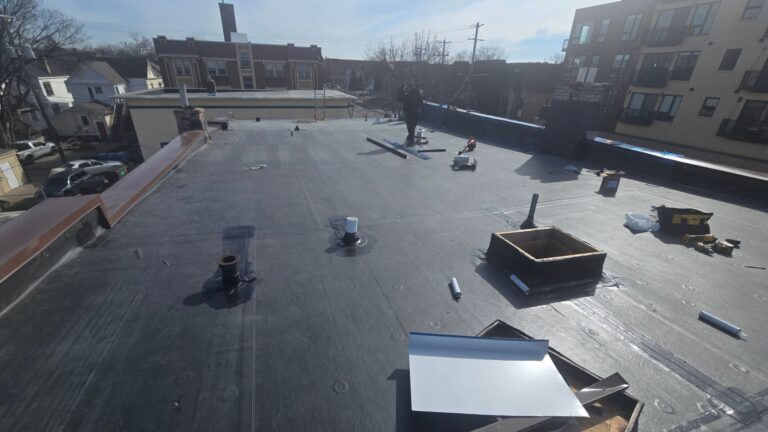
Match the inspection to the decision you need to make
Investigate a roof concern
Use leak history and accessible conditions to identify what needs attention. Repeated problems may need a more focused leak investigation rather than a routine overview.
Plan maintenance
Establish a baseline, record vulnerable details, and identify follow-up work. Connect observations to a maintenance scope instead of treating every observation as an immediate replacement need.
Compare capital options
Request the information needed to compare repairs and replacement planning. Tell us in advance about an HOA decision, purchase review, bid deadline, or special report requirements.
For an existing TPO roof, use our repair, investigation and replacement checklist to prepare questions. When comparing proposed assemblies, read the TPO and EPDM comparison.
What an accessible visual roof inspection can cover
The inspection scope depends on the roof system, access, weather, and the purpose of the visit. Areas covered should be identified, along with anything that could not be inspected.
- Roof surface: visible wear, damage, previous patches, openings, and the condition of accessible seams.
- Flashing and penetrations: transitions at walls, vents, curbs, skylights, and other roof openings.
- Roof edges: accessible edge metal, coping, terminations, and connections.
- Drainage: visible debris, drains, scuppers, gutters, and signs that water is not moving as intended.
- Rooftop activity: access paths and areas around equipment or recent work that warrant closer review.
- Interior information: reported leak locations and accessible observations provided by the building representative.
A visual assessment is not proof that concealed insulation or decking is dry and sound. Hidden conditions require an appropriate investigative method when the decision depends on them.
Agree on investigative work before the roof is opened
Core cuts, moisture surveys, testing, and investigative openings are not automatically included in every visit. Discuss why they may be useful, who will perform them, any cost, and how openings will be restored.
Tests have limits. Results should identify the areas evaluated and be interpreted alongside the roof history and observed conditions. A sample from one location does not establish conditions across an entire roof or precisely date its installation.
Structural engineering, environmental sampling, warranty certification, and code determinations may require separate qualified professionals or the responsible authority. State any such requirement before scheduling.
Questions to settle in advance
- Which buildings and roof areas are included?
- Will the work be visual only?
- What photographs or written deliverables are included?
- What access and weather limitations apply?
- Are testing, repairs, or return visits separately authorized?
- Who needs the findings, and by what date?
A useful condition record separates facts from conclusions
Use the following framework when agreeing on a report. It is a suggested structure, not a completed customer report or a promise that every estimate visit includes these deliverables.
1. Observation
Identify the roof area and photograph reference. Describe what was actually visible, the date, relevant conditions, and any access limitation.
2. Interpretation
Explain why the observation matters. Distinguish a confirmed defect from a suspected issue, and state what a visual inspection cannot determine.
3. Next action
Identify repair, further investigation, maintenance, or monitoring as appropriate. Record the approval needed, follow-up owner, and any proposed scope or allowance.
For example, a photograph of debris near a drain documents debris. It does not by itself establish a damaged membrane, a blocked underground drain, or the cause of an interior leak. Those questions need their own evidence.
Prepare for a commercial roof assessment
Send the property address, building use, contact responsible for access, and the reason for the request. Roof plans, prior estimates, warranty paperwork, installation records, and a dated leak log are useful when available.
For an occupied building, identify roof-hatch access, parking and staging restrictions, tenant entrances, sensitive operations, and any required coordination with maintenance staff. You do not need to send someone onto the roof to collect photographs.
Our property-manager roofing page provides additional planning questions for apartments, associations, and managed commercial properties.
Commercial inspection questions
Is an estimate visit the same as a formal condition report?
No. A visit to prepare a repair estimate and a formal condition report can have different scopes and deliverables. Explain how you will use the information. Confirm the included written findings, photographs, testing, and any fees before the appointment.
How often should the roof be inspected?
Set the schedule around the roof manufacturer’s guidance, warranty requirements, existing condition, drainage, and building activity. Seasonal reviews and checks after significant weather or rooftop work may be appropriate. The maintenance agreement should specify the actual frequency rather than assume one schedule fits every building.
Will an inspection guarantee insurance coverage or a lower premium?
No. A roof assessment can document conditions and proposed work, but it does not determine coverage, claim payment, or premiums. Ask the insurer about policy requirements and keep the inspection record separate from assumptions about the insurance outcome.
What happens if a repair is needed?
Discuss a separate written scope identifying the affected area, materials, repair limits, and approval process. An assessment does not automatically authorize repairs. Our commercial repair service explains the repair-planning process.
Commercial roof inspections across the Twin Cities
Contact Sellers Roofing about Saint Paul, Minneapolis, New Brighton, and the surrounding service area. Confirm the address, scope, and availability when requesting a visit. For a broader system or replacement question, start with commercial roofing services.
Further reading: GAF’s commercial roof inspection and repair-planning guidance.
Know what you need to learn about your roof
Tell us the building location and the decision you are facing. We will discuss the appropriate assessment and next steps.