Last updated: 2026-08-01 by Ted Sellers, Owner
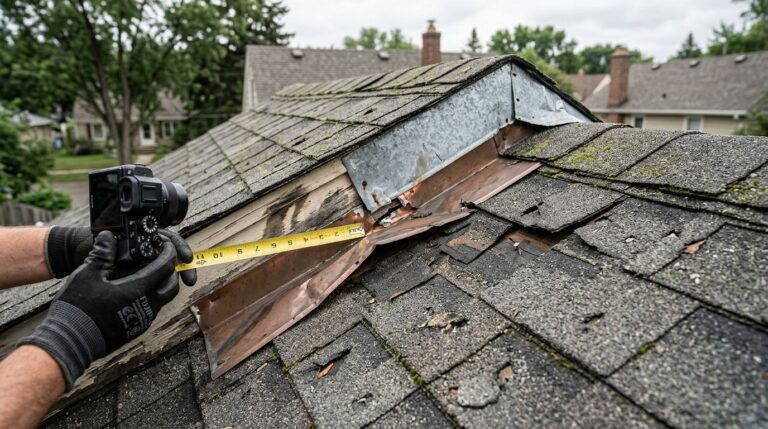
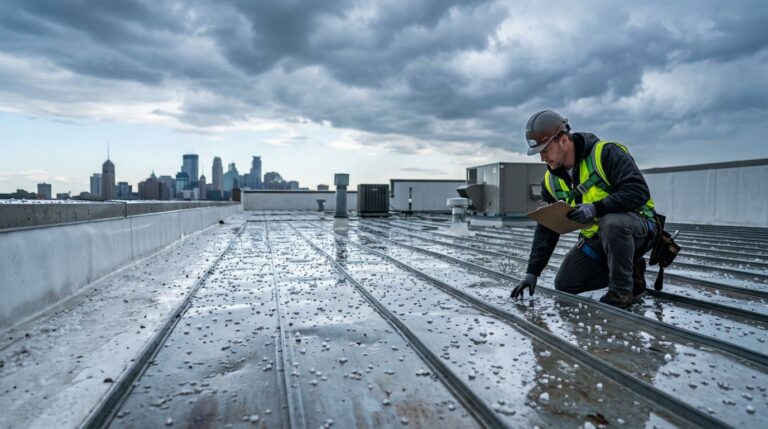
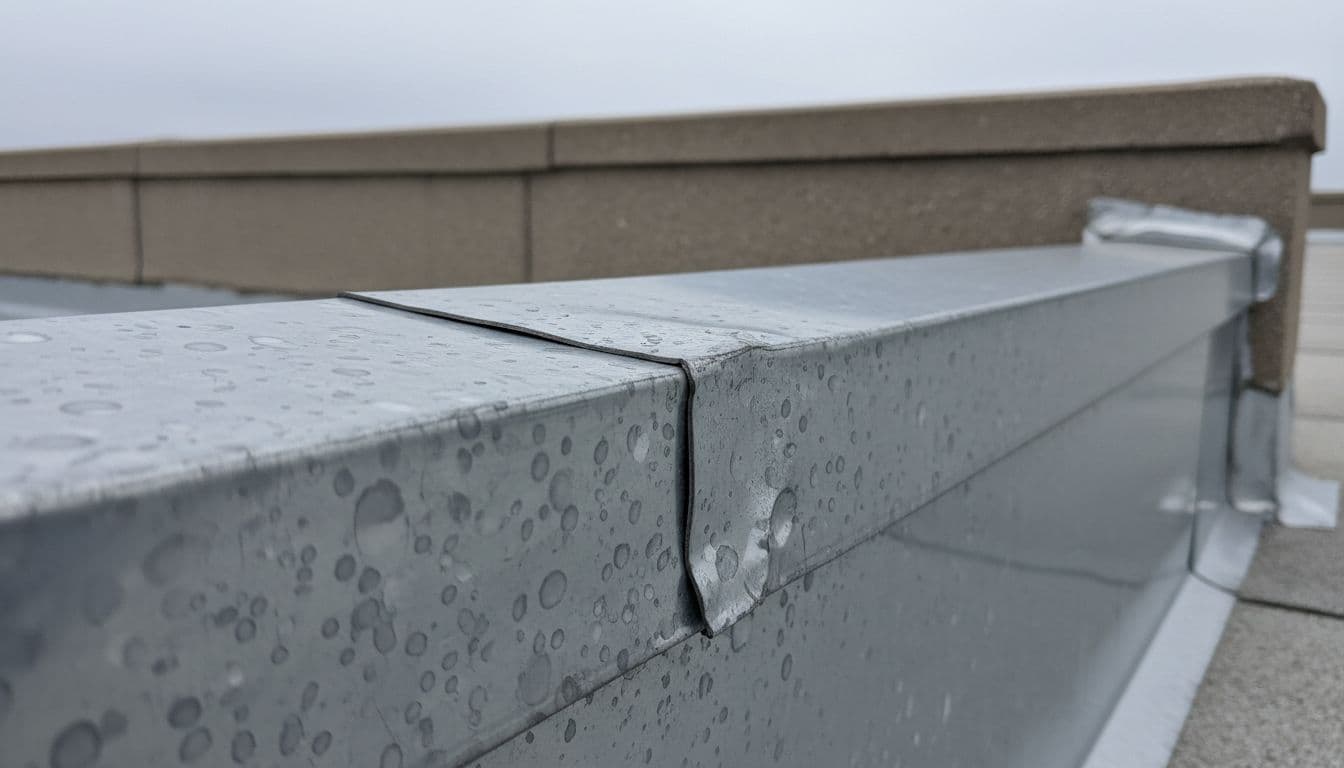
Hail damage on flat roof edge metal usually looks like clustered dents, sharp dings, chipped coating, bent corners, and opened joints. On severe hits, coping caps and gravel stops may shift out of line or pull at seams. If the metal moved, cracked, or lost sealant, the damage is more than cosmetic.
What Flat Roof Edge Metal Hail Damage Looks Like
The marks that matter most
On flat roofs, hail often shows up first on coping caps, gravel stops, drip edges, and fascia. The surface may look pebbled, with many small round dents grouped across one side of the building. Fresh impacts can also leave light scuffs where paint or coating broke.
Larger hailstones leave deeper dings and short creases. Corners may flatten slightly, and exposed edges can lose their straight, crisp profile. If you run your eye along the metal and it looks wavy, that matters more than one isolated dent.
Damage that points to a larger roof problem
Not every dent means failure. What matters is whether the impact changed how the edge metal sheds water or holds the roof edge together. When a coping cap lifts, a lap joint spreads, or a fastener loosens, water can slip behind the metal and reach the wall or roof termination.
Older roofs are more at risk because sealants harden over time. A hail hit that would only dent newer metal may crack brittle sealant on an aging edge. If you also see stains near the perimeter or suspect hidden moisture, a closer check for commercial roof leak detection can confirm whether the storm damage opened a leak path.
When This Applies
Buildings and roof edges where this check makes sense
This applies to commercial buildings with low-slope roofs and exposed perimeter metal. Warehouses, office buildings, retail centers, schools, and multifamily properties often have edge details that show impact clearly after a storm.
It doesn’t apply the same way on every roof. Some perimeter metal is covered by wall panels or trim, so you can’t judge the storm from ground level. In other cases, old service damage, ladder contact, or wind-thrown debris can look similar to hail at first glance.
Key exceptions and look-alikes
Soft aluminum usually dents more easily than heavier steel, so nearby buildings may show different results from the same storm. Hail also tends to favor the storm-facing sides, while foot traffic damage often appears near hatches, access points, and corners.
If the edge metal is badly rusted, fresh impacts may be hard to separate from long-term wear. Also, if the membrane edge is hidden, this check won’t tell you everything. The commercial roof needs repair only when the inspection shows functional change, not dents alone.
Step-by-Step
How to inspect flat roof edge metal after a hailstorm
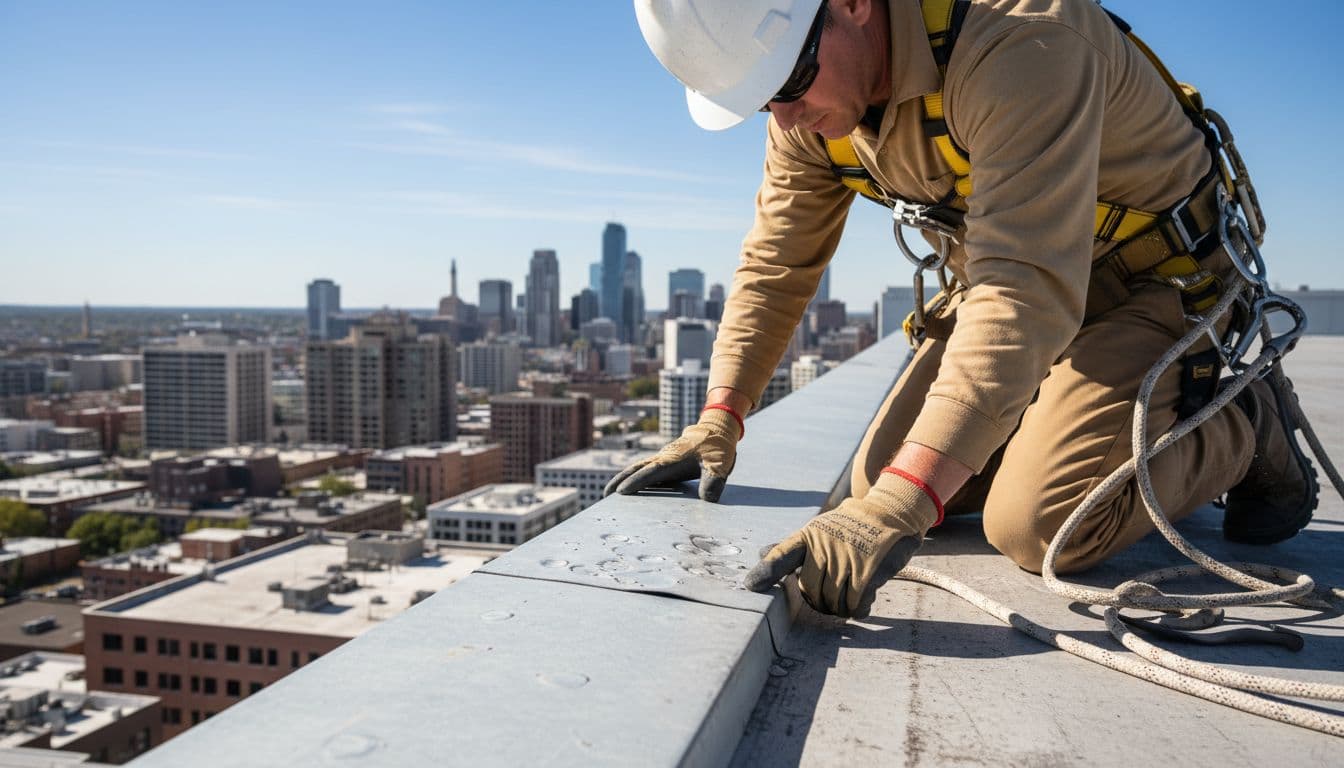
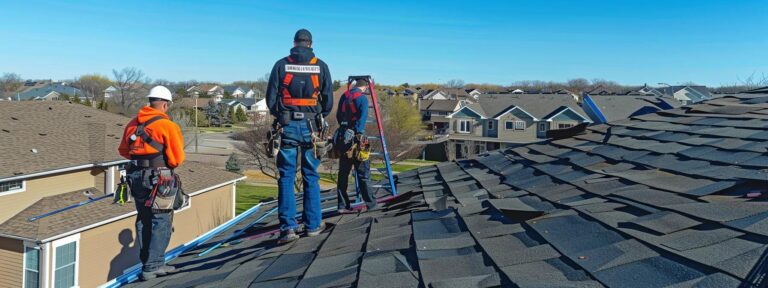
- Start from the ground and scan all visible perimeter metal. Look for dent clusters, bent corners, loose fascia, and displaced downspouts before anyone disturbs the site.
- Check the storm-facing elevations first. Hail rarely hits every side the same way, so the most exposed wall often shows the clearest edge metal hail damage.
- Move in close and inspect joints, laps, and fasteners. Small dimples may be cosmetic, but split seams, broken coating, torn sealant, and shifted coping are signs of functional damage.
- Document what you find with photos and a size reference, such as a ruler or coin. Then compare exposed areas with protected spots under overhangs or recessed entries, because the pattern helps separate hail from random impacts.
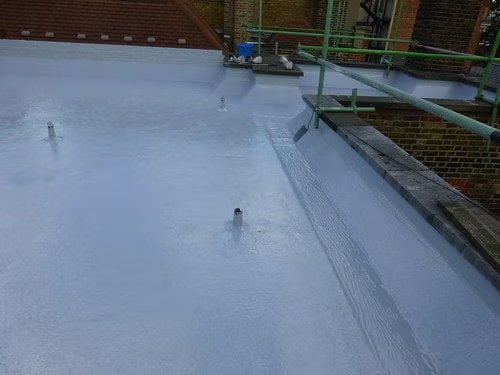
- Match the fix to the scope of damage. Localized dents with tight seams often point to monitoring or targeted commercial flat roof repair. If joints opened, the membrane termination shifted, or water reached the interior, the commercial roof needs repair right away. When the damage runs across the roof edge and field conditions look poor, ask a contractor experienced in expert commercial roof replacement whether isolated repairs will last.
Conclusion
What to remember after a storm
Hail damage on flat roof edge metal is easy to miss when you’re only looking for huge dents. In many cases, the bigger warning signs are chipped finish, bent profiles, open joints, and broken sealant.
If the edge still sits straight and tight, the damage may be cosmetic. Once the metal shifts or separates, the roof edge can become a leak path and a weak point for future storms.
FAQ
Can hail dent edge metal without damaging the roof membrane?
Yes. Edge metal often shows impact before the membrane does because it is thinner and more exposed. Even so, visible dents should trigger a closer look at nearby terminations and flashings.
Does dented coping always mean the roof will leak?
No. Many dents stay cosmetic for years. Trouble starts when the coping lifts, a splice opens, or the sealant line breaks.
How can I tell hail marks from foot traffic or tool drops?
Pattern matters more than one dent
Hail leaves repeated marks across exposed faces and usually hits the storm side harder. Foot traffic and dropped tools create random damage near ladders, hatches, and service routes.
Will insurance cover hail damage on flat roof edge metal?
Sometimes, but the claim usually gets stronger when the damage affects function or service life. Clear photos, storm dates, and prompt inspection notes help support the file.
Should one damaged edge be repaired, or should all perimeter metal be replaced?
That depends on continuity and age. If one section can match the existing profile and attachment, a repair may work. If the metal is discontinued, heavily weathered, or tied into failing roof edges, wider replacement may be the better call.
Need a roof inspection in Saint Paul or the Twin Cities? Call Sellers Roofing Company at +1-651-703-2336 or schedule a free estimate. We are a black-owned, NMSDC-certified MBE roofing contractor with 9+ years experience.