Last updated: 2026-08-01 by Ted Sellers, Owner
Yes. Loose fasteners can leak even when every metal panel is still in place. When a screw backs out or its washer fails, it leaves a small path for water. Wind-driven rain, snowmelt, and freeze-thaw cycles can push moisture through that opening, so a commercial roof may leak long before any panel goes missing.
When This Applies
Where loose fasteners cause leaks most often
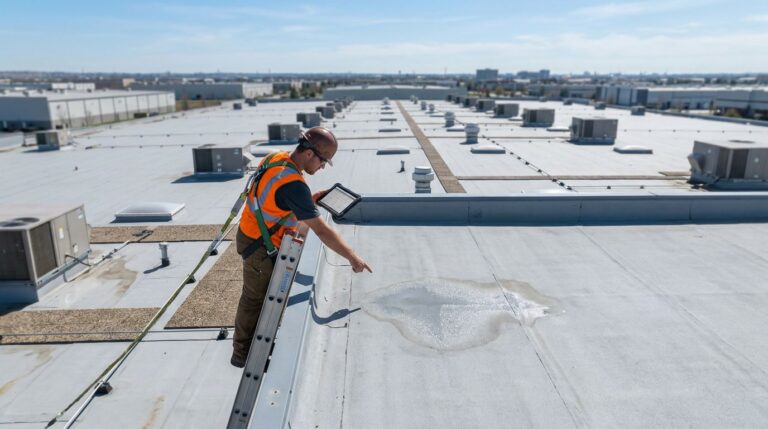
This applies most to exposed-fastener metal roofs on warehouses, retail buildings, shops, and light industrial properties. As the roof ages, metal expands and contracts with weather swings. Because of that movement, screws can loosen, washers can crack, and the hole around the fastener can widen enough to admit water.
Roofs most at risk
Older roofs in cold climates face the highest risk. Leaks often begin near laps, ridge caps, eaves, curbs, and other areas that move more than the open field of the roof.
When another defect is more likely
Loose screws are common, but they are not the only cause. Concealed-fastener standing seam roofs usually leak at seams, clips, penetrations, or flashing before the panel field fails. In addition, water can travel downhill or sideways along framing, so the ceiling stain may not sit under the entry point.
Mixed roof sections
Many business buildings have more than one roof type. Some leaks that look like screw failure turn out to need commercial roof leak detection services on flashing, drains, or wall transitions, or a separate area that needs commercial flat roof repair.
Step-by-Step
1. Match the leak to weather and location
Start with timing. A fastener leak often shows up during wind-driven rain, after snow starts to thaw, or on the first warm day after a freeze. Mark the interior stain, then compare that area with the roof layout above it. Fastener rows, overlaps, and penetrations give you the best clues.
2. Inspect screws, washers, and metal around them
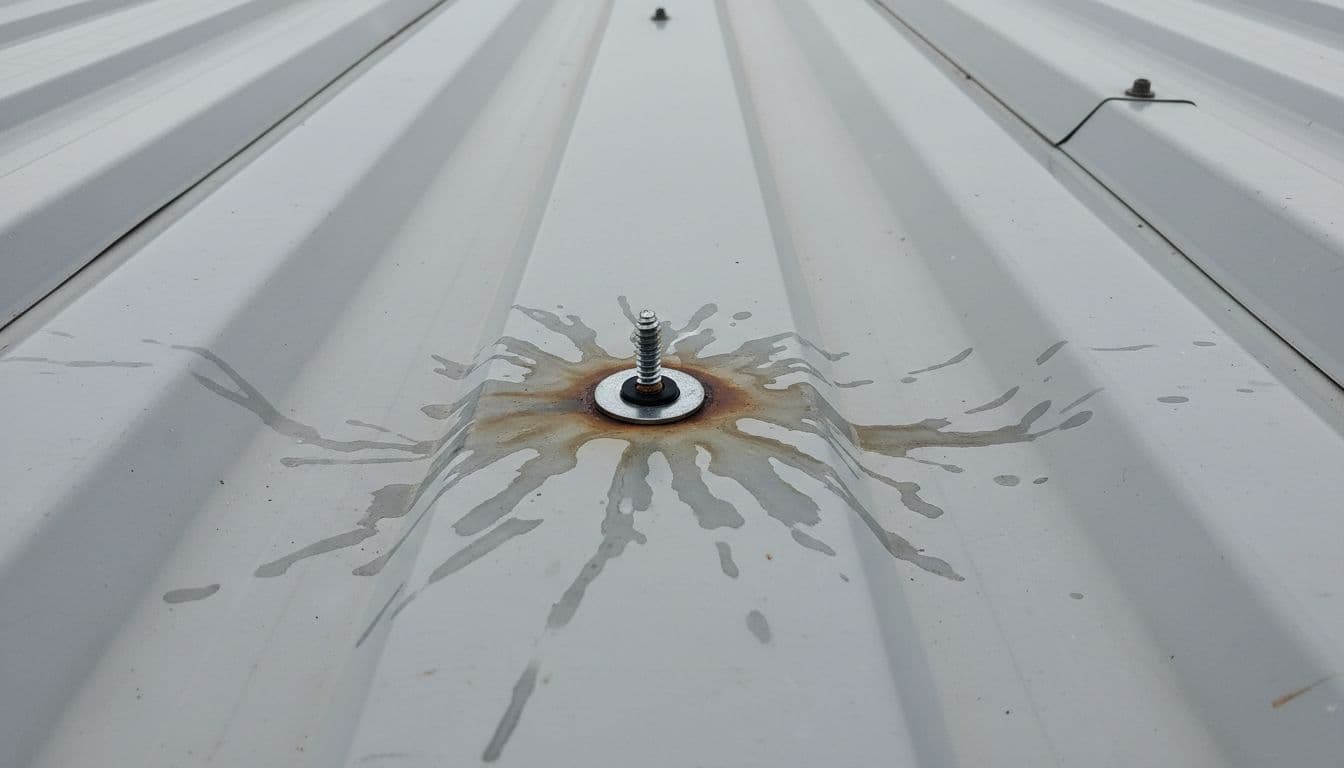
Look for backed-out screws, tilted fasteners, split neoprene washers, rust rings, and enlarged holes. Those signs matter because a screw can stay in place visually and still stop sealing. A row of slightly loose screws can let in more water than one missing fastener.
A screw can stay in the panel and still leak.
Avoid quick caulk fixes
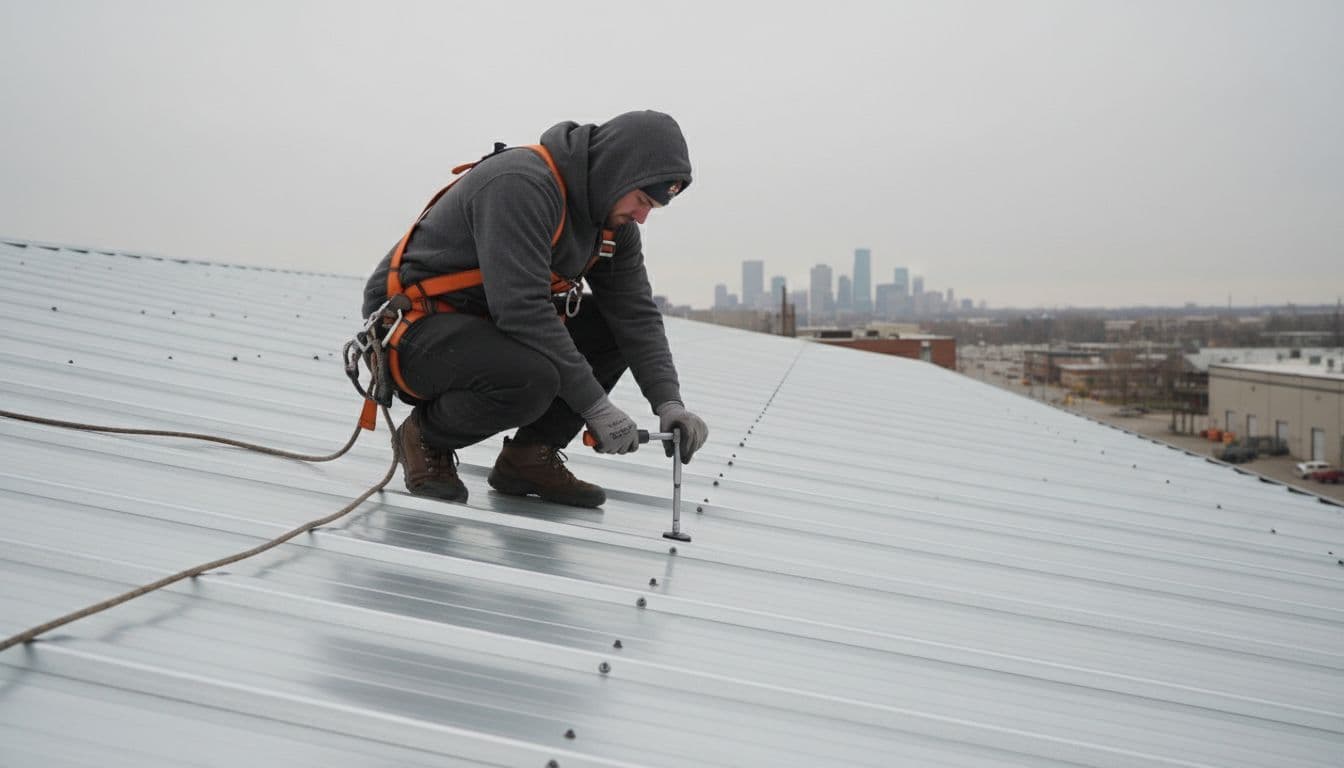
Caulk over a bad screw rarely lasts. If the screw is stripped, loose, or set in a widened hole, the better fix is to replace the fastener and correct the hole size.
3. Check seams, flashing, and movement points
Fasteners often fail alongside nearby details. Inspect pipe boots, curb flashing, edge metal, skylights, and horizontal laps. If those areas have opened up, water may enter there and show up at a screw line below. That is why a good inspection looks at the whole assembly, not one hardware point.
4. Decide on repair scope before damage spreads
If only a few screws are loose and the panels remain sound, targeted repair usually works. That may include replacing the fasteners, installing new washers, and fixing nearby flashing. If leaks keep returning, corrosion is spreading, or many fasteners have lost grip, compare repair costs with Saint Paul commercial roof replacements before the damage widens. At that stage, a commercial roof replacement may cost less than repeat service calls and interior repairs.
When replacement is the smarter spend
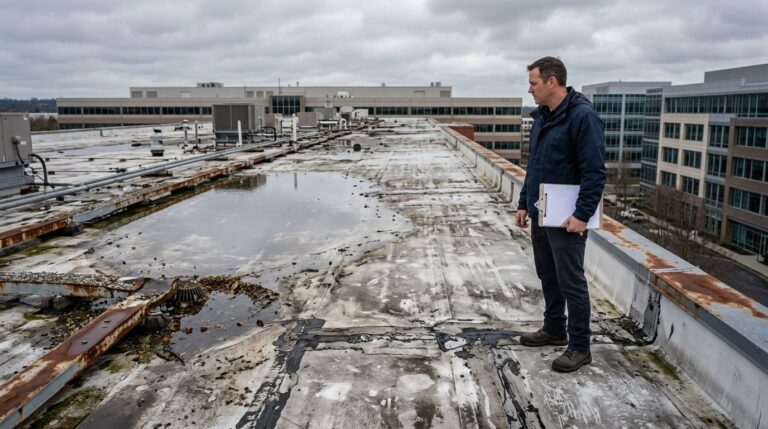
Once wet insulation, broad rust, or panel movement appears across large sections, the problem is bigger than a few screws. Your commercial roof needs repair at a system level, and spot fixes will only buy limited time.
Final Thoughts
Loose screws on a metal roof are small parts, but they can create expensive leaks without any missing panels. For business owners, early inspection matters more than the size of the stain.
If the leak follows weather shifts, keeps coming back, or appears near fastener lines, do not treat it as a minor nuisance. A backed-out screw, failed washer, or related flashing defect often means the roof needs prompt, well-scoped repair.
FAQ
Can one loose fastener damage insulation or interior finishes?
Yes. Even a small opening can soak insulation over time. Water may also travel along deck ribs or framing, so by the time a ceiling stain appears, moisture may have spread farther than expected.
Should in-house maintenance staff re-tighten roof screws?
Only if they know the roof system and torque limits. Over-tightening can crush the washer or strip the hole, which creates a new leak path instead of fixing the old one.
Will roof cement or sealant stop a fastener leak through winter?
It may slow the leak for a short time, but it rarely solves movement or washer failure. Cold weather also makes many surface fixes less reliable, so the leak often returns.
What if the leak only appears during snowmelt?
That still fits a fastener-related leak pattern. Melting snow can feed water into tiny openings for hours, especially where ice held moisture against the washer or screw shank.
Why snowmelt leaks can be misleading
Snowmelt leaks often look random because water travels before it drips inside. The visible stain may be several feet away from the actual failed fastener.
When does this stop being a repair issue and become replacement?
Repeated leaks in the same zones, many loose fasteners, broad corrosion, or wet insulation usually shift the math. At that point, short-term fixes stack up fast, and owners start comparing them with full replacement costs.
Need a roof inspection in Saint Paul or the Twin Cities? Call Sellers Roofing Company at +1-651-703-2336 or schedule a free estimate. We are a black-owned, NMSDC-certified MBE roofing contractor with 9+ years experience.