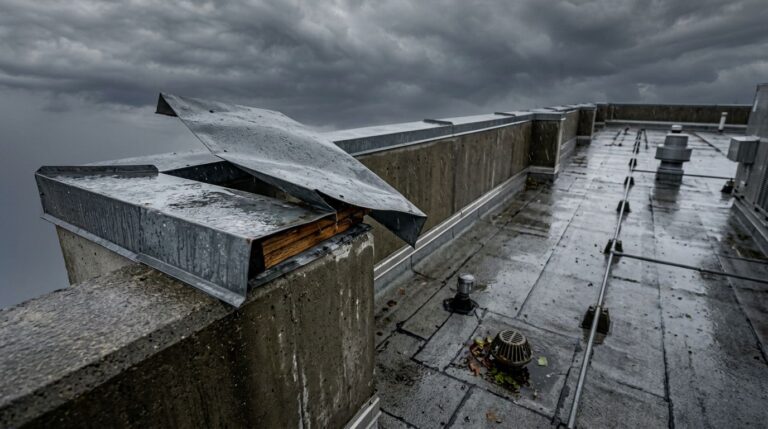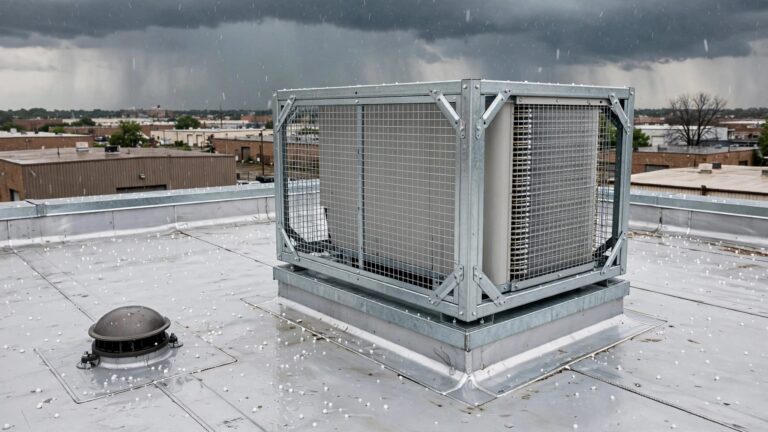
Last updated: 2026-10-22 by Ted Sellers, Owner
Usually, yes. Minnesota commercial insurance can cover hail-damaged rooftop HVAC units when hail is a covered cause and the equipment is insured property. Payment depends on documented physical damage, exclusions, valuation terms, coverage limits, and the deductible. Coverage doesn’t automatically mean the insurer owes for a complete replacement.
Flattened condenser fins and dented cabinets require different evaluations. Start by separating equipment damage, roof damage, and maintenance problems.
Table of Contents
- When This Applies
- What HVAC Damage Supports a Hail Claim?
- What Affects Commercial Insurance Coverage for Hail Damage?
- Step-by-Step
- Should You Repair or Replace the Equipment and Roof?
- What Changes for Minnesota Properties?
- Frequently Asked Questions
- Conclusion: Separate Coverage From Repair Scope
When This Applies
Which buildings and policies qualify?
This applies to warehouses, offices, retail buildings, and mixed-use properties with insured rooftop heating and cooling equipment.
The relevant coverage is commercial property insurance, either standalone or within a businessowners policy. General liability insurance generally doesn’t cover damage to your own equipment.
Minnesota Department of Commerce guidance identifies windstorm and hail among the covered perils under basic-form business property insurance. Your policy must still cover the damaged unit and the reported loss.
Permanently installed equipment may fall under building coverage. Tenant-owned equipment may require coverage under business personal property or improvements and betterments.
When does coverage become uncertain?
Wear, corrosion, old coil damage, and deferred maintenance aren’t automatically covered because a storm occurred afterward. The inspection must distinguish new impact damage from existing deterioration.
Ownership also matters. A tenant’s obligation to maintain an HVAC unit doesn’t establish which policy insures it.
If the equipment is leased
Review the equipment agreement, building lease, and applicable policies together. Notify the owner and insurer promptly. Don’t assume a landlord’s building policy covers every tenant-installed component.
What HVAC Damage Supports a Hail Claim?
What requires mechanical testing?
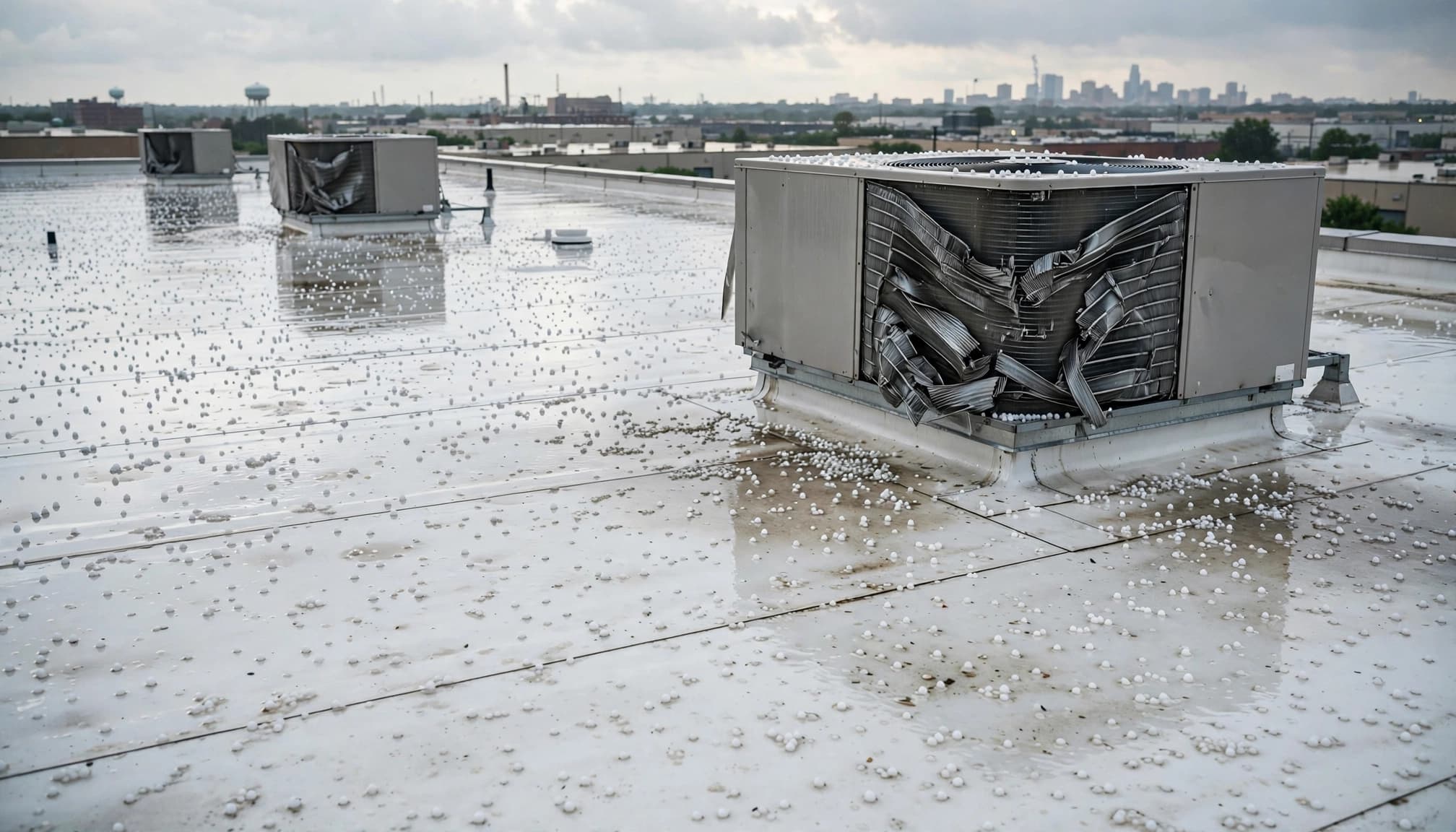
Hail can flatten condenser fins, damage coil tubing, dent cabinets, and strike exposed components. Crushed fins may restrict airflow. Damaged tubing may leak refrigerant.
A qualified HVAC contractor should record the unit’s model, serial number, age, and maintenance history. Testing should establish whether the impacts affect operation.
Useful findings include measured airflow restrictions, refrigerant leakage, electrical damage, and manufacturer-supported repair recommendations. A photograph of flattened fins alone doesn’t establish whether coil replacement is necessary.
Are dents considered cosmetic damage?
A cabinet dent may leave operation unchanged. Damage to coil tubing can require repair even when the cabinet looks acceptable.
Whether either condition is covered depends on the policy. Some endorsements exclude cosmetic damage to particular property or surfaces. Check whether the wording applies to roofing, equipment, or both.
Dents on rooftop equipment establish evidence of impact. They don’t prove that the roof membrane failed or that the entire HVAC unit requires replacement.
There isn’t one universal dent size or fin-damage percentage that determines every commercial claim.
What Affects Commercial Insurance Coverage for Hail Damage?
Which exclusions and deductibles matter?
Review the declarations, property coverage form, causes-of-loss form, and endorsements. The declarations alone rarely contain every restriction.
A wind/hail deductible may differ from the standard property deductible. Percentage deductibles require careful reading because the percentage may apply to an insured value rather than the repair bill.
Cosmetic exclusions, equipment limitations, and roof-specific settlement provisions can affect different parts of the same loss. A roof limitation doesn’t necessarily apply to HVAC equipment.
Also check coverage limits and any coinsurance provision. Underinsurance can reduce payment even when the cause of loss is covered.
Does insurance pay replacement cost or depreciated value?
Actual cash value (ACV) generally accounts for depreciation. Replacement-cost coverage generally doesn’t deduct depreciation from the final covered valuation, subject to policy conditions.
Minnesota commercial property coverage terms can differ substantially. Confirm the valuation provision for the equipment rather than assuming it matches the roof.
Replacement-cost policies may initially pay a depreciated amount, with additional payment after qualifying repairs or replacement. Review completion requirements and deadlines before authorizing work.
Equipment age can affect valuation and repair feasibility. It doesn’t establish that all damage is preexisting or that replacement is automatically owed.
Step-by-Step
How do you secure and report the damage?
- Restrict roof access until conditions are safe. Have qualified personnel evaluate electrical hazards, unstable panels, and equipment faults. Protect occupants and inventory from active water entry.
- Photograph damage before temporary work when practical. Record the storm date, discovery date, equipment identification, and affected roof locations. Preserve earlier service records and inspection photographs.
- Notify the insurer promptly. Ask for claim instructions, applicable notice requirements, and any proof-of-loss deadline. Request written confirmation rather than assuming every Minnesota commercial policy uses the same deadline.
How do you document and resolve the claim?
- Arrange separate roofing and HVAC evaluations. The roofer documents membrane, flashing, curb, and moisture conditions. The HVAC contractor documents mechanical impairment and repair options. Keep temporary repair receipts.
- Prepare for the adjuster’s inspection with commercial hail claim documentation. Identify each damaged unit and roof area. Request itemized estimates that separate equipment, roof work, access costs, and interior damage.
- Compare the insurer’s scope with both inspection reports. Request written explanations for omitted work or denied coverage. Preserve damaged components when safe and practical, and allow inspection before disposal. If disagreements remain, obtain qualified claim or legal assistance appropriate to the dispute.
Should You Repair or Replace the Equipment and Roof?
Can the HVAC unit be repaired independently?
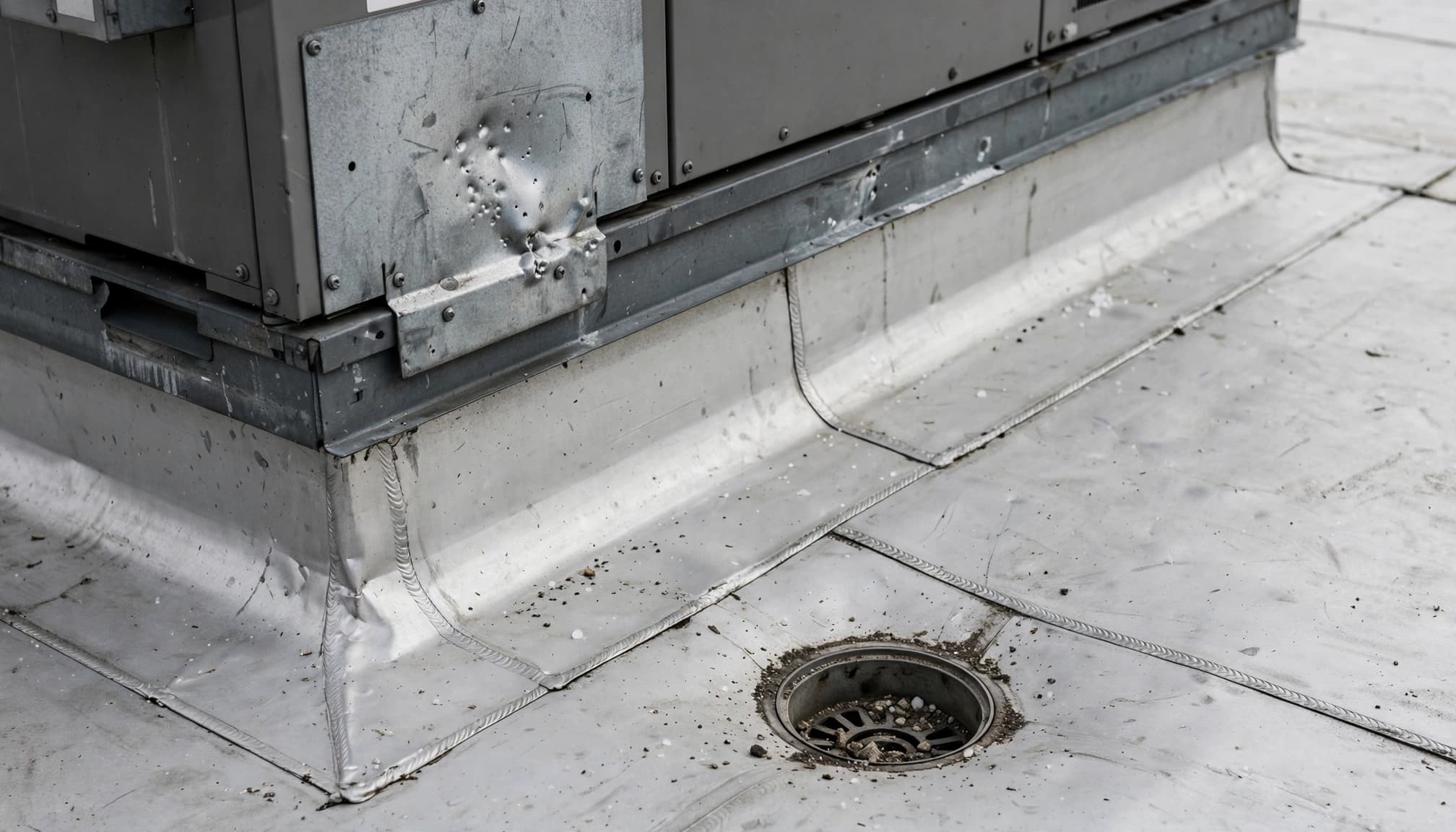
Fin straightening, panel replacement, or coil replacement may resolve localized damage. Full replacement requires a supported explanation, such as unavailable compatible parts or damage that can’t be repaired reliably.
The estimate should address lifting equipment, electrical disconnection, reconnection, startup testing, and access where required. If replacement affects the roof curb, coordinate both trades before work begins.
When replacement changes the installation
Confirm permit requirements, equipment compatibility, and applicable code requirements. Ordinance-or-law coverage may address some required upgrades, but it doesn’t automatically fund an elective efficiency upgrade.
How should the surrounding roof be evaluated?
A commercial flat roof needs its own damage assessment. TPO roofing, EPDM, modified bitumen, and built-up roofing (BUR) require system-specific inspection methods.
Check membranes, seams, flashing, drains, and insulation. Metal roofing requires evaluation of panels, laps, fasteners, and weatherproofing details.
Localized damage with dry insulation may support commercial roof repair. Widespread damage or substantial wet insulation may support commercial roof replacement.
If water appears near a unit, locating leaks around rooftop HVAC equipment helps distinguish curb leakage from another entry point.
Commercial roof restoration requires a suitable substrate. Commercial roof coatings shouldn’t conceal punctures, failed flashing, open seams, or wet insulation.
What Changes for Minnesota Properties?
Why should inspection happen before winter?
Minnesota’s business insurance risks include hail and freezing weather. Freeze-thaw cycles and snow accumulation can complicate inspection of an already damaged roof.
Document storm damage before snow obscures the membrane or equipment. Keep hail damage separate from later snow-load damage, drainage failures, or ice-related leaks.
Ice dam removal may address a winter drainage problem, but it doesn’t repair hail-damaged coils or roof punctures. Each condition needs its own diagnosis.
Avoid using fresh snow, roof stains, or equipment dents as substitutes for a documented cause-of-loss assessment.
Who should coordinate the roofing work?
Saint Paul and Minneapolis roofing projects require coordination between the roofer, HVAC contractor, property manager, and insurer. Each party should define its scope before equipment is lifted or flashing is disturbed.
Sellers Roofing Company serves Twin Cities roofing clients from 801 Transfer Road, Saint Paul, MN 55114. Its credentials include GAF certification and MN Builder Contractor License 803862.
Its union-built roofing crews include IUPAT Local 96 roofers. Roofing credentials don’t replace mechanical testing or determine insurance coverage.
For active roof leaks, Call 651-703-2336 for 24/7 Emergency Roofing.
Frequently Asked Questions
Can I file a claim if the HVAC unit still runs?
Yes. Continued operation doesn’t rule out damage. A unit may run with restricted airflow or a damaged coil. Obtain testing that explains the observed condition. Coverage still depends on insured physical damage, policy terms, and the deductible.
What if the insurer calls all the damage preexisting?
Request the basis for that finding in writing. Compare it with dated maintenance reports, earlier photographs, and the contractor’s findings. Identify which components show recent impacts and which show deterioration. Ask the inspector to explain that distinction without overstating certainty.
Does equipment breakdown insurance cover hail damage?
Equipment breakdown coverage commonly addresses specified mechanical or electrical breakdowns. Hail is an external weather event and is generally evaluated under property coverage. Review both forms if multiple causes are involved; adding equipment breakdown coverage doesn’t guarantee a hail payment.
Will insurance pay for lost business while cooling is unavailable?
Possibly, under applicable business income or extra expense coverage. The policy may require covered property damage and a qualifying interruption. Waiting periods, limits, and restoration-period rules can apply. Save operating records and temporary cooling invoices, and request a written coverage explanation.
Can I install hail guards after the claim?
Yes, if the guards are compatible with the equipment and preserve required airflow and service access. Ask the manufacturer or HVAC contractor to confirm suitability. Preventive guards are a separate decision; don’t assume the claim pays for them.
Conclusion: Separate Coverage From Repair Scope
Minnesota commercial insurance often covers hail-damaged rooftop HVAC equipment, but payment depends on the insured property and policy terms. The strongest evaluation separates mechanical damage, roof damage, and preexisting conditions.
Arrange a documented commercial roof hail damage inspection alongside an HVAC assessment. Use those findings to establish the repair scope before deciding that either system needs replacement.
Need a roof inspection in Saint Paul or the Twin Cities? Call Sellers Roofing Company at +1-651-703-2336 or schedule a free estimate. We are a black-owned, NMSDC-certified MBE roofing contractor with 9+ years experience.