Last updated: 2026-08-01 by Ted Sellers, Owner
Prepare for a visit from your insurance adjuster by capturing documented damage (both roof and interior), gathering roof records, and making safe access easy. Don’t “clean up” in ways that hide impacts, but do stop active leaks. Have one point person, a clear damage summary, and a qualified roofer available to explain their findings for the roof insurance claim so your hail damage roof insurance claim reflects what’s really on the roof.
When This Applies
If you own or manage a commercial building with suspected hail damage
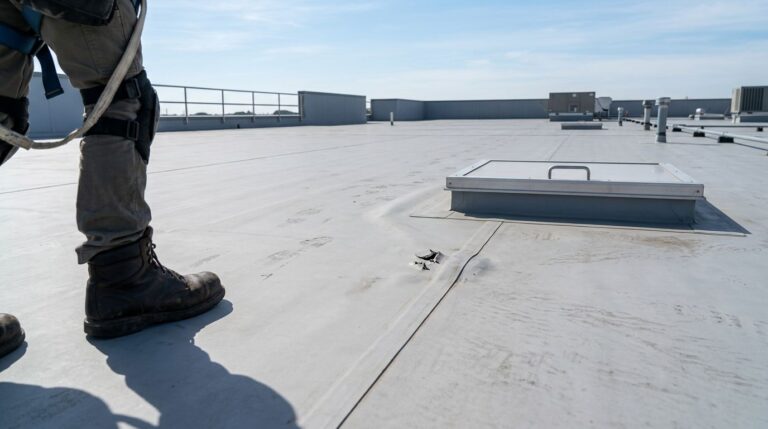
While this guide focuses on commercial properties, the core principles of a hail damage claim are similar to those found in a standard homeowners insurance policy. This applies when you’ve had a hail event and an adjuster is scheduled to inspect your roof, rooftop units, and any interior leaks. It’s especially important on low-slope systems, where hail can bruise insulation or split seams without obvious interior stains for weeks.
If you’re in the Twin Cities and want a contractor who’s used to working alongside adjusters, it helps to line up a qualified roofing contractor early. Many owners start with a professional inspection and documentation through Saint Paul commercial roofing help for storm claims, then bring that information to the adjuster meeting.
When this does not apply (or needs a different first move)
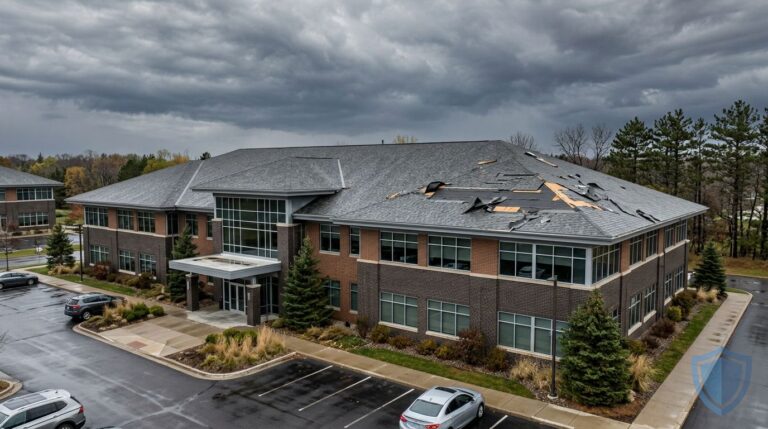
If after a wind and hail event the storm created an active safety issue (live electrical hazards, structural concerns, ceiling collapse, or severe ponding), shift to emergency mitigation first. Your priority is protecting people, tenants, and inventory, including mitigating water damage before the insurance company performs their walkthrough.
Also, if access is unsafe (icy surfaces, damaged roof hatch, unstable ladders), don’t send staff onto the roof “just to look.” Document from the ground and wait for qualified help. For general guidance on claim handling and documentation expectations in Minnesota, review Minnesota insurance claim guidance and adapt it to your commercial policy terms.
A good adjuster visit isn’t a debate. It’s a site walkthrough backed by clear notes, photos, and safe access.
Step-by-Step
Set up the paperwork the adjuster will ask for as part of the claim process
What to collect before anyone steps on the roof
- Confirm the loss date and claim details with your insurance company. Write down the storm date, claim number, adjuster’s name, and scheduled time window. Keep it all in one folder so nothing gets lost mid-visit.
- Pull roof history records. Gather prior repair invoices, warranty documents, roof plans (if you have them), and maintenance logs. These show pre-storm condition, help separate old wear from hail impacts, establish actual cash value versus replacement cost coverage, and clarify how the deductible might apply.
- Build a simple photo timeline. Use your phone and label photos by area (north elevation, dock canopy, mechanical zone). Include wide shots and close-ups, plus interior stains, wet tiles, and damaged stock.
Make the roof and building easy, safe, and honest to inspect
Access and safety for commercial roofs
- Provide safe roof access and escorts. Make sure roof hatches are unlocked, ladder points are clear, and keys or access cards are ready. Assign one escort who can answer questions and keep the visit moving.
- Don’t “repair away” the evidence. Avoid coating, patching, or power washing right before inspection. If you must make temporary repairs like tarping or sealing a leak, photograph the damaged spot first and save material receipts.
- Mark problem areas without altering them. Use simple, removable markers (like a note on a vent curb or a cone near a drain) to point out where leaks showed up. Let the adjuster see the surface as-is.
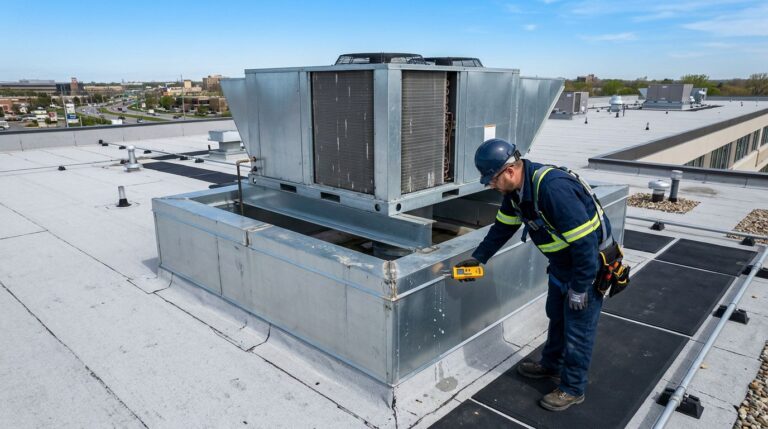
- Check rooftop equipment and metal. Hail often leaves dents in HVAC fins, metal copings, and wall caps. Photograph those signs of hail damage because it supports storm intensity, even when membrane damage looks subtle.
Get a professional roof assessment ready (without turning it into a sales pitch)
Where hidden damage commonly sits on flat roofs
- Request a moisture and leak evaluation if signs point that way. On many buildings, the first clue is a ceiling stain far from the entry point. If you suspect concealed wet insulation, schedule commercial roof leak detection after hail so you can discuss findings with real data, not guesswork.
- Separate short-term repairs from long-term scope. Be ready to explain what you need right now (stop water) versus what restores the system. That difference affects whether the path is commercial flat roof repair or full roof replacement.
Run the adjuster meeting like a structured walkthrough
How to describe damage clearly and avoid common mistakes
- Use a one-page damage summary when you file a claim. List the roof type (TPO, EPDM, metal, BUR), the areas you suspect were hit hardest with roof damage, and interior impact points. Include a sentence such as: “Several areas suggest the commercial roof needs repair due to roof damage from hail impacts and resulting water intrusion.”
- Ask what the adjuster needs to see to write the scope. Some adjusters focus on test squares, seams, and flashings. Others spend time on penetrations and drains. Keep the conversation factual and tied to visible conditions.
- Take your own notes during the inspection. Write down what areas the adjuster photographs, what they call “wear” versus “damage,” and any items they say they’ll “review later.” Those notes help if the report comes back thin.
Follow up fast after the visit
What to do if the scope seems incomplete
- Request clarification in writing and attach your documentation. If the report doesn’t match what you saw on repair or replacement, respond promptly with labeled photos and contractor findings. If the roof system is too compromised for spot work, document why commercial roof replacement may be the correct remedy (for example, widespread seam failures, saturated insulation, or repeated leaks after temporary repairs).
For a straightforward overview of the claim process steps and what typically happens after inspection, compare notes with storm damage claim steps, then follow your policy and carrier instructions.
FAQ
Should my roofer be present when the insurance adjuster visits?
Yes, if they can stay professional and documentation-focused. A roofing contractor can point out hail hits on seams, flashings, and membranes, and explain why certain repairs won’t hold. That helps prevent missed roof damage while the insurance adjuster is already on the roof. Alternatively, consider a public adjuster as a professional advocate.
What if I already had maintenance issues before the hailstorm?
Bring the records anyway. Prior issues don’t erase new storm damage, but they can affect scope. Note that dwelling coverage and coverage limits on a homeowners insurance policy function differently than commercial forms, but still require documentation. Clear documentation helps separate pre-existing wear from hail impacts, especially around drains, penetrations, and older patches.
If the adjuster says “wear and tear”
Ask them to show exactly which conditions support that conclusion, then compare it to dated photos and invoices.
Can I do temporary repairs before the inspection?
You can, and sometimes you must, especially with active leaks. First, photograph the damage and the water path inside. Next, keep receipts and note who did the work. Temporary measures should stop water, not hide impact marks or change the roof surface.
What signs of hail matter most on commercial roofs?
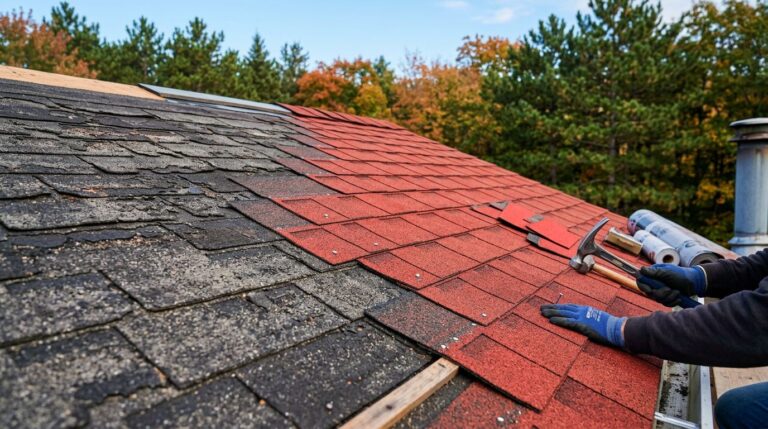
Look for punctures, splits at seams, damaged flashing, bruised membrane, and deformed metal edge details. Unlike asphalt shingles on residential roofs showing granular loss or missing shingles, also document dents on rooftop equipment and soft spots that suggest wet insulation. Interior evidence matters too, like stained tiles, wet insulation odor, and drips near exterior walls.
What happens if the adjuster denies the claim or under-scopes the repairs?
Request the full estimate and photo set, then respond in writing with your documentation and contractor findings. Stay calm and precise. If needed, ask about the carrier’s re-inspection process and required supplemental documents to address claim denial and pursue a fair insurance settlement on your hail damage claim, because many claims move forward after a better-supported supplement.
Preparing for an adjuster visit is about clarity, safety, and proof. When your photos, records, and access are ready, the meeting stays focused on facts. If you treat the roof like a jobsite inspection, not a negotiation, you protect your building and your hail damage roof insurance outcome at the same time.
Need a roof inspection in Saint Paul or the Twin Cities? Call Sellers Roofing Company at +1-651-703-2336 or schedule a free estimate. We are a black-owned, NMSDC-certified MBE roofing contractor with 9+ years experience.