Last updated: 2026-09-28 by Ted Sellers, Owner
Commercial roof drains can be damaged around the drain bowl, membrane flashing, or strainer after a hailstorm even when the first visible problem is only ponding water. This guide explains what to protect, document, and inspect before permanent work begins.
What Should Businesses Do After Hail Damages a Roof Drain?
After hail damages a commercial roof drain, document the drain, nearby membrane, interior signs of water, and storm date. Keep water moving safely, request a roof-specific inspection, and compare the insurance scope with the actual drain assembly before permanent repairs begin.
Short answer: A hail damage roof drain needs same-day stabilization, documentation, and a professional inspection. Keep people off the roof, protect inventory and electrical areas, clear only loose surface debris, and use temporary dry-in work for active leaks. Then report the loss, preserve failed materials, and choose repair, restoration, or replacement based on the full roof assembly.
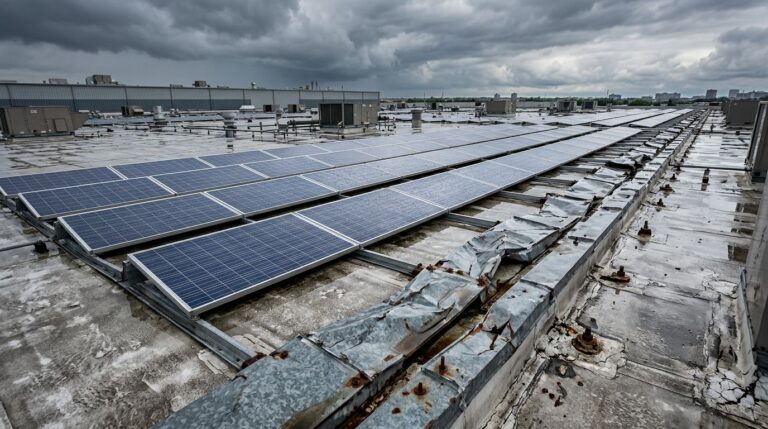
On a commercial flat roof, a drain is part of the waterproofing system, not a simple plumbing opening. A small dent or torn membrane can send water into insulation and deck areas far beyond the drain.
When This Applies
Low-slope roofs and mixed systems
This applies to business owners, facility managers, associations, and landlords after a hailstorm when a roof drain, strainer, clamping ring, drain flange, or surrounding membrane may be damaged.
It is especially important on TPO roofing, EPDM, modified bitumen, and BUR systems. These assemblies can take a direct impact near the drain, then fail later when heavy rain pushes water under the membrane flashing.
A building with retail below and offices above has more at risk than a wet ceiling tile. Water can reach inventory, electrical equipment, tenant finishes, insulation, and structural deck components.
When it may be maintenance, not hail
Don’t assume a backed-up drain is hail damage. Leaves, roofing gravel, neglected strainers, poor slope, and long-term ponding can also block drainage.
A storm-created opening and an old drainage problem can exist at the same time. The inspection must separate fresh impact damage from age, maintenance issues, and prior repairs. That distinction matters for repair decisions and a roof insurance claim.
Inspect the Hail Damage Roof Drain Before It Floods
Look at the drain assembly, not only the water
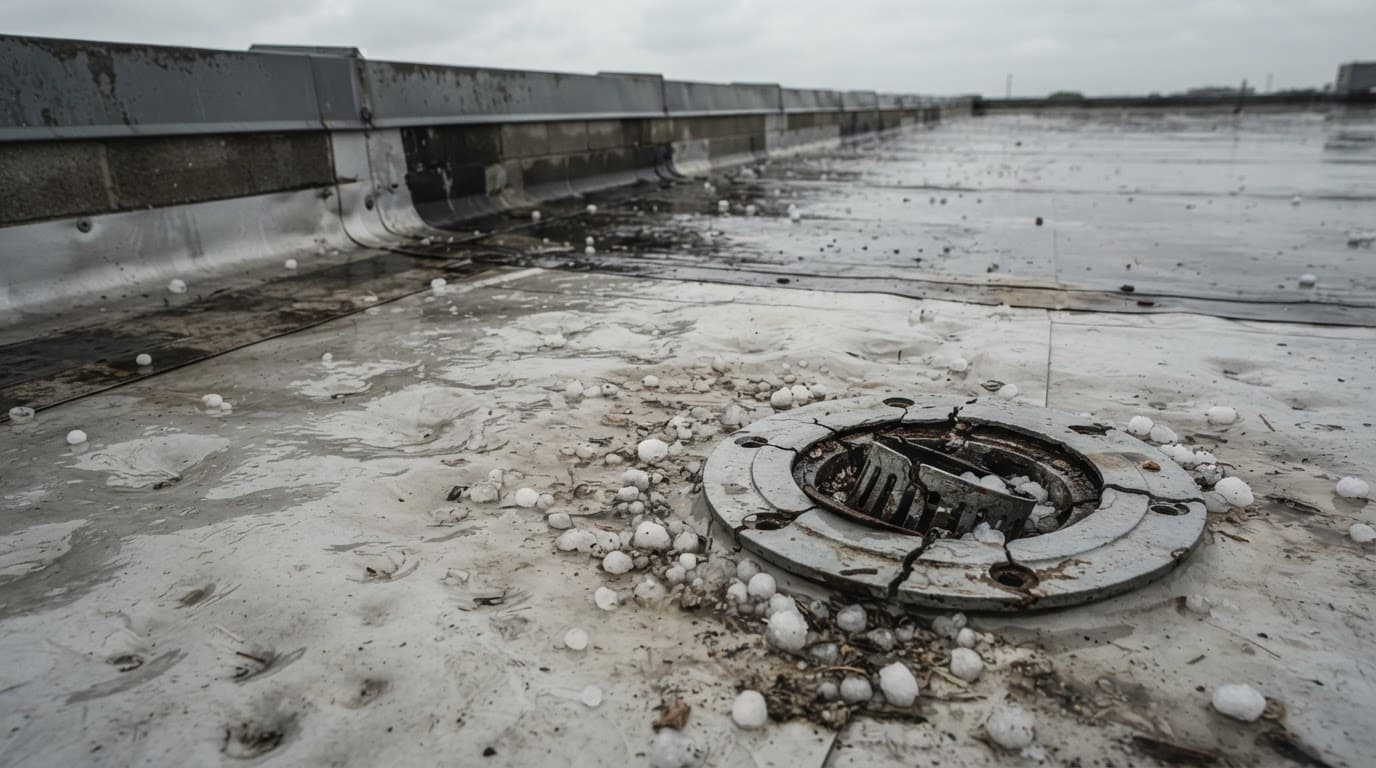
A roof drain inspection should include the strainer or dome, drain bowl, clamping ring, bolts, membrane flashing, seams, nearby punctures, and the roof surface around the drain.
Look for fresh dents, broken or shifted strainers, membrane splits, exposed fasteners, torn reinforcement, and impact marks that line up with the storm. Photograph the roof area from wide, medium, and close views before anyone moves materials.
Trace water before choosing a repair
Water rarely drops straight through a commercial roof. It can travel beneath membrane laps, insulation boards, cover boards, or metal deck flutes before it appears indoors.
An interior stain identifies where water exited, not where it entered the roof assembly.
A commercial roof leak detection inspection can use moisture readings, targeted test cuts, and drainage review to locate the true opening. A patch placed above the ceiling stain may miss the actual drain failure.
Step-by-Step
1. Secure people and property
- Keep staff off a wet, storm-damaged roof. Isolate wet floors, sagging ceiling areas, and electrical equipment below the leak. If water is actively entering, Call 651-703-2336 for 24/7 Emergency Roofing for temporary stabilization.
2. Clear loose debris without disturbing evidence
- Remove loose leaves, hail, or packaging from an accessible strainer only if it is safe. Don’t pry on a damaged drain ring, pull membrane back into place, or force debris deeper into the pipe.
3. Photograph the full condition
- Record the drain, surrounding roof field, parapet walls, rooftop equipment, interior leaks, and damaged contents. Keep original photo files and note the building, roof section, date, direction, and weather event.
4. Use temporary dry-in work for active leaks
- Authorize limited work that stops water entry, such as temporary seam sealing, a controlled cover, or interior water removal. Avoid broad tear-off, permanent coating, or full membrane replacement before the roof is inspected.
5. Schedule a system-level inspection
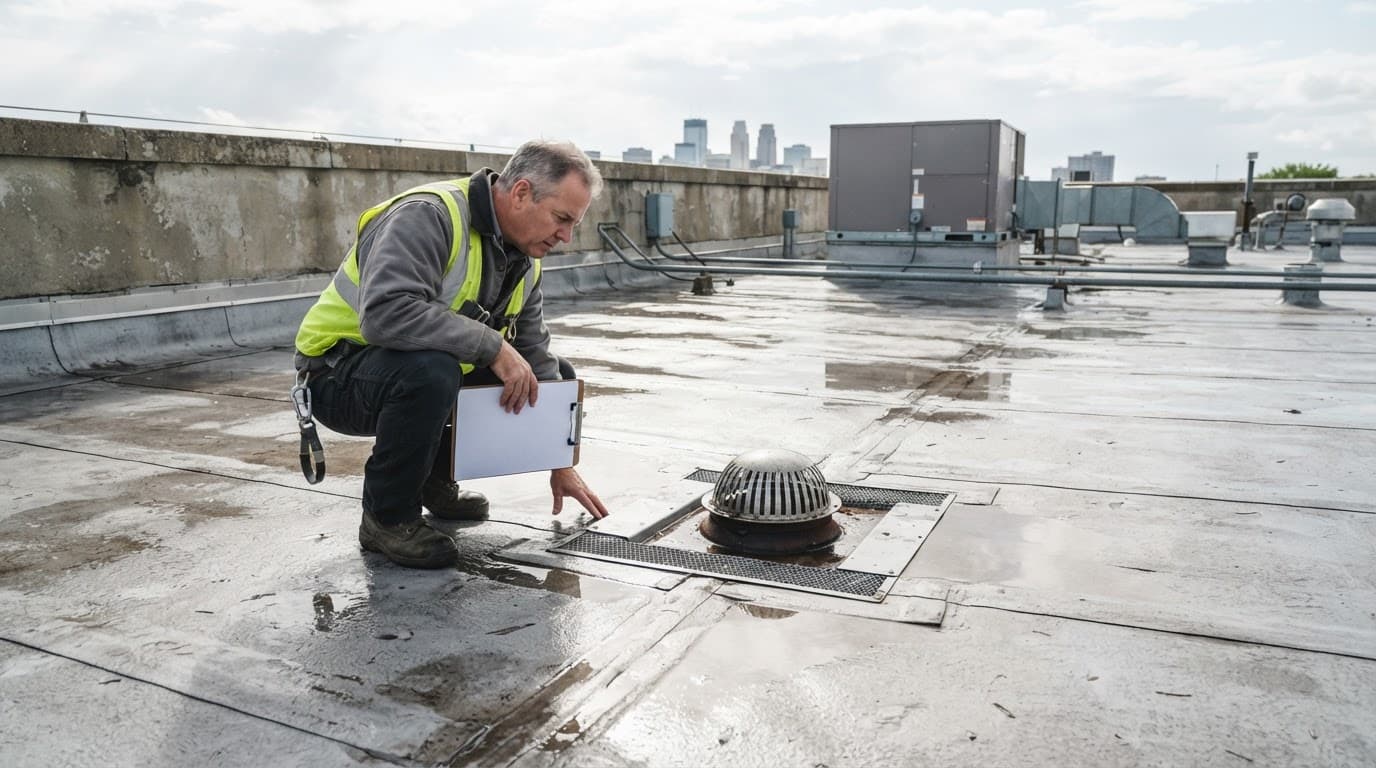
- Request moisture mapping, membrane evaluation, drain testing, and a written scope. A commercial roof inspection should identify whether insulation is dry, where water traveled, and whether the issue is limited to the drain or affects a larger section.
Build a Clean Roof Insurance Claim File
Report facts, not conclusions
Open the claim promptly and use plain, cause-based language. “Hail struck the drain area and water entered near the north roof section” is stronger than “the roof is destroyed.”
Review the policy’s deductible, roof-surface limitations, exclusions, and ordinance-or-law language. The Minnesota Department of Commerce storm-preparation guidance is a useful reminder to read policy terms before relying on a summary or verbal explanation.
Save inspection reports, invoices, moisture maps, maintenance records, weather dates, and photos of removed materials. Don’t discard a damaged strainer, membrane sample, or wet insulation before it is documented.
Compare the carrier’s scope against the roof findings
A small commercial roof repair may be correct when damage is isolated and the insulation remains dry. It is not correct if moisture spread, failed seams, or damaged attachment extend past the visible drain area.
Ask for the insurer’s line-item estimate. Compare it against measurements, test cuts, required flashing work, insulation replacement, disposal, and code-related items. Minnesota also provides claim-settlement resources for policyholders who need to understand the claims process.
If coverage is accepted but the cost is disputed, a supplement or appraisal may help. If the carrier says the loss is old maintenance, request a written explanation tied to the policy language and the inspected condition.
Choose Repair, Restoration, or Replacement
When commercial roof repair is enough
Targeted commercial roof repair works when the drain assembly or membrane flashing is damaged in one area, nearby seams remain secure, and moisture testing shows dry insulation.
The repair may include a new drain component, membrane reinforcement, new flashing, heat-welded seams, and a water test. The goal is to restore the roof system, not only cover a visible hole.
When coatings and restoration fit
Commercial roof restoration and commercial roof coatings can extend the life of a sound low-slope roof. They do not repair wet insulation, failed membrane attachment, open seams, or a damaged drain flange.
Coatings belong after repairs are complete and the roof is dry, stable, and properly prepared. Coating over impact damage or trapped moisture can hide evidence and leave the leak path active.
When replacement is the responsible scope
Commercial roof replacement may be the better option when testing finds widespread wet insulation, repeated seam failure, membrane shrinkage, deteriorated attachment, or several damaged drainage areas.
A Get a Free Commercial Roof Inspection appointment gives the owner a written basis for the decision before a repair budget becomes a replacement project.
Restore Drainage Before Winter Arrives
Fix the water path, not only the puncture
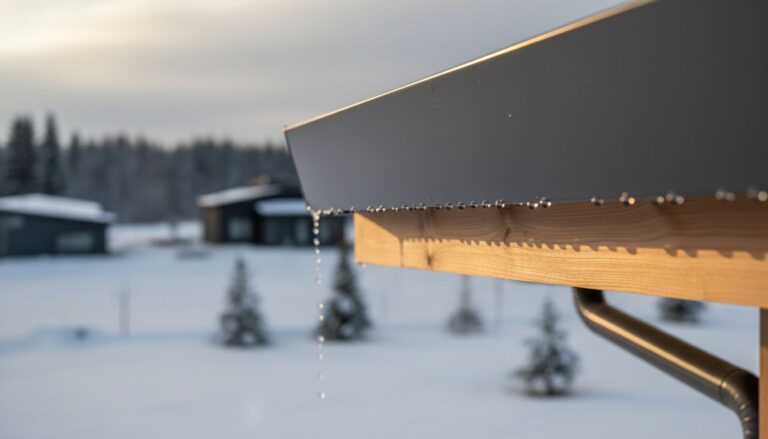
Hail damage is only the first problem. In Saint Paul roofing and Minneapolis roofing work, a drain that cannot move water before freeze-thaw weather can create ponding, ice buildup, membrane stress, and interior leaks.
Ice dam removal applies mainly to steep-slope roof edges. It does not repair a damaged commercial drain. Low-slope roofs need clear strainers, intact drains, working scuppers, sound flashing, and a drainage plan that moves water off the roof.
For risk managers, FM Global’s property-loss prevention data sheets provide additional material on weather-related property loss prevention.
Use qualified crews and written scopes
Twin Cities roofing systems need crews that understand cold-weather drainage, membrane compatibility, and insurance documentation. Minnesota roofing work should come with a written scope, photos, material details, and a clear separation between storm damage and deferred maintenance.
Sellers Roofing Company uses union-built roofing crews that include IUPAT Local 96 Roofers, Carpenters Local 322, and Laborers Local 563. The company holds Minnesota Builder Contractor License 803862. A GAF-certified system and a low-slope membrane system also have different material and warranty requirements.
Final Takeaway
Act before water spreads below the membrane
A damaged roof drain is not a wait-and-see problem. Secure the building, preserve the evidence, inspect the whole roof assembly, and use a repair scope that matches the actual moisture and membrane findings.
Fast temporary protection limits damage. Accurate documentation determines whether the final work is a drain repair, a restoration project, or a commercial roof replacement.
Frequently Asked Questions
Can maintenance staff clear a clogged roof drain after hail?
They can remove loose surface debris if access is dry and safe. They should not pry off a stuck strainer, push tools into the drain, or disturb torn membrane flashing. A damaged drain can worsen quickly when handled without knowing how the assembly is secured.
What if the adjuster says ponding water caused the leak?
Ask why the water ponded and whether hail also created an opening at the drain or membrane. Old ponding may be excluded, while fresh storm damage in another area may still be covered. Large commercial claims often involve more than one cause.
Will temporary roof work hurt the claim?
Reasonable dry-in work usually helps because it limits added damage. Photograph conditions first when safe, keep invoices, and avoid broad permanent repairs before the inspection. A temporary patch should stop water, not erase the evidence.
Can hail damage appear far from the interior ceiling stain?
Yes. Water can run beneath insulation and membrane seams before it reaches a ceiling tile or wall. The visible interior leak may be several feet from the drain or membrane opening, which is why leak tracing matters.
What if hail also damaged the owner’s home?
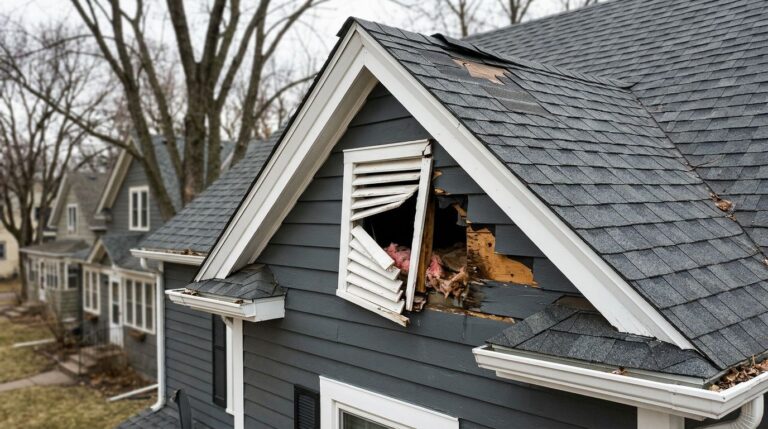
Asphalt shingles and metal roofing need a separate steep-slope inspection. The right scope may be residential roof repair for isolated storm damage or residential roof replacement when damage is widespread, materials are brittle, or matching and code work expand the project. Get a Free Residential Roof Estimate for a written assessment.
For the larger documentation and claim process, read our Minnesota roof storm damage and insurance claims guide.
Need a roof inspection in Saint Paul or the Twin Cities? Call Sellers Roofing Company at +1-651-703-2336 or schedule a free estimate. We are a black-owned, NMSDC-certified MBE roofing contractor with 9+ years experience.