Last updated: 2026-05-26 by Ted Sellers, Owner
Hail damage shingles usually show random, round bruises with granule loss, while foot traffic leaves scuffs, scratches, and repeated wear along walking paths. The key difference is pattern. Hail hits from above in scattered spots. Feet move in lines, often near roof access points, HVAC units, and service routes.
Round and random often means hail. Linear and repeated usually means foot traffic.
When This Applies
This matters most on commercial buildings with shingle sections
This question comes up often on offices, retail centers, churches, and apartment buildings with mixed roof types. The main roof may be low-slope, but entries, mansards, canopies, or accent slopes often use shingles. After a storm, those areas can become the focus of a claim or repair decision.
If there was a recent hail event, this test makes sense. It also helps when a building owner sees marks after vendors have been on the roof. In that case, the issue may be storm damage, crew traffic, or both.
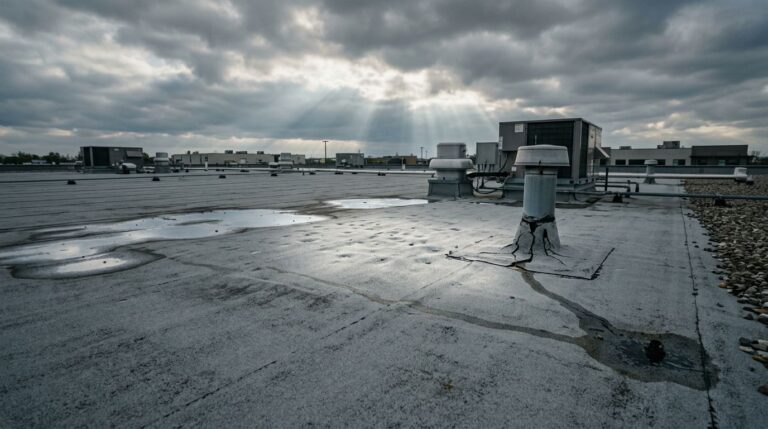
If your building only has membrane roofing, this guide is less useful. A low-slope leak may point to punctures, seams, flashing failure, or drainage trouble instead. In that case, you may need commercial flat roof repair, not shingle repair.
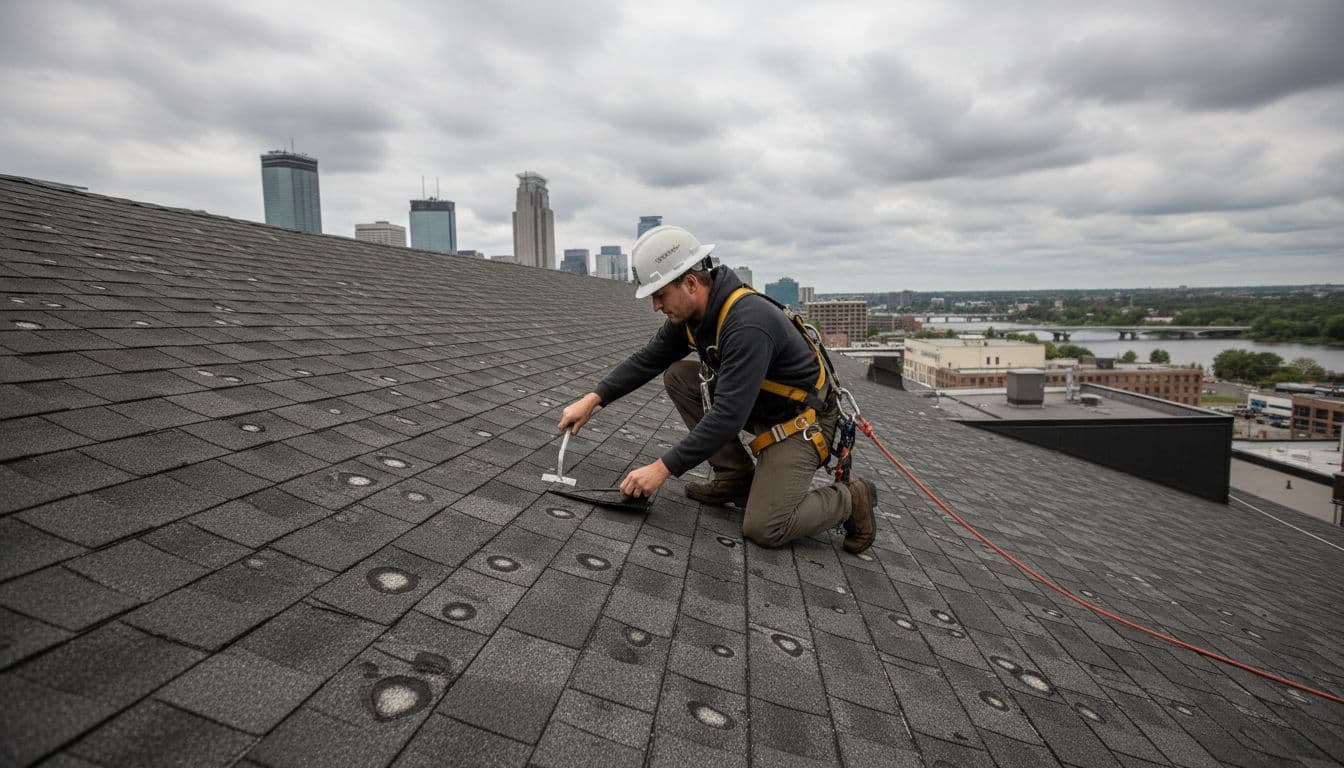
Age also matters. Old, brittle shingles can crack from normal use, heat, or past storms. That can blur the picture. If damage appears on several roof sections, or leaks are already inside the building, the problem may be larger than a spot fix. At that point, a commercial roof replacement could make more sense than patching scattered damage. Most importantly, if water is getting in, the commercial roof needs repair right away, no matter what caused the mark.
Step-by-Step
1. Start with the shape of the marks
Hail acts like a series of hammer taps from the sky. Foot traffic acts more like sandpaper under a boot. So, the first thing to study is shape.
What hail usually looks like
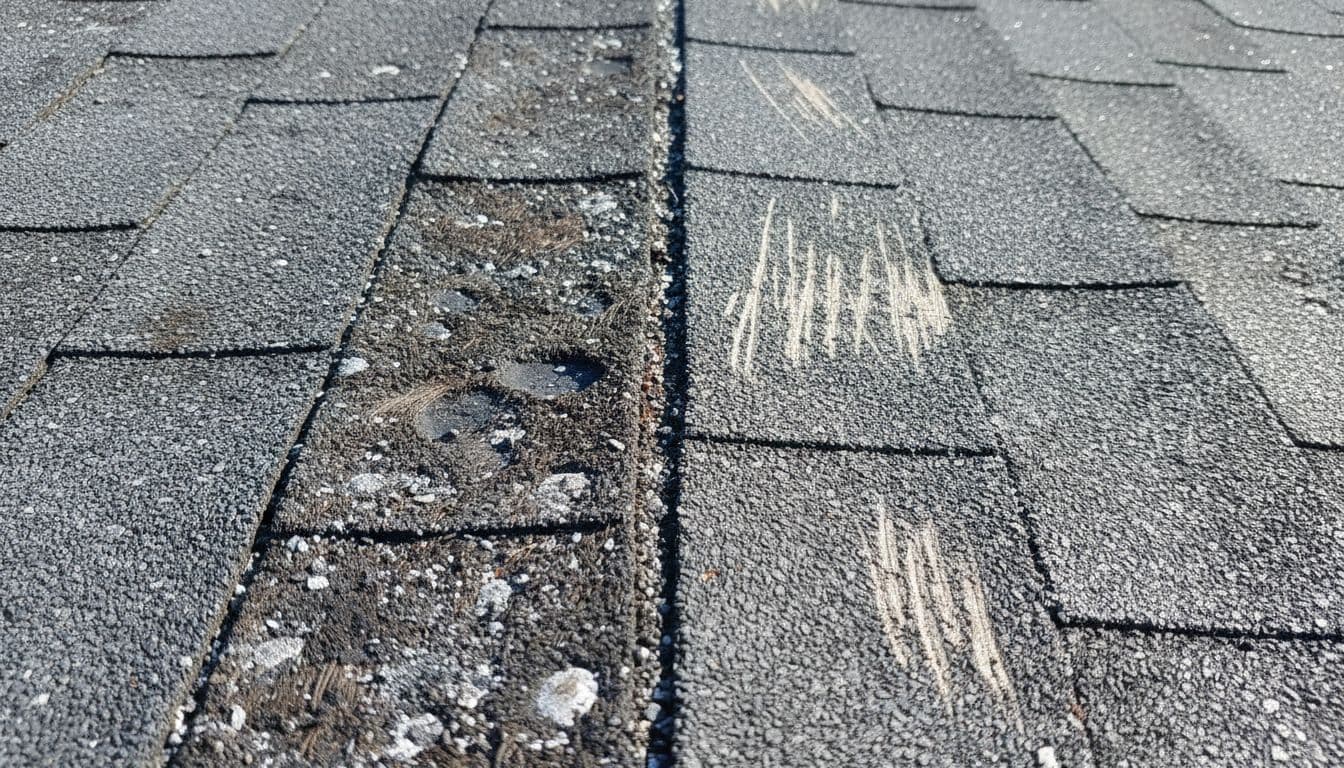
Hail marks tend to be round or slightly oval. They appear in random spots, not in neat lines. You may also see dark areas where granules were knocked away.
Foot traffic usually looks flatter and more dragged out. The marks may stretch across the shingle, especially where someone twisted a foot while climbing or turning.
2. Check where the damage appears on the roof
Location tells a big part of the story. Foot traffic clusters near roof hatches, ladders, HVAC units, drains, and service paths. If marks follow a route, that points away from hail.
Hail does not care where people walk. It strikes broad areas of the slope, often across multiple faces. Some slopes may show more damage because of wind direction, but the pattern still feels scattered, not organized.
3. Test for a bruise, not just granule loss
Granule loss alone does not prove hail. Foot traffic, age, and poor installation can all loosen granules. The better clue is a bruise under the surface.
A true hail bruise feels different
From a safe ladder position, not by walking the roof, gently press the suspect spot. A hail bruise often feels softer at the center than the shingle around it. A traffic scuff usually feels firm, even if the granules are worn off.
That soft center matters because hail can damage the mat below the granules. Foot traffic usually scrapes the surface first.
4. Look for matching impact signs around the roof
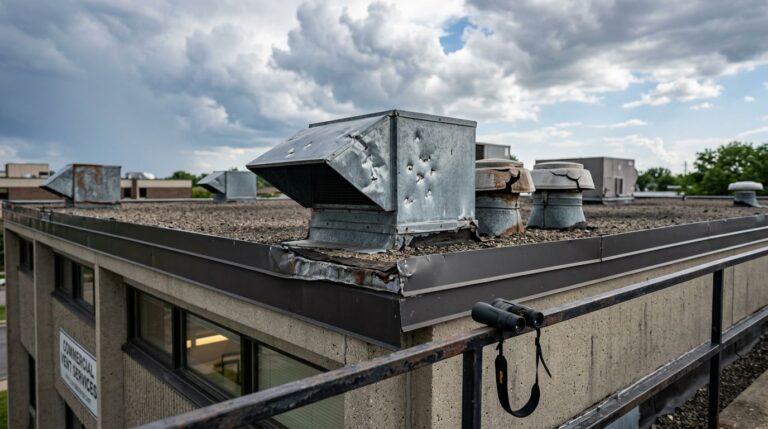
Shingles rarely tell the whole story by themselves. Check metal vents, soft metals, gutters, downspouts, and flashing. Hail often leaves dents on those surfaces too.
If the shingles show round hits and the nearby metal shows fresh impact marks, hail becomes much more likely. If the shingles alone look worn near service areas, foot traffic is the stronger call. This visual guide to hail damage shows the kind of bruise pattern inspectors often compare against in the field.
5. Compare the marks with your maintenance history
Think about who has been on the roof lately. HVAC crews, satellite installers, electricians, and sign contractors often cross the same areas again and again. Repeated visits create repeated wear.
On the other hand, if the marks appeared right after a storm and show up across several slopes, that timing supports hail. Good notes matter here. Service logs, storm dates, and photos can settle arguments later.
6. Get a documented inspection before making the repair call
A contractor should photograph the pattern, test suspect bruises, and note supporting evidence on metal surfaces. That gives you a record for insurance, budgeting, and planning.
For a business owner, that matters because the repair path changes fast. A few damaged shingles may call for local repair. Widespread impact can affect warranties, shorten roof life, and shift the conversation toward replacement.
FAQ
Can hail and foot traffic happen on the same roof?
Yes, and that is common on commercial properties. A storm may bruise shingles first, then later foot traffic knocks off more granules on the weakened spots. That is why pattern, timing, and supporting evidence all matter.
Will insurance cover foot traffic damage?
Usually not, unless it ties to a covered event or a liable third party. Hail is often covered, but careless maintenance traffic usually falls into wear, misuse, or contractor responsibility.
Can old shingles make this harder to judge?
Yes. Older shingles lose flexibility, so they can crack or shed granules more easily.
When age changes the surface
If the roof is already dry, brittle, or curling, even trained inspectors need to separate storm hits from simple aging. In those cases, photos, weather dates, and test spots become more important.
What if the marks are only near HVAC units?
That strongly suggests foot traffic. Service crews tend to step in the same few places, especially around mechanical equipment and roof access points.
When should a business owner skip self-inspection?
Skip it if the roof is steep, high, wet, icy, or hard to reach. Also skip it if you suspect active leaks, loose shingles, or storm-weakened decking. The cost of a fall is never worth a quick look.
The Bottom Line
To tell hail from foot traffic on shingles, focus on pattern, location, and feel. Hail leaves random, round bruises. Foot traffic leaves directional wear along paths people use. If the stakes involve an insurance claim, lease issue, or major repair budget, document it and get a professional inspection before choosing the next step.
Need a roof inspection in Saint Paul or the Twin Cities? Call Sellers Roofing Company at +1-651-703-2336 or schedule a free estimate. We are a black-owned, NMSDC-certified MBE roofing contractor with 9+ years experience.