Last updated: 2026-08-01 by Ted Sellers, Owner
Commercial roof leak detection on low-slope metal roofs works by tracing the leak from inside the building, mapping how water may travel, inspecting seams, fasteners, laps, flashings, and penetrations, then confirming the entry point with infrared, moisture testing, or controlled water tests. The goal is simple, find the true source, not the spot where water finally drips.
When This Applies
Best fit for recurring leaks and occupied buildings
This approach fits warehouses, offices, retail centers, schools, and plants with low-slope metal roofing. It helps most when leaks return after patching, show up far from the roof edge, or appear only during wind-driven rain.
In those cases, expert leak detection for commercial roofs can save time and keep crews from opening the wrong area first.
When another approach fits better
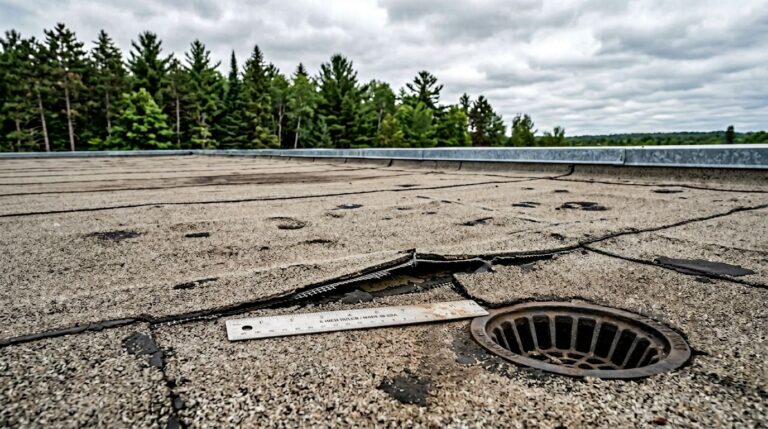
It doesn’t fit every roof. If the roof is actually a membrane system over metal deck, the process leans more toward commercial flat roof repair methods than metal panel seam tracing.
Also, if panels are badly rusted, fasteners are failing across broad areas, or insulation is soaked in several zones, testing may show the building is closer to commercial roof replacement than a small repair.
One common false alarm
Condensation can look like a leak, especially near rooftop units and poorly insulated lines. Because of that, good inspectors compare weather timing, stain patterns, and roof details before naming the cause. This low-slope moisture testing guidance shows why hidden wet areas matter as much as visible drips.
On low-slope metal roofs, the interior drip is often a clue, not the source.
Step-by-Step
A standard leak detection sequence
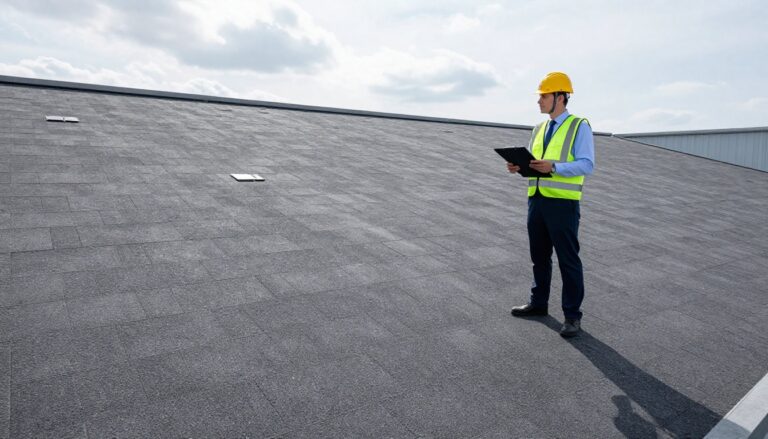
- Start inside the building. The technician maps stains, drips, rust lines, wet insulation, or ceiling damage. They also note wind direction, roof slope, nearby penetrations, and when the leak appears, because timing helps separate rain entry from condensation.
- Inspect the roof surface and details. On low-slope metal, the main suspects are panel laps, standing seams, exposed fasteners, skylights, curbs, gutters, and transition flashings. Water can slip under a lap and travel sideways, so the nearest stain rarely tells the whole story.
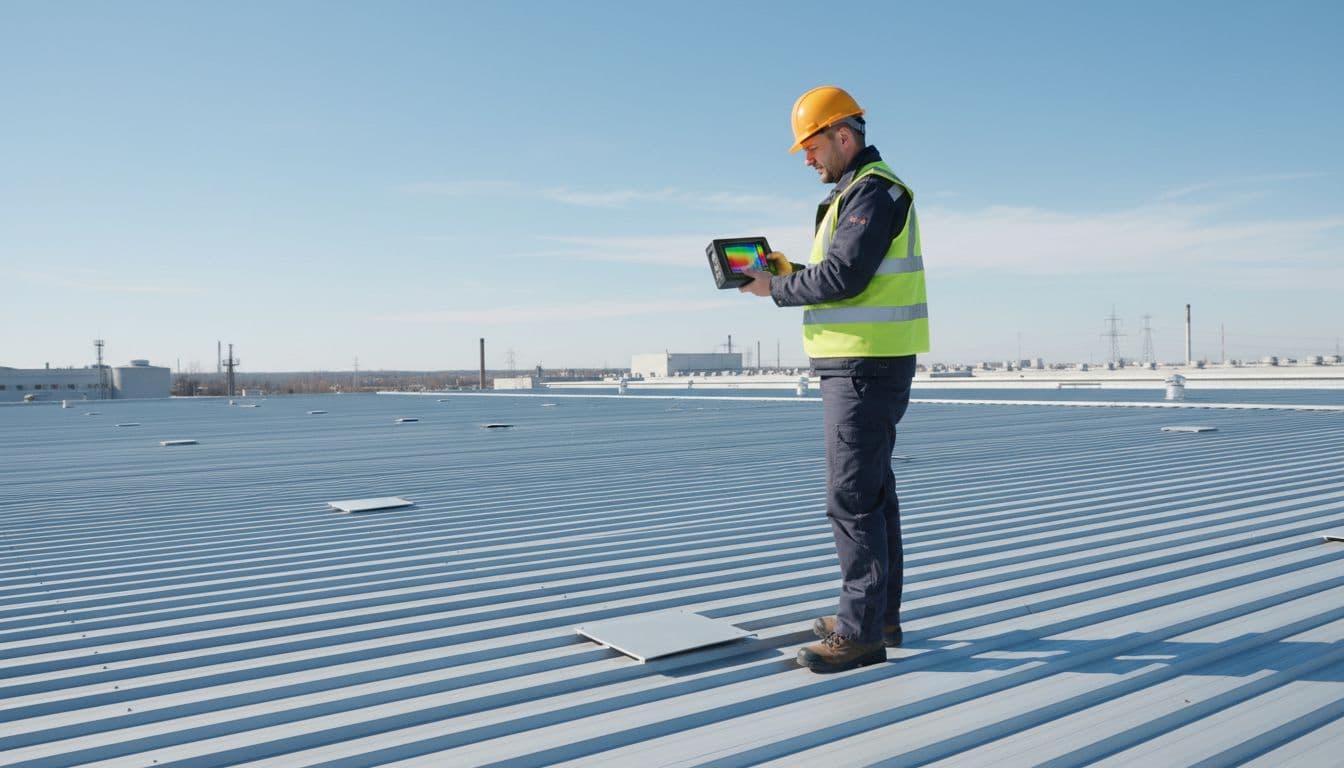
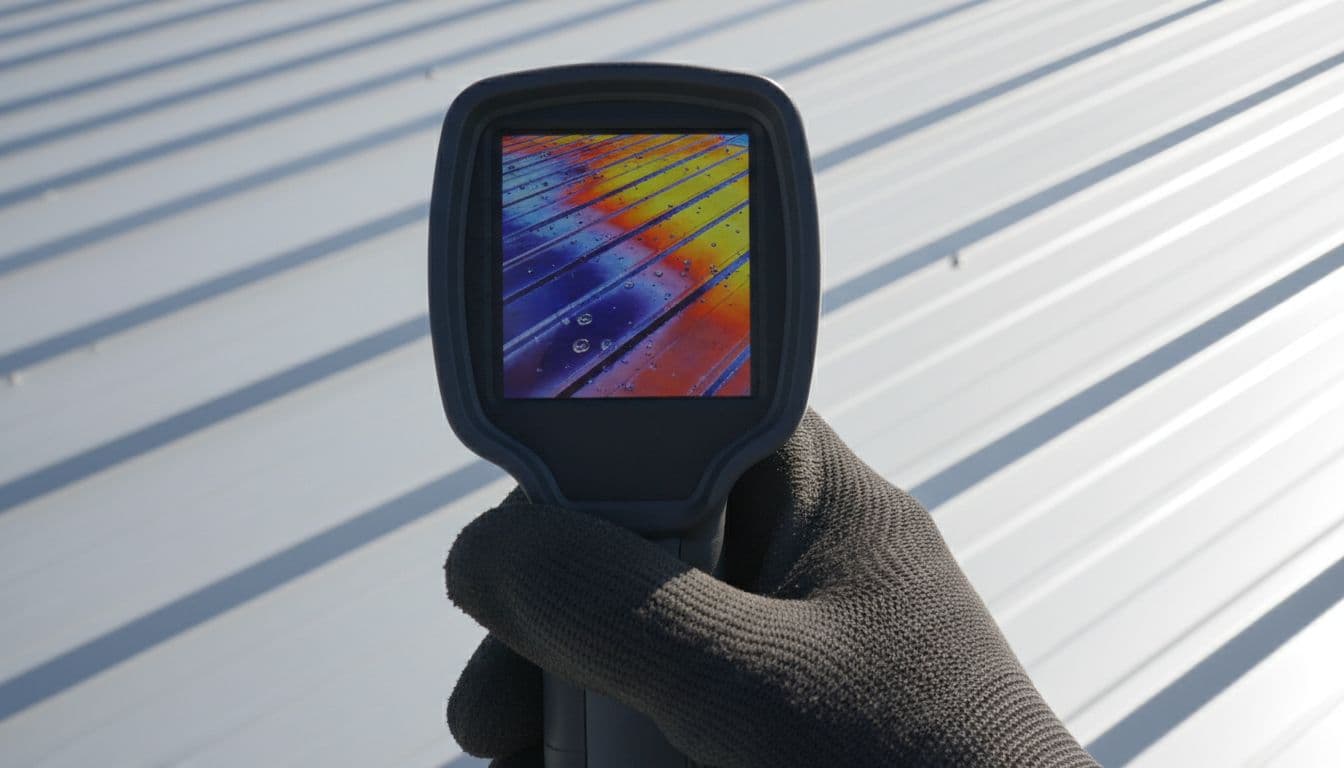
- Use non-destructive testing first. Infrared scanning works best when wet materials hold a different temperature than dry ones. Moisture meters, underside checks, and targeted seam review narrow the search without tearing into the roof.
- Confirm the exact entry point. If conditions allow, the crew may run a controlled water test in small sections. They isolate one detail at a time, watch the interior response, and stop once they prove the source.
- Match the fix to the evidence. A failed fastener washer or cracked sealant bead may need a focused repair. On the other hand, repeated seam separation, widespread corrosion, or soaked insulation often means the commercial roof needs repair on a larger scale, not just another patch.
Which Tools Actually Confirm the Leak Source
Infrared helps map wet zones
For commercial roof leak detection, infrared doesn’t “see” water entering the roof. Instead, it reads surface temperature differences that can point to trapped moisture under metal panels or insulation. That’s why crews usually scan at the right time of day, then verify the pattern with hands-on inspection. This overview of commercial leak detection methods follows that same confirm-before-repair logic.
Close-up inspection still does the hard work
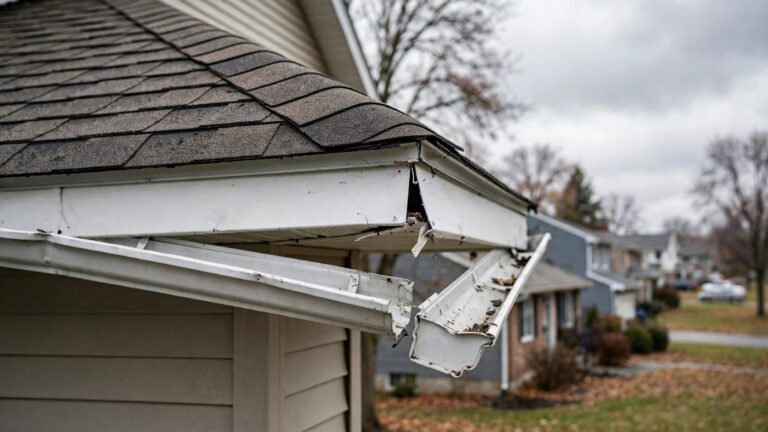
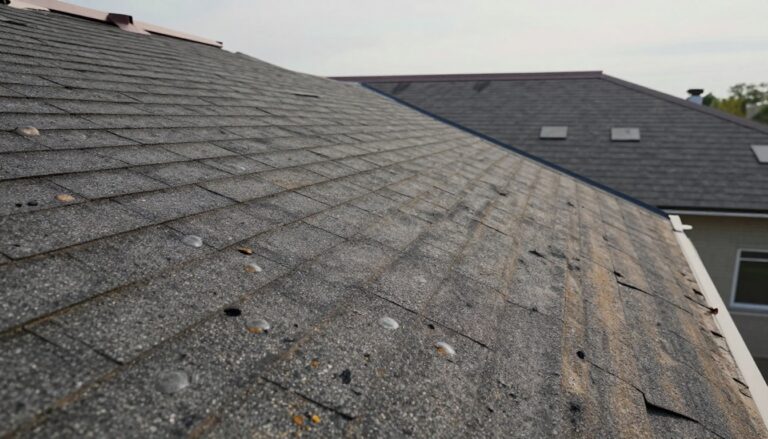
On low-slope metal roofs, close-up inspection often finds what broad scans miss. Technicians look for backed-out fasteners, open end laps, loose closures, cracked sealant, and flashing gaps around equipment curbs.
In other words, tech tools point to the neighborhood, but detail work finds the front door.
Water tests and moisture mapping settle disputes
When owners have repeat leaks, proof matters. A controlled hose test, underside review, and moisture mapping can show whether the problem is one failed detail or a wider assembly issue.
That distinction matters because a one-day repair costs far less than chasing the wrong spot for months.
FAQ
Can infrared find every metal roof leak?
No. Infrared is a screening tool, not a final answer. It works best when moisture creates a clear temperature difference and the roof surface is dry enough to read well. Reflective metal, wind, and cloud cover can reduce accuracy.
How long does leak detection usually take on a commercial building?
Many small buildings can be checked in a few hours. Larger facilities, active leaks, and roofs with many penetrations may take most of a day. Safe access and weather conditions also affect the schedule.
Will leak detection damage the roof?
Usually not. Most commercial roof leak detection starts with visual review, infrared, moisture checks, and gentle probing at suspect details. If a test cut is needed, the crew should patch it the same day and document why they opened that spot.
Why do leaks show up far from the actual hole?
Because low-slope metal roofs let water move along panel ribs, laps, insulation facers, and framing. It’s a bit like water running under a tray liner. The stain inside may be several feet away from the true entry point.
When is a patch no longer the smart option?
When the roof has recurring leaks in different zones, broad corrosion, or wet insulation below multiple panels. At that point, spot work may only delay a bigger decision.
Repair or replace?
If thaw cycles or storms keep reopening the same areas, the commercial roof needs repair at a wider level, or the owner may be better served by commercial roof replacement.
The Bottom Line
What building owners should do next
Low-slope metal roofs don’t usually leak in a straight line. Because of that, the best process starts with evidence, confirms the source, and then matches the repair to the actual failure. If you act early, you can often avoid damaged inventory, interior downtime, and a bigger repair bill.
Need a roof inspection in Saint Paul or the Twin Cities? Call Sellers Roofing Company at +1-651-703-2336 or schedule a free estimate. We are a black-owned, NMSDC-certified MBE roofing contractor with 9+ years experience.