Last updated: 2026-08-01 by Ted Sellers, Owner
Attic roof storm damage is easiest to spot when the clues are fresh. Look for new water trails, wet insulation, daylight through the roof deck, split wood, rusted fasteners, and stains that line up with a recent hail or wind event. If the space is unsafe, or there is no true attic, call a roofer for a roof-level inspection instead.
When This Applies
When an attic check makes sense
This method works best on commercial buildings with an attic, loft, or open space under the roof deck. It also helps after hail, wind, heavy snow, or a branch strike, especially when the building started leaking soon after the storm. In those cases, the attic often shows the first clean evidence before the ceiling does.
Business owners, facility managers, and maintenance teams can use that evidence to decide whether the roof has a small problem or a larger one. If the signs are isolated, the fix may stay small. If the damage spreads across several bays, the roof may need a deeper look before anyone chooses between repair and replacement.
When it does not tell the full story
Not every commercial roof gives you this view. Low-slope membrane roofs often have no real attic, and some buildings hide the problem in a plenum or mechanical chase. In those cases, interior stains can appear far from the source, so professional commercial roof leak detection is the better next step.
This method also falls short when the stain came from condensation, plumbing, HVAC drainage, or an old leak that never got fixed. If the ceiling is sagging or wiring is wet, stop and treat it as a safety issue first. A storm clue is useful only when it fits the building, the timing, and the condition of the roof.
Step-by-Step
1. Start with safety and the easiest clues
Use a flashlight, steady footing, and a clear exit path. Walk only on solid framing or designated walk boards, never on ceiling drywall or loose insulation. Start by scanning the whole space for fresh water, a musty smell, or dark marks near roof edges, vents, skylights, and pipe penetrations.
Those places often show the first signs because storm-driven water enters there early. Also check for loose debris, torn insulation facing, or wood that looks recently damp but not yet moldy. Fresh damage often looks clean and sharp. Older issues usually look dusty, stained, or already dried into the material.
When to stop right away
Leave the attic if the roof deck sags, if water is dripping near live electrical lines, or if the ceiling below looks bowed. A roof can fail farther once the deck weakens. If you need to step carefully to keep people safe, the inspection should stop there and move to a pro.
2. Follow the water path, not the stain
Water almost never drops straight down from the entry point. It runs along rafters, trusses, fasteners, and insulation before it shows on a ceiling panel. That means the stain on the drywall may sit several feet away from the real breach.
Look uphill from the visible mark. Check for brown trails on wood, rust lines around nails, and dust washed into clean streaks. If the stain appeared right after a storm, and it points in one direction, the case for attic roof storm damage gets stronger. The attic is giving you a map, not the exact address. Read it carefully.
A stain on the ceiling is a clue, not the source. Water often enters somewhere else.
3. Inspect the roof deck and framing for impact or lift
Storms often leave the underside of the roof looking tired in one small zone. Hail can crack the sheathing. Wind can lift fasteners or flex the deck until it splits. Fresh damage often looks sharper and cleaner than old wear.
Check for daylight through board seams, broken or popped nails, split plywood, soft spots, and wood that looks dark only where the storm hit. If one area shows damage and the rest stays dry, the issue may stay local. If several bays are wet, crushed, or open, the project is more likely to grow beyond a small patch.
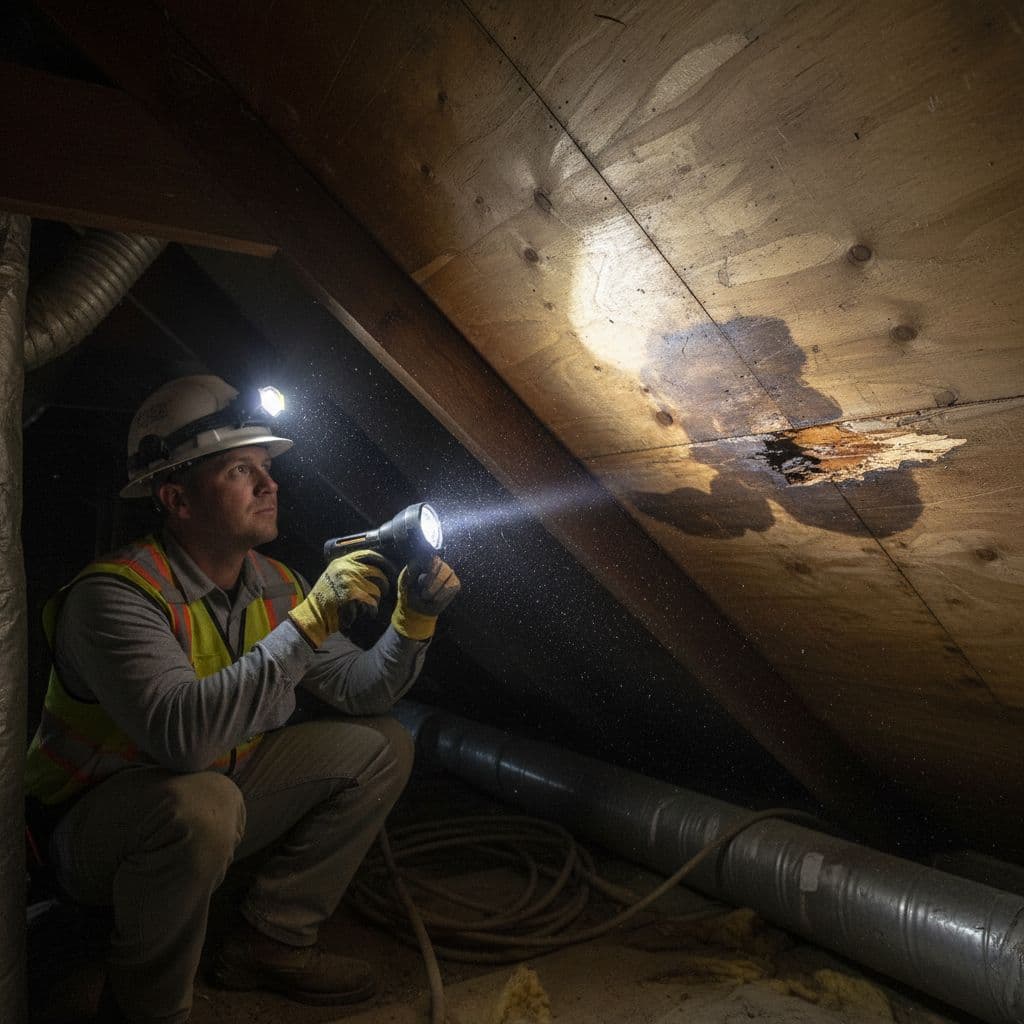
What storm damage looks like up close
Fresh splits usually have sharp edges. Old damage tends to be rounded, dusty, or already stained. That difference matters when you are trying to separate a covered storm event from old wear. It also matters if the first roof estimate looked too low, because hidden deck damage often changes the scope later.
4. Check insulation and hidden moisture
Insulation holds water long after wood starts to dry. Look for flattened batts, clumps, dark patches, and fiberglass that feels heavier than the dry areas around it. A moisture meter can help, but even a simple touch test tells you a lot.
Fresh wet insulation below a storm path is a big red flag. So is repeated dampness in the same spot after each rain. If you see that pattern, the commercial roof needs repair, not just a cosmetic fix. Keep photos, dates, and any moisture readings. Those notes matter if the claim later needs a supplement or reinspection.
5. Match the attic clues to the next move
If the damage is small, isolated, and the framing stays dry, a targeted repair may solve it. If you see wide saturation, damaged decking, or repeated leaks, the job may move toward commercial roof replacement. The key is to connect the attic evidence to the real extent of the roof problem before anyone closes the file.
This is where documentation pays off. Save photos, field notes, contractor observations, and receipts for temporary dry-in work. If an insurer misses code-required items or hidden damage, that record helps support a supplement. It also keeps the estimate tied to the actual loss, not a guess.
When you need a second set of eyes, a commercial roofing contractor in St. Paul can inspect the deck, explain whether the roof is a repair or replacement case, and help you separate storm damage from old wear. If the damage stays limited, the fix may be a commercial flat roof repair. If the roof has lost too much dry material, the larger call may be the safer one.
FAQ
Can you spot hail damage from inside the attic?
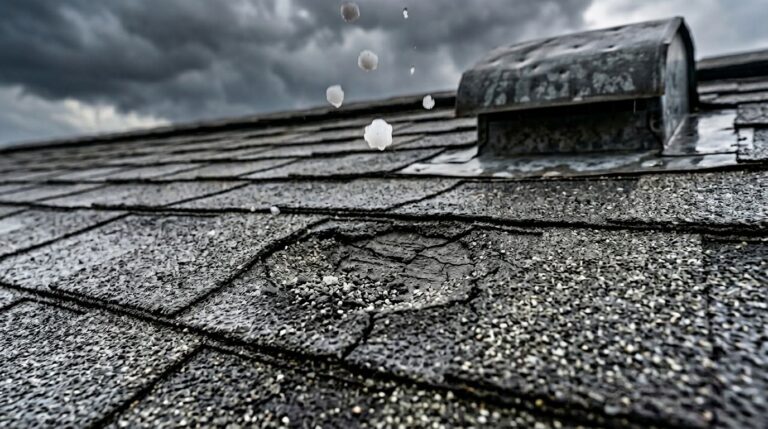
Sometimes, yes. Hail can show up as fresh splits, loosened fasteners, or new daylight through the deck. The attic usually supports the case, but the roof surface still gives the clearest hail pattern. If the attic clues and the storm date line up, the evidence gets stronger. That matters when a claim turns on whether the damage was sudden or already there.
Do all water stains mean storm damage?
No. Condensation, plumbing leaks, HVAC lines, and old roof patches can leave similar stains. Storm damage is more likely when the mark appears after a known weather event and the moisture follows a clear path through the roof deck or insulation. The timing matters as much as the stain itself.
What if the attic is too unsafe to enter?
Do not push past sagging decking, wet wiring, or loose ceiling material. Use the hatch only if you can stay on stable framing. If the space feels unstable, stop there and bring in a roofer or emergency crew. One bad step can turn a roof issue into a fall injury.
Should you document attic damage for insurance?
Yes. Take dated photos, note the weather and time, and keep samples if parts of the roof deck or insulation fall loose. Save receipts for tarps, dry-in work, and emergency cleanup. Clear records help if the first scope misses hidden damage. They also help if the insurer asks why the repair changed after inspection.
When does attic damage point to repair or replacement?
If the issue is narrow and dry, commercial flat roof repair may be enough. If water spread across several areas, the deck softened, or the same leak returns after each storm, commercial roof replacement may be the better answer. The attic is useful because it shows how far the damage really reached. That helps you avoid paying for the wrong fix.
Conclusion
The best attic clues are fresh ones, new water trails, wet insulation, split decking, rusted fasteners, and daylight where the roof should be tight. Old stains matter less unless they match a new storm path.
If you spot those signs, document them before permanent work starts. That paper trail helps you decide whether the roof needs a repair, a larger scope, or a full replacement, and it gives your contractor the proof needed if the claim file needs a supplement.
Need a roof inspection in Saint Paul or the Twin Cities? Call Sellers Roofing Company at +1-651-703-2336 or schedule a free estimate. We are a black-owned, NMSDC-certified MBE roofing contractor with 9+ years experience.