Last updated: 2026-11-01 by Ted Sellers, Owner
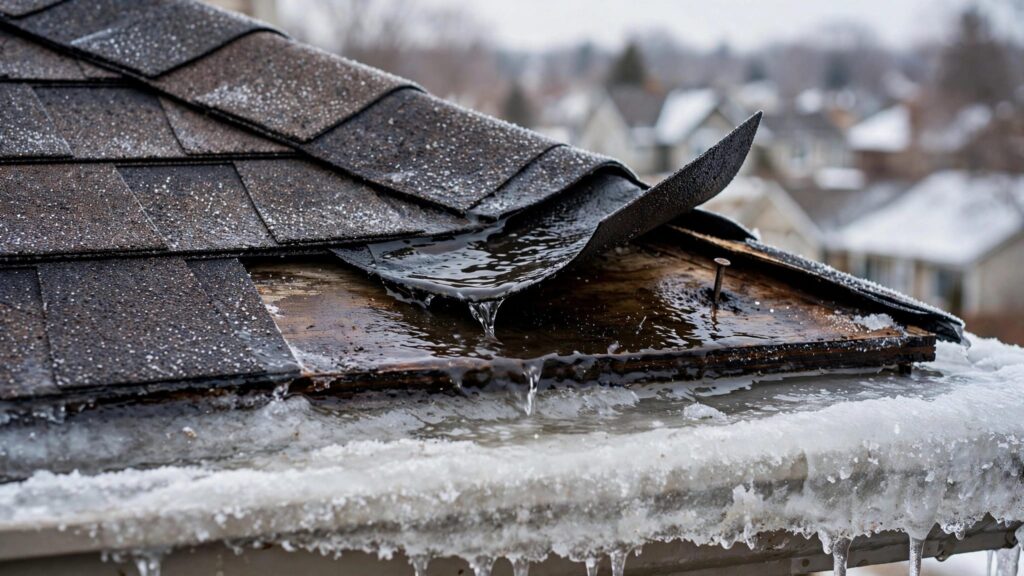
Yes. Ice-dam water can back up beneath asphalt shingles and reach roof decking through exposed, misplaced, or poorly sealed nail penetrations. An exposed nail line identifies a possible entry point, but confirming ice dam roof leaks requires tracing the water path and inspecting the underlayment, ice barrier, and decking beneath the affected courses.
What Actually Causes Ice-Dam Leaks on Shingle Roofs in Harsh Winter Climates
How does backed-up water reach the nails?
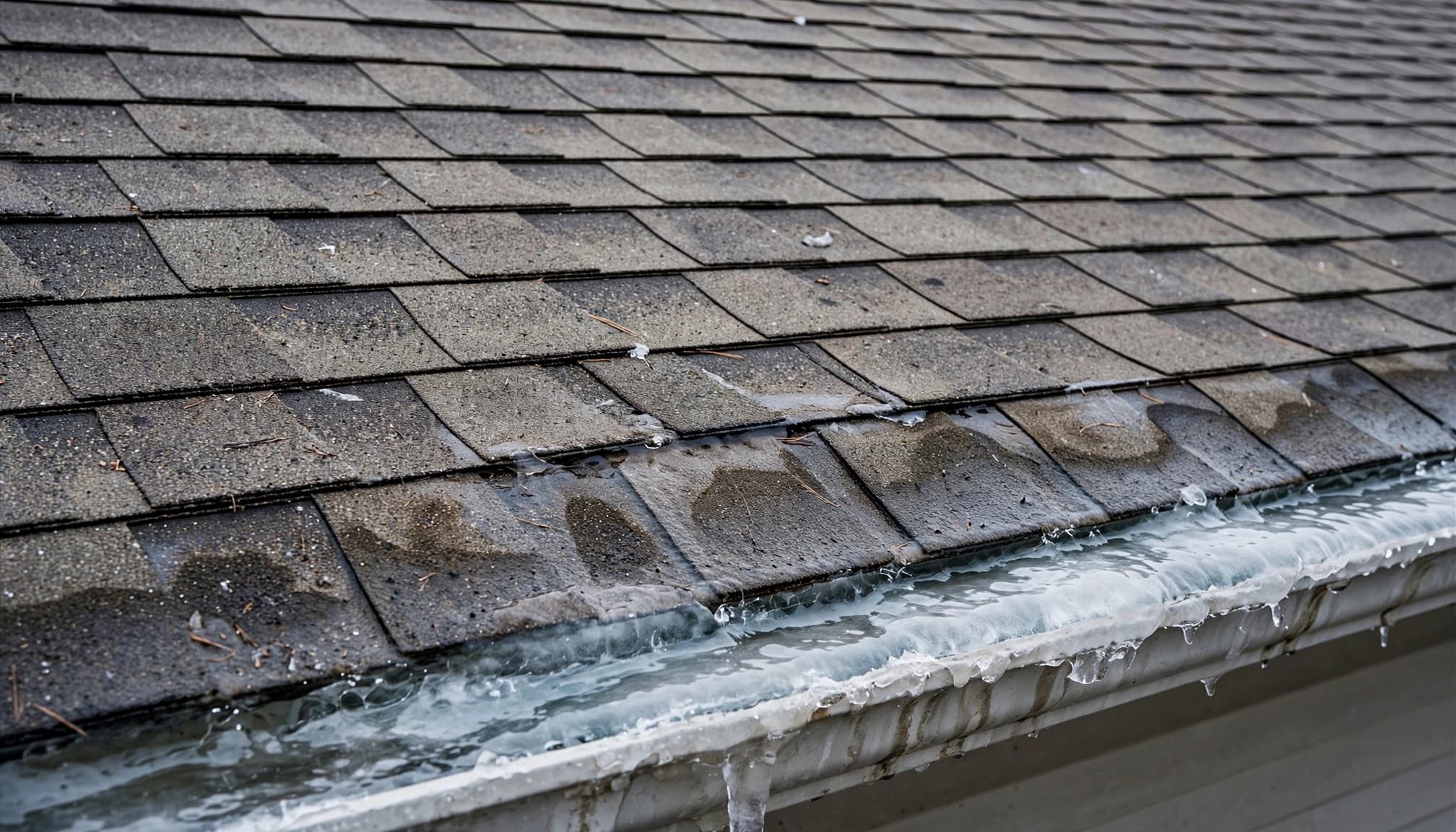
Heat escaping through the ceiling can warm the upper roof enough to melt snow. That water flows toward the colder overhang, freezes, and gradually blocks drainage. Sun-driven melting and outdoor temperature changes can also feed the buildup.
As water collects behind the ice, it can enter shingle overlaps that normally shed downhill runoff. It then reaches fasteners, torn underlayment, or gaps in the ice barrier.
An intact self-adhering membrane can seal around properly driven nails. However, poor adhesion, membrane damage, or water backing above its coverage can leave the deck exposed.
The University of Minnesota’s ice-dam guidance explains why controlling roof temperatures matters alongside repairing the leak.
When this applies
This applies to shingle-covered homes, apartments, and pitched commercial buildings with snowmelt backing behind an obstruction. Eaves, valleys, dormers, and shallow additions deserve attention.
The receiving roof plane determines shingle suitability. Asphalt shingles aren’t permitted below 2:12 slope. Slopes from 2:12 to less than 4:12 require the approved low-slope underlayment approach.
A commercial flat roof has different failure points. Frozen drains, membrane seams, and curb flashings require system-specific investigation rather than a shingle nail-line repair.
How to Inspect and Document the Damage (Field Checklist)
What should the exterior inspection cover?
Property owners should document visible conditions from the ground. A contractor should access the roof only when weather, traction, and fall protection permit.
Follow this inspection order:
- Photograph each affected slope, the eave ice, gutters, and the relationship between exterior conditions and interior leaks.
- Examine the granule-loss pattern, cracked tabs, displaced shingles, and exposed nail heads after safe access becomes possible.
- Inspect valley condition, including debris lines, ice blockage, damaged laps, and concentrated runoff.
- Document flashing separation at walls, chimneys, roof edges, and transitions.
- Inspect pipe-boot cracking and displaced penetration flashing.
- Look for deck deflection or an uneven roof plane before opening the assembly.
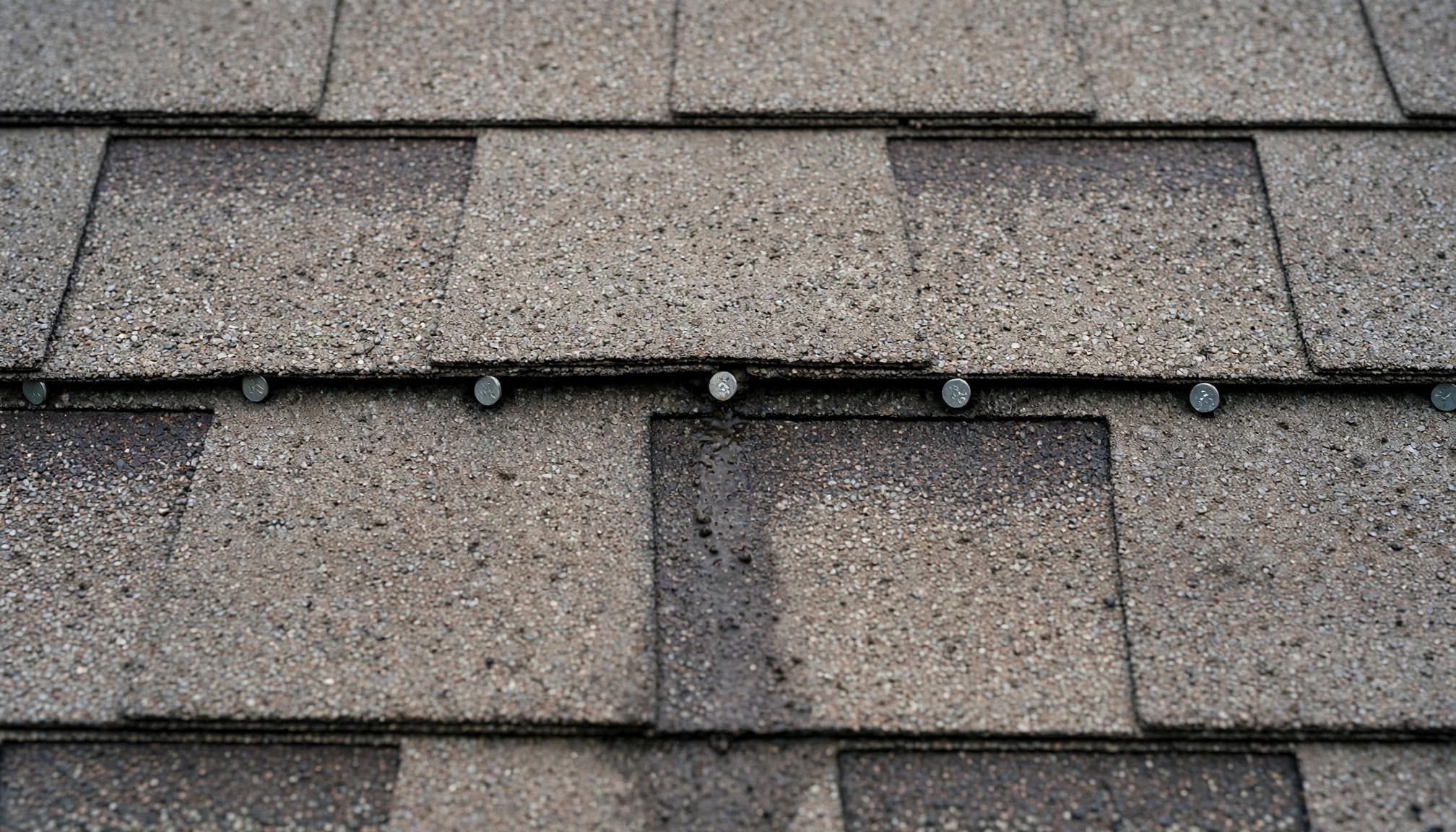
A printed nailing guide visible on a shingle isn’t automatically an exposed fastener. Distinguish that marking from an actual metal nail head.
GAF’s Timberline installation instructions state that nails must not remain exposed. Nail placement must follow the instructions for the installed product.
What should the attic inspection establish?
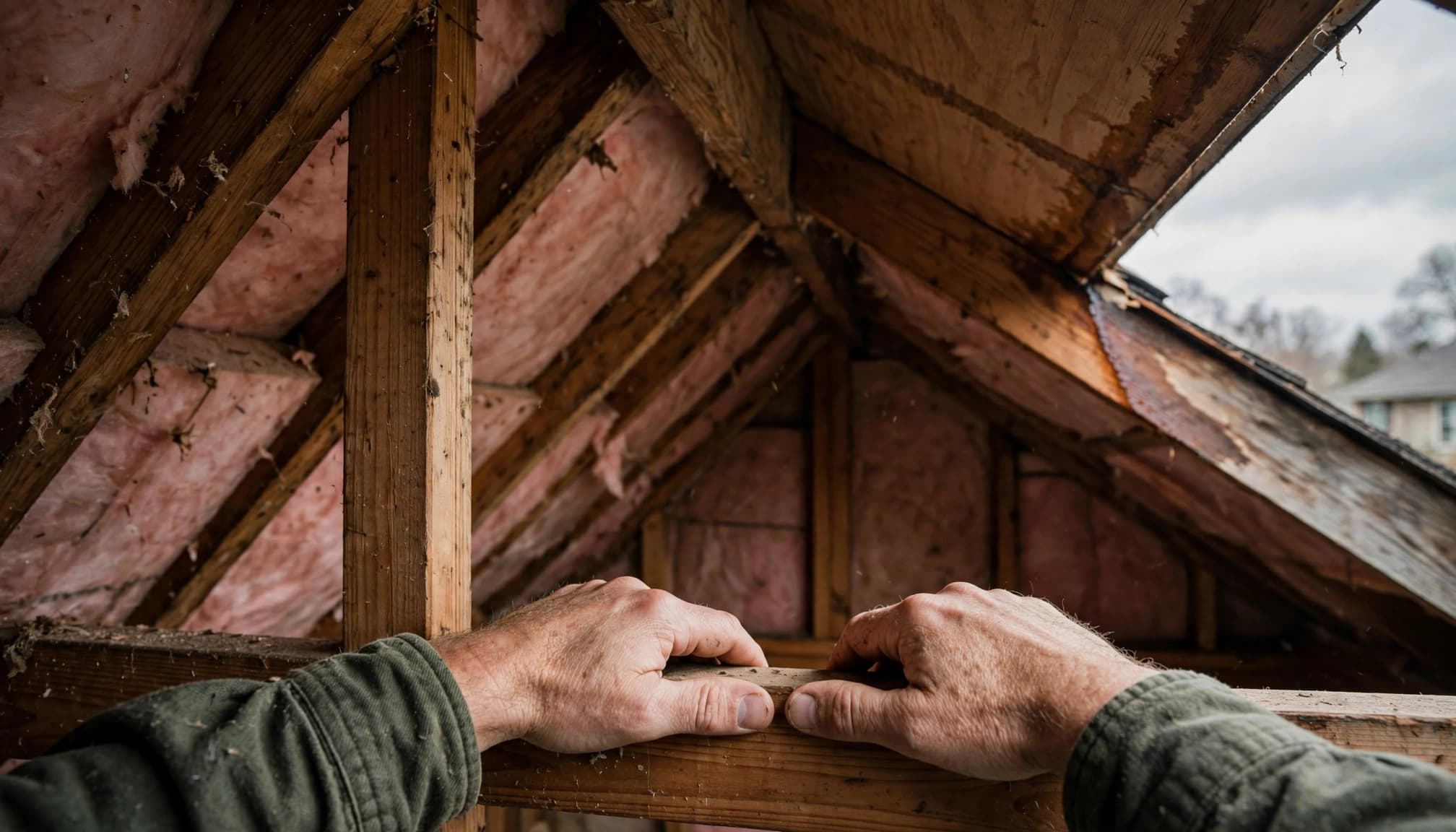
From a safe access point, document wet insulation, staining on sheathing, rusty fasteners, and water tracks along framing. Record locations relative to exterior walls and roof penetrations.
A ceiling stain may sit several feet from the opening. Water can follow underlayment, framing, or sheathing joints before dripping.
Our explanation of hidden ice-dam moisture damage covers why insulation can become wet before ceiling finishes show damage.
Repair vs. Replace: The Decision Framework
When is targeted repair enough?
Residential roof repair makes sense when the opening is localized and surrounding materials remain serviceable. The repair must restore shingle coverage, correct fastening, and reconnect the underlying drainage layers.
A smear of roof cement over a nail doesn’t establish that the concealed assembly is sound. Remove enough covering to determine whether water reached damaged membrane or deteriorated wood.
These comparisons separate a limited repair from a roof-wide scope.
| Factor | Targeted repair | Full replacement |
|---|---|---|
| Cost range | Removal-only work may run $400 to $700; roofing repairs are additional | Architectural-shingle planning range: $450 to $900 per square installed |
| Remaining service life | Surrounding roof retains useful service life | Widespread deterioration limits useful life |
| Deck condition | Localized damaged sheathing can be replaced | Extensive deterioration requires broader opening and replacement |
| Insurance implications | Document the opening and resulting damage | Replacement requires condition and coverage support |
| Material compatibility | Matching shingles and compatible membrane must integrate | A complete compatible assembly can be installed |
The deciding factor is the condition beneath the ice, not the size of the icicles.
What justifies broader replacement?
Residential roof replacement becomes reasonable when brittle shingles prevent sound repairs, fastening defects extend across a slope, or damaged decking covers substantial areas.
For commercial roof repair, use the same condition-based approach. Saturated insulation and widespread attachment failure can support commercial roof replacement.
Commercial roof restoration and roof coatings require a suitable substrate. They don’t correct trapped moisture, deteriorated decking, or blocked drainage.
Material Specs That Matter for This Repair or Replacement
Which shingle specifications affect the repair?
GAF Timberline HDZ, CertainTeed Landmark, and Malarkey Legacy have product-specific exposure, fastening, and installation requirements. Don’t transfer a nail location from one shingle design to another.
Malarkey Legacy carries a Class 4 impact-resistance rating. That classification addresses standardized impact testing, not resistance to ponded ice-dam water.
Shingle impact resistance also doesn’t establish the condition of existing flashing or underlayment. A hail-damaged roof still needs inspection at penetrations and concealed water-management details.
How much ice-and-water protection is needed?
Minnesota ice-barrier requirements extend protection from the eave to at least 24 inches inside the exterior wall line. That measurement isn’t 24 inches up from the gutter.
Overhang depth and roof slope determine the membrane width needed. A single narrow course may not reach the required termination.
Felt and synthetic underlayment aren’t substitutes for the required ice-barrier assembly. Self-adhering polymer-modified bitumen membrane must bond to a suitable deck and integrate with adjacent layers.
Valley protection follows the applicable assembly, product instructions, and local requirements. GAF’s steep-slope field guide addresses leak-barrier and flashing details.
What changes on membrane roofs?
TPO roofing with a 60-mil membrane uses welded seams. EPDM at 45 mils or 60 mils uses its specified seam and flashing system.
Modified bitumen and built-up roofing, or BUR, require different repair materials. Membrane thickness alone doesn’t correct deficient drainage, failed terminations, or wet insulation.
Insurance Documentation and the Claim Process
What evidence supports the reported loss?
A roof insurance claim needs a clear record of what happened, where water entered, and what materials sustained damage. Start with dated wide photographs, then document individual defects.
For hail strikes, photograph the whole slope and close views showing the affected shingle surface. Record wind-lifted tabs without lifting or breaking shingles to create a demonstration.
Inside, photograph ceiling stains, wet insulation, water tracks, and damaged contents. Keep emergency-removal invoices, temporary-protection records, and the dates occupants first noticed leakage.
Describe observations accurately. Granule loss alone doesn’t establish hail damage, and an exposed nail doesn’t establish the complete water path.
How do contractor findings differ from coverage decisions?
An adjuster evaluates the reported cause, policy terms, exclusions, deductibles, and covered damage. A contractor documents physical conditions, repair access, material quantities, and installation requirements.
Separate storm damage from repeated heat-loss conditions. Wind damage can create an opening that later admits backed-up winter water, but the two conditions require separate documentation.
Emergency mitigation doesn’t guarantee reimbursement. Preserve evidence before permanent work covers it, while taking reasonable steps to limit continuing damage.
A written scope should distinguish ice removal, roofing repair, deck replacement, drying, and attic corrections. Those are separate operations with different purposes and costs.
What a Professional Roof Contractor Does Differently
Step-by-step: How is the leak stabilized and opened?
- Protect occupants and contents. Keep people away from sagging ceilings and wet electrical equipment. For active intrusion, Call 651-703-2336 for 24/7 Emergency Roofing.
- Relieve the water backup without damaging the covering. Professional ice dam removal methods can include controlled steaming rather than chopping bonded ice.
- Open enough shingle courses to trace the entry point. Document nail placement, membrane laps, adhesion, and the deck condition before repairs conceal them.
- Remove compromised sheathing back to sound material. Support replacement-panel edges as required, maintain specified spacing, and restore proper fastening.
- Rebuild the membrane, flashing, and shingle assembly. Replace failed pipe boots and document completed details before closing the scope.
How are drying and attic ventilation addressed?
Wet wood doesn’t automatically require replacement. Structurally sound material may remain after drying, but rot, delamination, and lost fastening capacity require correction.
For vented attics, calculate net free ventilating area, or NFA, using manufacturer-rated vent capacities. The prescriptive baseline is 1 square foot per 150 square feet of ventilated space. A 1:300 ratio requires qualifying code conditions.
Air sealing comes before adding insulation over major ceiling bypasses. Keep soffit intake paths open and exhaust ducts connected outdoors.
PNNL’s ice-dam prevention guidance addresses air sealing, insulation, and ventilation together. More ridge ventilation won’t compensate for uncontrolled ceiling leakage.
Cost Ranges for Ice-Dam Roof Leaks in Minnesota (Current Market)
What should a property owner budget?
For November 2026 planning, small removal-only jobs may run about $400 to $700. That isn’t a complete leak-repair price. Opening shingles, replacing decking, rebuilding flashing, and drying interior materials add separate costs.
An architectural-shingle replacement budget of approximately $450 to $900 per roofing square provides a starting range. One roofing square equals 100 square feet of roof surface.
At that range, 20 squares calculates to $9,000 to $18,000 before unusual conditions or additional scope. Roof area differs from the home’s floor area.
A nail-line repair needs a written scope before pricing. The number of visible nails doesn’t establish how much concealed membrane or decking requires replacement.
What changes the final price?
Deck condition, roof pitch, access difficulty, disposal fees, permits, and winter protection affect the total. Multiple roof-to-wall transitions can require more labor than an open, accessible eave.
Tear-off requirements also affect cost. West St. Paul’s roofing handout allows no more than one layer of roof covering, so adding shingles over an existing roof isn’t an acceptable shortcut there.
For a mixed-use building or apartment property, a commercial roof inspection should distinguish pitched-roof work from membrane-roof work. Frozen drains and wet insulation require different quantities, access arrangements, and repair methods.
Frequently Asked Questions
Can I seal an exposed roofing nail with roof cement in freezing weather?
Cold-weather sealant performance depends on the product and surface conditions. Applying material over ice or wet shingles won’t restore the underlying assembly. A contractor should correct the fastening and covering detail after tracing the leak, rather than treating surface sealant as the complete repair.
Can rusty attic nail tips mean condensation instead of a roof leak?
Yes. Warm, humid indoor air can condense or freeze on cold nail tips. Widespread frost suggests a different pattern than a localized water track beneath an eave. However, condensation and roof leakage can occur together, so the inspection must address both.
Why did a ceiling stain appear after the ice dam melted?
Insulation and concealed cavities can hold water before it reaches drywall. A later stain may reflect delayed drainage rather than a new opening. Document the timing and trace moisture through the attic before assuming the leak started where the stain appeared.
Will heat cables prevent the next ice dam?
Heat cables can maintain limited drainage channels when properly designed and installed. They don’t repair exposed fasteners, restore membrane coverage, or seal attic bypasses. Persistent ice buildup still requires correction of the roof’s heat-loss and drainage conditions.
Will replacing asphalt shingles with metal roofing stop ice dams?
No. Snow can melt on warm metal panels and refreeze at cold overhangs. Seams, penetrations, and transitions can still admit backed-up water. Metal roofing also changes sliding-snow hazards, so the replacement design must address snow movement and drainage.
Key Takeaways for a Dry Roof Deck
What establishes the repair scope?
Exposed nails provide a possible route to the deck, but the repair scope must follow documented water entry and material condition. Restoring the covering, membrane, and sound decking addresses the leak path.
What should happen next?
Recurring ice also requires correction of heat loss and drainage, or the same area can face another backup.
For Saint Paul, Minneapolis, and surrounding Twin Cities properties, Get a Free Residential Roof Estimate with a written scope separating emergency work, permanent roofing repairs, and attic corrections.
Need a roof inspection in Saint Paul or the Twin Cities? Call Sellers Roofing Company at +1-651-703-2336 or schedule a free estimate. We are a black-owned, NMSDC-certified MBE roofing contractor with 9+ years experience.
