Last updated: 2026-09-16 by Ted Sellers, Owner
Short answer: Yes. Metal roof ice dams can form when attic heat melts snow above a cold roof edge, as they can on asphalt shingles. Both systems can develop ice dams under those conditions, but water behaves differently. Backed-up water can move beneath shingle tabs, while metal roofing can carry it under panels, seams, transitions, or penetrations.
Key Takeaways
- Metal and shingle roofs can both develop ice dams when attic heat melts snow above a cold roof edge.
- Water may follow different leak paths: beneath shingle tabs or under metal panels, seams, transitions, and penetrations.
- Air sealing, adequate insulation, balanced roof ventilation, and clear drainage help reduce recurring ice dams.
- Snow guards and heat cables can manage sliding snow or localized ice, but they do not correct attic heat loss or roof defects.
- After an ice dam, inspect the attic, roof edge, flashing, gutters, roof deck, and interior for hidden water damage.
Table of Contents
Residential steep-slope roofs
- When metal roof ice dams apply
- How metal and shingle ice dams differ
- Step-by-step: stop recurring ice dams
- What to inspect after an ice dam
Commercial and winter-response concerns
When Metal Roof Ice Dams Apply
Homes with uneven roof temperatures
This applies to steep-slope homes, where roof pitch and uneven temperatures matter more than the roof covering. Examples include standing seam panels, exposed fastener metal, and asphalt shingles. Watch for ice at eaves, valleys, gutters, and below dormers after a thaw.
Minnesota homes with cathedral ceilings, additions, skylights, and complex rooflines have more areas for heat loss and trapped snow. Winter performance also depends on attic insulation and heat loss. A heavy snow load can stress roof components and expose defects. A cold roof surface still matters more than the roof covering.
When the cause may be roof damage
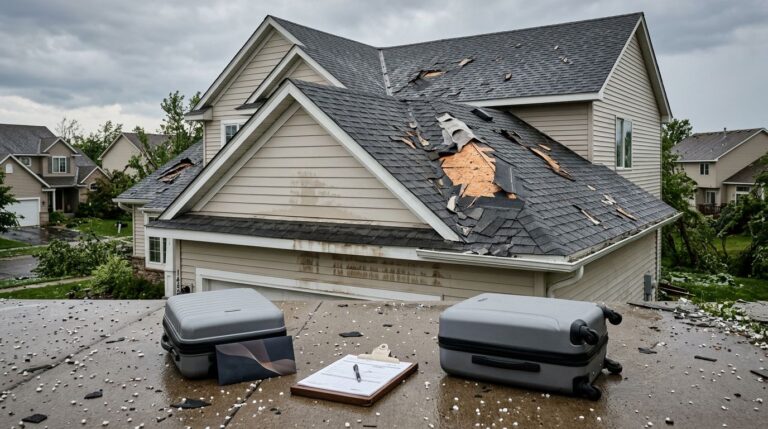
Not every winter leak is an ice dam. Roof leaks may instead result from hail or wind damage, including bent flashing, lifted panels, broken shingle seals, or damaged penetrations.
If water appears after wind-driven rain, before snow arrives, or far from an eave, treat it as a roof-defect investigation. Ice-related water entry usually follows snow and thaw conditions, while hail or wind damage can leak independently. Don’t blame the attic until the roof is inspected.
How Metal Roof Ice Dams Differ
Shingles trap water at the tabs
Ice dams block drainage at the roof edge. Meltwater backs up beneath asphalt shingles, weakening shingle seals, washing away granules, and wetting the underlayment and roof deck.
The visible ice may be limited to one entry roof or north-facing eave. That often points to a local attic bypass, poor ventilation path, or a damaged valley detail.
Metal panels shed snow but can hide leak paths
Metal roof ice dams still occur, even with metal roofing materials that show more self shedding behavior than asphalt shingles. Snow may release more readily, but a warm roof surface can still feed meltwater toward a cold overhang.
Roof pitch affects how snow and water move. Snow guards can help control sliding snow, but they don’t prevent ice dams or correct heat loss.
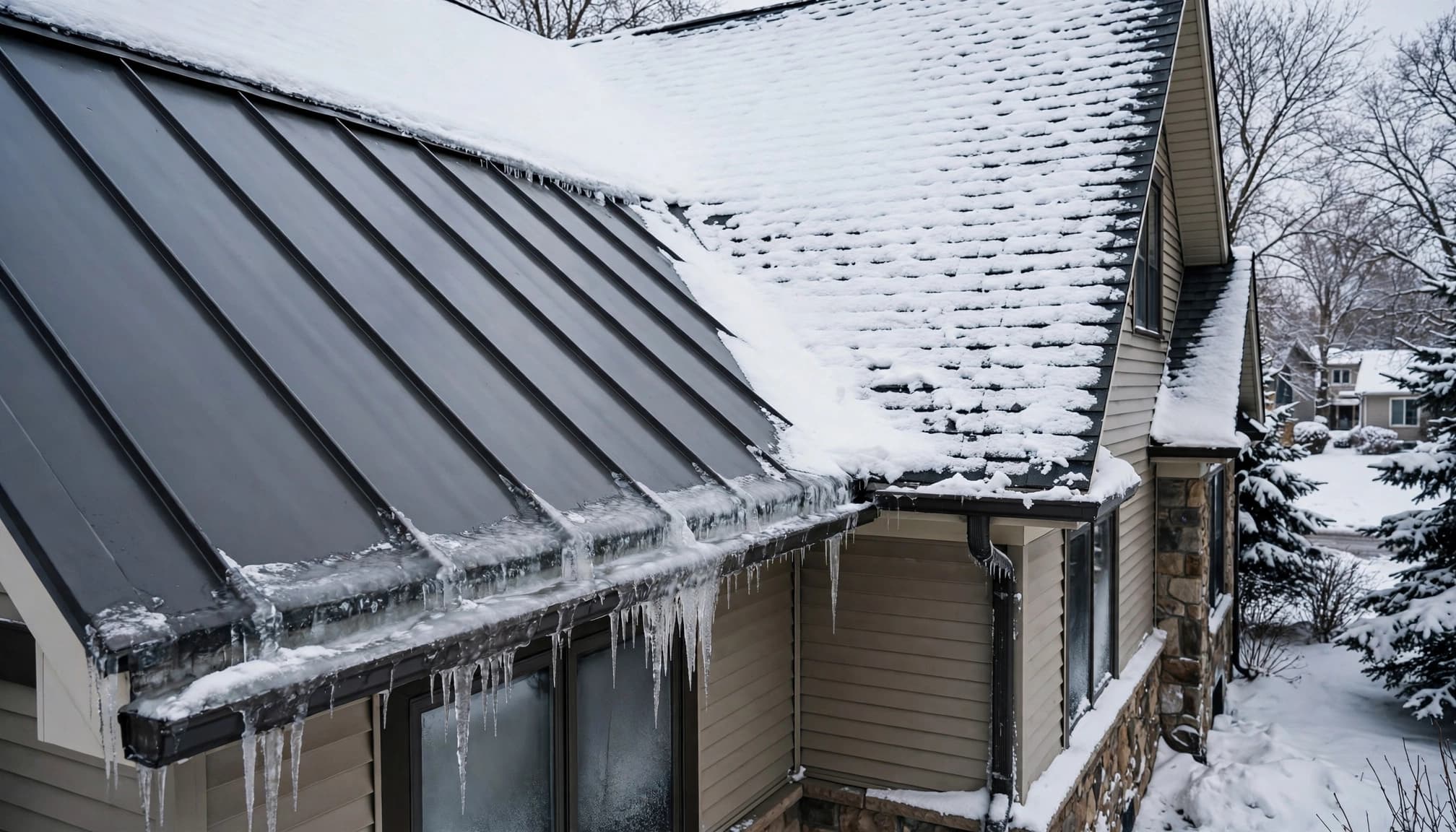
Roof leaks may appear well away from their entry point. Standing seam roof leak detection checks seams, clips, end laps, penetrations, and transitions instead of chasing the ceiling stain.
Step-by-Step: Stop Recurring Ice Dams
1. Stop attic heat from reaching the roof
- Find and seal air leaks around plumbing stacks, wiring holes, top plates, attic hatches, and recessed lights.
- Keep safe clearances around chimneys, recessed lights, and other heat-producing fixtures.
- Check attic insulation after sealing major leaks, then address blocked soffit vents, missing ridge vents, and poor roof ventilation.
Spray foam can help seal select openings, but it must not block soffit airflow or conceal a roof defect. The National Weather Service ice-dam guidance recommends reviewing insulation and ventilation. Verify Minnesota building codes and the existing roof assembly before changing insulation levels.
This approach reduces heat loss and helps limit recurring ice dams during the freeze thaw cycle.
2. Protect the roof edge without damaging it
- Use roof rakes from the ground to pull loose snow from the lower roof edge when conditions are safe.
- Clear gutters and downspouts before deep freezes.
- Arrange professional ice dam removal for thick bonded ice, steep slopes, active leaks, or difficult access.
Don’t chop ice, apply salt, use pressure washers, or drag sharp tools across panels and shingles. Steam removal can open drainage channels without prying on the roof surface.
Snow guards and other snow retention systems can control sliding snow above entrances, decks, and driveways. They protect people and property, but they don’t correct heat loss. Consider the roof’s snow load and applicable Minnesota requirements before adding them.
Heat cables may limit ice in chronic trouble spots, but they aren’t a substitute for air sealing, insulation, drainage, and roof ventilation.
What to Inspect After an Ice Dam
Inside the attic and living space
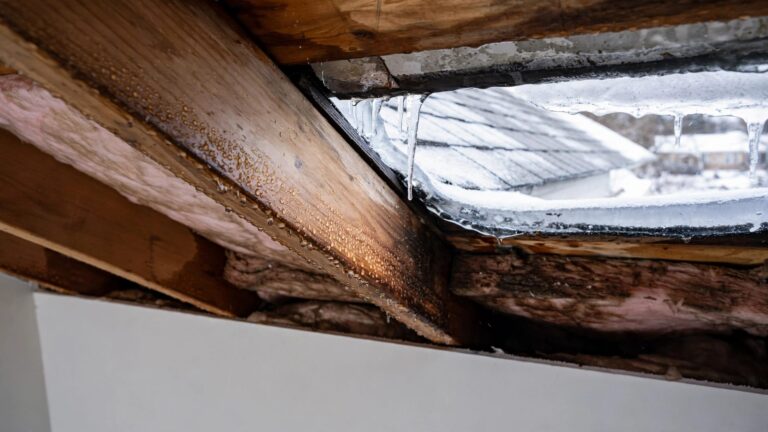
After ice dams thaw, inspect for water stains that appear on warmer days, bubbling paint, damp insulation, frosty roof nails, and soft drywall near exterior walls. These signs can indicate roof leaks, but the visible stain may not mark the entry point. Protect contents and electrical equipment before the next thaw.
Document ceiling stains, roof-edge ice, and any temporary repairs with dated photos. That record helps separate deferred maintenance from new damage for a roof insurance claim.
At the roof edge
After the ice is removed, inspect gutters, flashing, the roof deck, loose trim, lifted shingles, and the ice and water shield. A targeted ice dam removal in Saint Paul service should include a post-removal condition check.
A localized issue may need residential roof repair. Saturated decking, repeated leaks, or broad material failure may support residential roof replacement instead. Get a Free Residential Roof Estimate after reviewing the inspection findings and before authorizing permanent work.
How Commercial Flat Roofs Handle Ice
Drainage changes the diagnosis
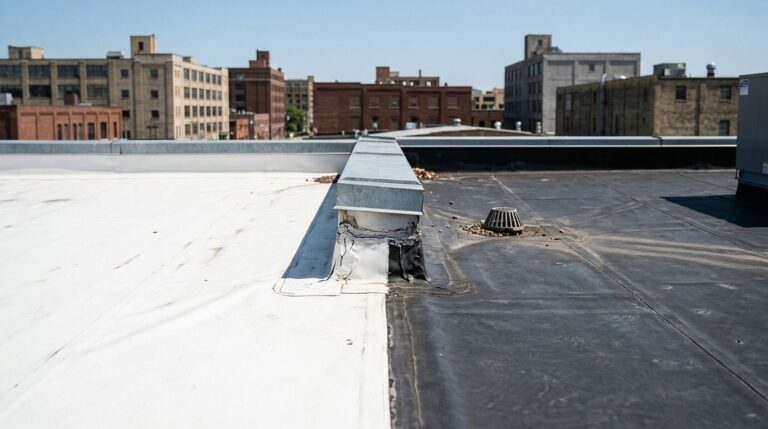
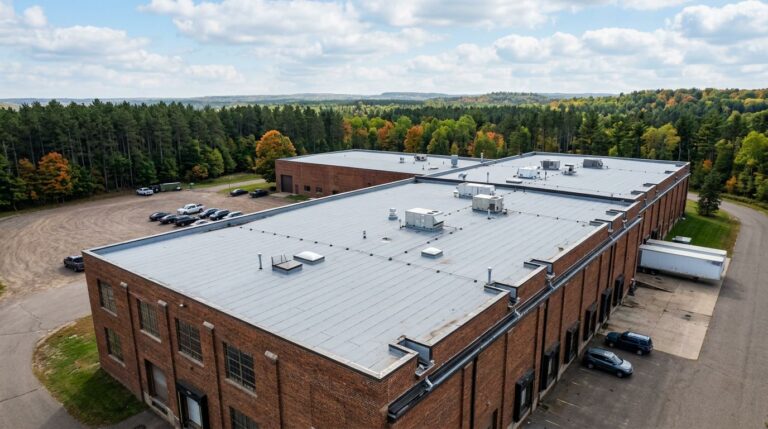
A commercial flat roof does not fail like a steep residential eave. TPO roofing, EPDM, modified bitumen, and BUR depend on open drains, scuppers, seams, flashing, and sound perimeter metal.
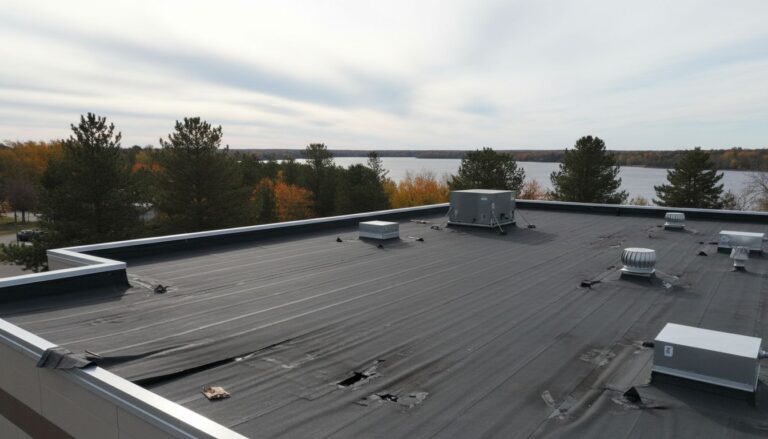
Winter performance also depends on the roof deck handling snow load without worsening ponding or drainage restrictions. Ice dam removal does not repair a blocked internal drain. A commercial roof inspection should identify roof leaks, wet insulation, seam separation, punctures, drainage restrictions, perimeter details, and ponding before choosing commercial roof repair or commercial roof replacement.
Coatings are not a drain repair
Commercial roof restoration and commercial roof coatings can extend a suitable roof system. They cannot correct saturated insulation, failed drainage, or an active seam leak.
For a winter leak on a low-slope building, Get a Free Commercial Roof Inspection before selecting the repair scope. Save photos, moisture findings, and written estimates if an insurer will review the loss.
Frequently Asked Questions
Can metal roofing prevent ice dams entirely?
No. Metal roofing changes how snow and water move, but attic heat loss and a cold roof edge can still form ice dams. A persistent problem may also point to a roof defect.
Do snow guards or heat cables prevent them?
No. Snow guards control sliding, while heat cables provide localized melting. Neither corrects the freeze thaw cycle that causes the problem.
Do attic insulation, air leaks, and roof ventilation all need attention?
Usually, yes. Seal air leaks, review attic insulation, and confirm roof ventilation provides balanced intake and exhaust. If water continues afterward, inspect the roof for defects.
What affects the cost of removing an ice dam?
Cost depends on access, ice thickness, roof pitch, emergency timing, and whether repairs are needed. A contractor can assess the conditions before recommending work.
How soon should I call?
Call immediately when water is entering, a ceiling is sagging, gutters are loose, or ice threatens people below. Use roof rakes only from the ground when conditions are safe. Call 651-703-2336 for 24/7 Emergency Roofing.
Final Thoughts
Fix the heat path, not only the ice
Metal and shingle roofs can both develop ice dams from roof-temperature or drainage problems. Correcting the heat path and drainage supports better winter performance. A cold, dry roof assembly improves thermal performance and prevents more damage than repeated scraping.
Use a documented repair plan
Sellers Roofing Company provides Saint Paul roofing, Minneapolis roofing, Twin Cities roofing, and Minnesota roofing services from 801 Transfer Road, Saint Paul. Since 2017, its GAF-certified, union-built roofing crews, including IUPAT Local 96, have completed more than 1,100 roofs under MN Builder Contractor License 803862.
Need a roof inspection in Saint Paul or the Twin Cities? Call Sellers Roofing Company at +1-651-703-2336 or schedule a free estimate. We are a black-owned, NMSDC-certified MBE roofing contractor with 9+ years experience.