Last updated: 2026-09-28 by Ted Sellers, Owner
A roof claim rarely moves in one straight line. Minnesota homeowners often need to document damage, review an estimate, answer follow-up questions, and decide whether a repair scope actually matches the roof before work begins.
What Does a Minnesota Roof Claim Timeline Look Like After Hail?
A Minnesota roof claim timeline usually starts with documentation and prompt reporting, followed by an inspection, written estimate, deductible and coverage review, then approved repairs or a supported request to correct the scope. Keep every estimate, photo, policy form, and message tied to the date of loss.
Most hail claims move from same-day photos and temporary protection to an adjuster inspection, written scope, payment, and possible supplement. A Minnesota roof claim timeline usually takes several weeks, not a fixed number of days. Give prompt written notice, preserve the roof evidence, and keep permanent work on hold until the damage is documented.
One dented vent doesn’t settle a claim. You need a file that separates new hail impacts from old wear, freeze-thaw damage, and leaks that started elsewhere. The dates and photos built in the first few days control much of the later conversation.
When This Applies
The damage must tie back to a hail event
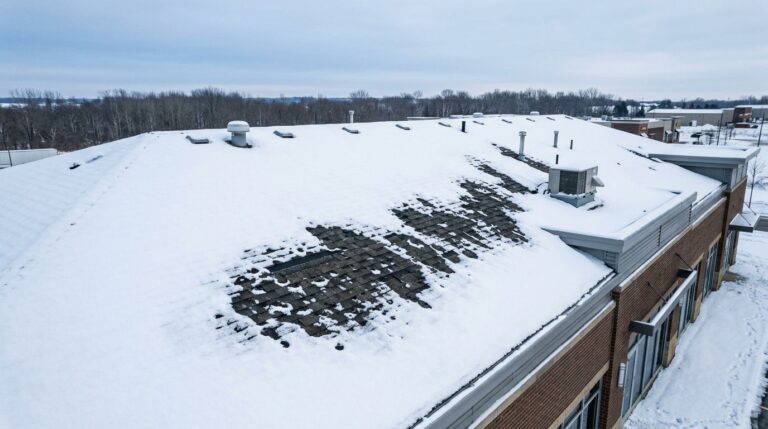
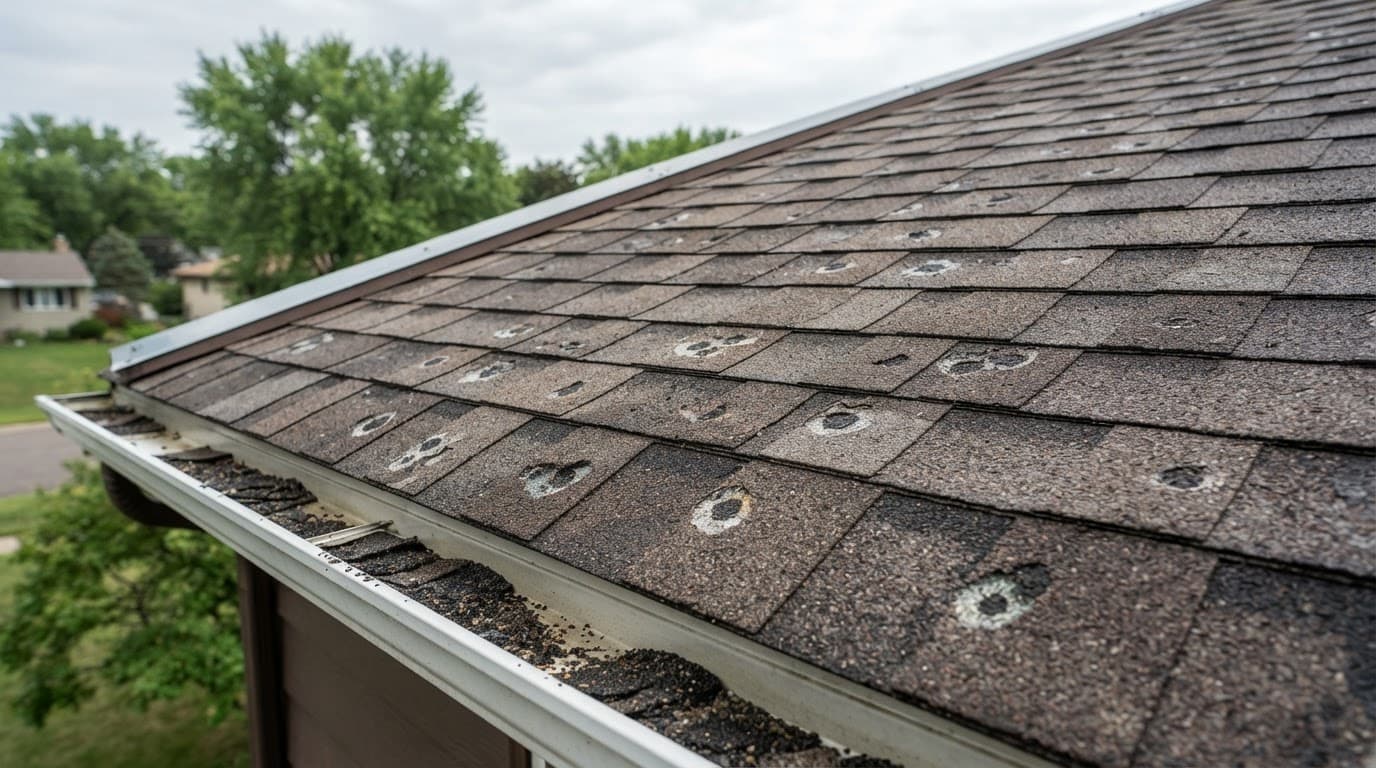
This applies to homeowners, associations, and commercial owners who found fresh damage after a known hailstorm. A storm damage roof can show bruised asphalt shingles, dents in metal roofing, chipped vents, loose flashing, damaged gutters, or a new interior leak.
A hail damage roof may look dry at first. It doesn’t apply to long-term granule loss, chronic ponding, aged sealant, or a leak that predates the storm. The claim question is causation, not whether the roof is old.
Homes and commercial buildings follow different claim paths
Homeowner and commercial policies have different forms, deductibles, valuation methods, and notice requirements. Give prompt written notice after discovery, read the policy, and follow the Minnesota Department of Commerce residential claim guidance for a home loss.
Commercial deadlines and proof requirements are usually controlled by the policy. In either case, write down when occupants first saw drips, debris, ceiling stains, or damaged materials.
Step-by-Step
Work through the first 72 hours
-
Stop added damage without erasing evidence. Keep people away from unsafe areas. Cover exposed interior property, move inventory, and use temporary dry-in work if water is entering. Save receipts and take photos before and after the work. If the building is actively leaking, Call 651-703-2336 for 24/7 Emergency Roofing.
-
Create a time-stamped record. Photograph every roof slope you can safely see from the ground, plus gutters, downspouts, vents, siding, screens, rooftop units, and interior staining. Note the storm date, hail size if known, and the time each leak appeared.
-
Get a system-specific inspection and report the loss. A contractor should identify fresh impacts, damaged flashing, moisture conditions, and likely water paths. Give the insurer prompt notice of the roof insurance claim while the inspection is scheduled or underway. Do not wait for an interior leak if the roof clearly took hail.
-
Compare the scope before authorizing permanent work. Ask whether the findings support residential roof repair, residential roof replacement, a targeted patch, or a larger project. For a home with documented hail loss, Get a Free Residential Roof Estimate after reviewing the carrier’s initial scope.
The Minnesota Roof Claim Timeline After You File
The practical order of a hail claim
A Minnesota roof claim timeline has predictable stages, but the carrier’s workload, inspection access, policy terms, and scope complexity affect the pace.
| Claim stage | What happens | Timing to watch |
|---|---|---|
| Notice of loss | You report hail damage and provide the storm date. | Give notice promptly after discovery. |
| Adjuster inspection | The carrier documents visible damage and prepares a first scope. | Minnesota has no general statewide inspection deadline. |
| Contractor review | The contractor compares roof findings against the carrier scope. | Do this before permanent work begins. |
| Proof of loss | The insurer may ask for a formal, sworn form. | Homeowner policies can require it within 60 days of a qualifying certified-mail demand. |
| Payment and depreciation | The carrier may issue actual cash value first. | Recoverable depreciation often follows completed, documented work. |
| Supplement or appraisal | New covered findings may require a revised scope. | Timing depends on policy terms and the evidence. |
An initial payment may be actual cash value, meaning depreciation and the deductible were removed. Replacement-cost policies often release recoverable depreciation after the covered work is complete and the final invoice is submitted.
Proof of loss and appraisal can create hard deadlines
For homeowner claims, Minnesota Statute 65A.296 allows an insurer to require a completed proof of loss within 60 days after the insured receives a qualifying certified-mail notice. Missing that deadline can create a serious problem, so read every carrier letter.
For hail losses, Minnesota’s appraisal statute permits either side to demand appraisal in writing when the dispute is about the amount of loss. Each side selects an appraiser within 10 days. Appraisal can resolve value and scope disputes, but it usually does not decide whether old wear, poor maintenance, or a policy exclusion caused the damage.
Commercial Hail Claims Need a Different Record
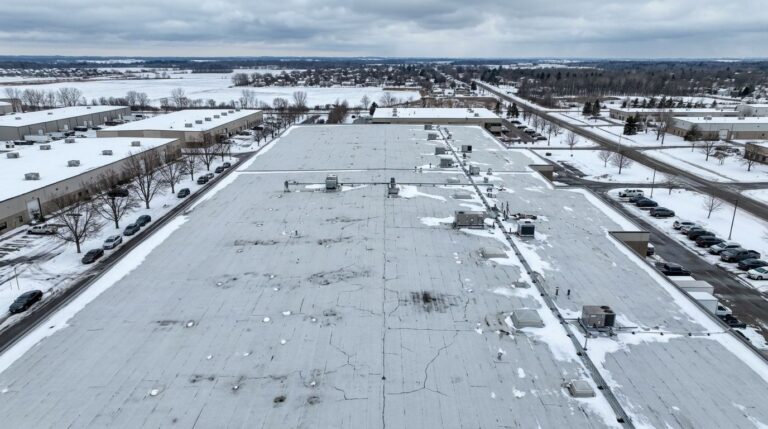
A commercial flat roof can hide damage below the surface
A commercial flat roof needs more than a walk-around for dents. TPO roofing and EPDM can have punctures, open seams, lifted perimeters, crushed insulation, or moisture below an intact-looking membrane. Modified bitumen and BUR can show torn plies, failed laps, blisters, and damage below the top surface.
A commercial roof inspection should identify the membrane type, flashings, drains, parapet walls, rooftop equipment, and moisture spread. When the leak path is unclear, commercial roof leak detection in Saint Paul can help connect an interior stain to the actual opening.
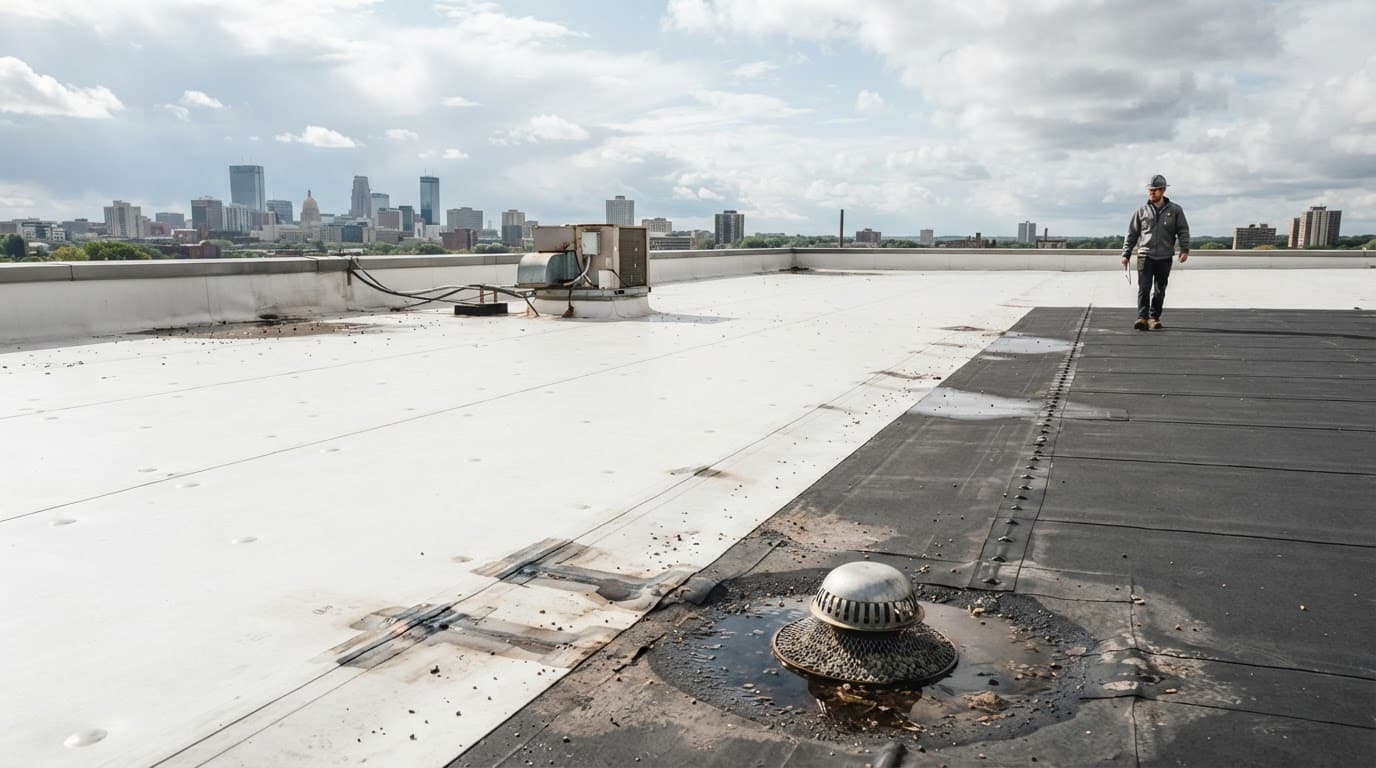
On a low-slope roof, the ceiling stain often marks where water exited the building, not where it entered the roof system.
Match the remedy to the damage, not the first estimate
An isolated puncture with dry insulation may support commercial roof repair. Widespread wet insulation, multiple membrane breaches, or failed attachment across connected areas can point toward commercial roof replacement.
Commercial roof restoration and commercial roof coatings can extend the service life of a sound membrane. They do not correct saturated insulation, active seam failure, or fresh hail openings. For a documented low-slope assessment, Get a Free Commercial Roof Inspection.
Where Hail Claims Stall
The carrier scope may miss related work
A carrier’s first estimate is a starting point, not a final diagnosis. It may omit flashing, underlayment, wet insulation, edge metal, code-required details, or damaged components discovered after tear-off.
Request a reinspection or submit a supplement with marked photos, measurements, moisture readings, test-cut findings, invoices, and a written explanation of the missed work. A supplement corrects documented covered damage. It is not a way to add upgrades or unrelated maintenance.
Old wear and winter damage can complicate the file
Minnesota roofing takes hail, freeze-thaw movement, snow loads, wind-driven rain, and ice buildup. Saint Paul roofing reports, Minneapolis roofing reports, and wider Twin Cities roofing claims need property-specific evidence, not assumptions based on a neighborhood storm map.
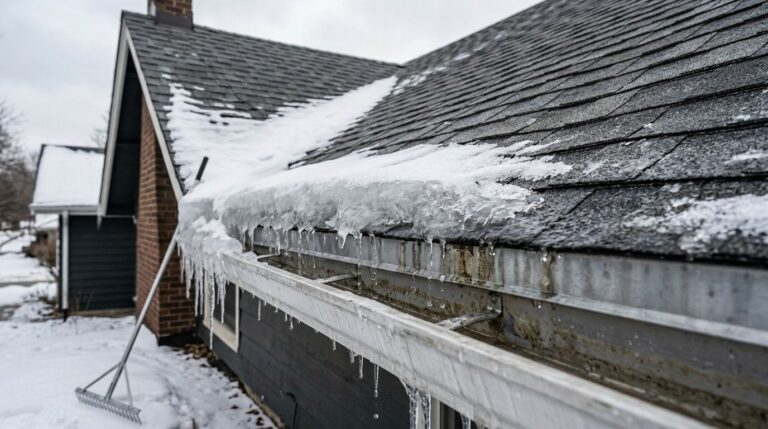
Keep ice dam removal invoices separate unless policy language and evidence support coverage. Ice-related water entry is not automatically handled like hail. A prior repair also doesn’t erase new damage, but the report should separate old defects from fresh storm impacts.
Final Takeaway
Keep the claim factual
The fastest path to a fair claim is a clean record: storm date, photos, temporary mitigation receipts, a system-specific inspection, and a written scope tied to the actual damage.
Don’t let a temporary patch become the final diagnosis. A sound Minnesota roof claim timeline gives the insurer enough evidence to evaluate the loss and gives you a clear basis for repair, replacement, or a supplement.
Frequently Asked Questions
How long does an adjuster have to inspect a hail-damaged roof?
Minnesota does not set one statewide deadline for every adjuster inspection. Contact the insurer promptly, document the damage, and ask for a scheduled inspection date in writing. Commercial policies may set different notice and cooperation requirements.
Can I make permanent repairs before the adjuster arrives?
Use temporary dry-in work to stop active water. Avoid broad permanent repairs, tear-off, or coating work until the roof is photographed and inspected. Early permanent work can remove evidence of fresh impacts, moisture spread, or damaged materials.
What if the insurer only approves a partial repair?
Compare the carrier’s scope line by line against the contractor’s report. Ask for a supplement if photos, moisture findings, measurements, or required related work show the approved scope does not restore the covered damage properly.
Does an ice dam claim follow the same process as a hail claim?
No. Ice dams and hail involve different causes of loss, damage patterns, and policy provisions. A hail appraisal process should not be assumed for an ice-related claim. Review the policy and document the actual water path.
Should my roofer attend the adjuster inspection?
Yes, if scheduling allows. A contractor can point out damage and explain repair requirements, but cannot decide coverage. Sellers Roofing Company is GAF certified, holds MN License 803862, and uses union-built roofing crews that include IUPAT Local 96 members.
For a step-by-step view of what to save and when, read our Minnesota roof storm damage and insurance claims guide.
Need a roof inspection in Saint Paul or the Twin Cities? Call Sellers Roofing Company at +1-651-703-2336 or schedule a free estimate. We are a black-owned, NMSDC-certified MBE roofing contractor with 9+ years experience.