Last updated: 2026-10-14 by Ted Sellers, Owner
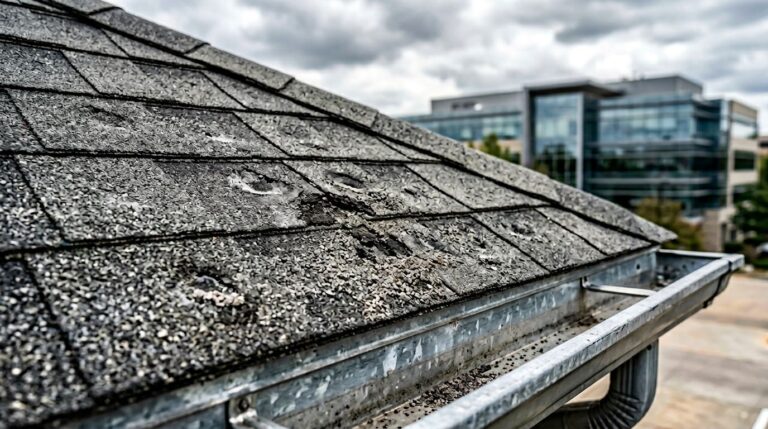
Check roof valley metal for ice dam damage in Minnesota from the ground first, especially after snow. Look for bent metal, lifted shingles, displaced flashing, and water stains below the valley. Don’t climb an icy roof or pry metal loose.
After safe ice removal or thawing, a roofer can inspect concealed laps, fasteners, underlayment, and decking. Active leaks need immediate protection before permanent repairs.
Contents
- When This Applies
- What Causes Roof Valley Ice Damage?
- Step-by-Step
- How Do You Remove Valley Ice Safely?
- How Do You Prevent Another Ice Dam?
- Does Valley Damage Need Repair or Replacement?
- Key Takeaways
- Frequently Asked Questions
When This Applies
Which roofs need a valley inspection?
This applies to sloped roofs where two roof planes meet at a roof valley, especially above heated rooms. Valleys beside dormers, additions, and intersecting gables collect runoff from both slopes.
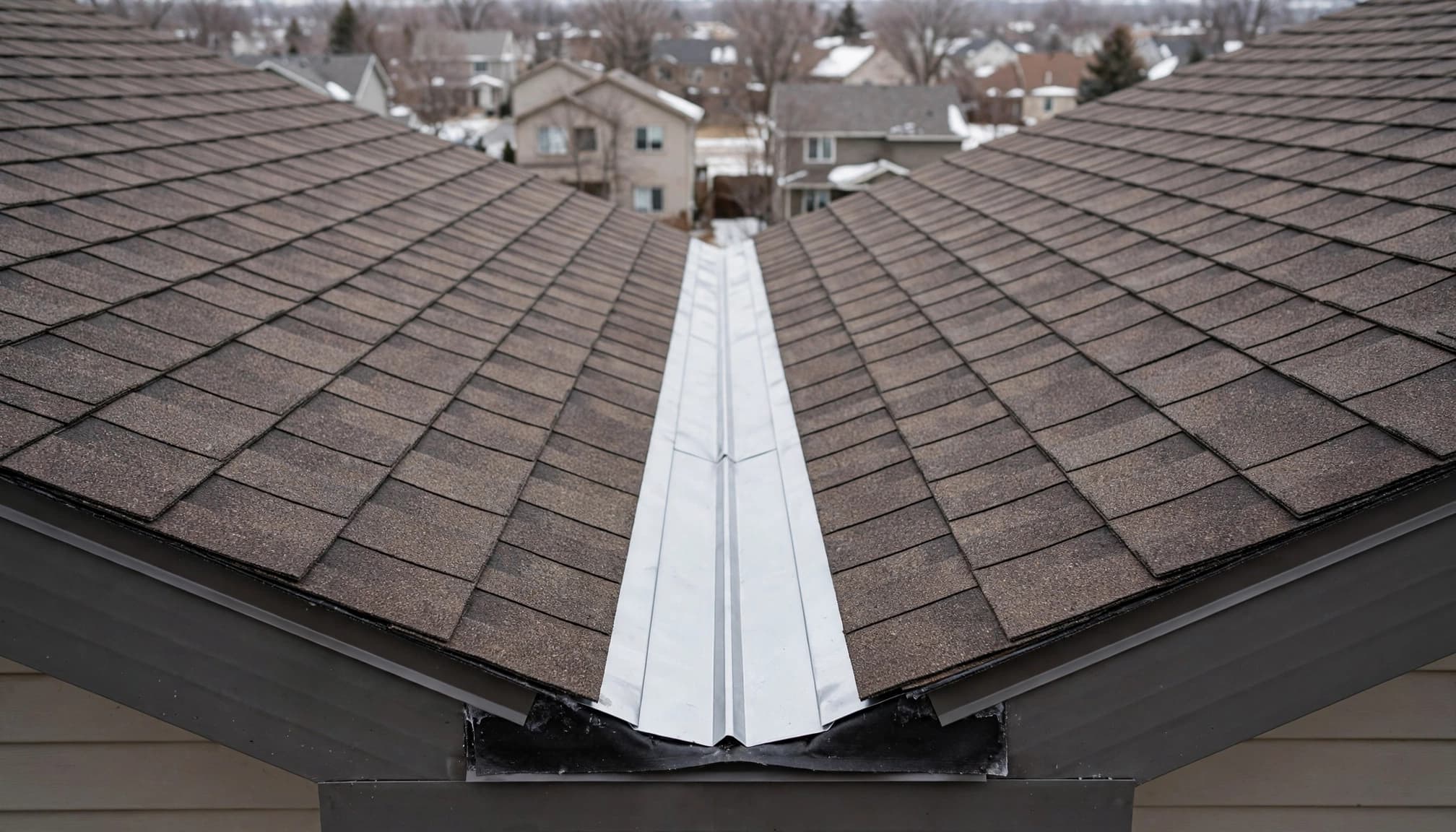
On an open valley, you can see the metal channel. On a closed valley, roofing covers it. Ground-level observation can’t confirm the condition of hidden flashing.
Both asphalt and metal roofs can develop an ice dam. Older Saint Paul and Minneapolis homes with complex rooflines or finished attics may have hidden heat leaks near the valley.
When does this inspection need a different approach?
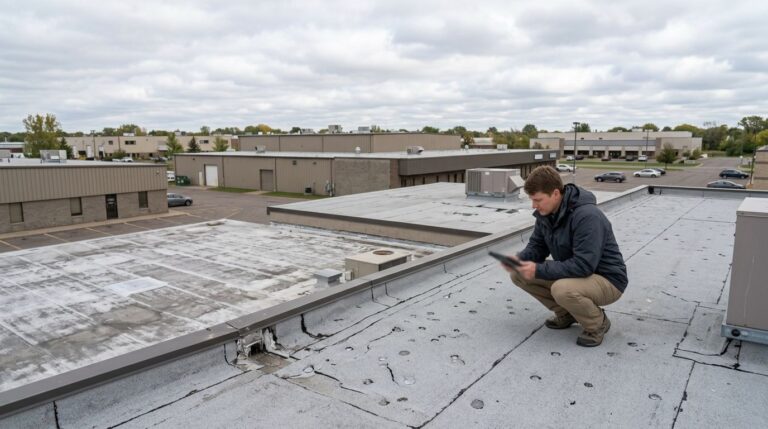
A commercial flat roof usually needs a drainage and membrane inspection rather than a residential valley inspection. TPO, EPDM, modified bitumen, and BUR systems can leak around frozen drains, scuppers, seams, and equipment curbs.
Cathedral ceilings and unvented roof assemblies also need different thermal evaluations. Don’t assume they need standard soffit-to-ridge ventilation.
Sagging roof surfaces, cracking sounds, or visible structural movement require urgent evaluation. A normal valley inspection doesn’t establish whether the building can carry its snow load.
What Causes Roof Valley Ice Damage?
Why does ice collect in the lower roof valley?
Wind deposits snow in valleys, where it stays trapped. These channels often hold more snow than nearby roof areas.
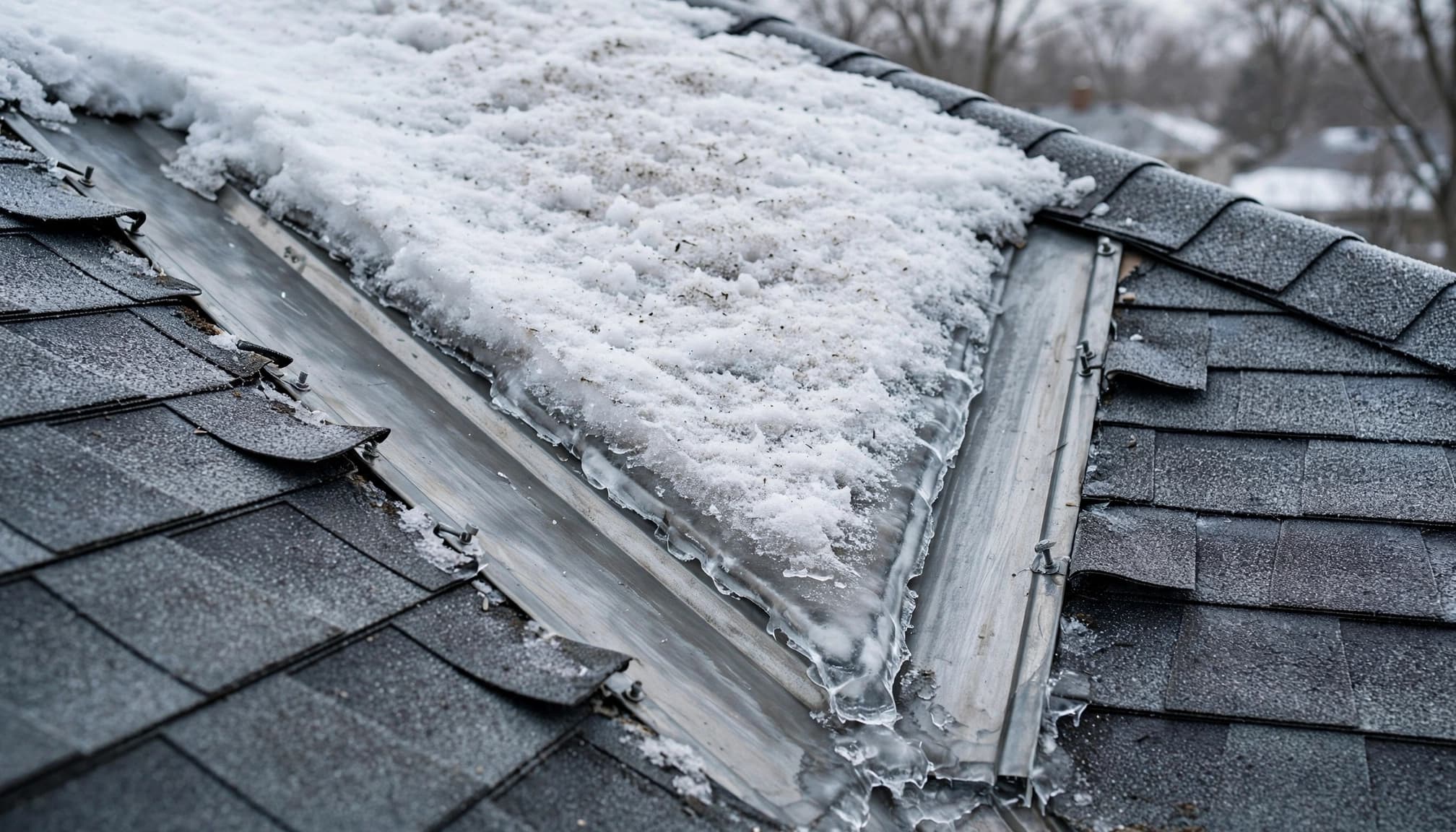
Heat loss through the ceiling warms the upper roof deck. Meltwater runs downhill, slows against packed snow, and refreezes in the colder lower valley.
Under some conditions, shaded roof surfaces can be 10 to 20 degrees colder than sunlit areas. The overhang also lacks the household heat that reaches the roof above occupied rooms.
The National Weather Service’s ice dam guidance explains how insulation and ventilation help limit this temperature split.
Why can deep snow increase melting underneath?
Snow adds roughly R-1 per inch, though density and moisture affect its insulating value. Deep valley snow can hold heat beneath the snowpack.
Common fibrous insulation provides roughly R-2.2 to R-3.8 per inch, not across an entire attic. Snow and attic insulation shouldn’t be compared without accounting for depth.
Roof color alone doesn’t establish the cause. Our explanation of dark shingles and ice dams separates solar warming from household heat loss.
Step-by-Step
What can you inspect without climbing?
- Photograph the entire roof valley from a safe spot on the ground. Include the upper intersection, lower outlet, eave, and gutter. Note whether the valley is shaded and whether ice appears during a thaw.
- Look for a raised ice ridge across the lower valley. Icicles alone don’t prove metal damage. Water backing up behind the ridge, uneven melting, or ice pushing beneath shingle edges warrants closer evaluation.
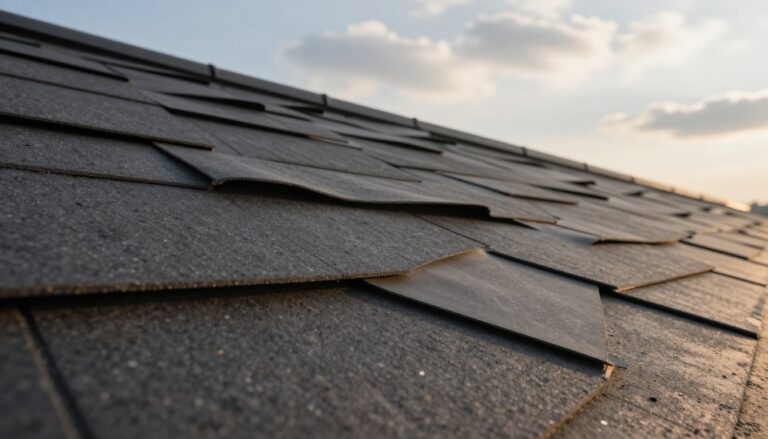
- Compare visible metal with adjacent straight sections. Look for buckling, a raised edge, separated laps, rust streaks, or metal pulled away from the roof. Don’t reach up to bend flashing back into place.
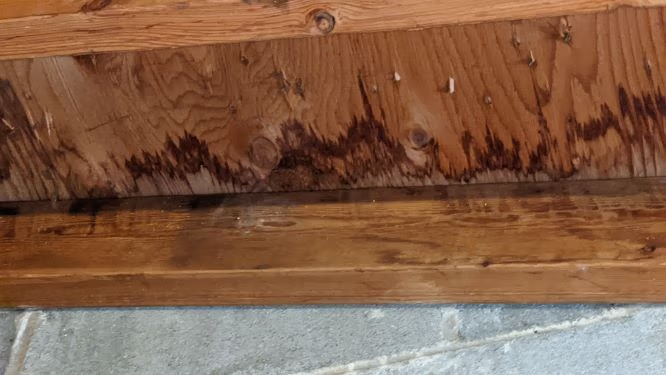
- Inspect indoors beneath and beside the valley. Photograph ceiling stains, bubbling paint, and damp trim. Water can travel along framing, so the stain may be several feet from its entry point.
What should be inspected after removal or thawing?
- Have the exposed valley checked under safe, dry conditions. The inspection should evaluate metal splits, punctures, corrosion, displaced laps, and exposed or backed-out fasteners. Shingles must direct water into the channel without obstructing it.
- Have concealed components evaluated where evidence justifies opening the roof. Failed underlayment, wet decking, and loose attachments may exist beneath metal that looks intact. Avoid unnecessary dismantling when the water path remains uncertain.
- Obtain a written scope that separates drainage obstruction, roofing damage, and interior moisture. Photograph findings before repairs conceal them. Recheck affected rooms because damp materials can continue releasing moisture after the ice disappears.
How Do You Remove Valley Ice Safely?
What can you do from the ground?
Use a roof rake to remove loose snow from the lowest 3 to 4 feet of accessible roof. Work from the ground, away from falling ice and overhead electrical lines.
Reduce the snow feeding the valley outlet and nearby gutters without scraping the roof covering or striking metal. Leave a protective snow layer rather than dragging the rake directly against it.
Calcium chloride can create a drainage channel, but it’s a temporary measure with material and landscaping risks. Use only a product compatible with the roofing assembly.
Fill a nylon stocking with calcium chloride and position it vertically across the dam, along the downslope drainage direction. Its lower end should extend beyond the ice ridge. Use this method only when placement requires no climbing or reaching beneath unstable ice.
Cover nearby shrubs with lightweight tarps to intercept runoff. Don’t use rock salt or sodium chloride, which can damage roofing components and plants.
When should professionals perform ice dam removal?
Bonded ice, steep valleys, inaccessible outlets, and active leaks call for professional help. Low-pressure steam can melt ice without prying against the roof covering or flashing.
Don’t use a hatchet, ice pick, shovel, propane torch, or heat gun. Mechanical impact can tear roofing, while concentrated heat creates damage and fire risks.
For active water entry, Call 651-703-2336 for 24/7 Emergency Roofing. Keep people away from wet electrical fixtures and unstable ceilings.
How Do You Prevent Another Ice Dam?
What should be corrected in the attic first?
Air sealing comes before insulation. Seal bypasses around light fixtures, attic hatches, plumbing and wiring penetrations, and the tops of interior walls.
Chimneys, flues, and heat-producing fixtures require fire-safe materials and clearances. Don’t apply ordinary foam against hot components.
Older cold-climate guidance often cited R-30 as a minimum and R-38 as preferable. Many Minnesota attic upgrades now target R-49 to R-60, depending on the assembly. R-38 may require about 12 inches of fiberglass or cellulose, but product ratings determine the actual depth.
The PNNL attic prevention guide treats air sealing, insulation, and ventilation as a coordinated system for ice dam prevention.
For vented attics, eave baffles keep insulation out of the soffit-to-ridge airflow path. Ventilation supports temperature control after sealing. Powered attic fans don’t correct ceiling leakage and can draw additional indoor air upward.
Where do cables, panels, and drainage improvements fit?
Heat cables can maintain drainage channels in recurring trouble spots. They consume electricity while operating, potentially throughout winter, and don’t repair heat loss. Installation must follow product instructions and applicable electrical rules.
Heated valley panels and metal ice belts also manage localized ice or runoff. They need compatible transitions and a drainage route beyond the cold edge. Neither guarantees a leak-free roof.
Clear gutters help drainage, but dams can form without clogged gutters. Complex valleys, dormers, and additions may need redesigned drainage or roof details alongside other repairs.
Does Valley Damage Need Repair or Replacement?
When is a localized repair enough?
Residential roof repair may be enough when damage is limited to one flashing section or a small shingle area. The surrounding covering, decking, and underlayment must remain serviceable.
Metal that has split, lost its protective coating, or pulled free may need replacement rather than surface sealant. Caulk over a damaged lap doesn’t restore concealed waterproofing.
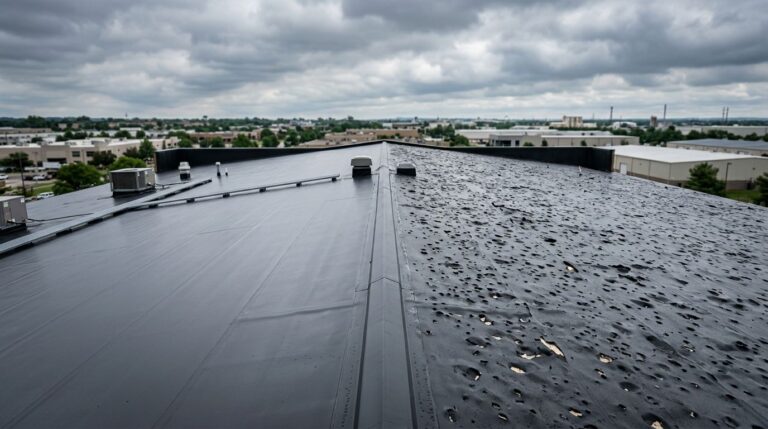
A hail-damaged roof hidden beneath snow can have separate defects. Document storm-created openings independently of recurring ice backup.
When does replacement become reasonable?
Residential roof replacement becomes more reasonable with widespread brittle shingles, deteriorated decking, or repeated failures across multiple valleys. Icicles alone don’t justify replacing the roof.
During reroofing, a self-adhering ice barrier membrane helps block water intrusion at vulnerable eaves. Hopkins’ ice barrier requirements specify protection extending at least 24 inches inside the exterior wall line. The membrane and valley metal serve different functions, so valley protection also needs compatible underlayment and flashing details.
We provide repair and replacement assessments throughout the Twin Cities. Get a Free Residential Roof Estimate when visible damage needs a written scope.
Key Takeaways: Keep the Valley Cold and Clear
Address water entry before permanent repairs
Inspect from the ground and protect occupied areas if water enters. Remove bonded ice without impact, then assess exposed and concealed valley components.
Correct the conditions that caused the backup
Sound flashing needs controlled heat loss and clear drainage through Minnesota freeze-thaw cycles. Base repairs on documented damage, then address the causes to support ice dam prevention.
Frequently Asked Questions
Does homeowners insurance cover ice dam damage?
Coverage depends on the policy and the cause of the ice dam. Recurring leaks, wear, and deferred maintenance may be excluded, while sudden interior water damage may be covered. Keep dated photos, removal receipts, and written findings for a roof insurance claim. The dam itself doesn’t establish coverage.
Are roofers responsible for recurring ice dams?
Responsibility depends on the contracted work and any documented defect. Incorrect flashing or underlayment may point to an installation issue. Existing attic bypasses, inadequate insulation, and blocked ventilation may fall outside a reroofing scope unless that work was included.
How many inches of snow can damage a roof?
There’s no universal safe depth. Wet snow weighs more than dry snow, and valley drifts concentrate snow loads. Roof span, framing, previous damage, and drifting affect how much snow a roof can hold. Sagging, unusual cracking sounds, or structural movement require urgent evaluation, not continued monitoring of snow depth.
Can an ice barrier replace valley metal?
No. The membrane protects beneath the covering when water backs up; metal directs normal runoff where the roof design uses exposed valley flashing. Each component has a separate function. A closed shingle valley may use a different approved assembly without exposed metal.
Why does the ceiling still drip after removal?
Water already beneath the roofing or inside insulation can keep draining after the outlet opens. Continued dripping can also indicate a separate flashing failure or roof opening. Persistent wetness needs follow-up inspection and drying, even when the visible ice is gone.
Need a roof inspection in Saint Paul or the Twin Cities? Call Sellers Roofing Company at +1-651-703-2336 or schedule a free estimate. We are a black-owned, NMSDC-certified MBE roofing contractor with 9+ years experience.