Last updated: 2026-08-14 by Ted Sellers, Owner
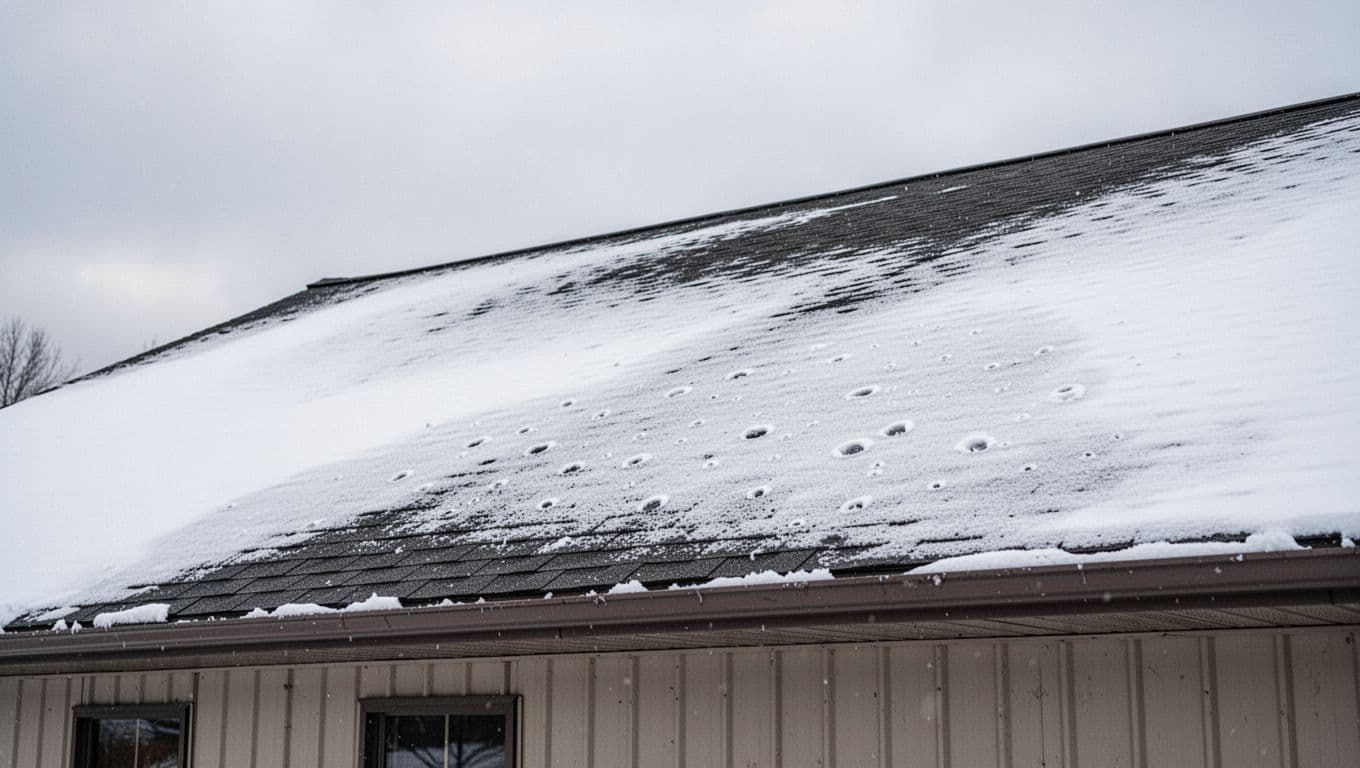
Yes. Snow can cover bruises, granule loss, and small cracks on asphalt shingles until thaw. It can also keep the surface wet and cold, which makes soft impact marks harder to spot. By spring, melting, drying, and freeze-thaw cycles often reveal damage that looked minor, or invisible, in winter.
When This Applies
Which commercial roofs fit this question
This applies to commercial properties with asphalt shingle sections, not only houses. Think retail entries, mansards, steep dormers, office canopies, and apartment roof accents. If hail hit before a long snow period, the snowpack can act like a blanket over the evidence.
Minnesota buildings with mixed roof systems need extra care. One edge may have shingles while the main footprint has a membrane roof. Age matters too. Older shingles bruise faster, and prior wear makes new hits harder to separate from normal loss.
When it doesn’t fit
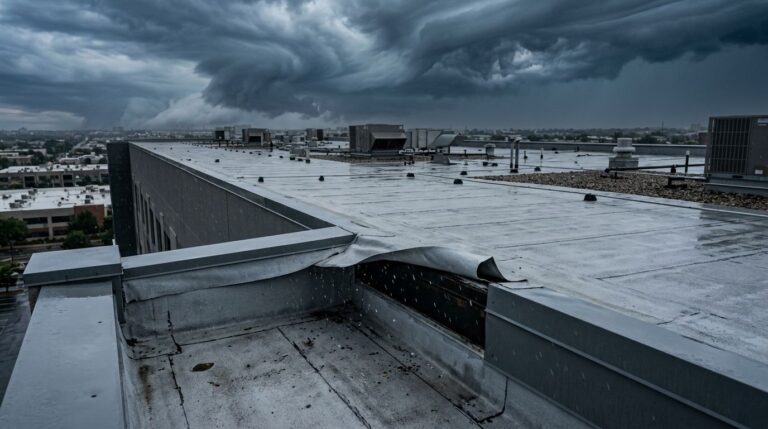
If your building has only TPO, EPDM, or modified bitumen, the question changes. Snow can still hide impact damage, but the signs aren’t the same. A low-slope section may call for commercial flat roof repair, not shingle work.
Fresh spring hail behaves differently because rain often exposes damage fast. Still, as this Minnesota overview of hidden roof hail damage explains, small impacts can stay out of sight before leaks start.
Snow hides damage. It doesn’t reverse it.
Step-by-Step
Before the melt starts
- Check storm dates, radar reports, security footage, and maintenance logs. If hail hit before snow piled up, early surface clues may have disappeared before anyone inspected the roof.
- Map every shingled roof area. Many business owners focus on the main membrane roof and forget the shingled canopy, mansard, or entry slope.
As snow pulls back
- Watch for uneven melt, dark spots, and granules collecting in gutters. Those clues don’t prove hail, but they show where the shingle surface may have lost protection.
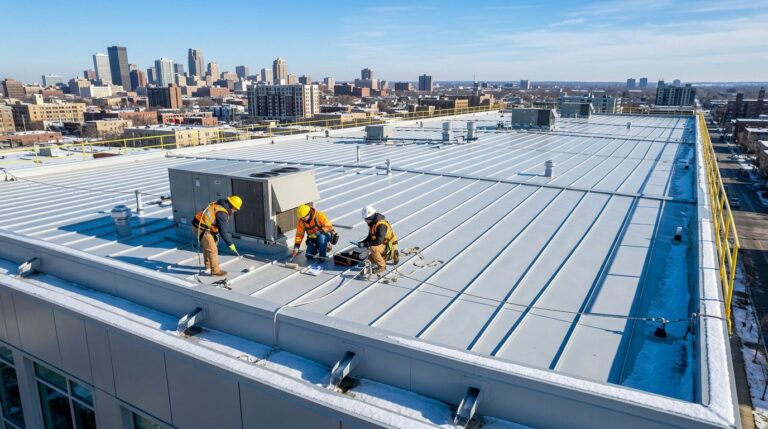
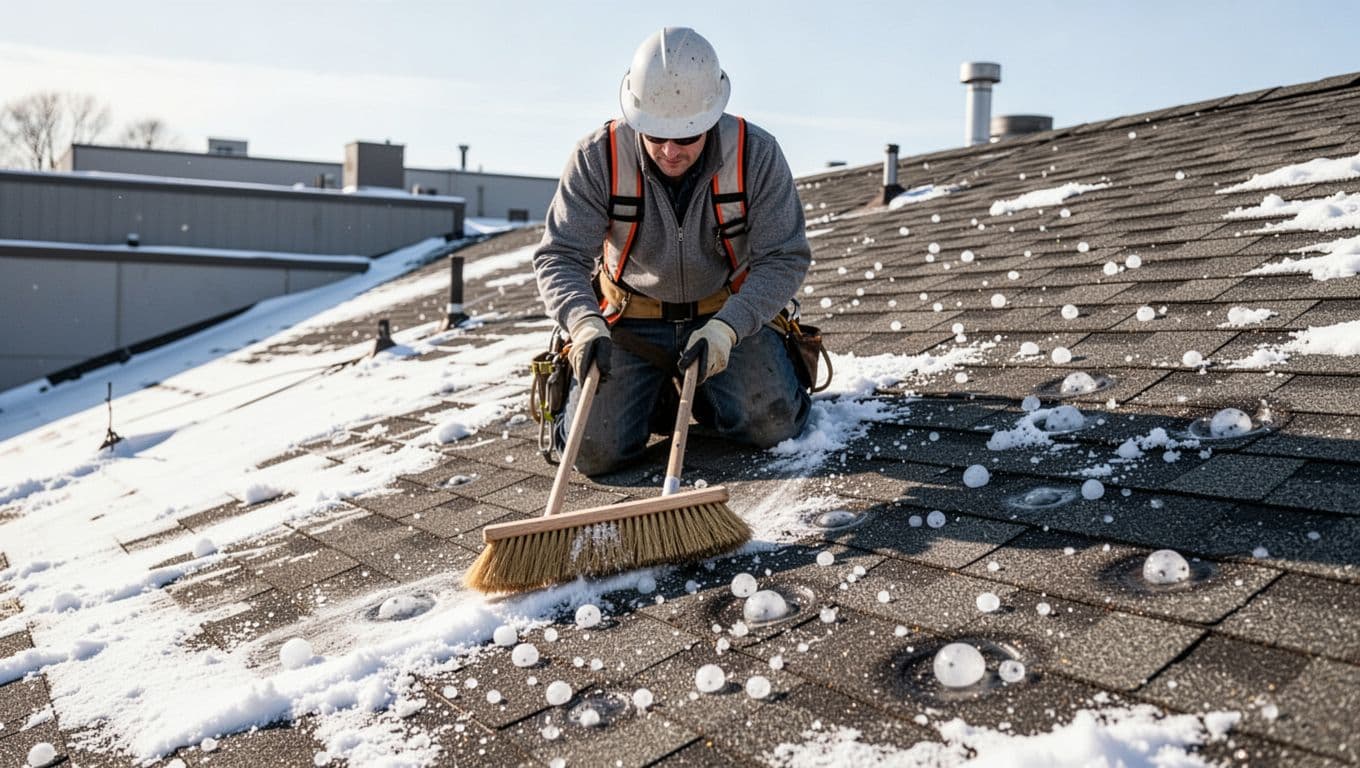
- Don’t scrape or chip ice off shingles. If access is safe, have a roofer clear a small test area and inspect tabs, flashings, and the shingle mat.
After the roof dries
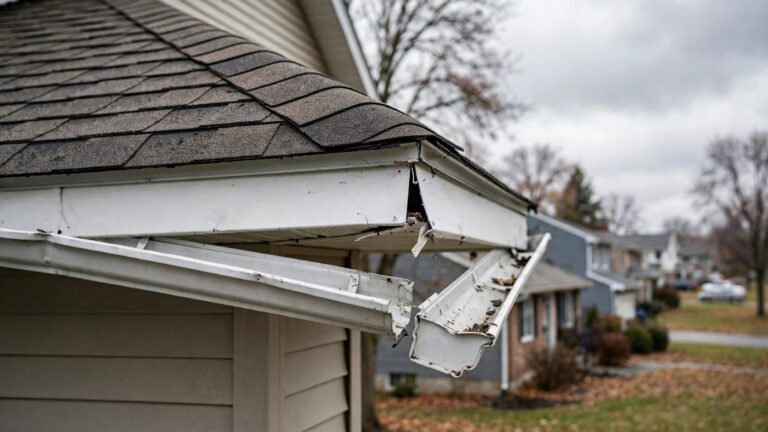
- Look for soft bruises, circular dents, cracked tabs, and exposed black mat. On a thawing roof, hail damage asphalt shingles can show as weak spots once the surface dries.
- Match roof signs with interior clues. Water stains near entry ceilings or exterior walls may mean your commercial roof needs repair now.
- Compare the damage map with service history. Hail may have pushed an aging slope from manageable wear to a section that no longer makes sense to patch.
- Get a documented professional inspection before you choose a fix. Limited hits may need repair, while broad mat damage or shortened service life can make commercial roof replacement the smarter call.
Why Spring Makes Hail Damage Easier to See
Freeze-thaw exposes weak shingles
A hail hit can bruise the fiberglass mat without tearing the shingle open that day. Then snow, ice, and thaw cycles work the same spot like bending a paper clip. The tab may stay in place all winter, yet the surface keeps losing granules and stiffness.
That’s why owners sometimes think the storm caused no harm. The damage happened earlier, but spring weather made it visible. On mixed commercial roofs, that delayed reveal can complicate planning because one slope may need a small repair while another is close to end of life.
What Hidden Hail Damage Looks Like in Spring
The marks worth documenting
When snow finally clears, the roof often tells the truth fast. You’ll usually see granule loss first, then bruises, then cracks as sun and daily temperature swings dry the shingles. Older roofs show these changes sooner because the surface is already tired.
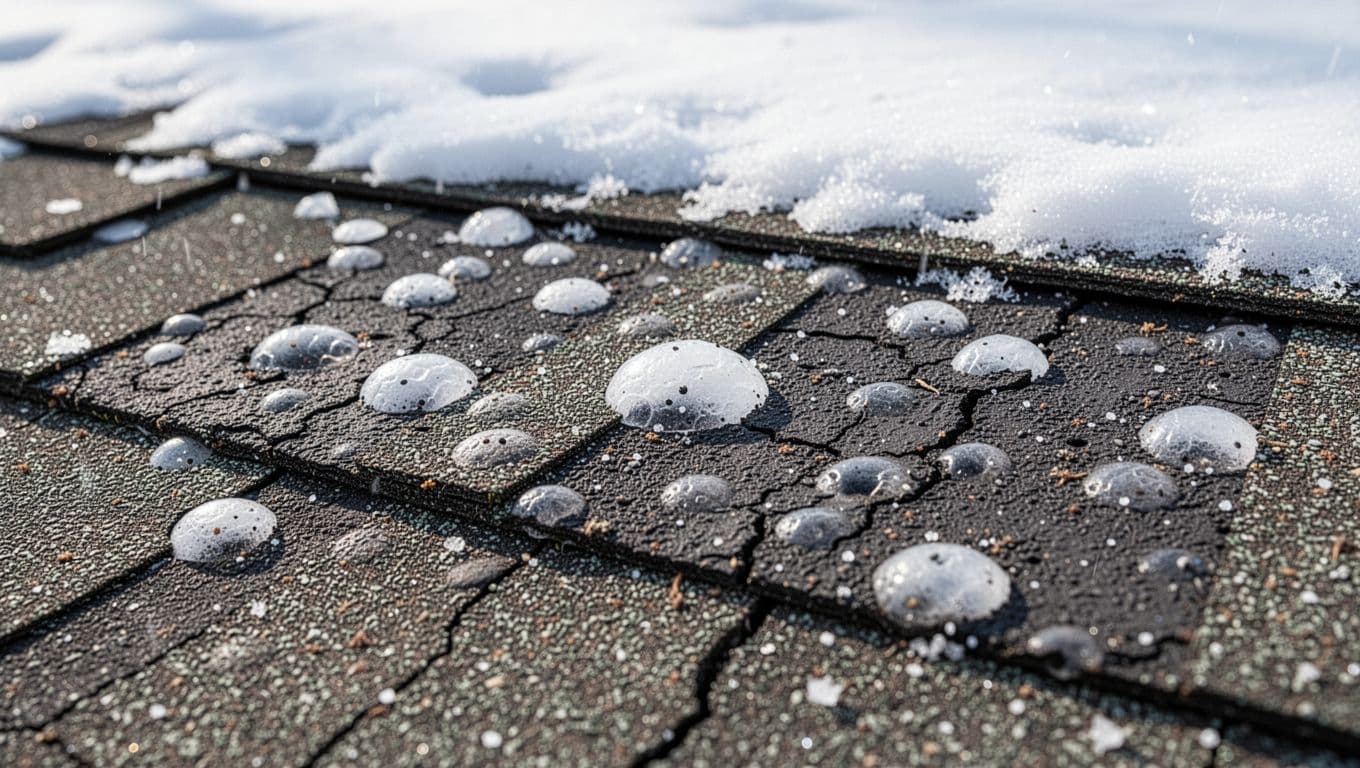
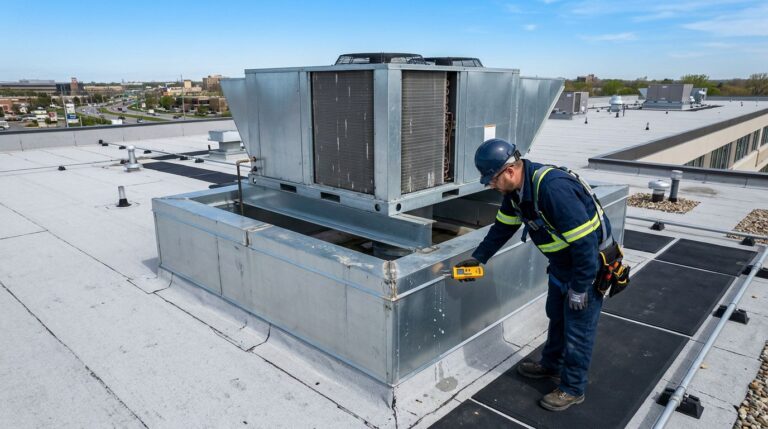
Metal trim helps confirm the story. If vent caps, downspouts, or rooftop metal show fresh dents, nearby shingles deserve a closer look. Hail rarely hits one surface and skips the rest.
Take close photos of suspect spots and soft tabs. Spring thaw can turn a hidden impact into a leak path, especially around edges and penetrations. That’s why spring roof inspection guidance in Minneapolis often focuses on timing, not only damage size.
FAQs After a Winter Hailstorm
Can hail damage stay hidden even if the roof doesn’t leak?
Yes. A bruise can weaken the shingle mat without opening a leak right away. Months later, sun, rain, and foot traffic can wear the spot down until water gets through.
What if only one shingled roof section was hit?
Mixed roof systems need separate decisions
That’s common on larger buildings. A front canopy may need shingle work while the main low-slope area stays sound. Good documentation keeps a small repair from turning into a whole-roof assumption.
Does snow make insurance claims harder?
Snow can delay discovery, but it doesn’t erase storm dates or weather records. The key is a prompt inspection once conditions are safe. Waiting too long after thaw can blur the line between storm damage and old wear.
Can staff check for damage from the ground?
They can spot clues, not diagnose the roof. Look for dented metal, clogged granules in downspouts, or new ceiling stains. Leave rooftop confirmation to trained crews with fall protection.
What happens if spring reveals both hail and age?
Then the fix depends on remaining service life. Sometimes targeted repairs work. Other times, hail sped up an aging roof enough that replacement is the safer financial move.
If a hailstorm hit before winter locked in, don’t assume the roof came through clean because snow looked smooth. On commercial shingle sections, spring often exposes the bruises winter hid.
The smart move is simple. Document the storm, watch the melt, and inspect once the roof dries. Snow is camouflage, not clearance.
{“@context”:”https://schema.org”,”@type”:”BlogPosting”,”@id”:”https://roofingexpertsstpaul.com/snow-hidden-hail-damage-shingles/#article”,”mainEntityOfPage”:{“@type”:”WebPage”,”@id”:”https://roofingexpertsstpaul.com/snow-hidden-hail-damage-shingles/”},”headline”:”Can Snow Hide Hail Damage On Asphalt Shingles Until Spring”,”description”:”Yes. Snow can cover bruises, granule loss, and small cracks on asphalt shingles until thaw. It can also keep the surface wet and cold, which makes soft impact marks harder to spot. By spring, melting, drying, and freeze-thaw cycles often reveal damage that looked minor, or invisible, in winter. When”,”datePublished”:”2026-04-10T03:20:58″,”dateModified”:”2026-04-10T03:21:00″,”author”:{“@type”:”Organization”,”name”:”Sellers Roofing Company”,”url”:”https://roofingexpertsstpaul.com”},”publisher”:{“@type”:”Organization”,”name”:”Sellers Roofing Company”,”url”:”https://roofingexpertsstpaul.com”,”logo”:{“@type”:”ImageObject”,”url”:”https://roofingexpertsstpaul.com/wp-content/uploads/2025/05/sellers-roofing-logo.png”}},”url”:”https://roofingexpertsstpaul.com/snow-hidden-hail-damage-shingles/”,”inLanguage”:”en-US”,”about”:{“@type”:”Thing”,”name”:”Roofing, Hail Damage, Storm Repair, Insurance Claims”},”isPartOf”:{“@type”:”Blog”,”@id”:”https://roofingexpertsstpaul.com/blog/”}} {“@context”:”https://schema.org”,”@type”:”WebPage”,”url”:”https://roofingexpertsstpaul.com/snow-hidden-hail-damage-shingles/”,”speakable”:{“@type”:”SpeakableSpecification”,”cssSelector”:[“h1″,”h2″,”.speakable”]}} {“@context”:”https://schema.org”,”@type”:”FAQPage”,”mainEntity”:[{“@type”:”Question”,”name”:”Can hail damage stay hidden even if the roof doesn’t leak?”,”acceptedAnswer”:{“@type”:”Answer”,”text”:”Yes. A bruise can weaken the shingle mat without opening a leak right away. Months later, sun, rain, and foot traffic can wear the spot down until water gets through.”}},{“@type”:”Question”,”name”:”Does snow make insurance claims harder?”,”acceptedAnswer”:{“@type”:”Answer”,”text”:”Snow can delay discovery, but it doesn’t erase storm dates or weather records. The key is a prompt inspection once conditions are safe. Waiting too long after thaw can blur the line between storm damage and old wear.”}},{“@type”:”Question”,”name”:”Can staff check for damage from the ground?”,”acceptedAnswer”:{“@type”:”Answer”,”text”:”They can spot clues, not diagnose the roof. Look for dented metal, clogged granules in downspouts, or new ceiling stains. Leave rooftop confirmation to trained crews with fall protection.”}},{“@type”:”Question”,”name”:”What happens if spring reveals both hail and age?”,”acceptedAnswer”:{“@type”:”Answer”,”text”:”Then the fix depends on remaining service life. Sometimes targeted repairs work. Other times, hail sped up an aging roof enough that replacement is the safer financial move. If a hailstorm hit before winter locked in, don’t assume the roof came through clean because snow looked smooth. On commercial shingle sections, spring often exposes the bruises winter hid. The smart move is simple. Document the storm, watch the melt, and inspect once the roof dries. Snow is camouflage , not clearance.”}}]}Need a roof inspection in Saint Paul or the Twin Cities? Call Sellers Roofing Company at +1-651-703-2336 or schedule a free estimate. We are a black-owned, NMSDC-certified MBE roofing contractor with 9+ years experience.